During Covid lockdown my elder daughter moved back into the family home to stay until things returned to something approaching normal. It was acceptable to go out for short walks during the lockdown, as long as you followed social distancing rules. When my daughter went for her walks, often in the close-by Wellington Botanic Gardens, sometimes she would come home with foraged mushrooms. Several types were harvested but most prized were porcini – Boletus edulis. I soon learnt by browsing in a facebook page that these were regarded as premier mushrooms, and that Wellington was New Zealand’s northernmost limit for their growth. Shortly I caught the mushroom foraging bug myself, firstly learning about identification, and then finding out where to look for them. B. edulis is mycorrhizal, having a mutualistic relationship with the roots of host trees. There are many trees that can host porcini, but through facebook posts it quickly became apparent that whereas in Christchurch oaks were the main host, in Wellington it was pines, including the exceedingly common Pinus radiata.
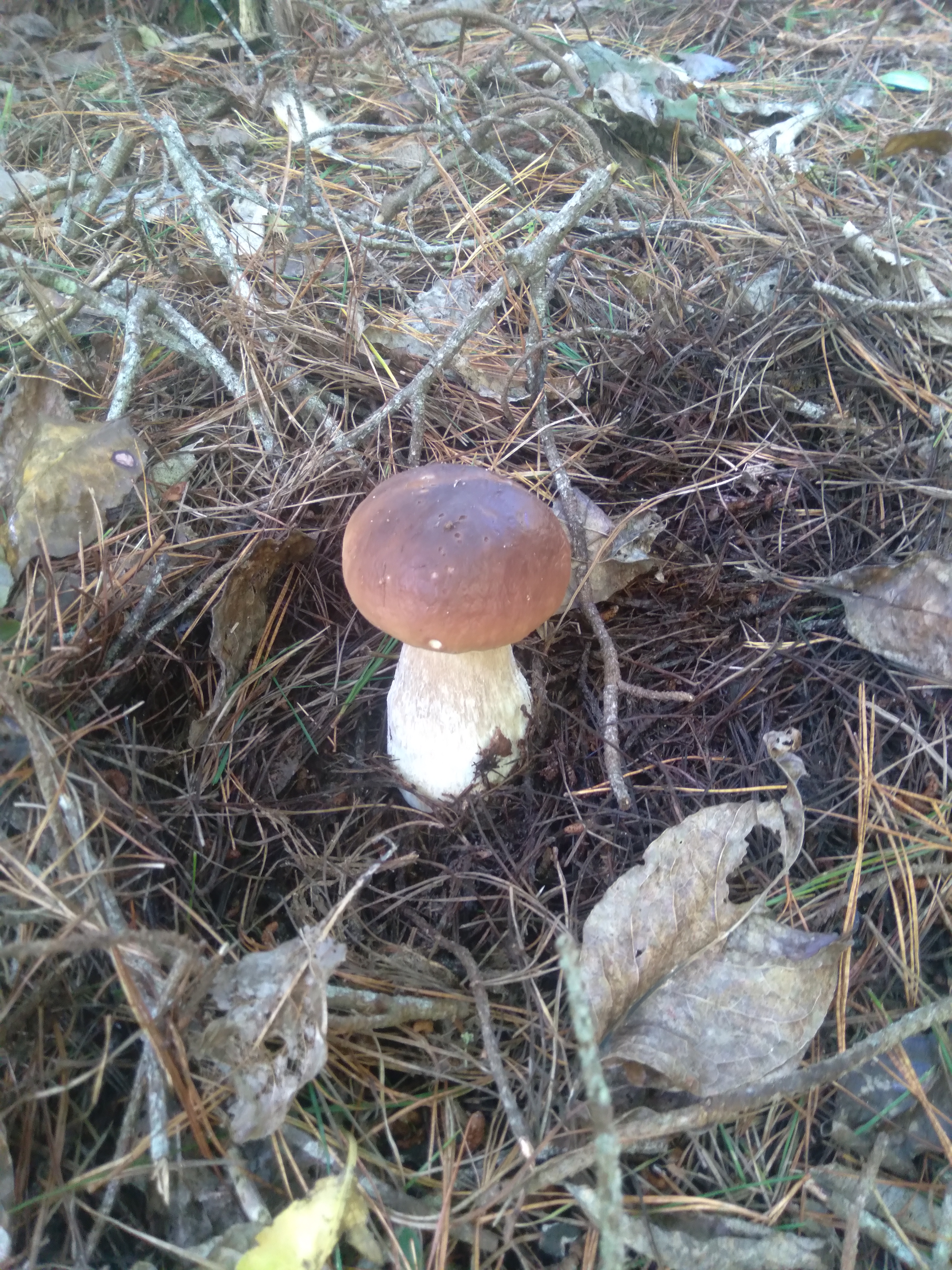
I live close to part of Wellington’s town belt called Polhill/Aro Valley where the walking and biking tracks go through many sizable old pine trees, so that is where I first started looking. After a few weeks of frustration with no success, I had my first find in a spot called ‘Lone Pine’ (this was actually signposted as such). Here’s a photo I took to show off my first harvest, a fine-looking porcino amongst the pine needles:
The ‘Lone Pine’ site actually comprised a group of pines off a small ridge, and it was their isolation that explained their name, not that there was only one of them. So, given there were several pines, I’d found one there, and there was a convenient track to take me to them, I returned every few days looking for more. I wasn’t always rewarded, but in my first season of harvesting even though I found other sites, the ‘Lone Pine’ spot proved my most productive.
Of course, I returned there the next season when I felt climatic conditions were right for porcini to begin appearing (about December). Imagine my concern then when upon returning to Lone Pine I found all of the pine trees there had been ‘ring-barked’. This had clearly been professionally done:
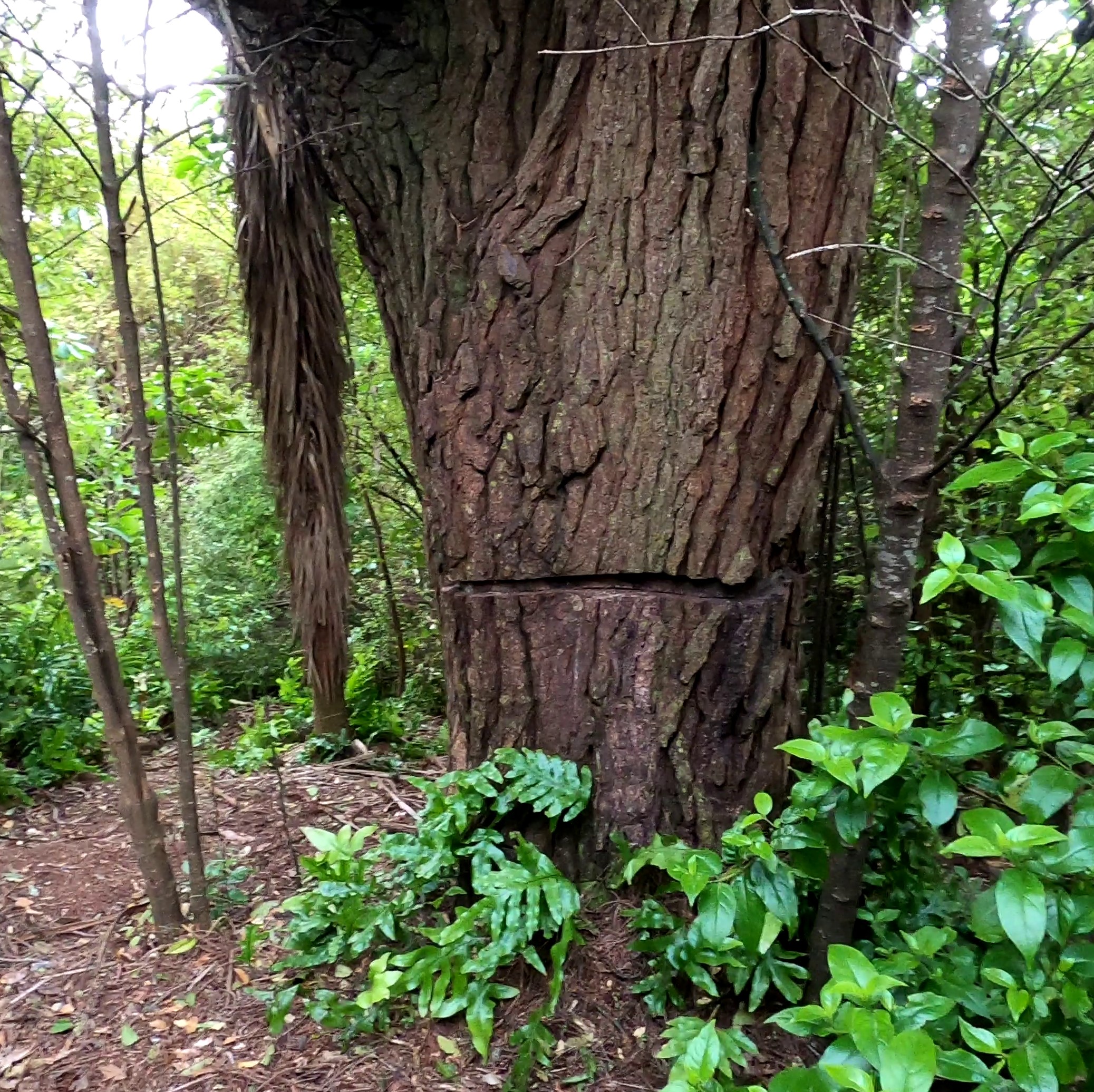
At the time while alarmed at this discovery I simply hoped for two things: first, that for some reason this was the only spot that had been selected for this treatment, and second, that the porcini might still grow given that many other (native) trees remained in the site. This was a kind of ‘magical thinking’: given that I’d never seen it mentioned that porcini were hosted by New Zealand native trees, to hope that this could be so wasn’t based on strong evidence. Even though it took the pines well over a year to die, I never found another porcini under these Pinus moribundus.
However, just up the hill from Lone Pine, while it involved a bit more ‘bush-bashing’ to get there, I had found a slightly wider-spread spot with good numbers of porcini. Unfortunately, in early January 2025, I found this sight awaiting me once I started foraging in the new season:
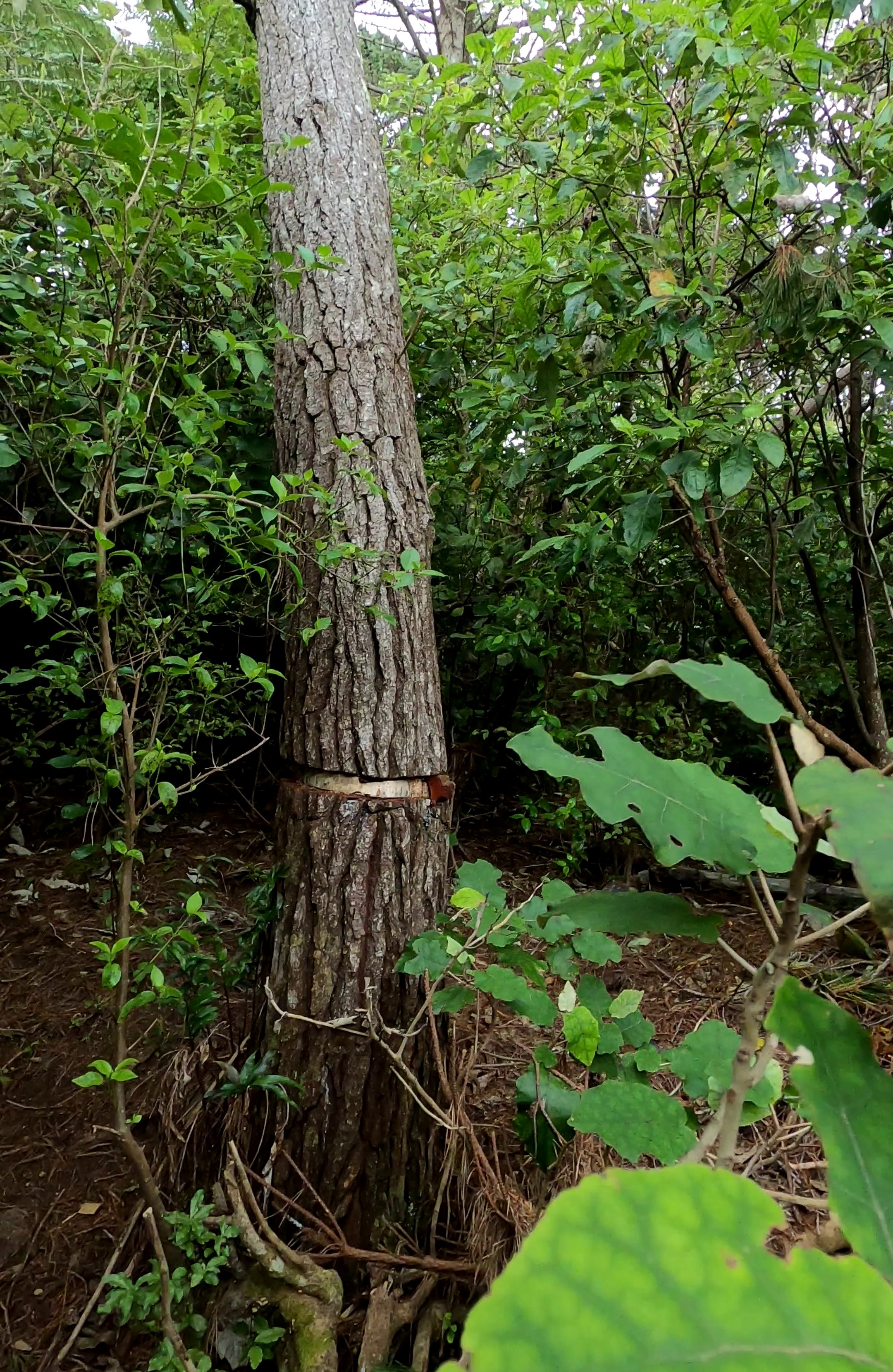
I only had to go downhill 50 metres to find hard evidence of the waiting fate for this P. moribundus:

So, it was pretty clear that something systematic was going on here. It didn’t take much searching to track down what had been happening. Some simple google searching turned up the Wellington City Council’s Town Belt Management Plan – not bedtime reading at 288 pages – and as set out in its June 2018 update, under Policies 8.3.3.1, the following plan regarding Polhill Reserve: ‘Restore all but the mown road edges of the Town Belt into podocarp and broadleaf forest’. (p. 112). Even if I, and other likeminded porcini foragers, had been aware of this, and attempted some appeal, I think any argument to leave the scattered pines to grow would have been unsuccessful. For quite good reasons, there is a very strong force to return Wellington’s townbelt to native vegetation, and some appeal based on the idiosyncratic ability of pines to support porcini, in a very small number of spots, wouldn’t have got very far. It’s a pity really because reflecting on the relationship between porcini and their host trees is ecologically fascinating. An example (where I do my best to keep one spot I know secret) shows some of the complexity of these relationships.
Secret Spots and Slightly More Rational Magical Thinking
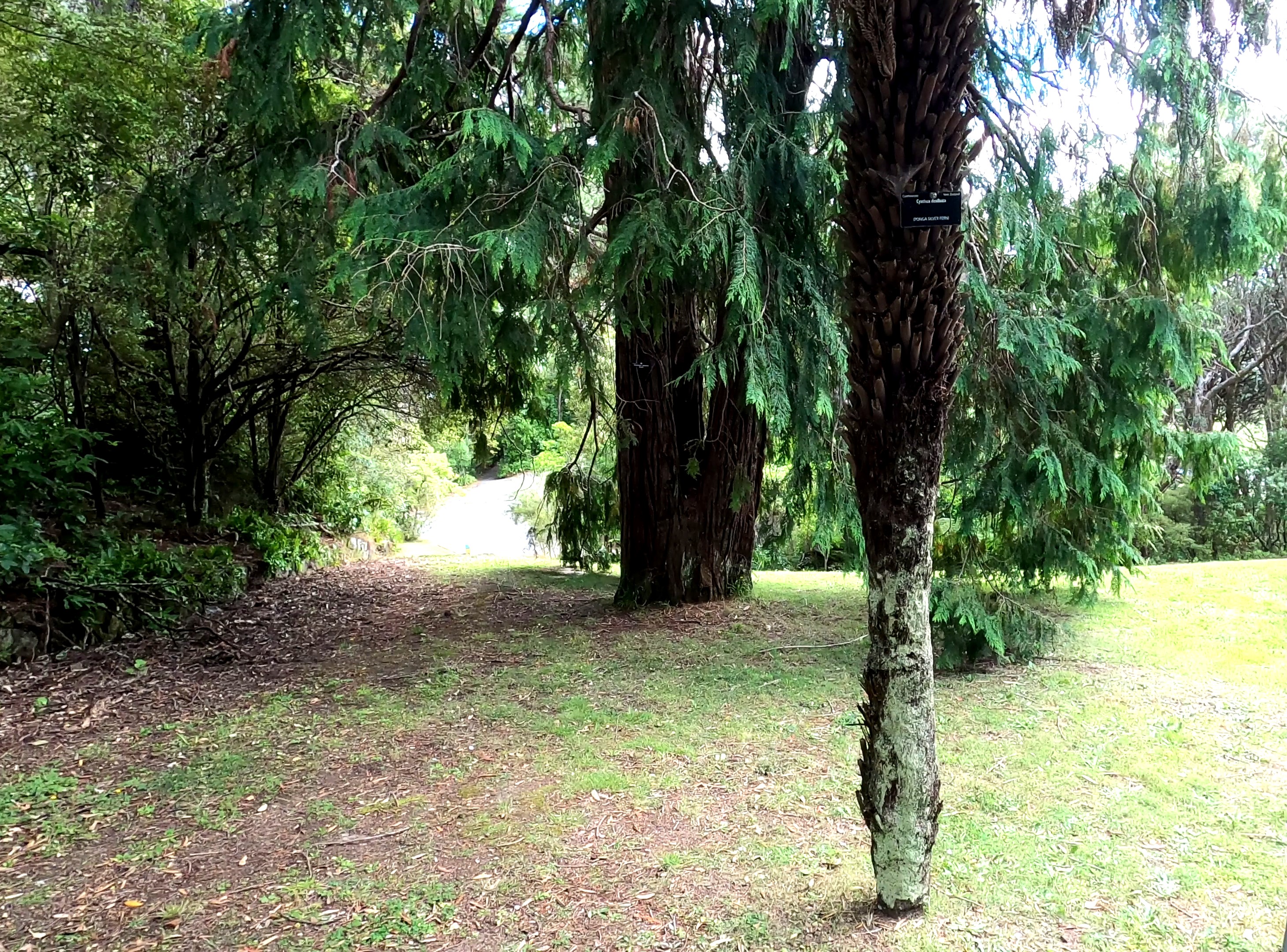
Here is a photo of a garden scene, somewhere I can’t say, where in the front there is a Cyathea dealbata (ponga/silver fern) and behind it a much larger Chamaecyparis lawsoniana ‘Gracilis’. I don’t get a lot of porcini here, but I do check this spot regularly and over time have found one porcini right up against the ponga, and several spread around the Lawson cypress.
Here’s a very recent photo of what can sometimes be found:
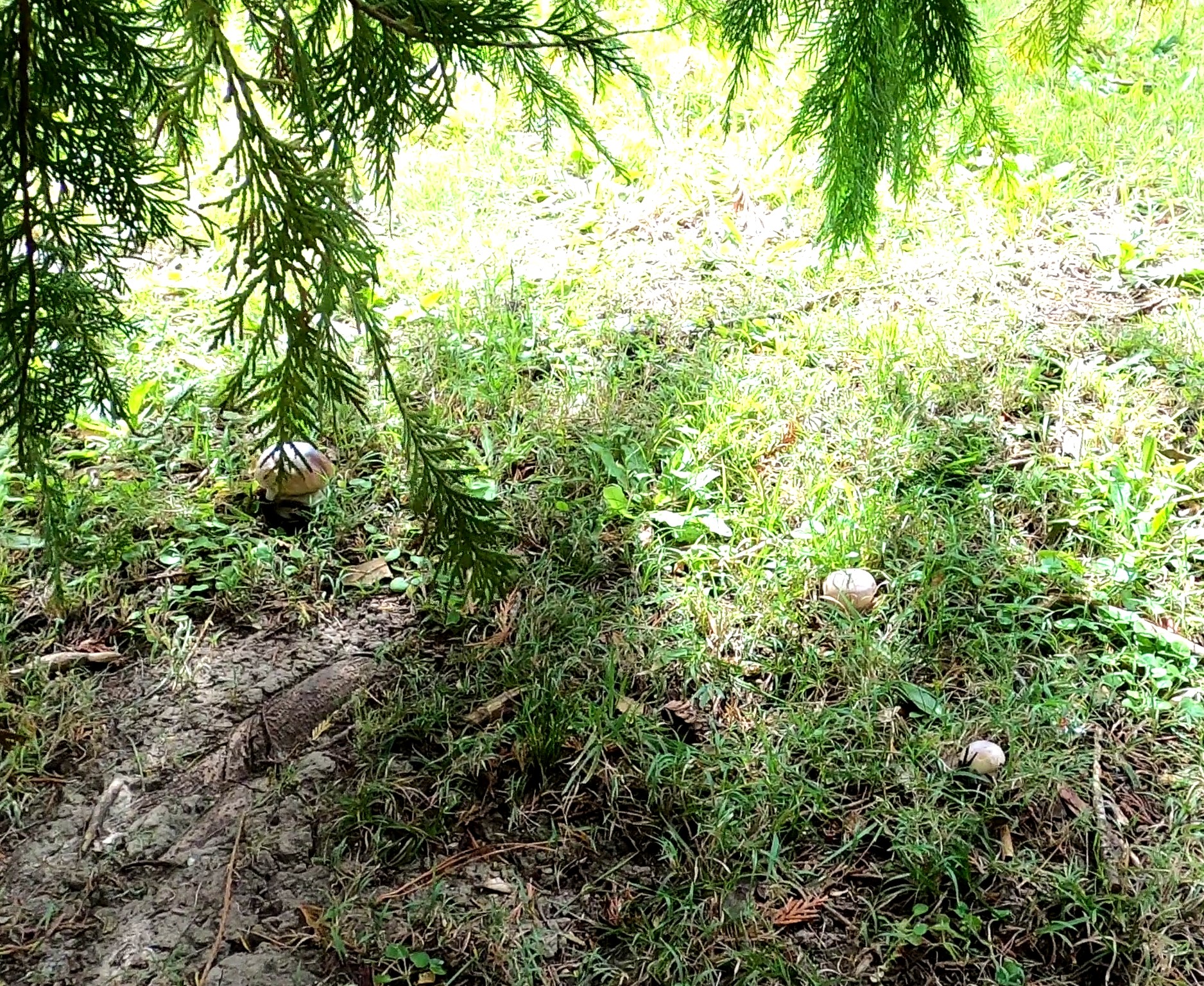
These are very small porcini, nonetheless give them time and they will be very pickable. Here’s one that is also small, but because I knew other foragers frequent this spot, I picked it so as not to miss out:

I’m holding it against the foliage of the Lawson cypress, almost in a kind of gesture of gratitude. But to be honest I haven’t told all of the tree story here. Just to the right of where I am holding this porcino, we find this:

This is a very big, old and healthy Pinus radiata. It is not visible in this photo but there are very large roots to be seen at the surface all along the side of the garden border. It is old enough, with big enough roots, for its full root structure to spread underneath the Lawson cypress.
So, we arrive at a type of ecological thinking with a slight magical tinge. Maybe the science would suggest that it is the pine that is in a mutual relationship with the porcini, and not the Lawson cypress, and certainly not the ponga. But there they are all together, growing as in effect a micro-ecosystem. Why couldn’t we think that is their totality that supports the porcini? It doesn’t seem coincidental to me that many of the porcini I have found here are under the ‘drip-line’ of the Lawson cypress. It is a lawn that tends to get very dry in the summer, so maybe it is the moisture and shade under the weeping Lawson cypress that enables the porcini to grow, even if their primary root connection is with the big old pine? Could this also explain the one porcino I have found at the base of the ponga?
This emphasis on connection, between three different kinds of plant, and a mushroom, enjoyed by those lucky enough to find them, seems quite removed from the logic that is currently leading to the slow eradication of pines in Wellington’s green belt. If I’m being a little magical in my thinking, I’ll accept that; I haven’t been tempted to dig into the science of mushroom-tree symbiosis for I just appreciate knowing there is another spot where I can find porcini. Because it now seems clear that many other spots in Wellington where the big pines support porcini are now full of that unfortunate species Pinus moribundus. So, I’m thankful to find even small porcini under the weeping Lawson cypress, next to that big old pine, with a neat ponga nearby. I’m happy to leave the science of their entanglements to others.
NB: moribundus in Latin means ‘close to death’; there is no actual Pinus species with this name.

 The Local Arboretum: Noticeable trees and their stories