I made a quick trip to Hamilton in the last week and on the return to Wellington made a point of calling into Patea Cemetery. This wasn’t because I have relatives buried there, rather it stemmed from Google maps showing two Phoenix palms in the cemetery. I have been researching the possible use of the palm as a war memorial tree (a post will come later on that topic), so wanted to check if there were any returned service people buried beside the palms. The first larger palm had several graves around it, none of which were for service people. The smaller of the two palms, which looked to me to be about 40 years old, had only one grave and headstone beside it:
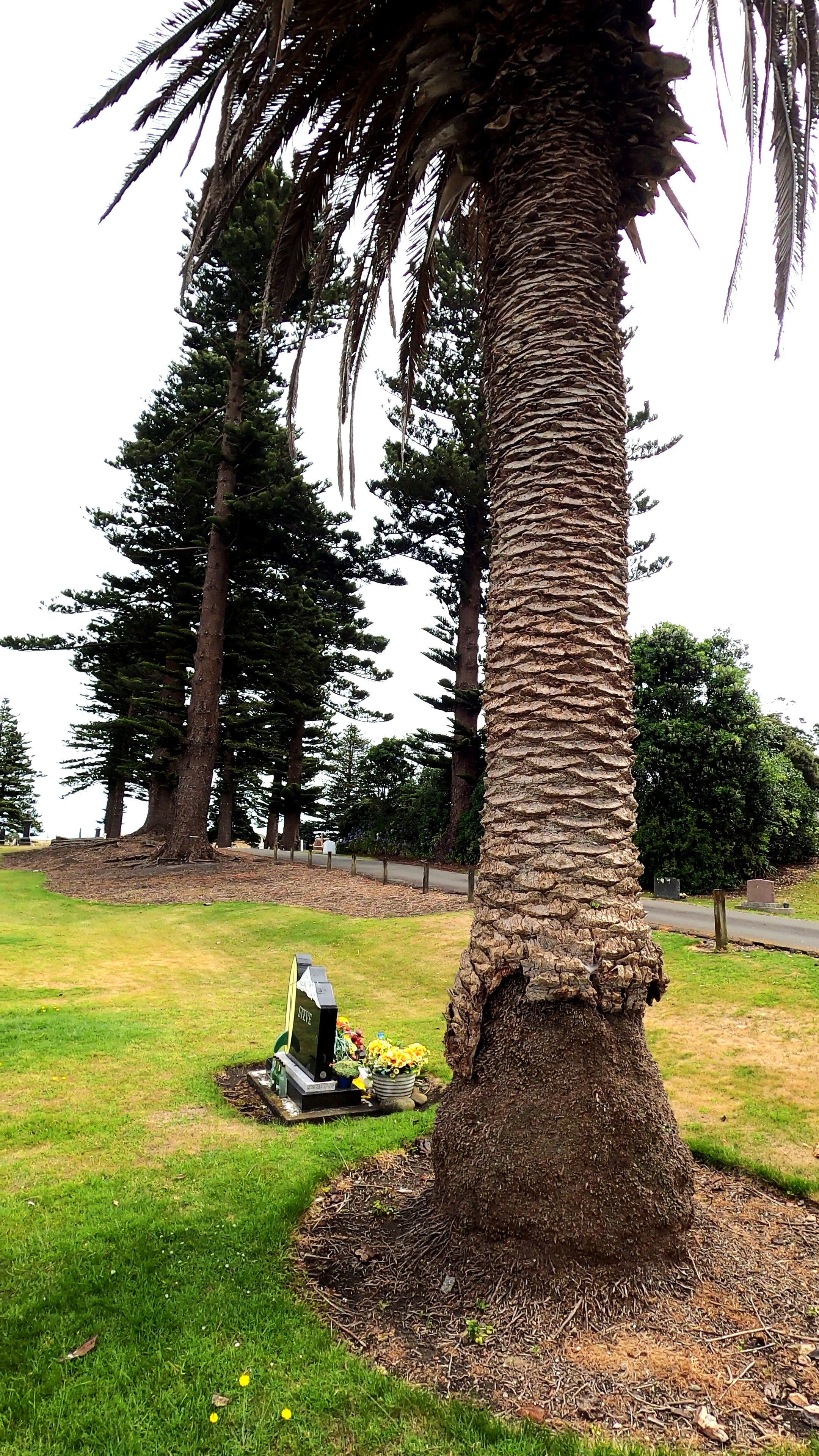
On inspection, the grave was of an unfortunate man who died young, with his date of death being well after the palm had been planted. By inference then both Phoenix palms seemed to be in the cemetery as decorative trees, not because of any possible war-commemorative role.
The slight detour to the cemetery was still fruitful as I had not been aware of the group of impressively tall Norfolk Island pines – Araucaria heterophylla – clearly visible in the background to the Phoenix palm. Walking over to the trees I wasn’t surprised to see a plaque recording their recognition by the South Taranaki District Council as protected trees:
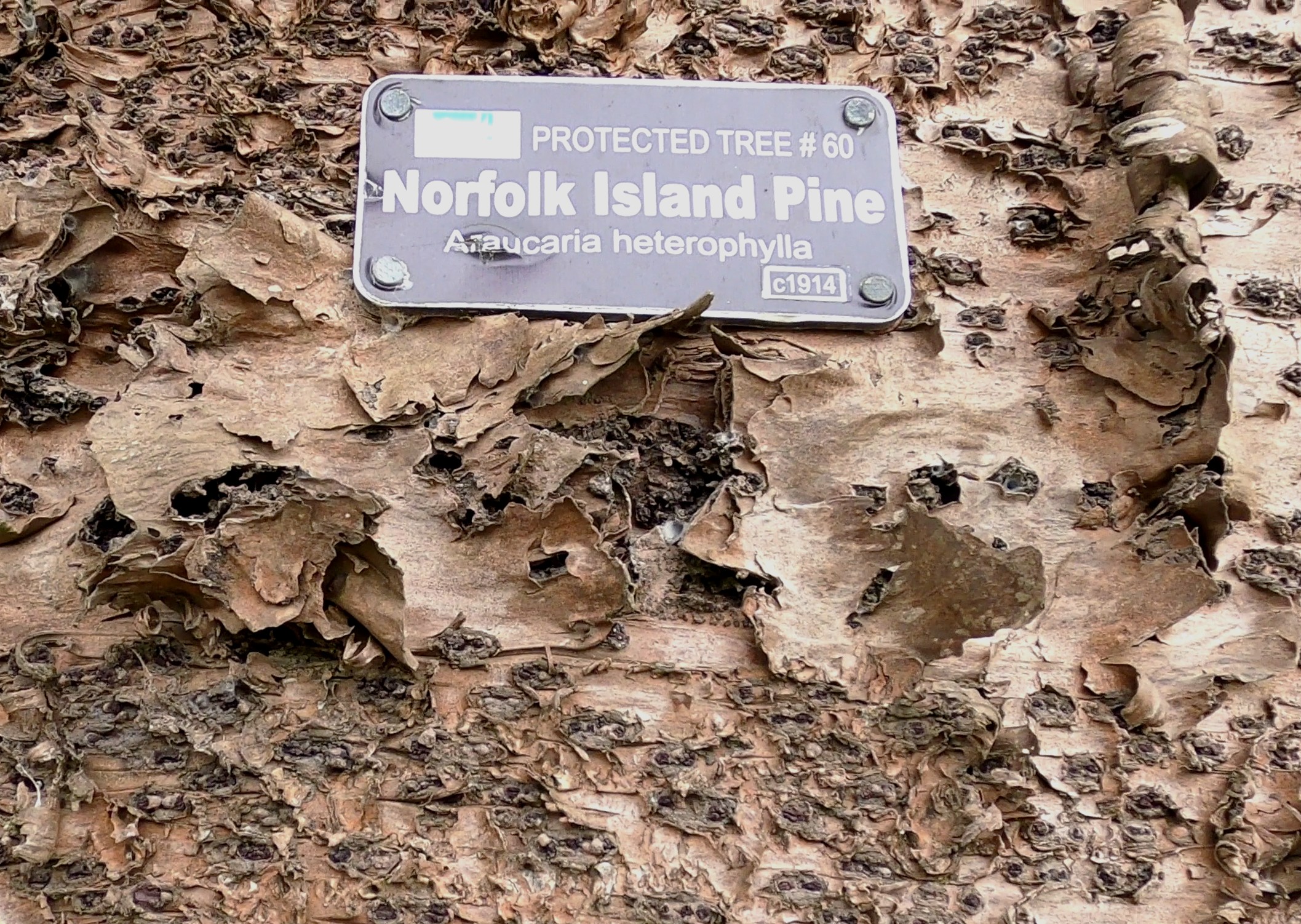
Surprising though was the contents of the little box at the bottom right. It is a bit hard to read in the photo: it says c1914. The c is for circa, indicating that in the process of registering the trees the council couldn’t fix an accurate planting date, settling upon ‘approximately’ 1914. One hundred and eleven is a good age for a tree, consistent with the kind of age expected for qualification as a protected tree. Still, when I looked at the size of the trees I just wondered how good 1914 was as an estimated planting date. Some prior experience with researching old Norfolk Island pines was part of what led me to this doubt.
Tracking Significant Trees: The ideal
If you get interested in noticeable trees and make any effort to track down planting dates, one thing you’ll often find is that buildings, bridges, and monuments will often have an easily locatable precise history, whereas little information can be found on the trees that surround these physical objects. There are exceptions and it is not hard to guess what lies behind better recording-keeping regarding planting dates. Here’s an example of a Norfolk Island pine (and two other trees) photographed circa 1912 in Parliament Grounds, Wellington:
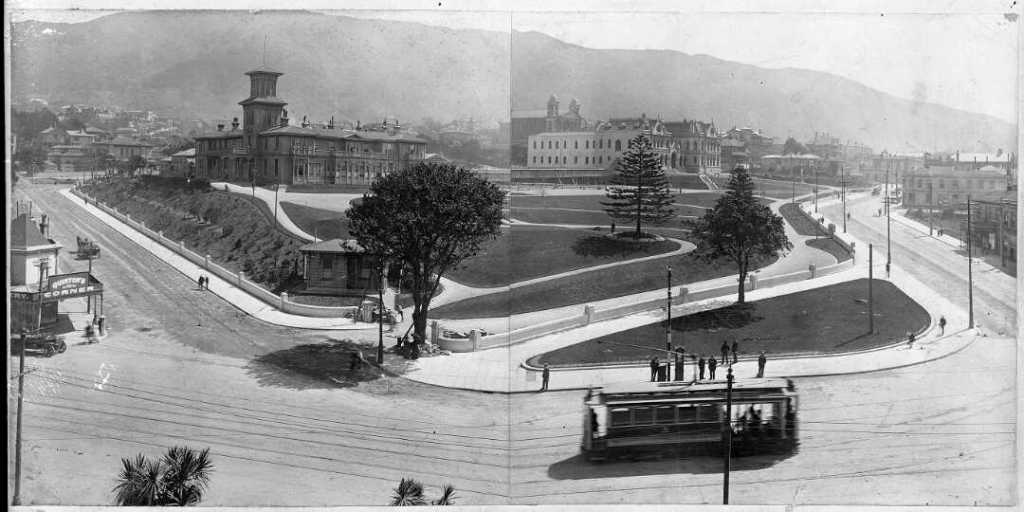
Source: Unidentified photographer, Grounds of Parliament Buildings, Ref PA Coll-4355. Alexander Turnbull Library /records/22862463.
The planting details for the Norfolk Island pine at the corner of the curved walkway are very precise: it was planted on April 15, 1869, by Queen Victoria’s second son, Prince Alfred, the Duke of Edinburgh (see The Evening Post, Friday April 16, 1869, p. 2). He planted many other trees throughout the country during his royal visit, and probably the dates of the planting of most of these were well recorded in newspapers of the time. New Zealand’s colonial status and still high regard for British royalty at the time clearly explain this. By extrapolation we could argue that if the Norfolk Island pines in Patea Cemetery were planted during a royal visit, there would be no need for a ‘c’ on the contemporary protected tree plaque: the date and possibly other details of the event would have been well-reported.
Moving on, if we update the circa 1912 scene above we can get closer to my main interest:
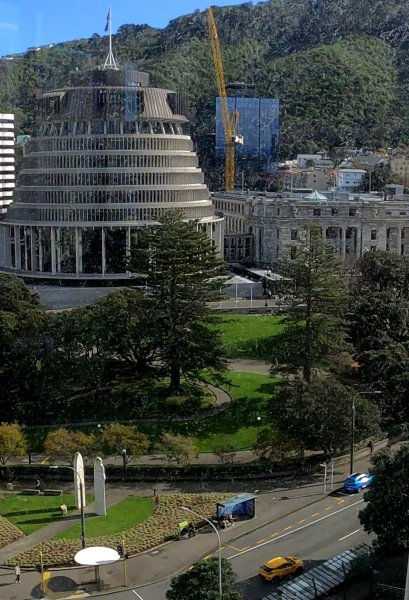
This is a photo taken in 2024 from inside a tall building across from Parliament. We see the then 155-year-old Norfolk Island pine, but nearby is a second specimen. This has no recorded planting date (it was not part of the Duke’s official planting activity) and other historical photos would suggest it was planted 30 or so years later.
The reason for introducing these two Norfolk Island pines is that it gives some context for my surprise at the circa 1914 date for the Patea Cemetery group. Given I’d registered the older specimen in the NZ Tree Register, I’d become familiar with what very old Norfolk Island pines looked like. Obviously I couldn’t make a direct comparison standing there in the Patea cemetery, nor could I gain a view from a tall building, but I did have a very real sense that they were not much smaller than the pair in Parliament grounds. Some more photographs help to convey the size of the Patea group:
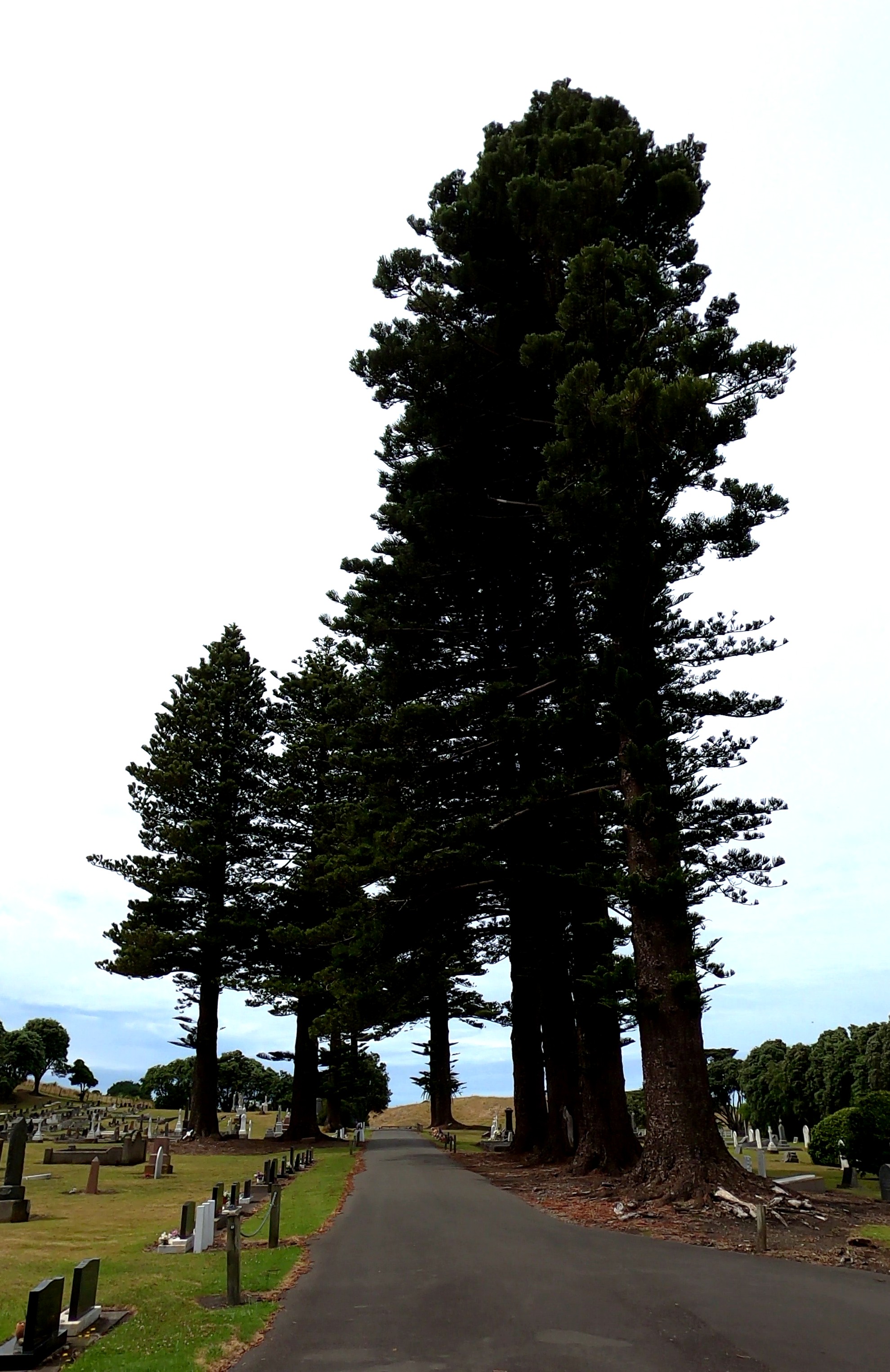
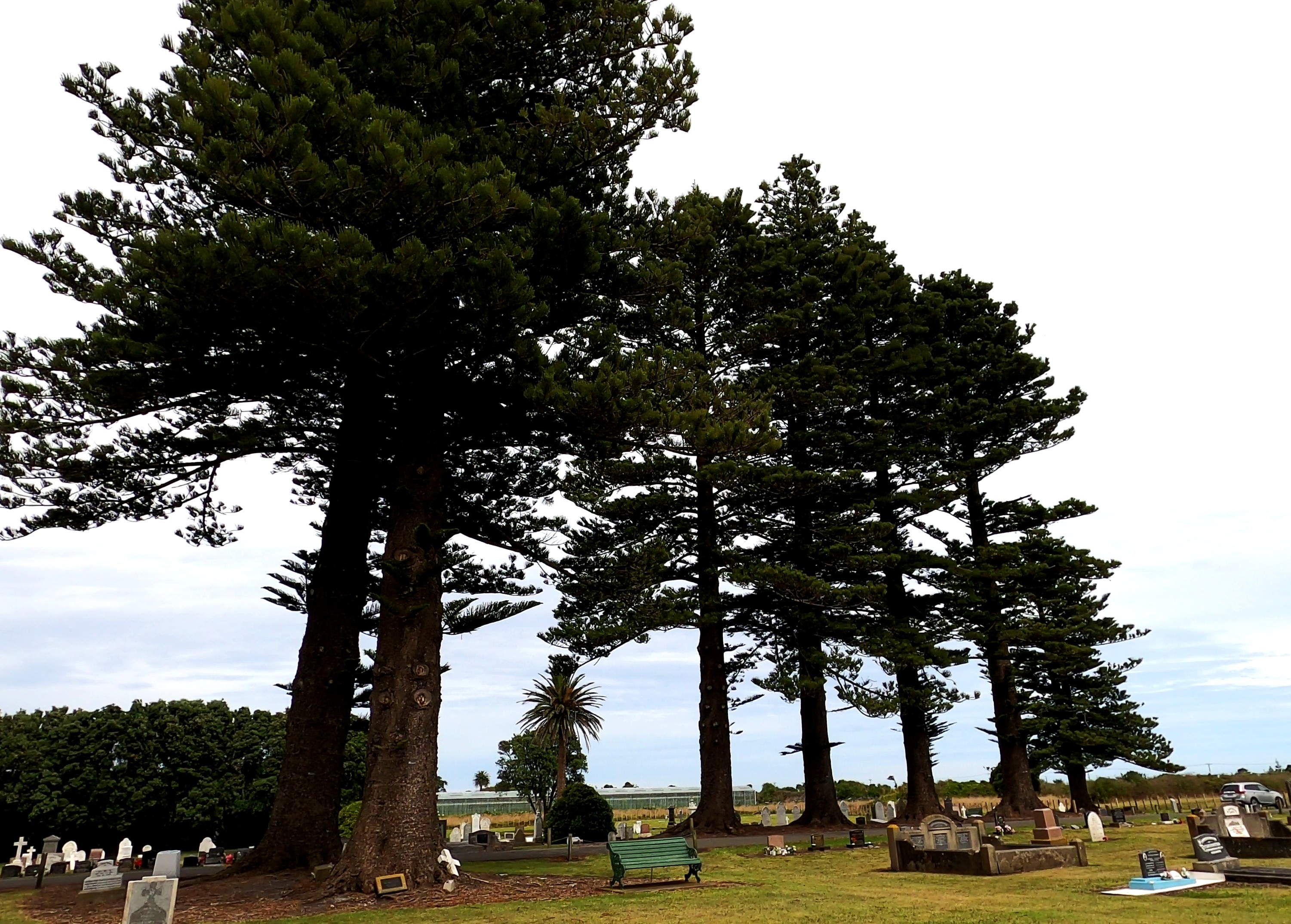
Armed with these photos and a sense that the circa 1914 planting date was not quite right, I returned home and resorted to some tried-and-true sources for tracking down the age of old trees. A quick google search didn’t prove fruitful, but I was at least able to confirm from the South Taranaki District Council’s record of protected trees that there were 12 Norfolk Island pines registered in the Patea Cemetery. For some reason a 13th pine there wasn’t included (more on this below). The local historical society also provided the information that burials started in the Patea Cemetery around 1869. With only this minimal information I then spent more time searching the Papers Past newspaper database, which did prove very interesting.
Selecting the Patea Mail, published between 1875 to 1941, I searched using the term ‘cemetery planting’ without any limit by year. This didn’t turn up anything specific regarding planting of Norfolk island pines circa 1914, but it did result in several articles mentioning planting being planned in Patea, then frustrated comments about lack of progress with this. Often, limited funds seemed to explain delays to planting, and there was also frequent debate about what were the best trees to plant. Keeping searching, including changing search terms, finally resulted in something of an ‘aha’ moment. In the 18th June 1881 issue I found in an article on ‘County News’ that ‘Tenders for various works and for planting trees in the Patea Cemetery will be received until Monday’ (p. 2). This doesn’t mention what trees were to be planted, or whether they were in fact planted, but luckily the 6th October 1882 issue includes a general article stating that ‘The extensive planting done a year ago is showing a good return’ (p. 2). Whereas this doesn’t establish what trees were planted, it does at least give a date of 1881 for planting of some unknown trees. It would have been frustrating if the reports left the issue there, but by chance a later article seems to (partly) clear up the issue.
A reasonable inference from ‘Blizzards’
In the 10th September 1897 issue, towards the bottom of a long article reporting the activities of the Patea Borough Council is the following report:
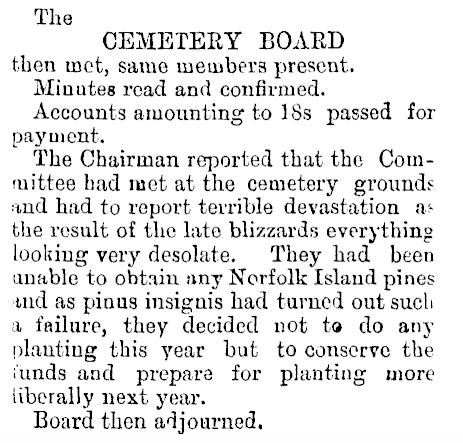
We have to be wary of a kind of ‘confirmation bias’ here, but it looks to me as if the ‘late blizzards’ had taken some toll on the 1881 planting of Norfolk Island pines, and the intent to replant the affected pines had not been possible due to the inability ‘to obtain any Norfolk Island pines’ (by the way Pinus insignis was an earlier botanical name for P. radiata).
Clearly, the mystery is not resolved beyond doubt, but to use a term an old social scientist colleague of mine favoured, ‘the weight of the evidence’ suggests 1881 is an acceptable date for the planting of the oldest Norfolk Island pines in Patea cemetery. This evidence includes my own sense of how tall 144-year-old Norfolk Island pines would be, the newspaper articles with confirmatory reports, and the lack of mention of 1914 plantings. I don’t envisage that as a result of this small investigation the protected tree plaques on the trees will be changed. If they were, to be clear, it would probably still make sense to put c1881 in the small box.
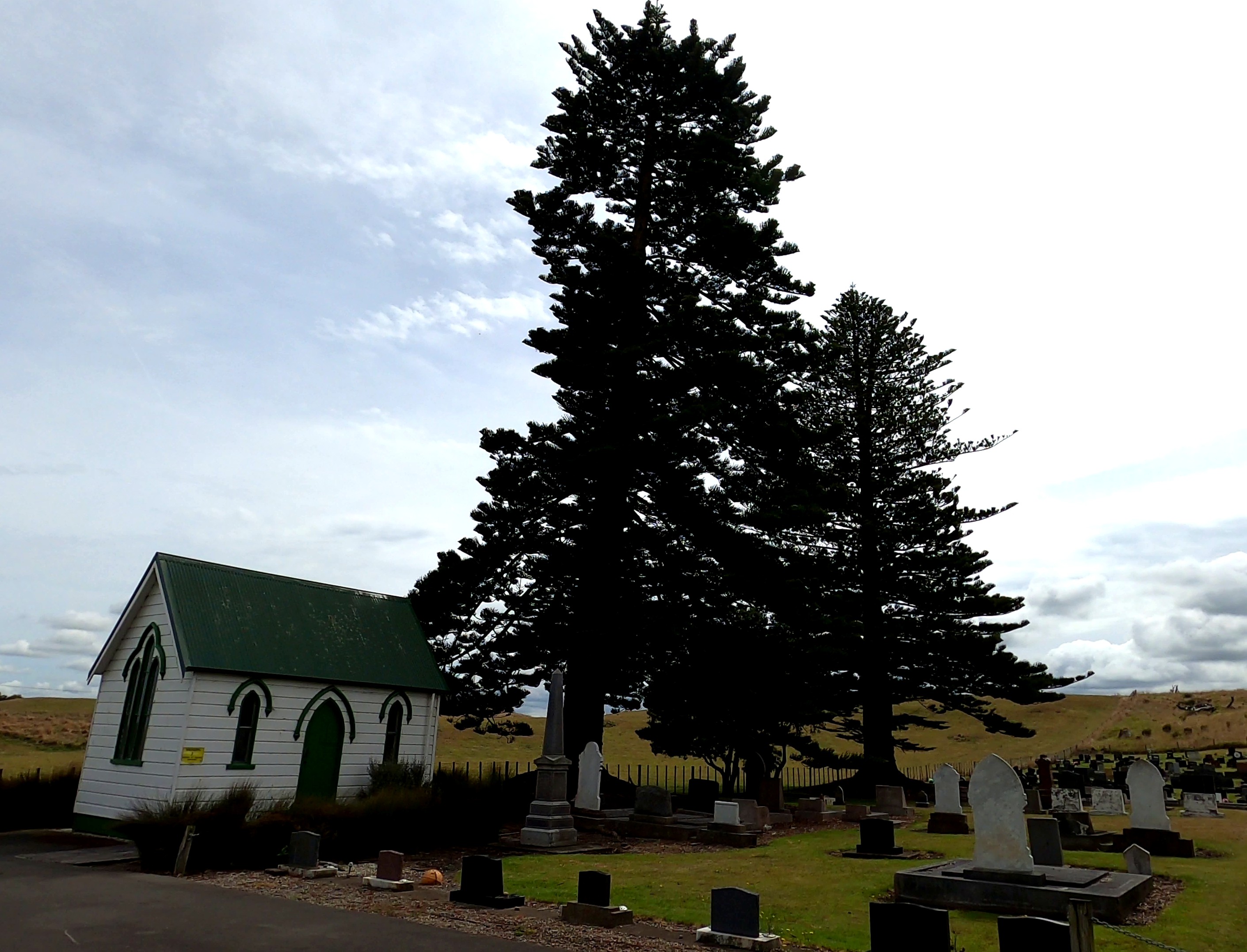
Finally, though not noted above, other newspaper articles suggest the planting of the Norfolk Island pines occurred in several stages, probably between 1881 to 1897. Also, the thirteenth tree that didn’t make it onto the protected tree register may have been planted quite a few years later. This helps to explain why there is variation in their sizes as shown by this final photo taken to the north of the cemetery where the restored mortuary chapel was relocated in 2013:
Acknowledgements: Many thanks to Yago Nascimento and Iasmin Nunes for suggesting the trip to Hamilton.


 The Local Arboretum: Noticeable trees and their stories