We’ve come across a few Phoenix palms (Phoenix canariensis) in previous posts and I promised to write more on them. The use of the palm in New Zealand has a long and varied history, so to keep this post short I’ll refer readers to some earlier posts on the topic (in another blog), and to a forthcoming publication. Then we’ll consider the involvement of Phoenix palms in the renovation of Whanganui’s Sarjeant Gallery. We’ll see examples of the ‘colonnade effect’, that is, a tree-based equivalent of a row of columns spaced at equal distance.
The Phoenix palm in New Zealand
Originating in the Canary Islands, the Phoenix palm has been available in New Zealand nursery catalogues since the 1870s. Not knowing how hardy the palm was it was firstly suggested that it should be grown as an indoor palm. Quite quickly however it was realised they were hardy to grow outdoors, and thus began a long history of the palm’s planting in New Zealand. I started researching aspects of the social history of the Phoenix palm in 2023, and initially rather than write academic articles (which can take far too long to reach a limited audience) I sent several short pieces to the Garden History Research Foundation which posted them on their blog. These are still useful as a background to this current post, and can be accessed here:
Phoenix palms: beginning a sociological inquiry
Percy Adams and Nelson’s ‘Monte Carlo Palms’
The significant Phoenix palms of central Auckland
In April 2025 I have a lengthy article being published in the International Review of Environmental History. ‘As Seen at Ellerslie’: The Spread of Phoenix Palm Sets in New Zealand’ traces how the 1913 planting of a significant double avenue of Phoenix palms at Ellerslie Racecourse became an exemplar for further such plantings throughout New Zealand. The article has several photos and is free to view, so interested readers will be able to see what the Ellerslie and other double avenues looked like. Consequently, a good place to start here is with several other palms around Ellerslie Racecourse, possibly planted earlier than the double avenue. This first photo is dated 1910-1919:
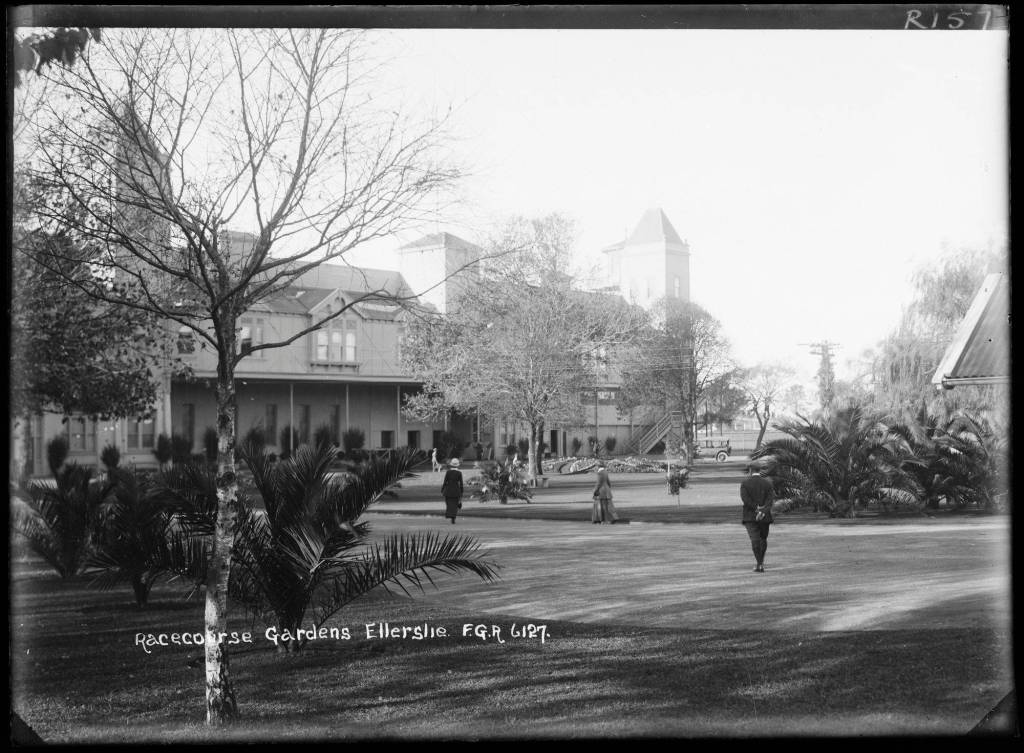
Source: ‘Racecourse Gardens Ellerslie, F G Radcliffe, Auckland Libraries Heritage Collections 35-R0157
This shows at least 8 Phoenix palms planted around an entrance to Ellerslie Stand, the main racecourse seating area. At an unknown date some of these palms were moved – I suspect some of the group to the right can now be found in front of a new large building next to the still existing Ellerslie Stand. This is what they looked like in late 2024:
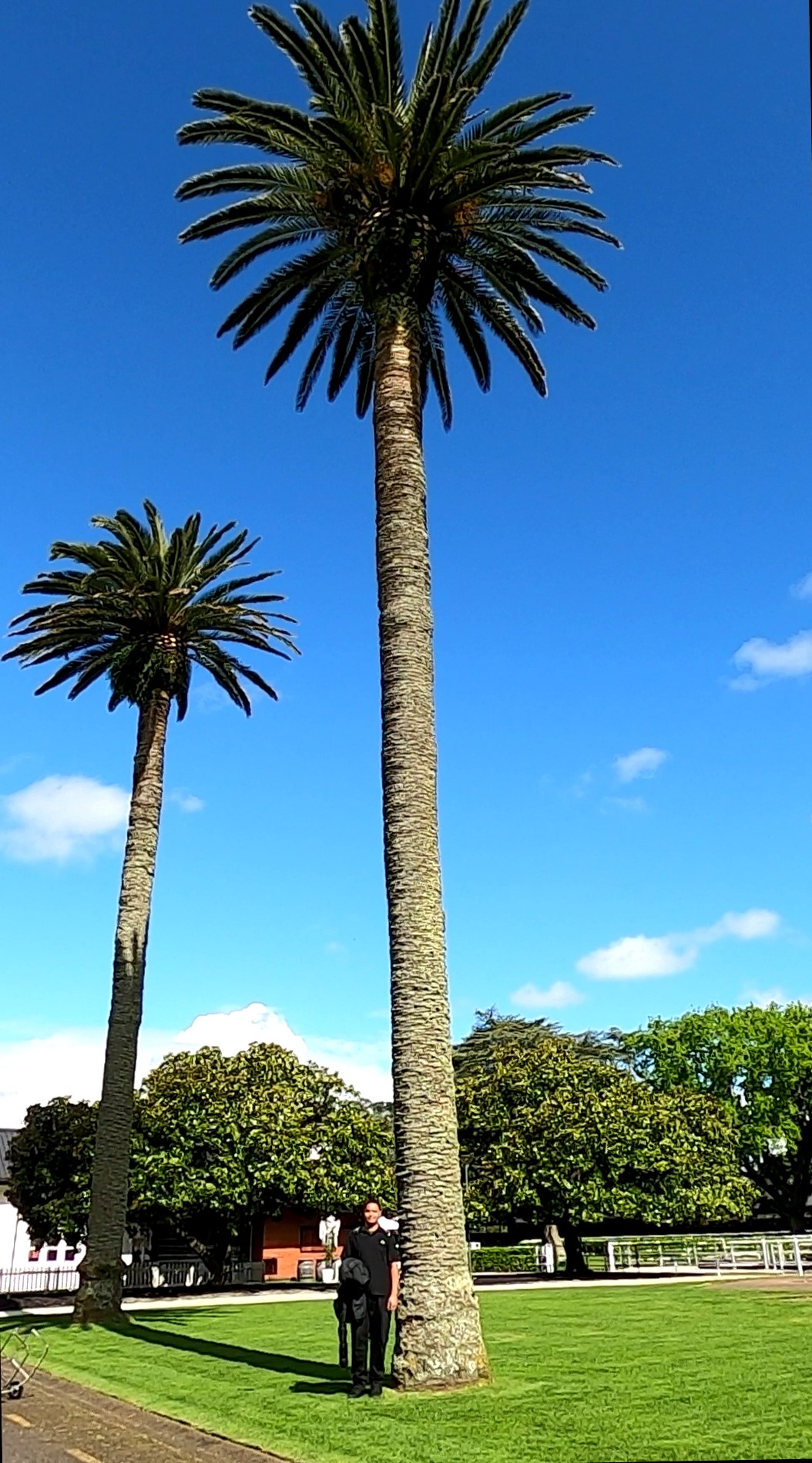
The raceourse worker gives a good indication of the size of this circa 115-year-old palm. A second photo taken from part-way up the building which they front also gives a good indication of their size:
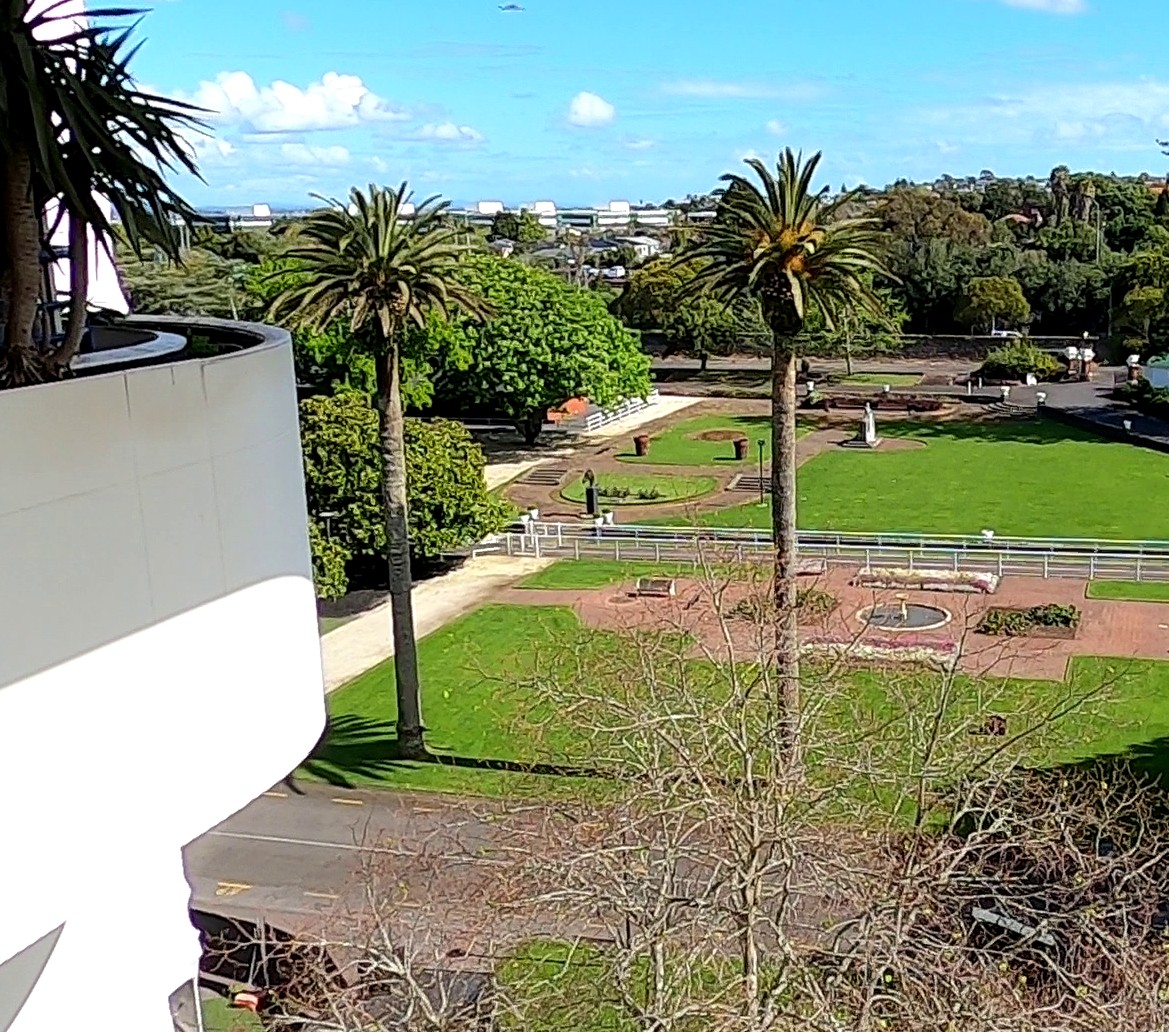
As these photos show, well-tended mature Phoenix palms are a significant sight in the landscape. Sixty-three such Phoenix palms at Ellerslie Racecourse are on the current (undated) Notable Trees Schedule of the Auckland Unitary Plan. Despite this recognition of value, currently in Auckland there is considerable debate about the merits of the palm, and this is increasingly spreading elsewhere. They have been called the ‘great white shark‘ of the palm family, or the palm ‘we love to hate’ (Steve Braunias, ‘The rise and fall of the phoenix palm‘). This negative reframing and the associated classification of the Phoenix palm as a ‘pest plant’ deserves a separate blog. In the meantime, following from visual examples like that above, I’m happy to call the palms ‘monumental’. This is consistent with how they have been treated further south than Auckland, including for example Whanganui.
Moving to Whanganui
Auckland was the early epicentre for Phoenix palm planting in New Zealand, but about 15 years after the Ellerslie palms were planted Whanganui picked up the trend. From about 1910 Whanganui had an active beautifying society and the riverside and other parks and garden areas came in for significant planting attention. Owing to the large size of the land sloping down to the lake, and the size of the lake itself, Rotokawau/Virginia Lake became an early focal point for the joint efforts of the Wanganui Beautifying Society and official parks and gardens staff. Currently in this prime site a variety of palms in groups can be seen, but probably the first were a row of Phoenix palms bordering the main road northwards out of Whanganui. From the early 1920s palm seeds were sourced in Australia by Mr James McGregor, a prominent member of the Wanganui Beautifying Society, and then were grown on by the city gardener, Mr Tucker (‘Wanganui Beautifying Society: Annual Report’, The Wanganui Chronicle, Wednesday March 9, 1921). The palms were planted out in mid-1924 in a row alongside a waterside walk, with three others planted a little distance away. Here are two photos from the mid-1950s which show the site where the palms were planted:
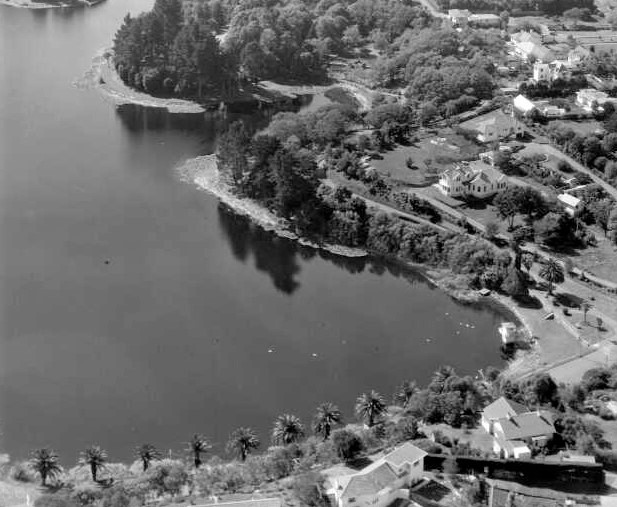
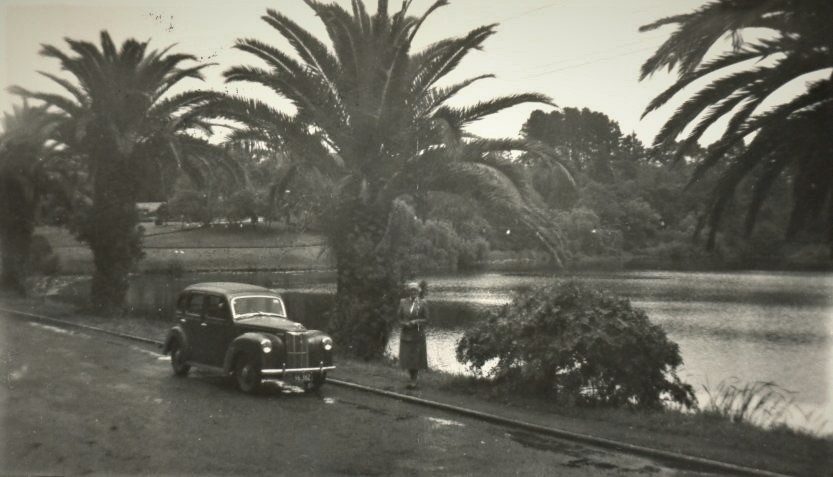
The second photo in particular shows how the row of Phoenix palms and its colonnade effect quickly became a local beauty spot where both tourists and locals would stop to take a photo. But there is a second cluster of Phoenix palms in the gardens; these are less well-known as they are on the Northern entrance to the park (Virginia Rd), which is a less-used suburban road. A double row of 12 phoenix palms forms part of another entrance to the gardens. Here is a photo taken in early January 2025:
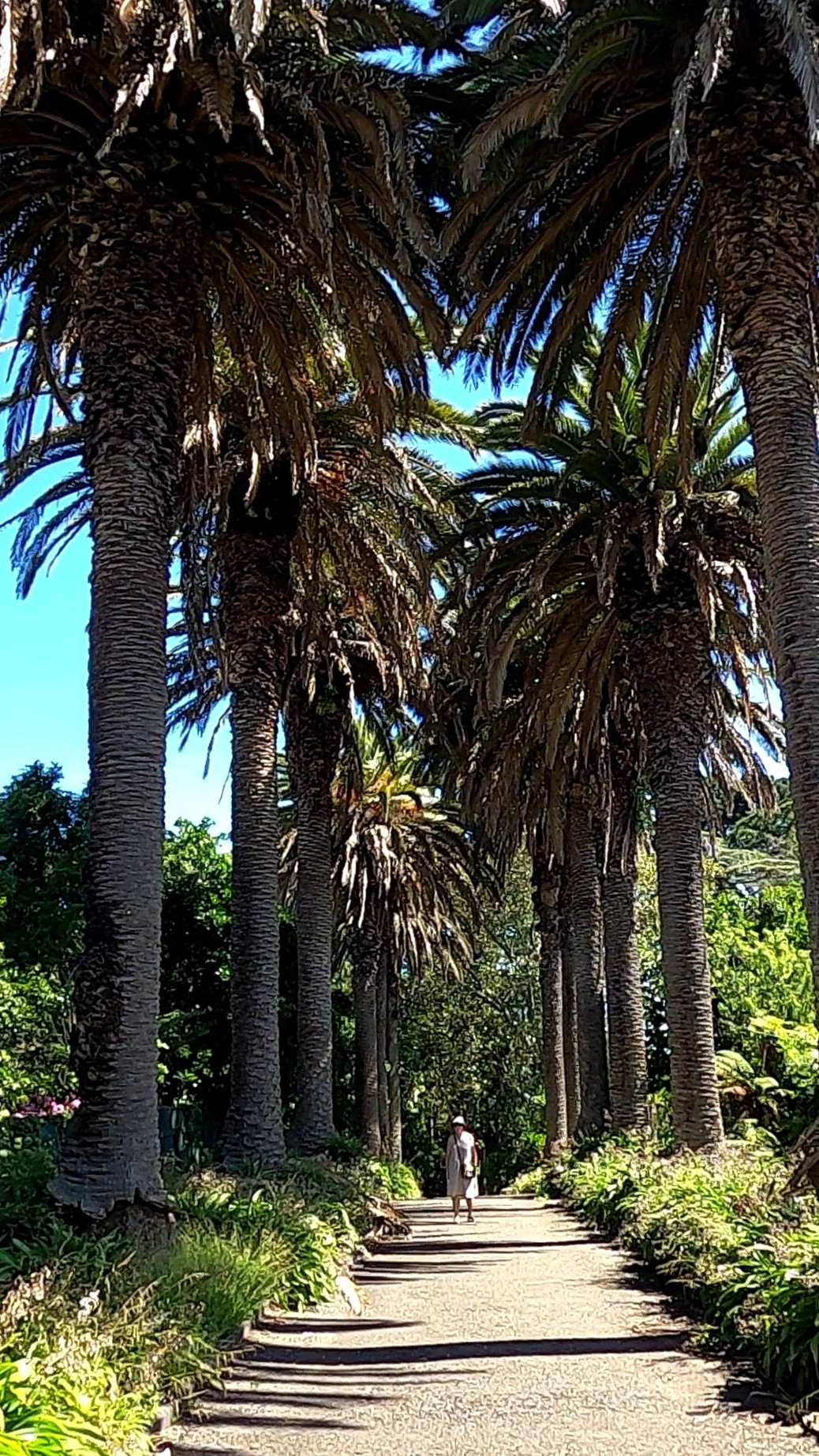
By their size these look to have also been planted about 1924. This type of double avenue clearly makes the most of the tall and patterned trunk of the palm, giving the classic colonnade effect.
More planting in the centre of Whanganui
Right in the centre of Whanganui, just over 2.4 kilometres from Rotokawau/Virginia Lake, is Pukenamu/Queen’s Park, where again a significant group planting of Phoenix palms was made. This time the palms were planted around buildings and not a lake, and while the whole area is known as Pukenamu/Queen’s Park, the buildings themselves are highly significant. Thus, an interesting interaction between buildings and palms has occurred over time, but in this case the outcome has been mutually beneficial. Perhaps the most notable building in the park is the Sarjeant Gallery, one of the most significant art galleries in a New Zealand regional city.
There are many types of trees planted in Pukenamu/Queen’s Park, but unmissable are the many Phoenix palms surrounding the Sarjeant Gallery. Here is a crop from a 1958 aerial photo which clearly shows this:
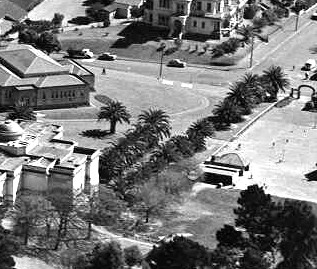
To the centre-left is the gallery, and to the right Queen’s Park School, with the row of Phoenix palms clearly visible. The school closed in 1972 being replaced by the Whanganui Library, but the palms remained and were given protected status. For many years the view from the library looking south up to the back of the Sarjeant Gallery looked like this:
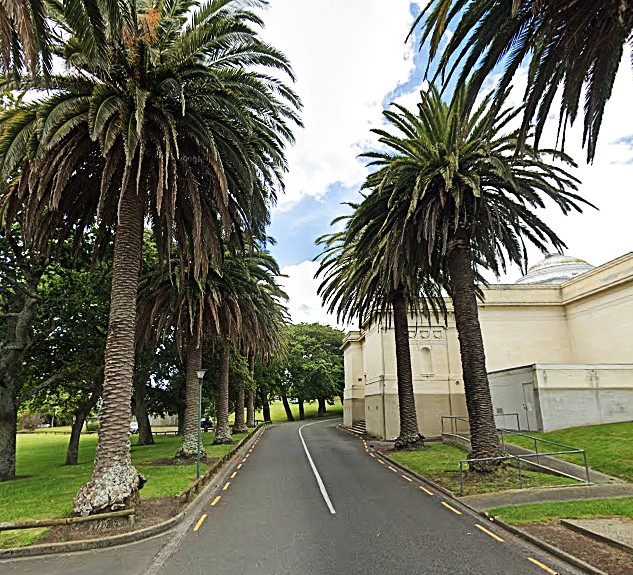
Source: Pukenamu Drive, Google Streetview, Nov. 2019
But by 2012 a significant plan for earthquake strengthening and the building of a new wing was put into action, with building work commencing in 2019. It was clear as early as 2012, from the architects Warren and Mahoney’s ‘flyover video‘, that the Phoenix palms were to be retained as a significant arboreal asset surrounding the gallery. At my first visit in October 2023 a great deal of work was in progress amongst the palms:
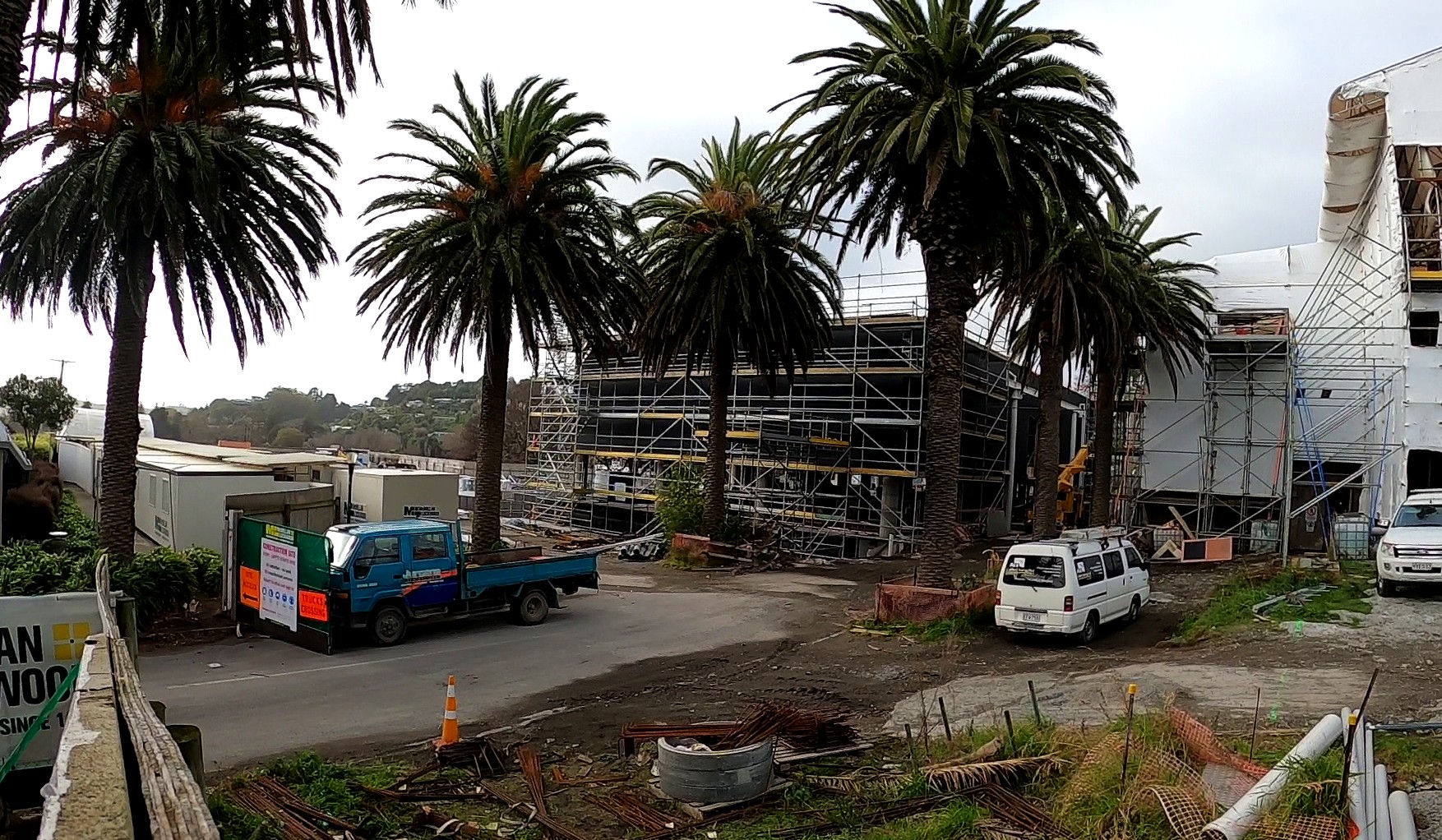
In this work four of the palms were removed. These were at the extension of the row of palms where the new wing can be seen surrounded by scaffolding. But as the architects’ flyover video, and the signage on the walls surrounding the construction zone showed, the intent was to keep the remaining palms as a significant feature of the whole site surrounding the gallery. I returned in early January 2025, just after the November 2024 re-opening, and a few photos show how well the work had integrated the palms and their colonnade effect:
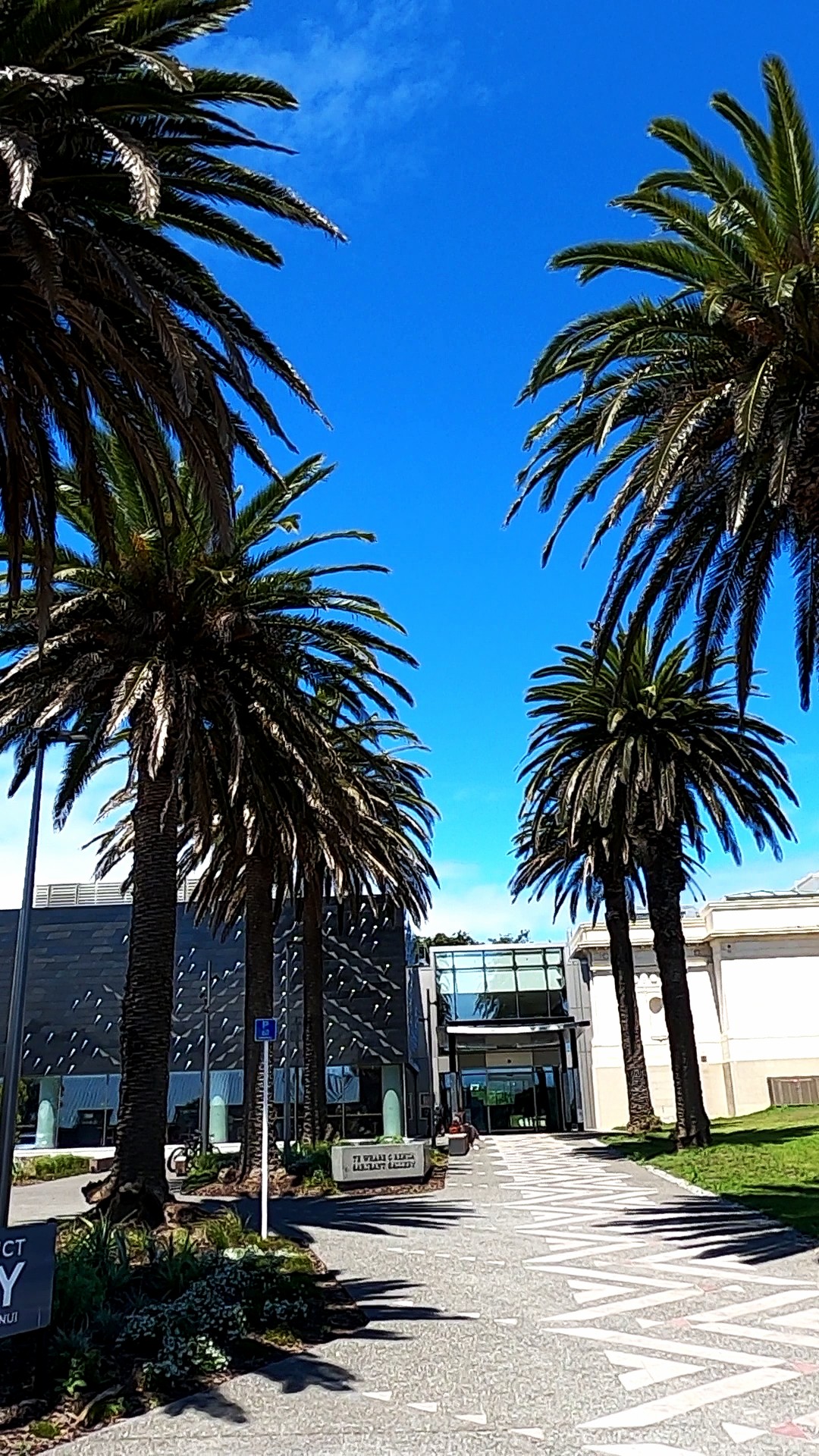
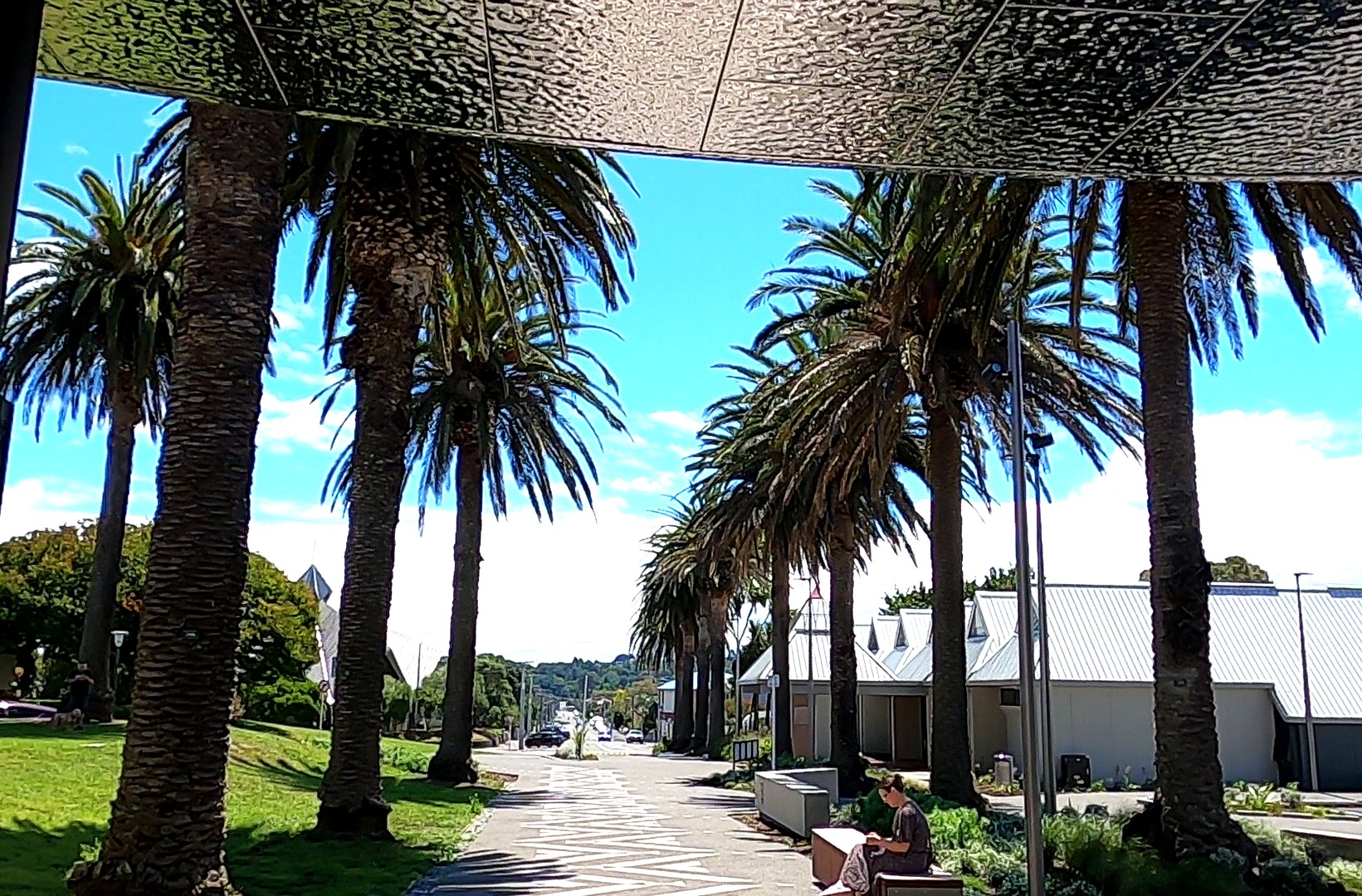
As can be seen, the colonnade effect works whether you are entering or exiting the Sarjeant Gallery. The entranceway to the new wing now makes the colonnade function as a proper directive sign, either in or out, whereas in the previous decades the double row effectively led behind the gallery, not making the most of the directional role of a colonnade. This suggests that the use of the palms in the initial planting at Pukenamu/Queen’s Park was relatively experimental, or perhaps a reflection of the palm’s popularity at the time. Either way, as they aged in place they became a highly usable landscape resource once the decision was made to extend the gallery into the area where four of them grew.
A Colonnade is Pleasing to the Eye
A row of columns in a building is both functional and pleasing to the eye. When the effect of large and tall closely-spaced columns is transferred to a garden landscape via trees or palms, the effect is mostly aesthetic. Given this it is not surprising that fine-art photographers have found groups of Phoenix palms to be good subject-matter. There are in fact two photographers who have used the palms at the Sarjeant Gallery for art photography. Unfortunately, due to copyright the photos cannot be reproduced here, but readers can view the works through the Sarjeant Gallery website. Strangely enough, both photographers have worked the four palms that were removed into their art photography. In the earliest Laurence Aberhart’s 1986 monochrome image shows the shadows of the palms on the Oamaru stone of the gallery building, with the actual fronds only appearing at the edges of the frame. In the second, as something of a homage to Aberhart, Andrew Ross moves further away from the building so now we see both the actual palms and their shadow on the gallery outside wall. His photo is titled ‘Back view, 5/8/2019‘, and in a somewhat ghostly fashion now constitutes one of the last records of the palms before they were removed for the construction of the new wing.
The art photographs of the Sarjeant palms seem to use shadows and symbolism more than the colonnade effect, but there is other art photography that we can view (thanks to H. Sameshina for permission to reproduce the photos). To finish, here are two photos taken by Haruhiko Sameshina of Phoenix palms at Winstone Park, Mount Roskill, Auckland:
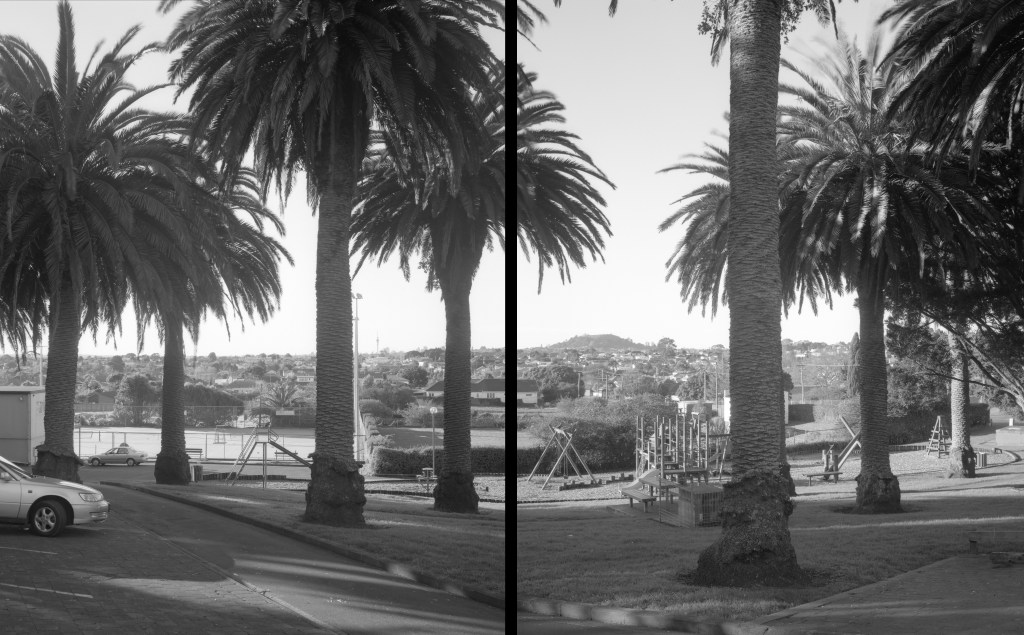
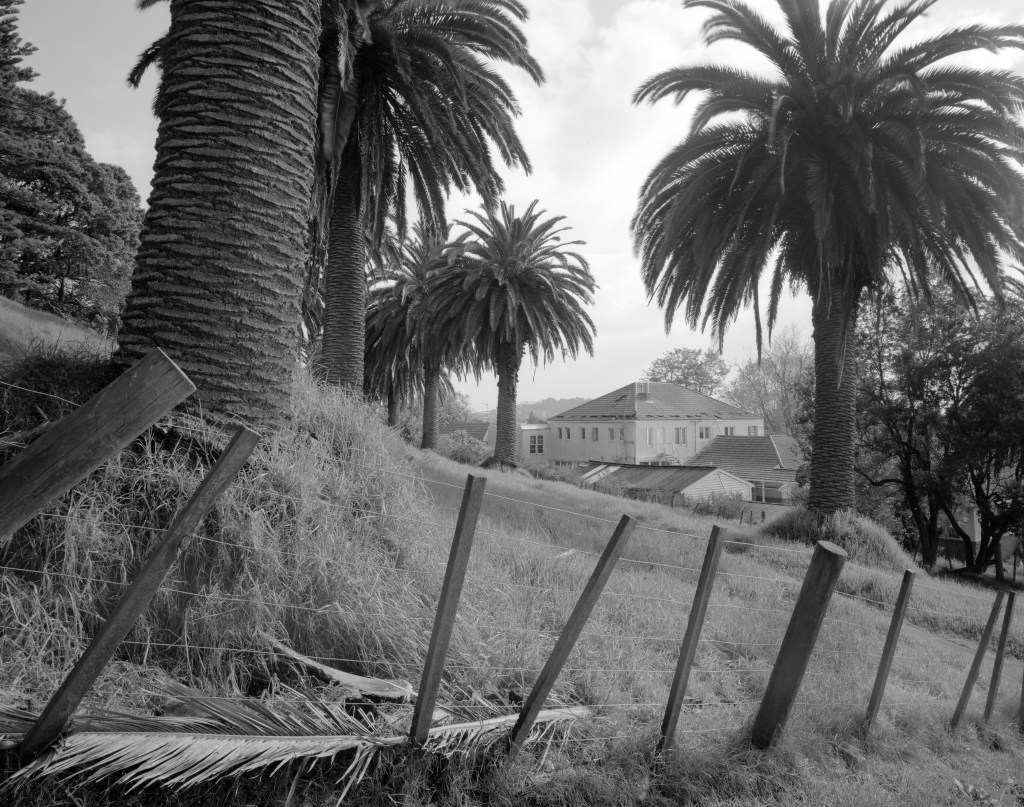
Source: Haruhiko Sameshina, top ‘Winstone Park view to Mount Eden‘; bottom ‘Winstone Park and rest home‘
The strong crown of the palms seems equally important to the aesthetic element of the photos, nonetheless the colonnade effect of the patterned trunks is central to the visual effect. Again, not long after these photos were taken some of these palms were removed, but this time it was due to the construction of the southern motorway in Auckland, not a new art gallery wing. The story of this removal deserves more attention in another blogpost, but we’ve hopefully seen enough here to understand how ‘monumental’ Phoenix palms can be. They can be noticeable as a solo specimen, but without doubt when planted in rows and double avenues the colonnade effect is very strong.

 The Local Arboretum: Noticeable trees and their stories
Leave a comment