
In the last post we got acquainted with the ‘colonnade effect’ of rows or double avenues of Phoenix palms. I quickly moved to look at a case study of the redevelopment of Whanganui’s Sarjeant Gallery, and glossed over the history of the Phoenix palm in New Zealand, partly because I’ve already written several blogs and an article covering that topic. In retrospect I realised that given the depth of my resources on the spread of the palm in New Zealand towns and cities, it would be easy enough to take an image-dominant approach to showing just how significant the palm is in New Zealand. This is the rationale for this post. To keep this manageable I’ll restrict the examples to North Island rows or double avenues, and then only sites that I have actually visited. I’ll restrict the images to one or two photos of each site, providing only minimal textual description.
Given Auckland was the epicentre for the initial planting of the palm, quite a few examples will come from Auckland, but I won’t discuss those already covered in my blog on the significant Phoenix palms of central Auckland. We will move through the examples from north to south, with Phoenix palms in the South Island having to wait for a future post.
1.Ellerslie Racecourse, Auckland
We did see two very tall palms near the main Ellerslie Racecourse grandstand in the last post, however, here is a 2024 view of half of the famed double avenue which wasn’t presented:

Source: author, November 2024
These palms were planted in 1913, there being a total of 63 in the Ellerslie Racecourse gardens. There have been a few removals, presumably because of ill-health or death, but in general the palms are in very good condition and should be good for at least another one hundred years or so.
2. Auckland Domain
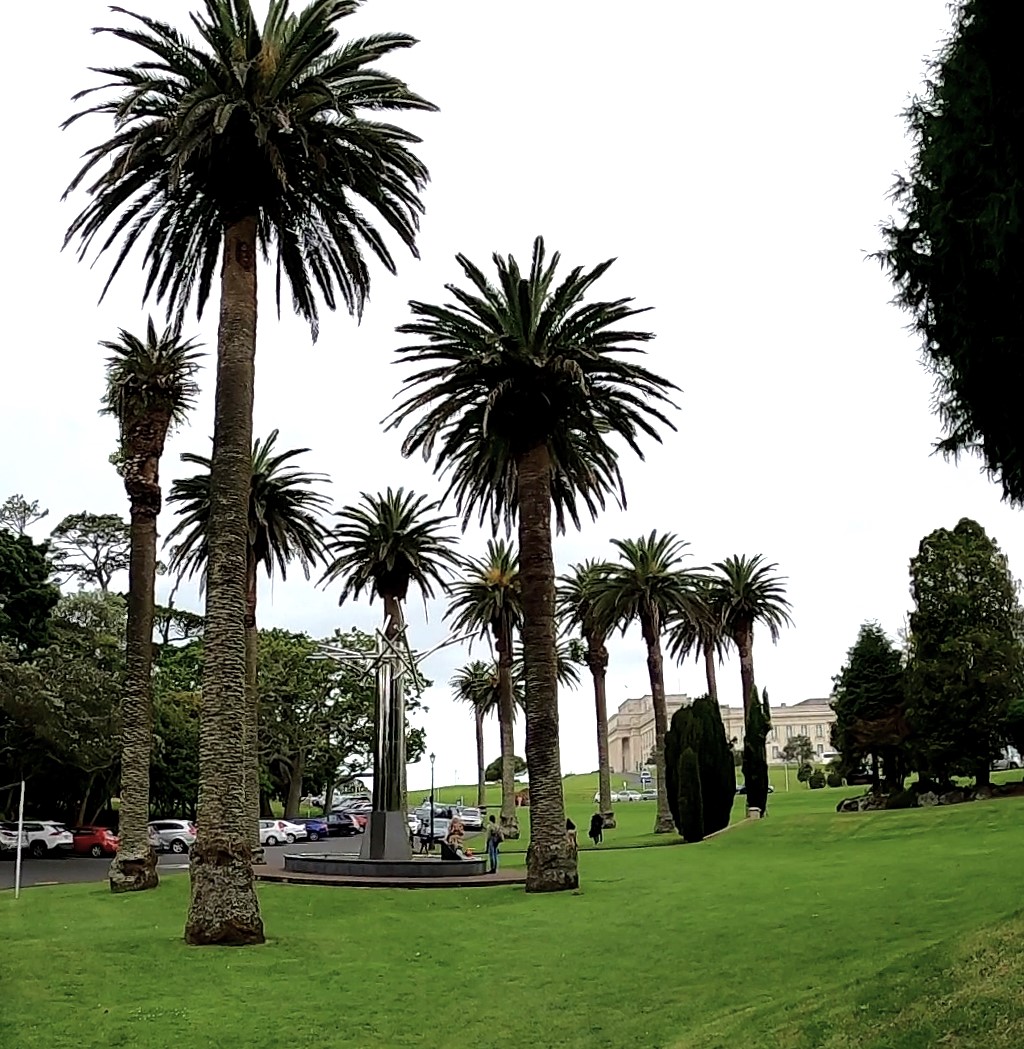
Source: Author, October 2023
This cluster of 19 Phoenix palms planted circa 1930 is alongside the Winter Gardens section of the Auckland Domain, which also houses the Auckland War Memorial Museum (it can be seen on top of the hill in the photo). The original plan was for them to be planted in a double avenue in front of the War Memorial Museum, and the Auckland City Council actually had the palms growing from 1926. But during mid-1929 a public controversy erupted over the planting plans, with some parties still believing the palms would be well suited to the architecture of the museum, whereas others favoured the planting of native trees (pohutukawa and puriri). As can be seen, the palms were not planted in front of the museum, but to the west by the Winter Gardens.
3. Kohimarama, Auckland

Source: Author, November, 2024
There are a lot of Phoenix palms around Auckland’s seaside suburbs including this group of eight (plus a few seedlings), planted circa 1930.
4. Hobsonville, Auckland
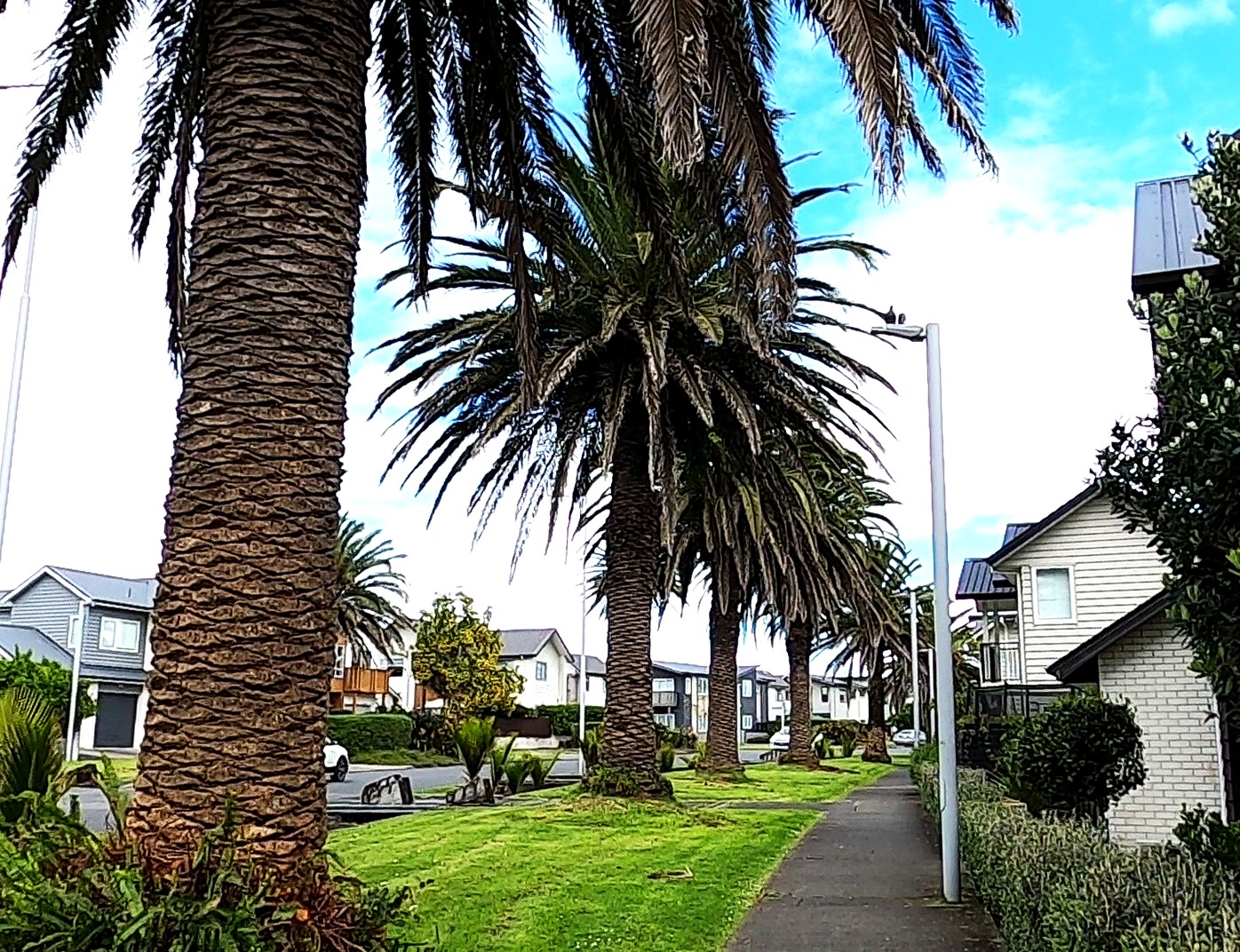

Source: Author, November 2024
Hobsonville was originally a New Zealand airforce seaplane base, and Phoenix palms were planted amongst the air corps houses circa 1950. The original houses have now given way to higher density housing, but the Phoenix palms were retained, including in the border to the air corps memorial seen in the bottom photo. There are just over 60 Phoenix palms in total in the Hobsonville site.
5. Waitara Cemetery, Taranaki

Source: author, January 2025
Clusters of Phoenix palms can be found in cemeteries, as in this example of 11 in Waitara cemetery. They are on the Taranaki District Council register of notable trees, but despite this no information is available on their planting date or reason for inclusion in the cemetery. By their size circa 1940 looks a reasonable estimate of planting date.
6. Phoenix Estate Vineyard, Hawke’s Bay
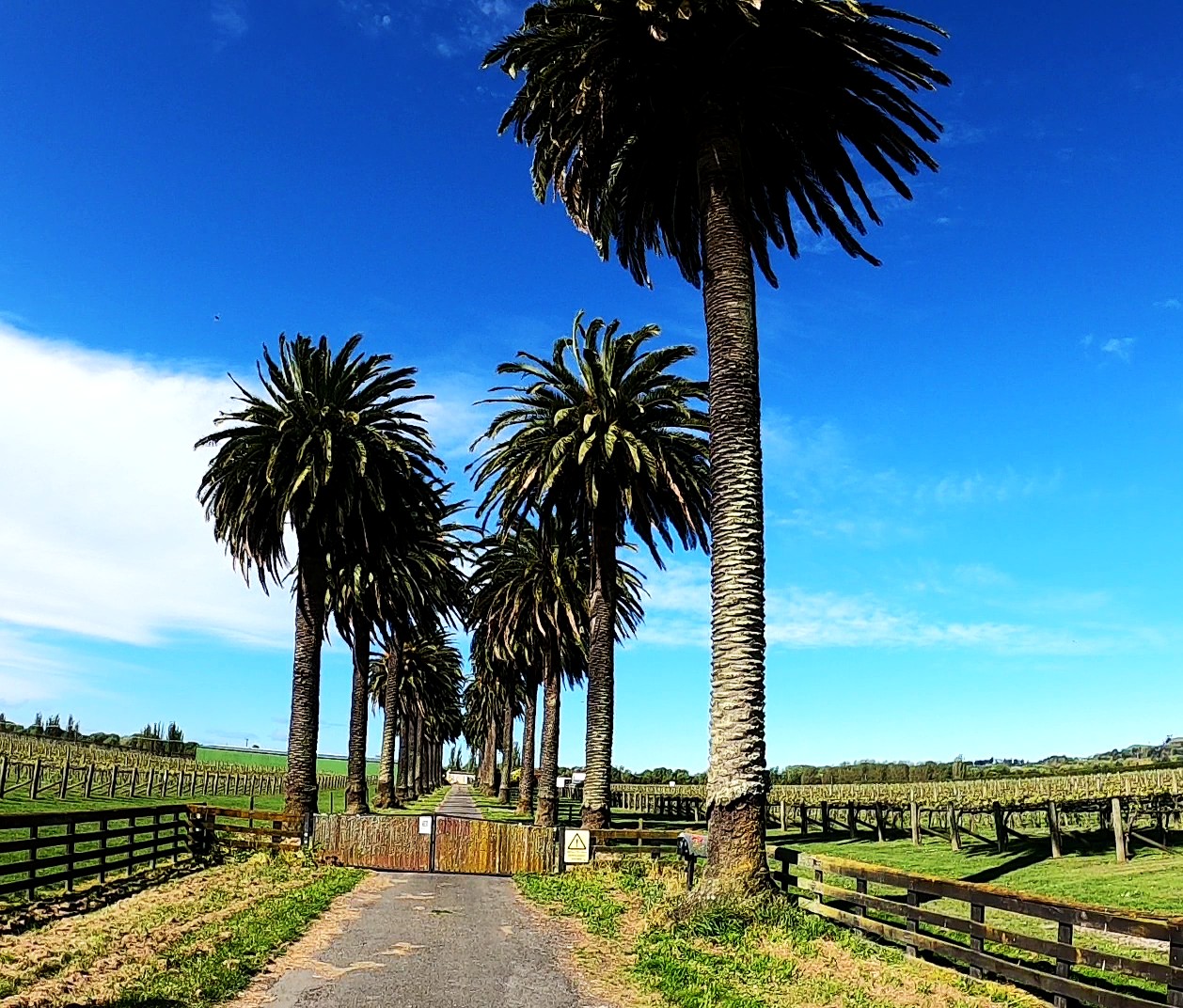
Source: Author, October 2023
A double avenue entry to a vineyard, where visitors walking up are warned ‘beware of falling fronds’.
7. Seaside entrance to Napier Boys’ High School
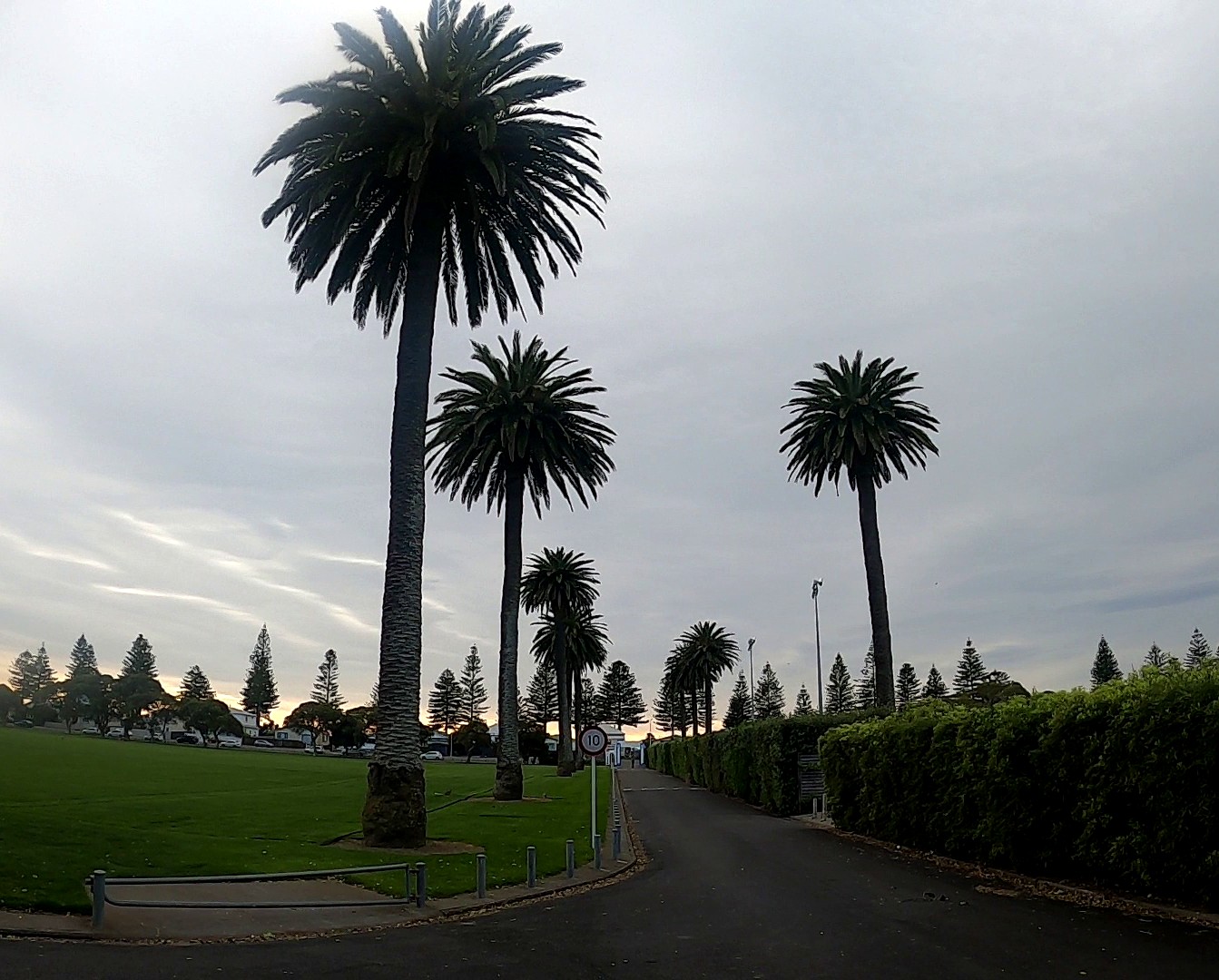
Source: Author, October 2023
Approximately 80 years old, this cluster lines one entrance to the school, framed in the distance by the seaside avenue of Norfolk Island Pines.
8. Memorial Square, Napier
Source, Author, October 2023
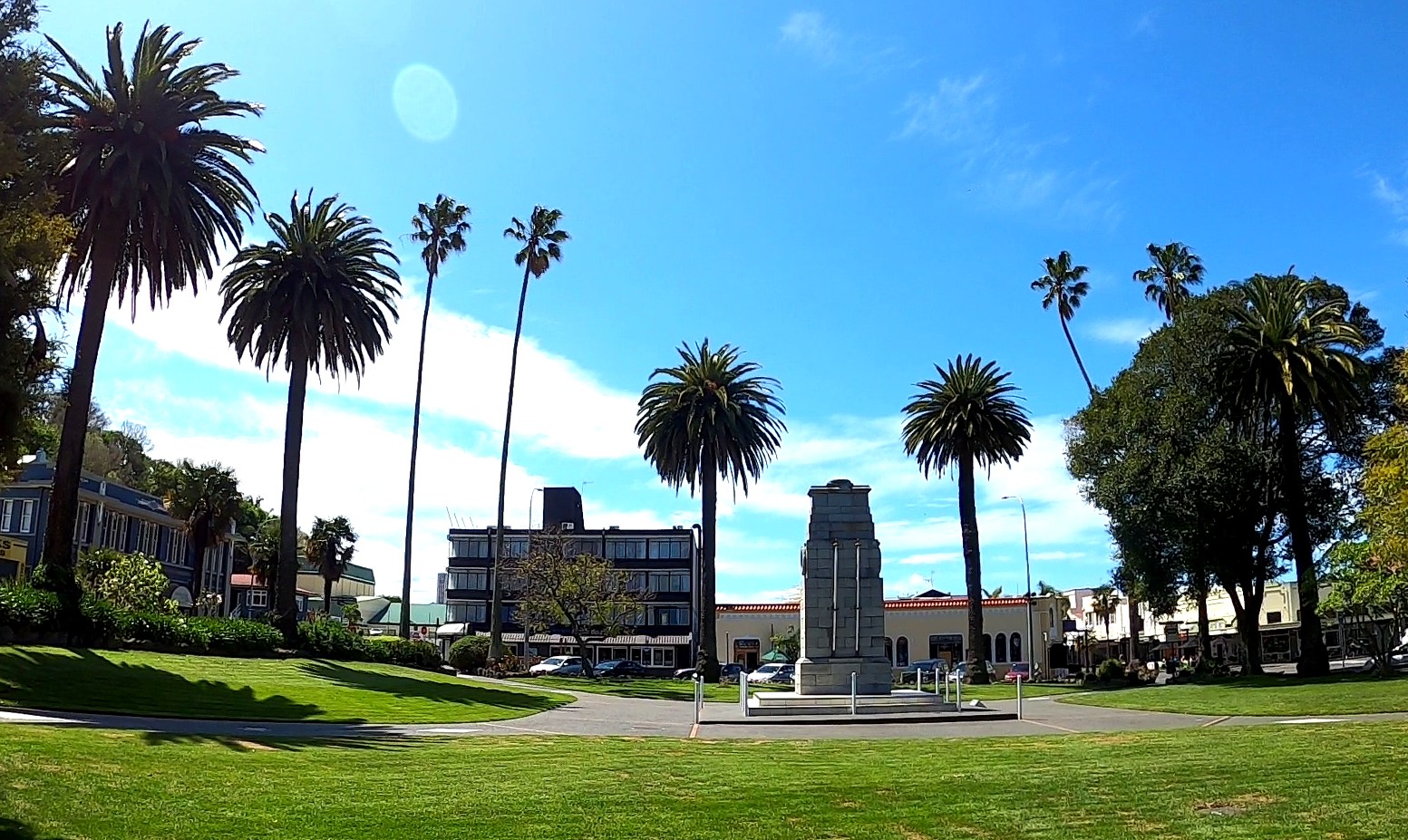
Bordering Napier’s World War One memorial, this cluster of Phoenix palms, complemented by Washingtonia robusta, were planted circa 1925. The palms are also planted in Clive Square, immediately adjacent, and both groups survived a period after the Napier earthquake when both squares were converted to a temporary shopping precinct called ‘Tin town’ (see NZTR entry).
9.Kai Iwi farmhouse

On the road to Kai Iwi beach about 20 minutes out of Whanganui is this double avenue of 19 palms leading up to a large farm homestead. The appearance of the avenue in standard farm pastures is striking to say the least.
10.The Victoria Esplanade Gardens, Palmerston North

Source: Author, February, 2023
Planted in 1934 these 36 palms are a fine example of a double avenue, with the subtle curve adding to the pleasing effect. Featured on early postcards, they became a key attraction of the gardens.
11. Libertyland, Palmerston North

Source: Bayleys Real Estate, 2009
Source: Author, July 2023
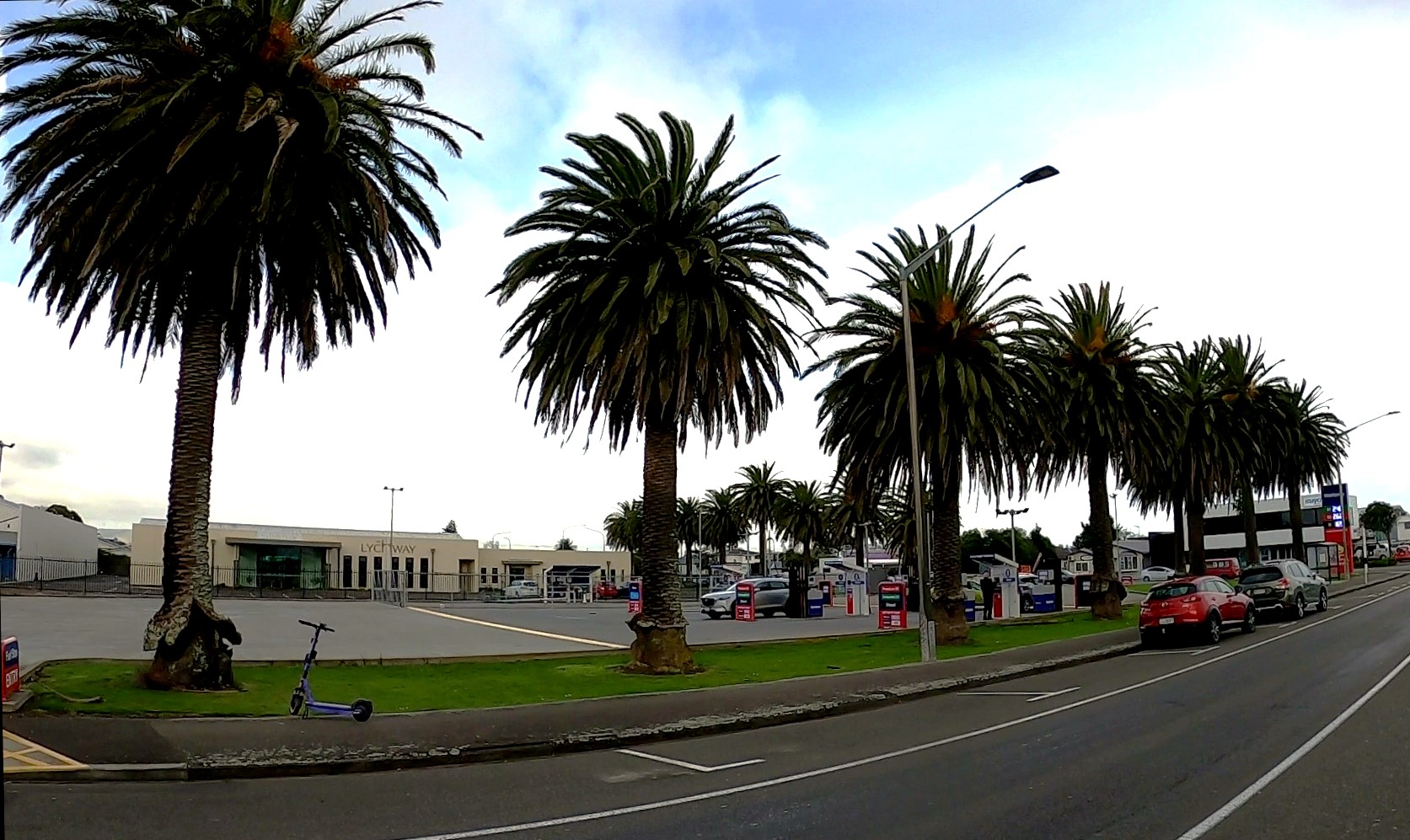
Originally planted circa 1955 in a border around the art deco Libertyland clothing factory, when the building was demolished the palms were retained and they now border a funeral home and a petrol station.
12. Pahiatua main road

Source: Author, February 2023
The small Wairarapa town of Pahiatua found itself with ample road verge on its main street and circa 1960 planted a total of 110 Phoenix palms in three sections across approximately three kilometres. The main section is a double avenue but the northern section, photographed above, included a row of adjacent oaks. If both grow neither will have sufficient space, consequently there has been an ongoing debate about whether the tree or the palm should ‘get the chop’ (see NZTR entry).
13. Levin Domain, Levin
Source: Author, June 2023.
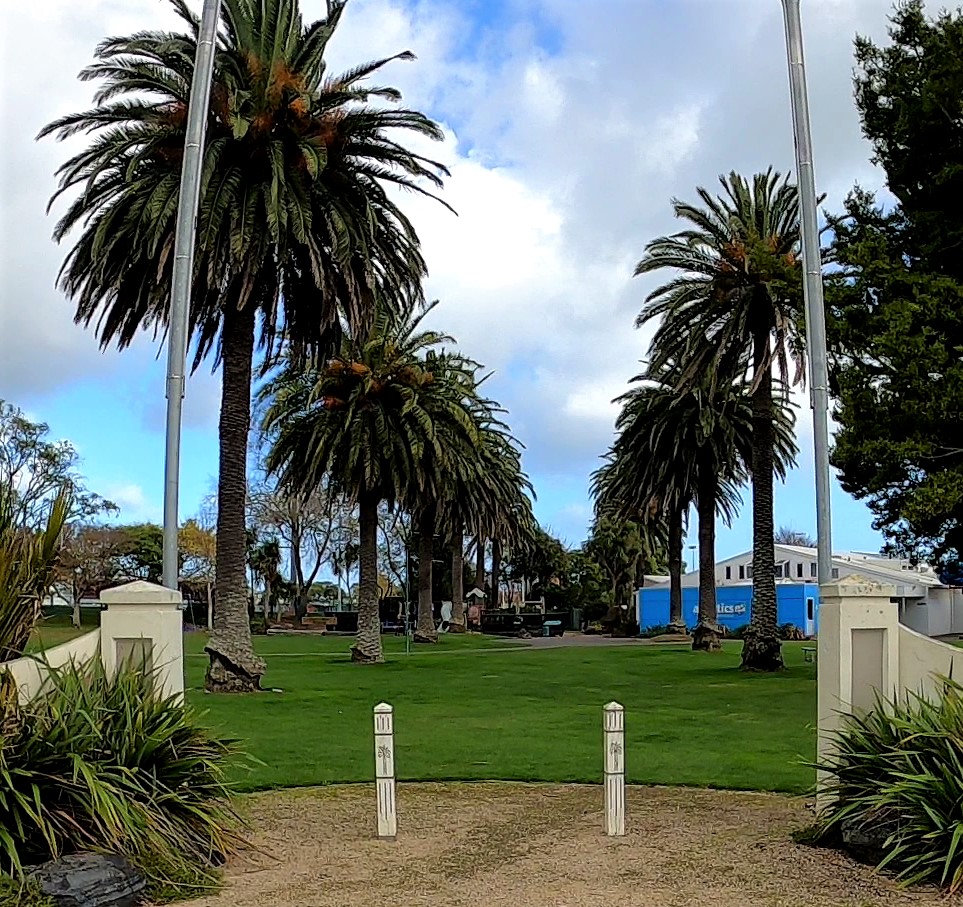
Planted in 1947 these 11 palms perhaps show the awareness of the avenues of palms in Palmerston North and a desire for Levin to follow its larger northern city.
14. Hutt Hospital

Source: Author, March 2023
Wellington was slow to the party re group Phoenix palm planting, but there are a few good examples including this row of eight at the entrance to Hutt Hospital. They were planted on Arbor Day, August 14, 1946. As can be seen they are notable for their uniform height.
The multitude
Unlike macrocarpas, Phoenix palms do not show massive variation in form – as they get older and taller you pretty much know what you are in for. But once in the order of ten metres tall they do offer a monumental arboreal feature. There are many more images that could be shown, but we have seen plenty of examples of the take-up of the cluster planting of the palm. The rows and double avenues are found in large parks and gardens, cemeteries, memorial squares, main road verges, seaside borders, farmhouse, school, hospital, and vineyard entrances, and so on. They could be called the palm in the background to our lives. But as I’ve touched on previously, there is a growing move to classify them as ‘pest plants’. That is a topic definitely worth returning to, especially as we’ve seen here some of the splendour the palms can present.

 The Local Arboretum: Noticeable trees and their stories
Leave a comment