In the previous post we saw several examples of rows and double avenues of Phoenix palms. One resource that helped me in putting together the examples was aerial photographs. Older photos can be sourced from Retrolens or DigitalNZ websites, and of course Google Maps is very useful for recent aerial photography. The site described in this current post was discovered fortuitously while using Google Maps to search for another tree. I had been searching for giant redwoods in Upper Hutt and while moving about in the map view noted this:
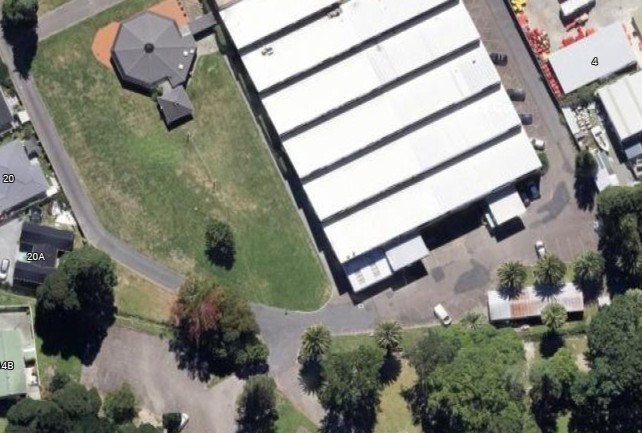
The big tree to the bottom left of the frame is the redwood I was interested in, but directly across to the right I also noticed what looked like a group of Phoenix palms. They could have been another type of palm, but by this time I had built up significant experience at tracking down Phoenix palms via Google Map aerial views. To remove any doubt it was simply a matter of switching to Google Street View to confirm the identification.
As I panned right I found more of the palms and then switched to Street View, as seen here:


Source: Google Maps, Google Street view, November 2022
There was now no doubt about the correctness of the Phoenix palm identification. More importantly, there was clearly a large number of them in this site, something I had previously been unaware of despite having tracked down plantings of the palm in the Wellington region for some time. That work had suggested the largest clusters were, in descending order, 12 in Wainuiomata (Queen St Reserve), 12 in Queen Elizabeth Park (Paekakariki end), 10 in Kura Park, Titahi Bay, and 8 at the entrance to Hutt Hospital.
Given the number of palms appearing in other clusters about New Zealand, these numbers were relatively low. For some unknown reason the planting dates in the Wellington region were also significantly later than the rest of the North Island. For both these reasons the chance discovery of this new larger cluster in Wallaceville was exciting. A little bit of research and a site visit confirmed there were 20 Phoenix palms in the site seen above, and these were planted about 1958. This makes them the largest cluster of the palm in the Wellington region (unless there is another larger cluster that I’m unaware of). This information may not excite everyone, but other aspects of this cluster’s story may prove interesting.
House and Garden
The Upper Hutt suburb of Wallaceville is probably best known as the site of the Wallaceveille Animal Research Centre which operated from 1905 to 2007. Not far from that site, part of which is still preserved as an historic site, is the road over the hill to Whitemans Valley, and at the beginning of that road in the early 1900s was a large block of land. Because of its north-facing aspect it offered a favourable microclimate and a good building site. Around 1929 the architect Charlesworth designed a large house for James Smith (information from Lynly Yates). Tree-planting must have occurred from this time as there are very large trees in the grounds surrounding the house. A 1984 photo shows the design and scale of the house, and some of the gardens surrounding it:

About 1946 the house was bought by Mr C.H.R. (Dick) Jepsen, a local businessman who was the founder of ‘Atlas Shovels’. Jepsen clearly planted more trees in the then still-large grounds (he was a member of the local Horticultural Society). Four Phoenix palms were planted close to the house possibly as early as 1950, but the earliest available aerial photo from Retrolens showing the row of palms is from 1966. The resolution of the image is not sufficiently good to reproduce here, but using magnification a double row of Phoenix palms can clearly be seen at what must have been the property entrance. The size of the palms in the photo would suggest circa 1958 as a reasonable estimate of planting date. At 68 years old, this is a long way off being amongst the oldest Phoenix palms in Wellington, but as noted it is the largest number planted, and this makes the Wallaceville site significant. Unfortunately, details and photos of what subsequently happened to this palm-lined entrance are scant, but the following photo gives a good indication of what happened:
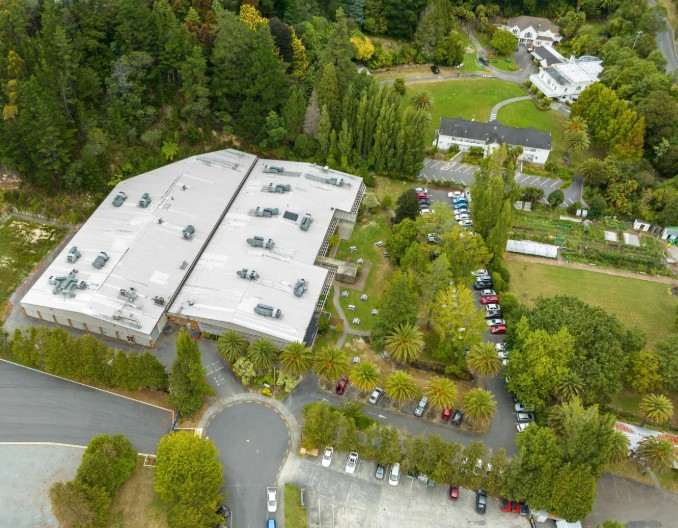
Source: Bayleys Real Estate, 2024
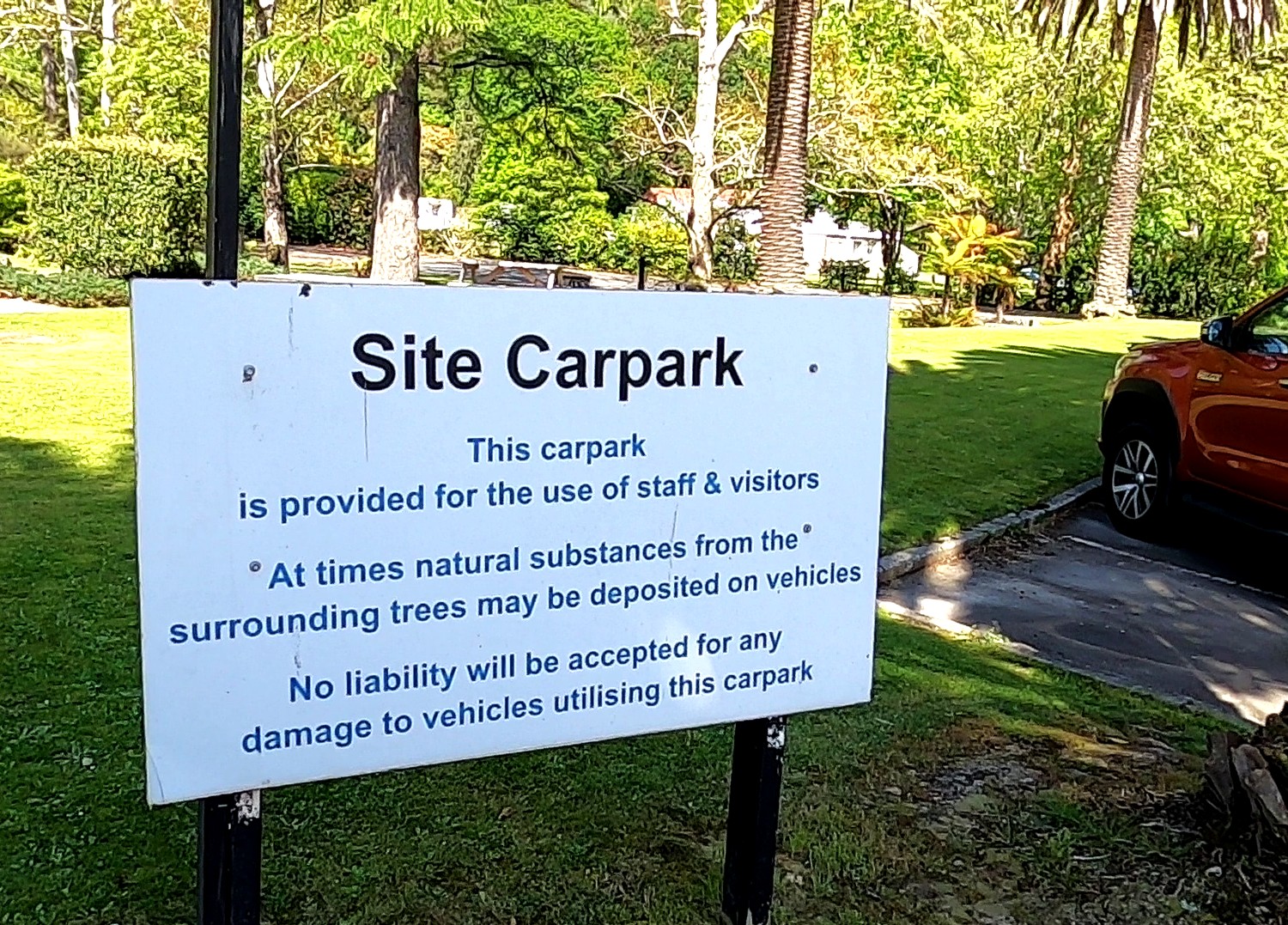
At the top right of the photo we can see Wallaceville House, plus some new buildings, but dominating the photo is the large building to the left, which now changes the harmony of the previous entranceway provided by the row of Phoenix palms. Inland Revenue leased this large building in 2014 and have renewed their lease through to 2032. The well maintained and planted grounds around this large building also include a parking lot. Contrary to the lyrics of Joni Mitchell’s famous song ‘Big Yellow Taxi’, they didn’t take away the trees and put them in a tree museum, but they did offer due warning to any staff parking under the trees and palms:
Some further photos are useful to show that while interrupted by the newer buildings and carparks that reduced the grounds of Wallaceville House, the palms are still present and well-maintained.
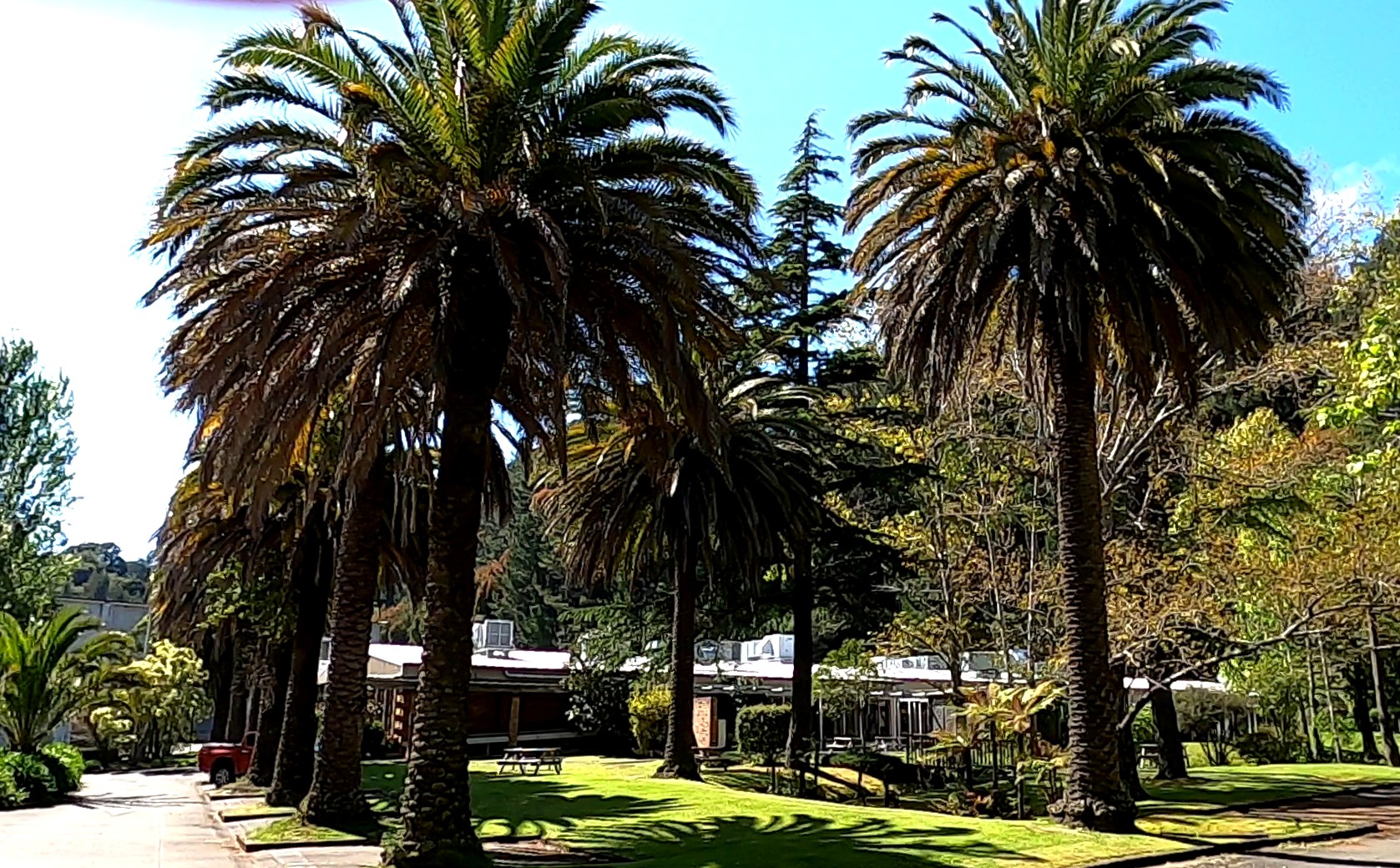
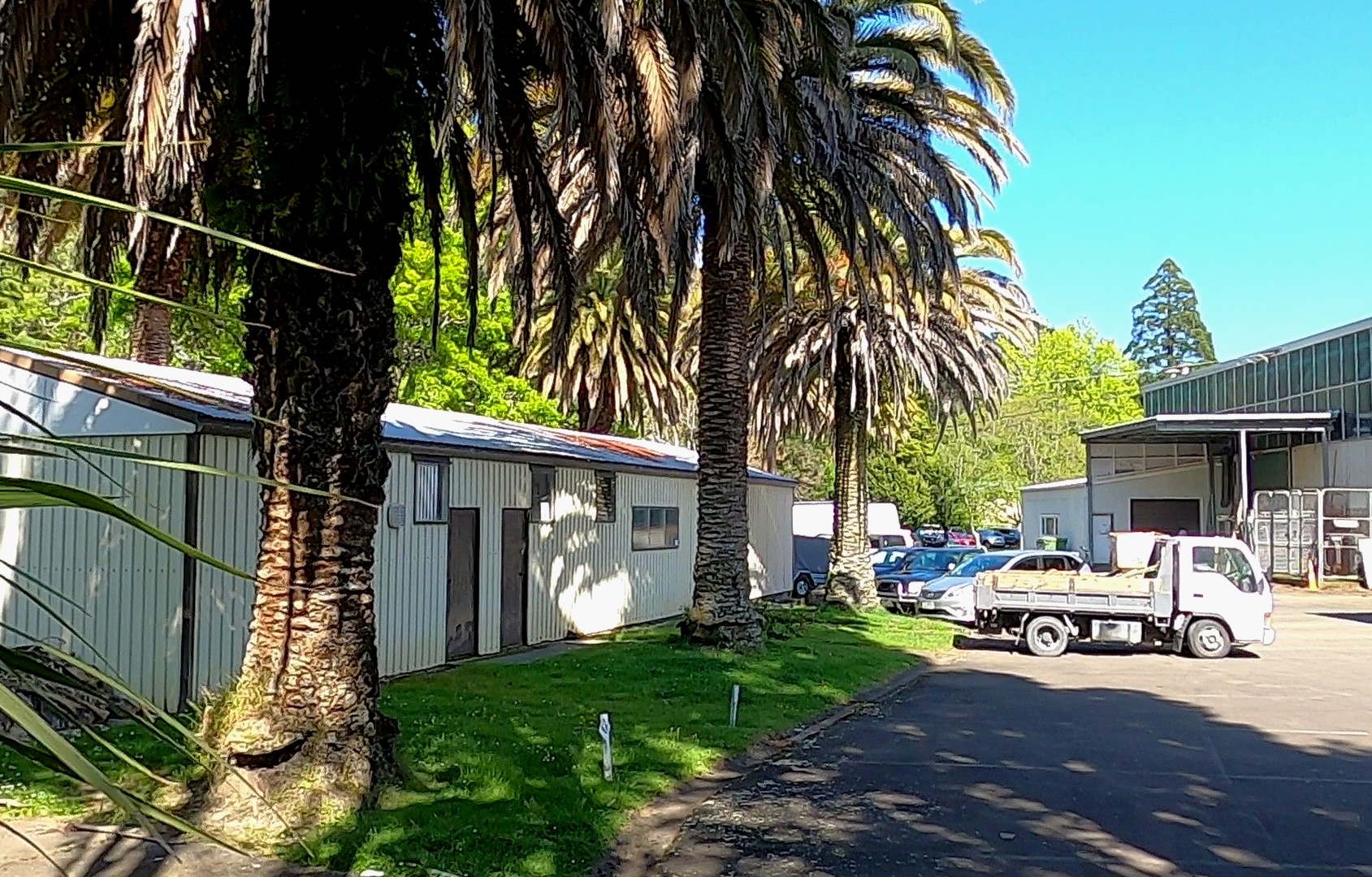
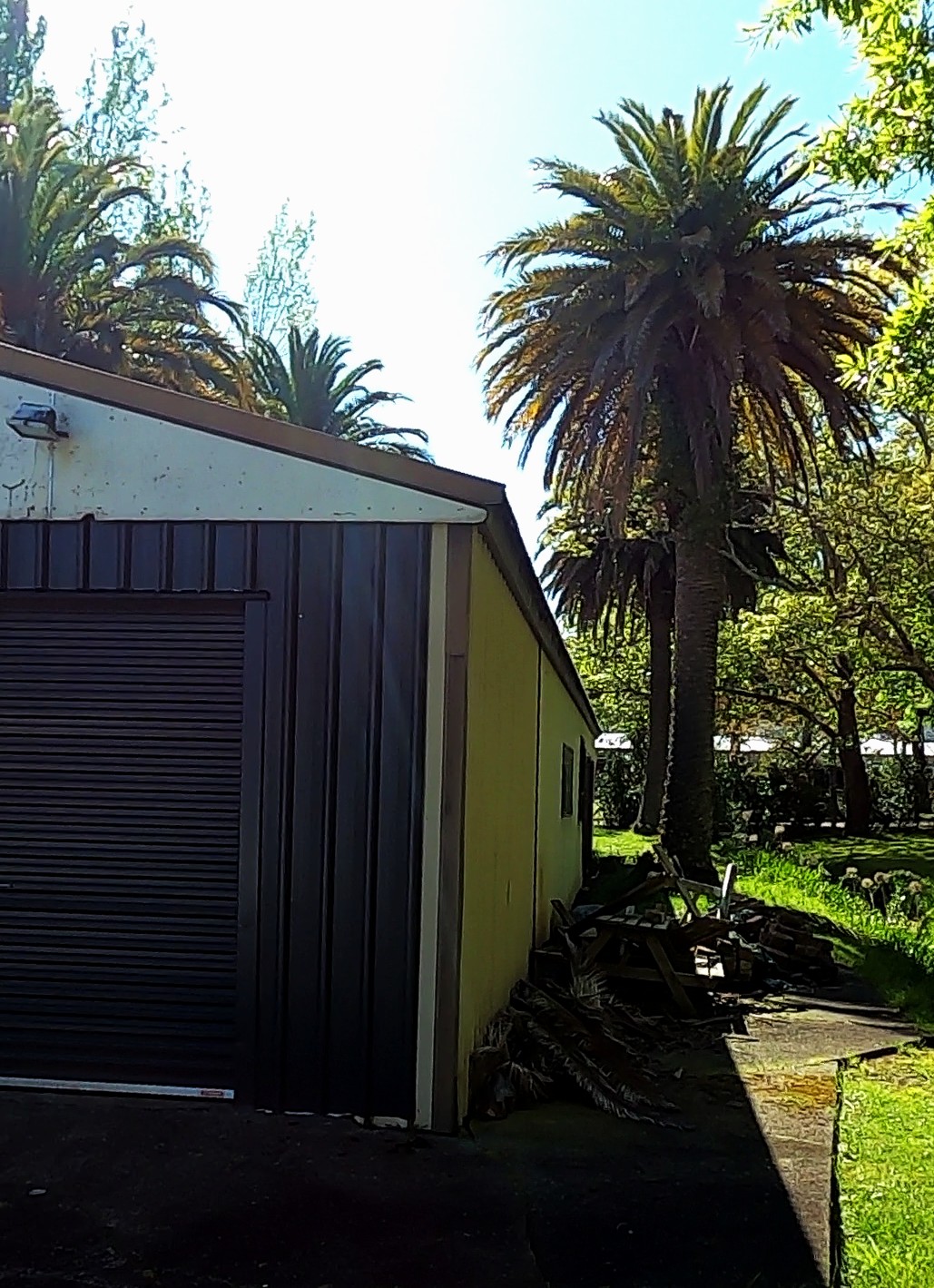
In contrast to the example of the developments around the Sarjeant Art Gallery in Whanganui (see previous post), the insertion of buildings clearly has dissipated the colonnade effect of the row of palms. The bottom photo also shows that the side of a large garage is a good place to pile palm fronds.
To be blunt, it’s a bit of a mish-mash. Some of the palms look like a well-intended row, but others look like an afterthought, no longer connecting to the other palms. Nevertheless, at least the palms have been retained, still offering a pleasing sight amongst the grounds. Coming in at 20 in the Inland Revenue carpark area, and 4 tall specimens around the upper house and lodge (now a wedding reception venue), this is the largest planting of Phoenix palms in the Wellington region.
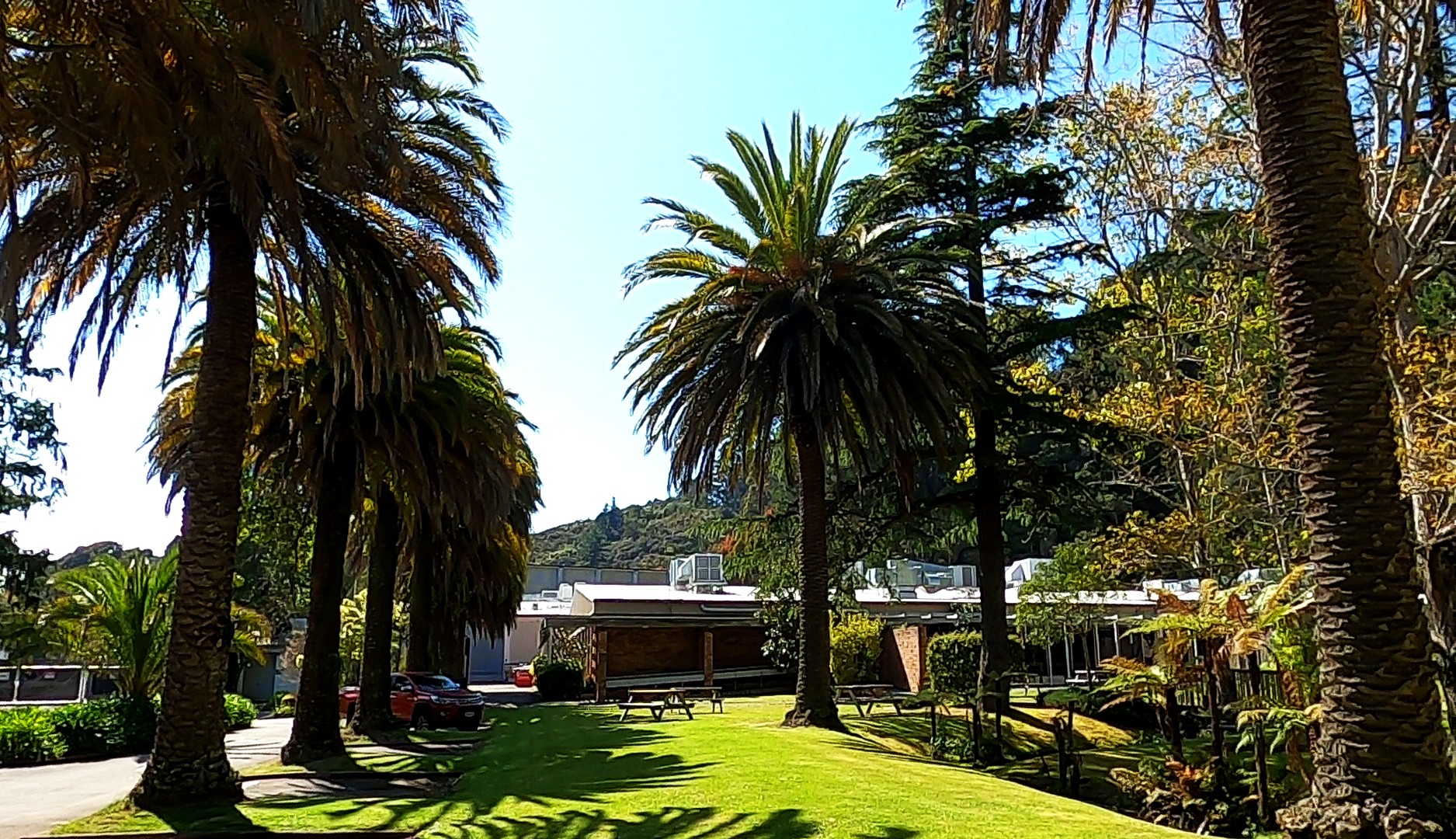
As the Inland Revenue workers sit at the outside tables having lunch, they’ll probably not know this about the palms. Let’s hope this carpark with lawn, seats, and palms will remain like this for some time. As I’ll move onto in other posts, there is no guarantee though, as Phoenix palms currently live in a precarious world.
Acknowledgements:
Thanks to Lynly Yates and Reid Perkins (Upper Hutt Libraries) for useful information. Also thanks to Michael Brown for joining me on the bike ride around Upper Hutt in October 2024.

 The Local Arboretum: Noticeable trees and their stories
Leave a comment