As readers of previous posts will know, I’ve grown fond of macrocarpas in all the shapes and sizes they manifest in the New Zealand landscape. This short post reports on another one I recently chanced upon. I had walked up to the historic St Alban’s Church in Pauahatanui which sits atop a small hill, and when I was towards the back of the grounds I glanced out to the surrounding farm paddocks. My eye was caught by the following view:
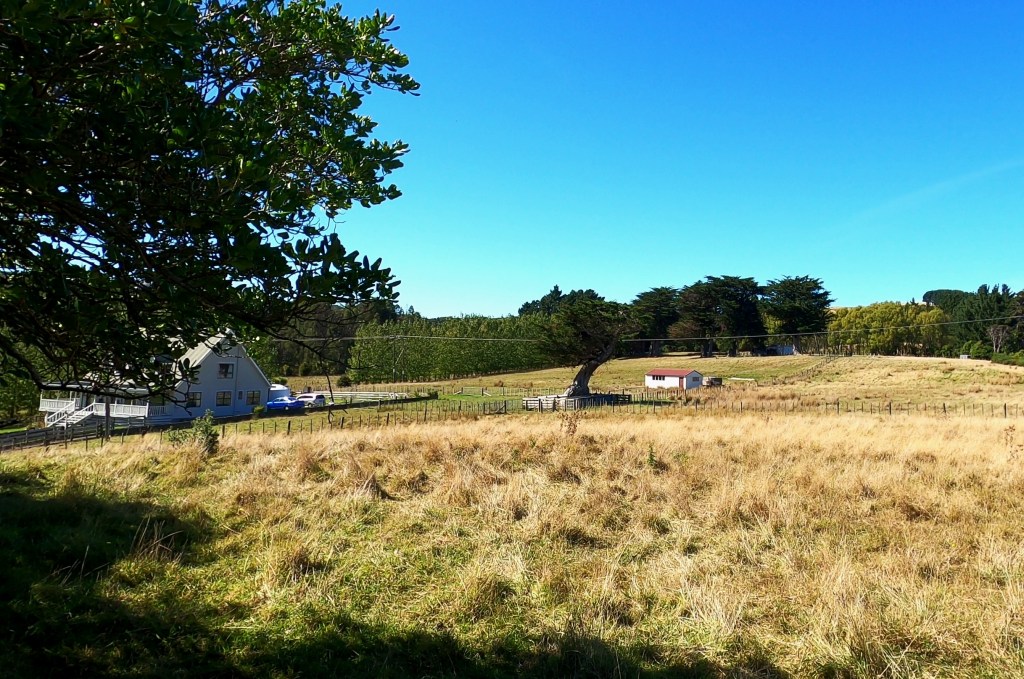
You can see typical paddocks with a shelter belt of macrocarpas in the background, as well as a large house to the left. But there in the middle of the paddock is an interesting solo mac. The farm paddocks are not part of the church-grounds, and the paddock with the solo tree was adjacent to the house, so I didn’t feel I could jump the fence and proceed through the farm for a closer look at the tree. As I was just about to give up on getting closer. a woman came out of the house and walked into the front garden. I bucked up my courage, clambered over the fence and got close enough to yell out a greeting. She heard and turned towards me, so I politely asked if I could photograph the tree, briefly explaining that even from the distance where I was it looked to be a stunning specimen. She agreed about the tree and gave me the go ahead, so I walked the 50 metres to the macrocarpa and started taking photographs. As I drew nearer, interesting features of the tree became clear:
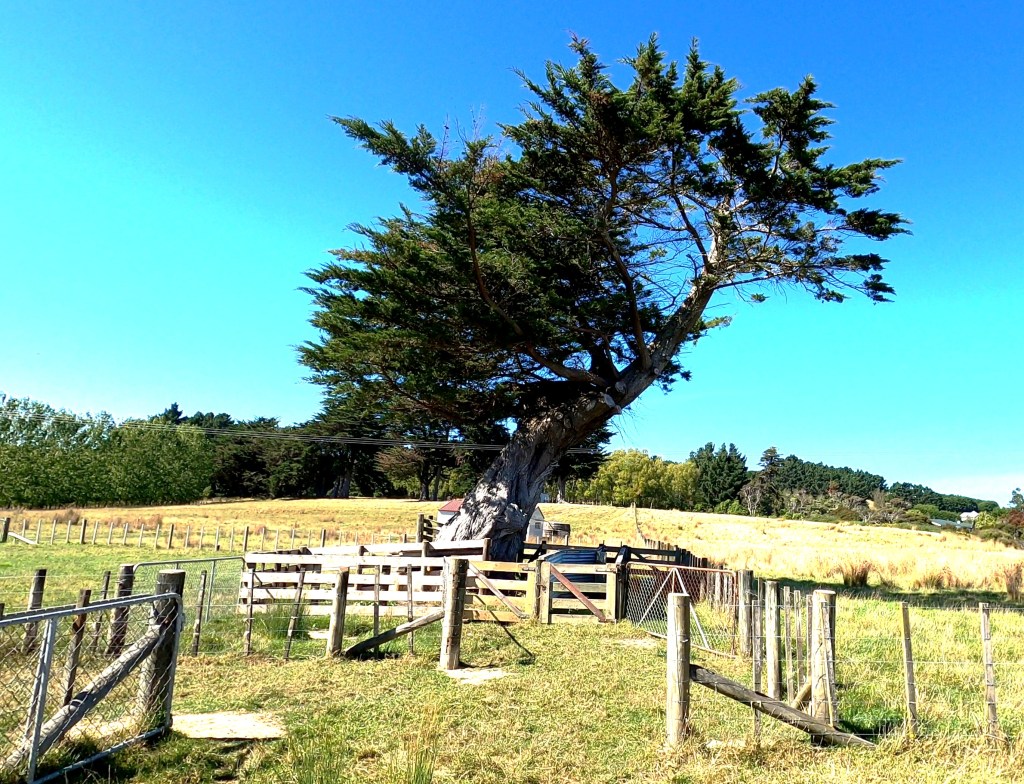
The tree had a very solid base, with a slant to the right away from the predominant northerly wind, but it was also clear the tree was incorporated into the day-to-day farm equipment. Gates, fences and a sheep-drafting run were built around its base. As I traversed the tree other things became apparent:
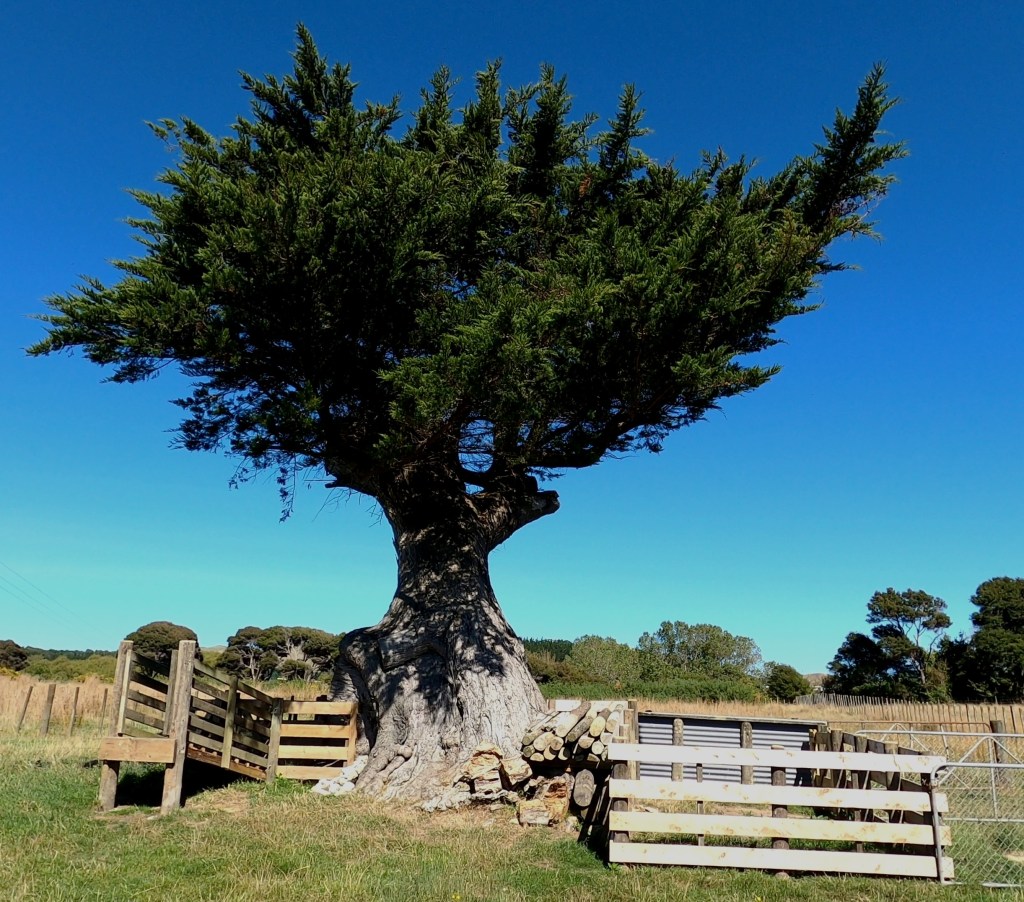
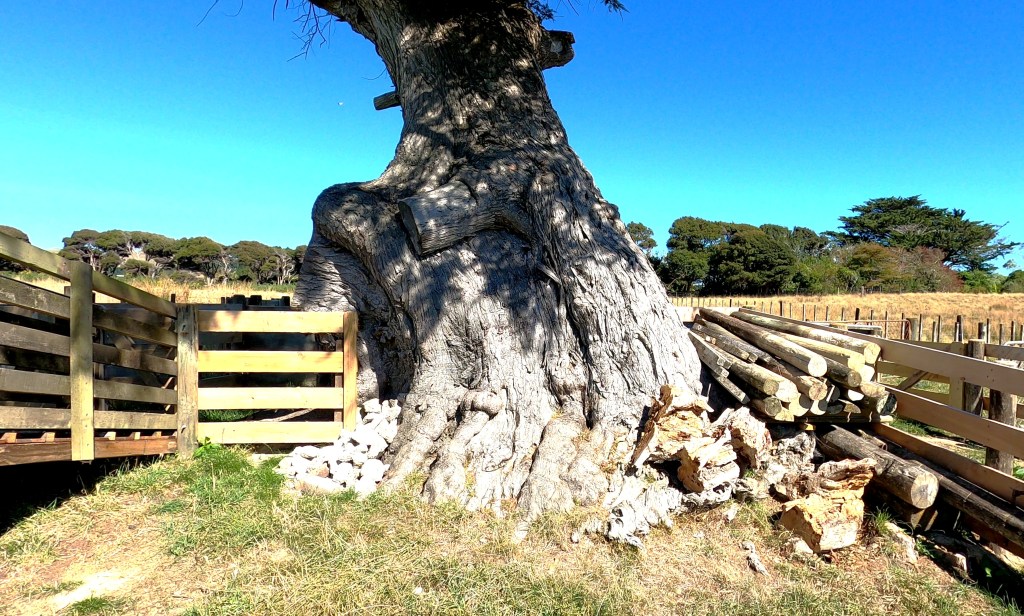
Whereas it was clear the tree was valued, as it still remained growing in the paddock, it had to fit within the functional needs of the farm. As I went further around the tree it was clear that at some stage major pruning had occurred:
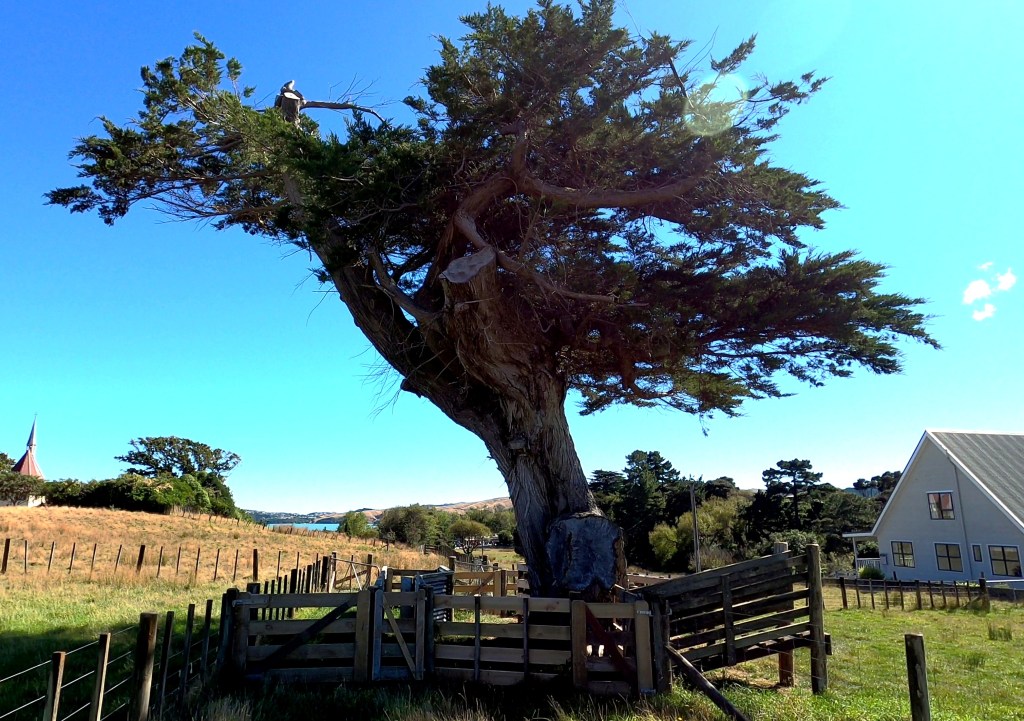
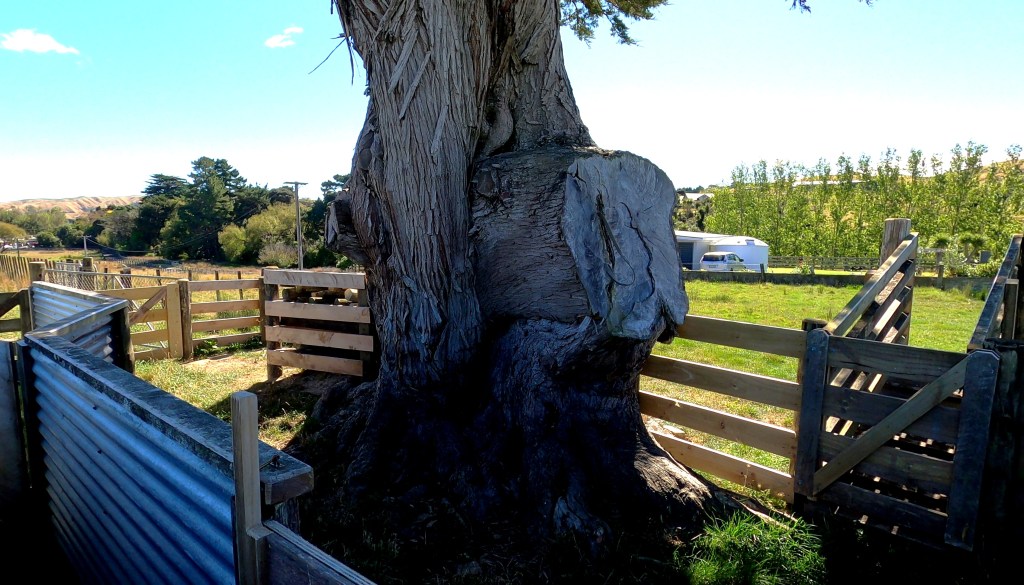
Just above the base there had been a very large branch, and it seems that the main leader of the tree was also cut off some time ago. Of course, this may have been the common process of removing wind-broken branches, something that commonly happens to macrocarpas. Given the use of the space below the tree for sheep pens and sorting, such pruning makes perfect sense. It has actually left the canopy of the tree quite robust, no doubt providing valued shade for when there are sheep gathered below.
So, this is a good example of the co-existence of farming practices and care and respect for an exotic tree. The mac certainly isn’t the full size it would have been without the pruning, nonetheless it still grows and is clearly appreciated by the landholders, not to mention the odd visitor to the church who glances out across the paddock.
The tree has to be at least 100 years old. I say this because of the large circumference of its bole, and because there is a Retrolens photo from 1966 showing a decent sized tree, with some others around it in the middle of the paddock:
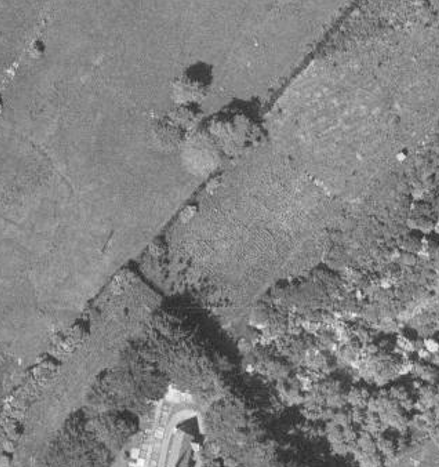
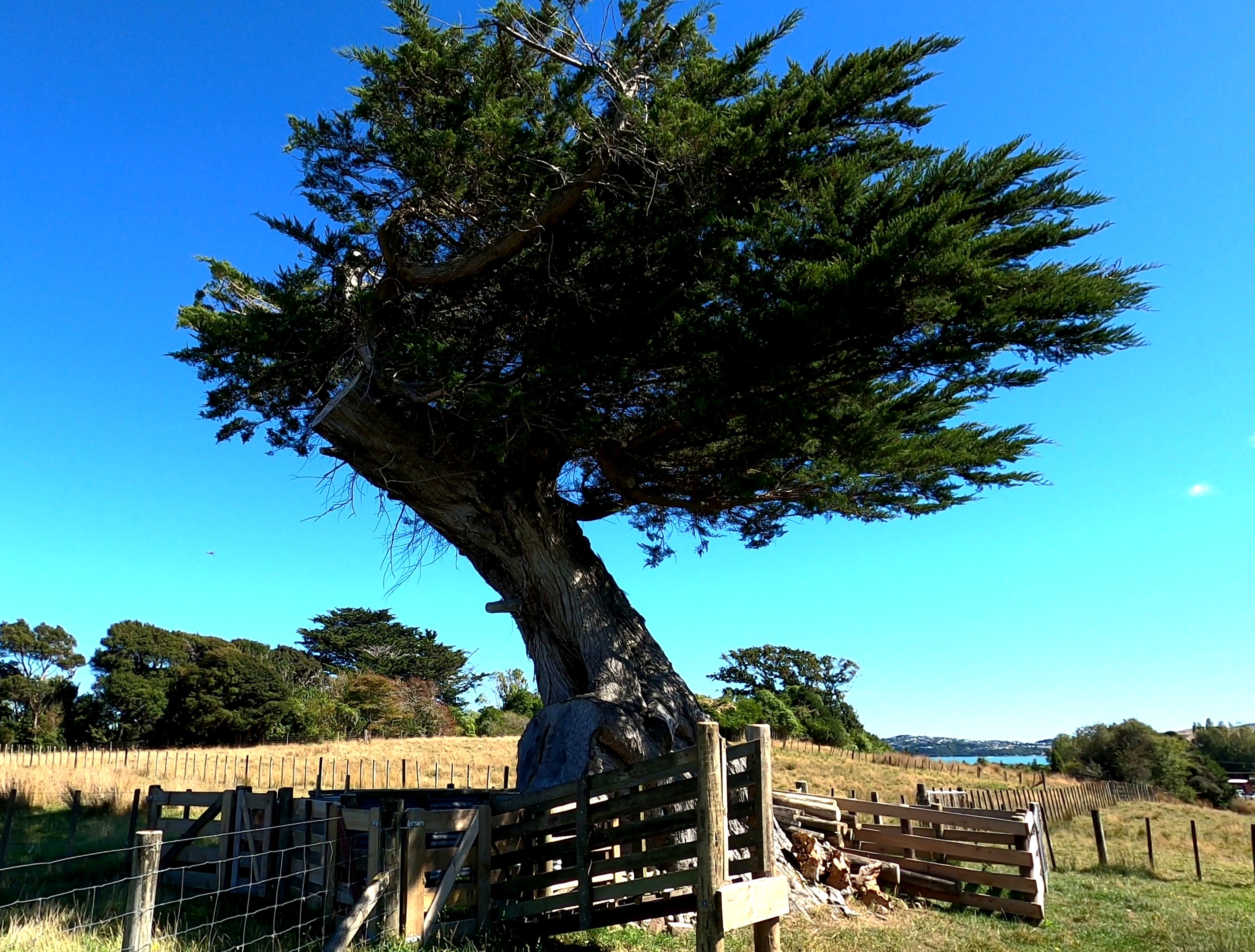
The building at the bottom is St Albans Church, which at this time clearly had a hedge around it. This is likely to have been a row of macrocarpa as one still remains (see the final photo below). The current farmhouse had not been built at this stage, suggesting that some subdivision of the land occurred. Fortuitously for the tree, this resulted in owners prepared to keep it growing out-standing in the paddock. It is by no means beautiful, but like other macrocarpas we have come across in previous posts, it has gravitas and noticeability:

 The Local Arboretum: Noticeable trees and their stories
Leave a comment