Paul Cézanne, one of the most original artists of the impressionist movement, produced a number of ‘tree paintings’. Perhaps the most well-known, painted over the six years of 1890-96, is The Great Pine based on a tree in Provence:
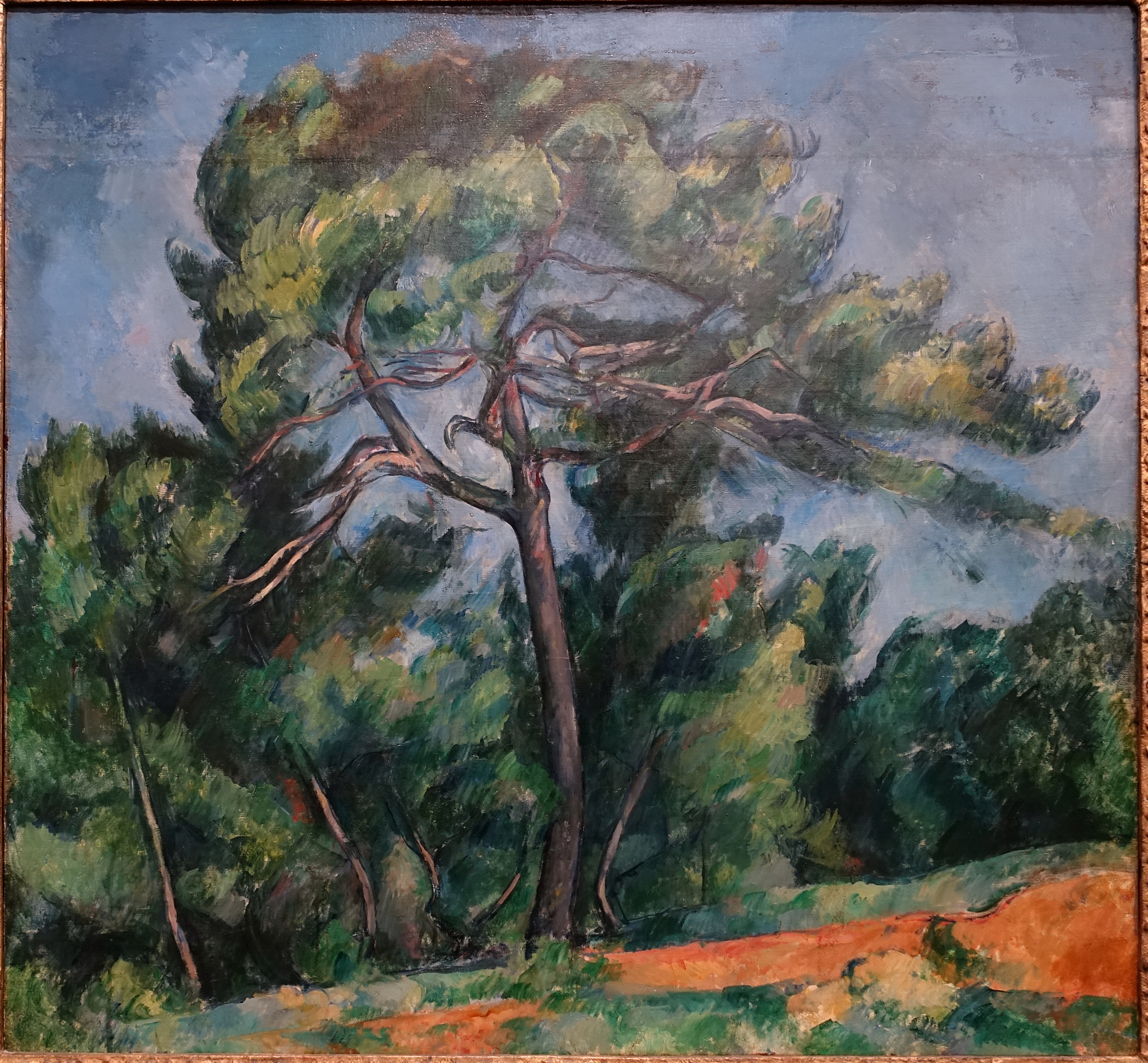
Source: Paul Cézanne, Public domain, via Wikimedia Commons
There are a number of pine species endemic to Europe, so it is not known what species Cézanne was so obviously taken with (botanical identification was hardly his main interest). At the mention of ‘pine’ though, New Zealanders may just assume they know what it is, as in this country it is hard to escape the sight of the country’s most popular commercial forestry tree, Pinus radiata. This applies whether we are concerned with rural areas, or as in this post, a central city area.
We can see how easy it might be to take Cézanne’s tree to be a radiata pine by considering the first example of Wellington’s Great Pines. It is one found in the Wellington Botanic Gardens:
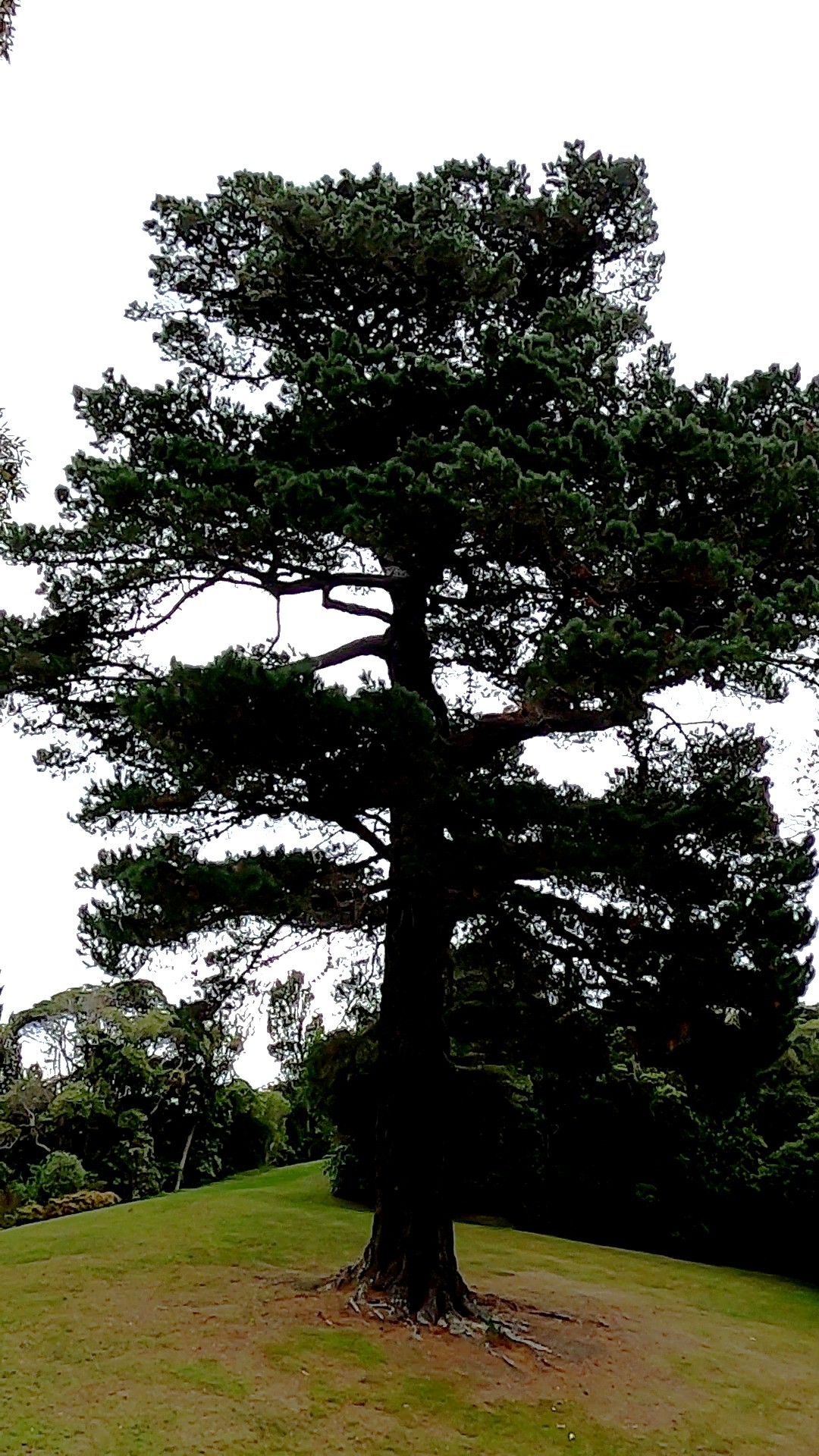
This specimen is found in a relatively sheltered part of the gardens, which may help explain its upright and relatively unbattered form (and it was photographed on a windless morning). The history of this and other radiata pines in the Wellington Botanic Gardens is well-known. Whereas they were not the first to be planted in New Zealand – one in Mt Peel planted in 1859 claims this honour – they were amongst the first planted with the purpose of trial and selection for forestry, with plantings dating from circa 1870. According to the New Zealand Tree Register entry for this tree, it is notable for its large canopy and symmetrical form (planting date circa 1902, and 38 metres tall in 1991). This and other trees in the Wellington Botanic Gardens were an important part of the successful breeding of radiata pines for New Zealand conditions. As has been known for some time, in New Zealand Pinus radiata exceeds its home (Monterey, California) growth rate. Whereas climatic conditions are part of this, so too is the successful plant-breeding program, including from this very tree.
Departures from forestry form
The Botanic Gardens tree is undoubtedly upright and symmetrical in form, and even without being a forester we can imagine this is the kind of thing you would look for in selective breeding. Of course, this form is not always found in other solo Great Pines in Wellington, as we can see from the second example found bordering Newtown Park and the Wellington Zoo:
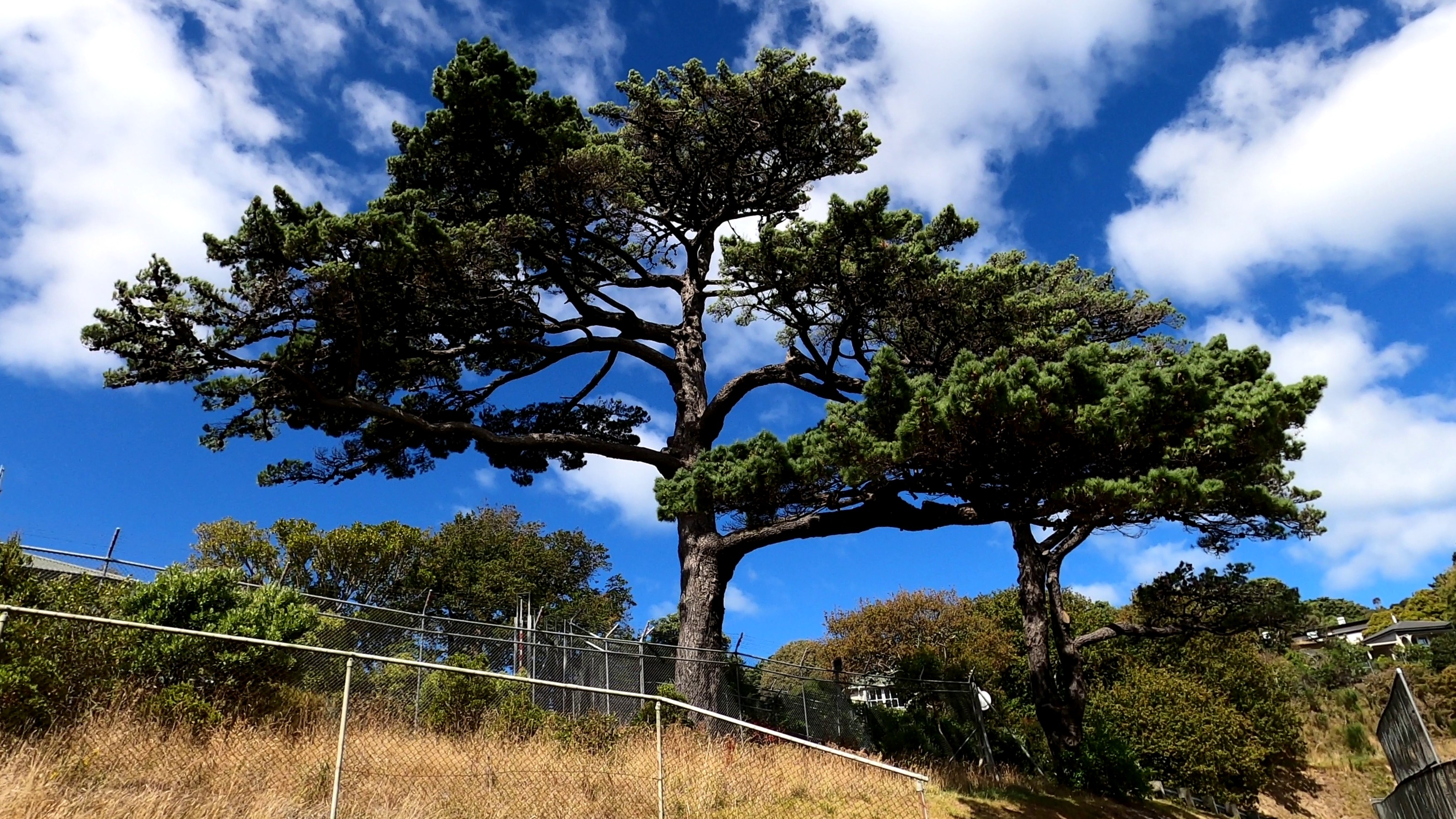
There are actually two pines here but the front one is larger and as can be seen is very wide-spreading (it looks wider than it is tall). Whereas this habit would not make it attractive for forestry plant-breeding, it does make the tree very noticeable in the landscape. It is actually sited at the deliveries entrance to Wellington Zoo – hence the security fencing – but the usual way it is seen is from Newtown Park athletic stadium where it dominates the southern skyline.
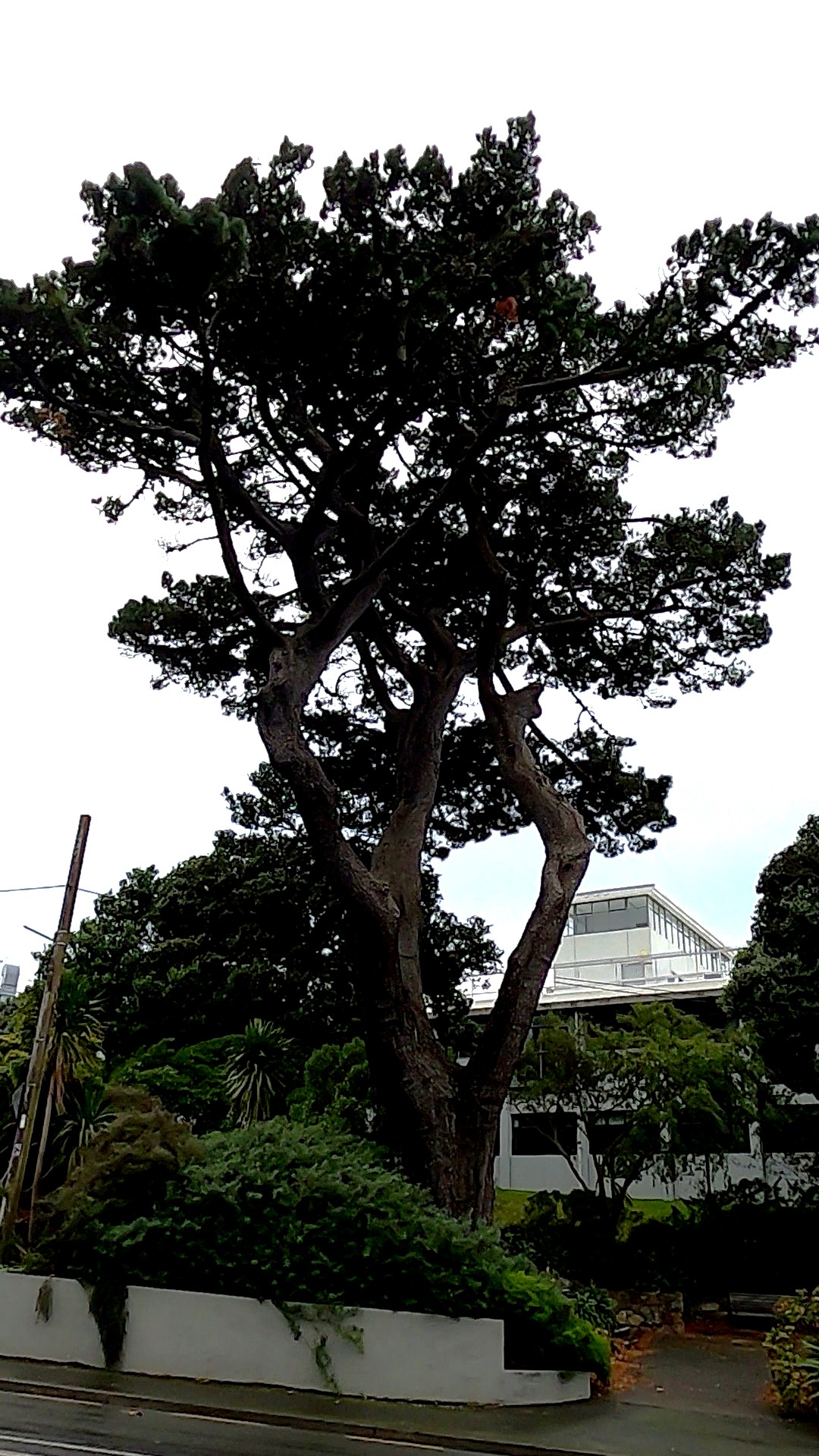
Perhaps the most noticeable radiata pine in the Wellington CBD is found outside Massey University’s Wellington campus. Approaching the campus on the road travelling south it also dominates the skyline, as seen in this first photo taken on an overcast and drizzly day:
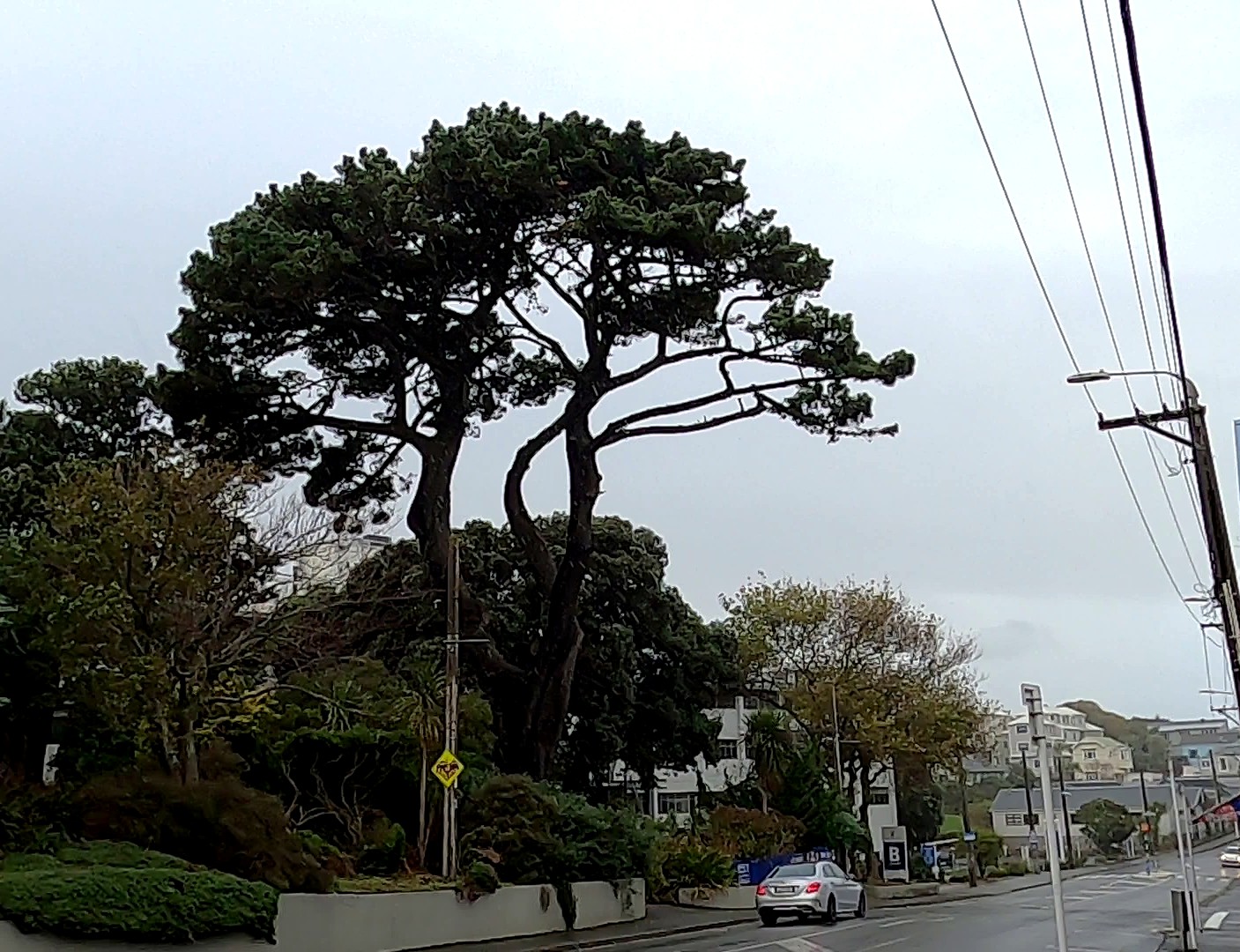
The tree clearly has significant height, but another interesting feature is that it has three main leading branches. This means that as you move around it you gain a different appreciation of the tree’s form:
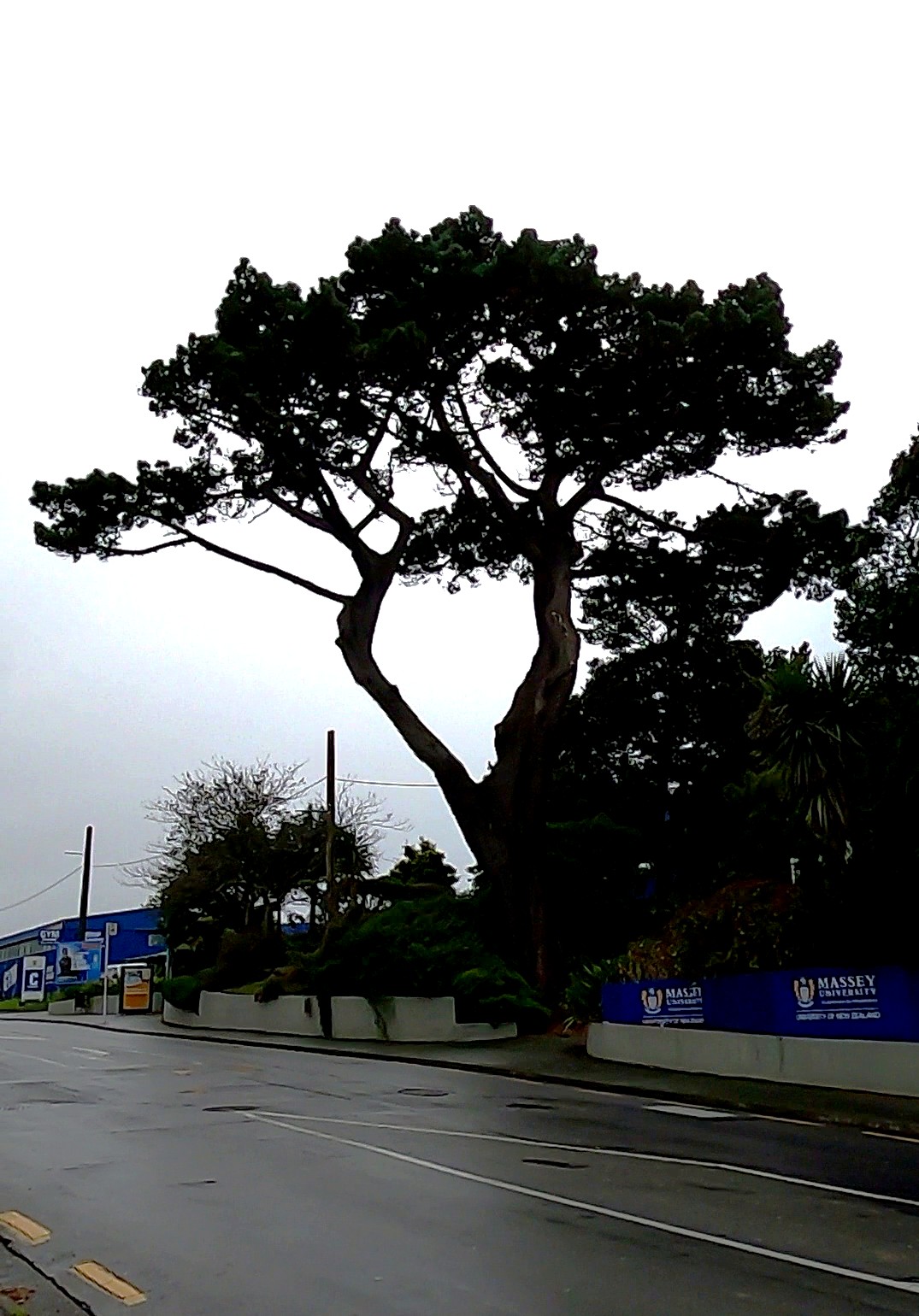
Then, as you get close up to it, its large trunk and robustness take your focus:
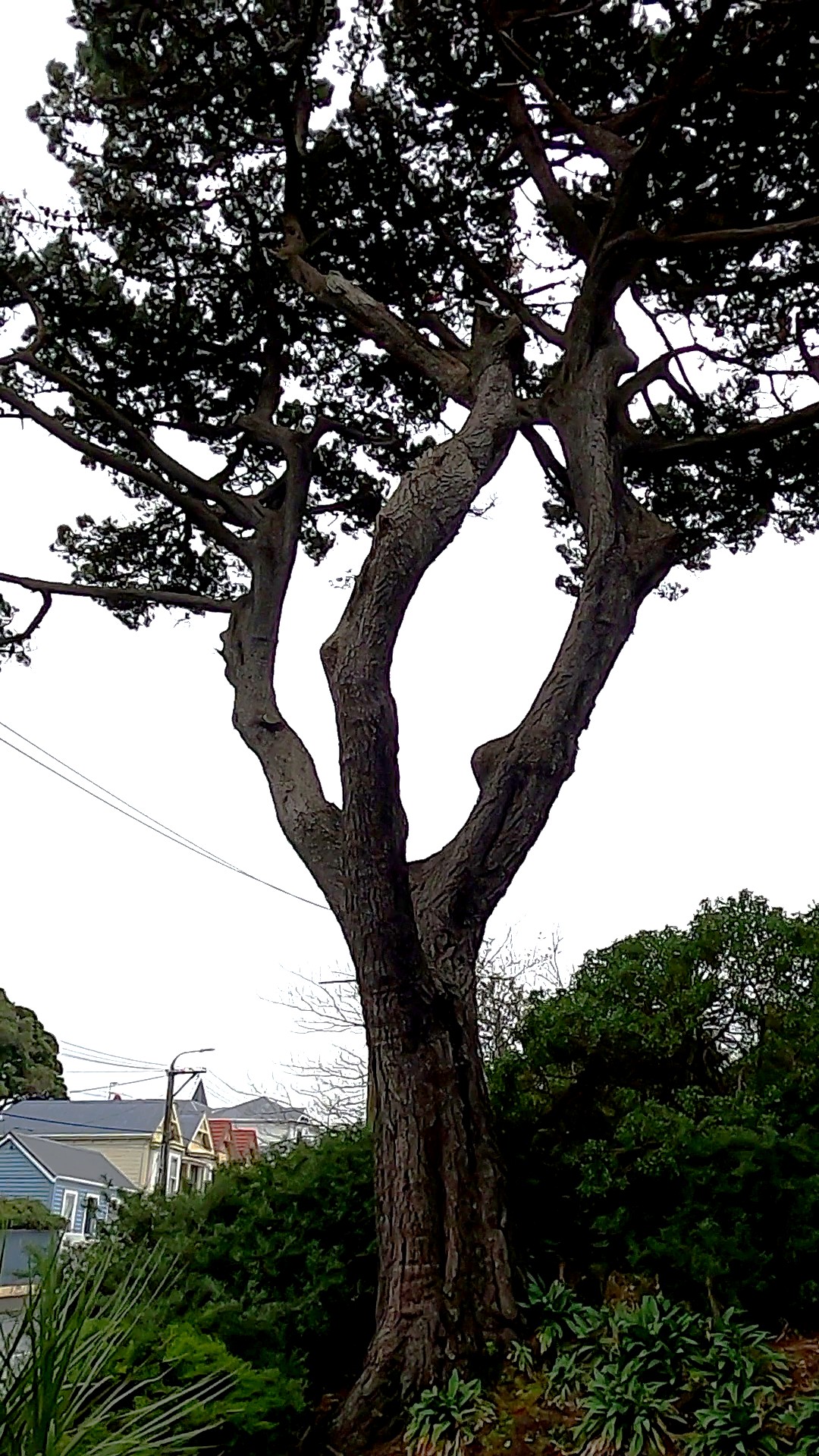
This triple main leader is presumably not something selected for in pine breeding programs, but it certainly makes the tree noticeable in Wellington’s central city environment.
Technically not in Wellington but worth finishing with, is a bonsai-looking radiata pine found in Paekakariki. This can be seen while driving on the motorway between Paekakariki and Raumati. This is what it looks like from the motorway:
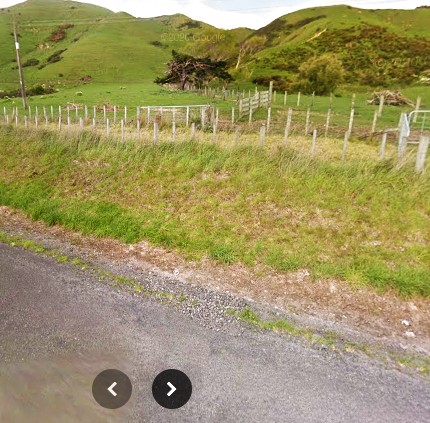
Source: Google Maps Street View, October 2019
Travelling at 100 km/h it is very easy to miss, not least because it is not especially large. Even if seen, the detail of it easily escapes the eye. Luckily, biking past one day I stopped to get some closer photos, showing very clearly the bonsai-like nature of this slightly smaller ‘great pine’:
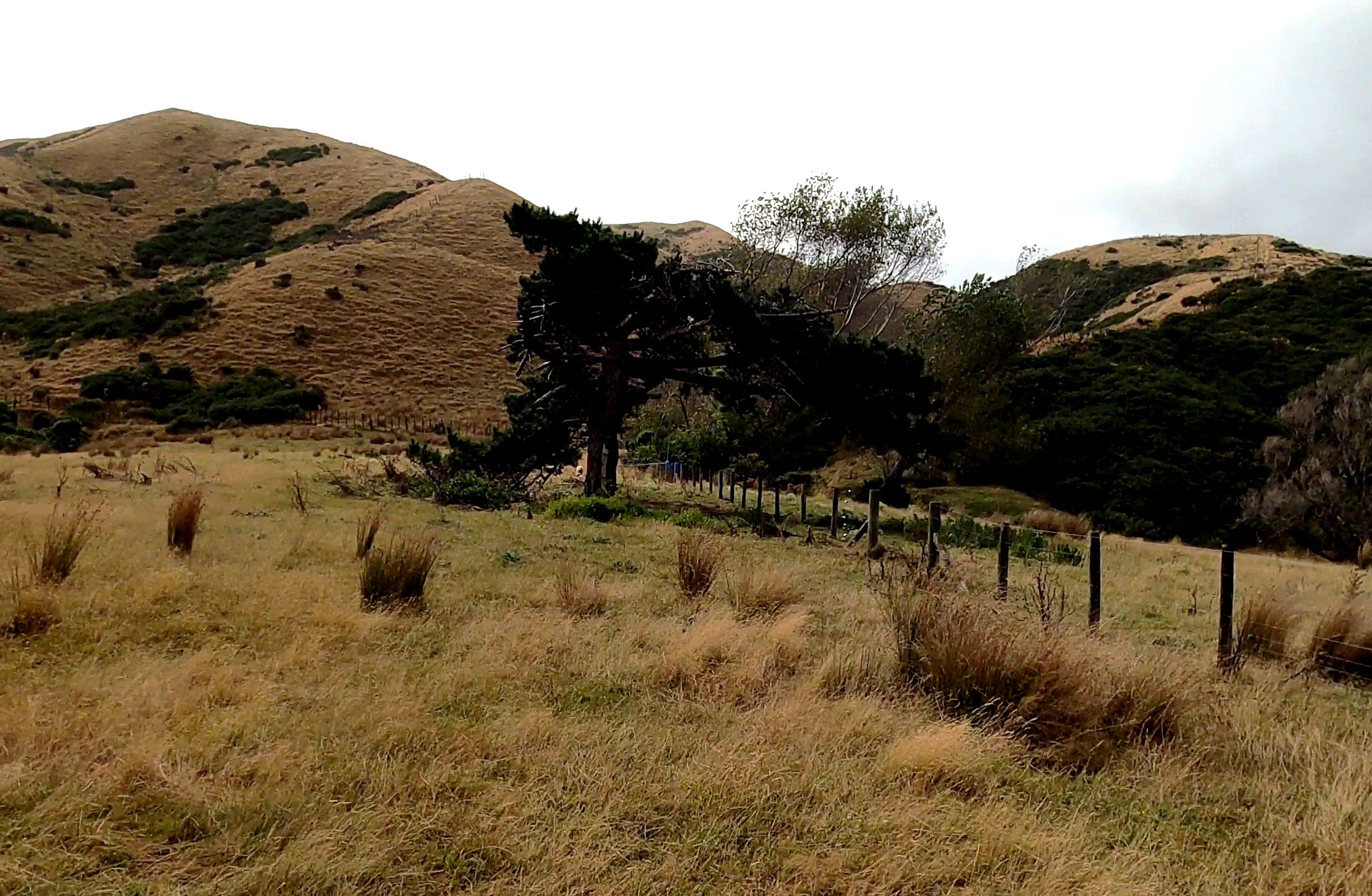
It seems very similar to the macrocarpa in the Manakau farmland I wrote about in the post ‘Photogenic ‘beat-up macs‘: it is a solo tree in open farmland exposed to the elements. As we get closer and walk around the tree we see the shaping effects of exposure to the elements:
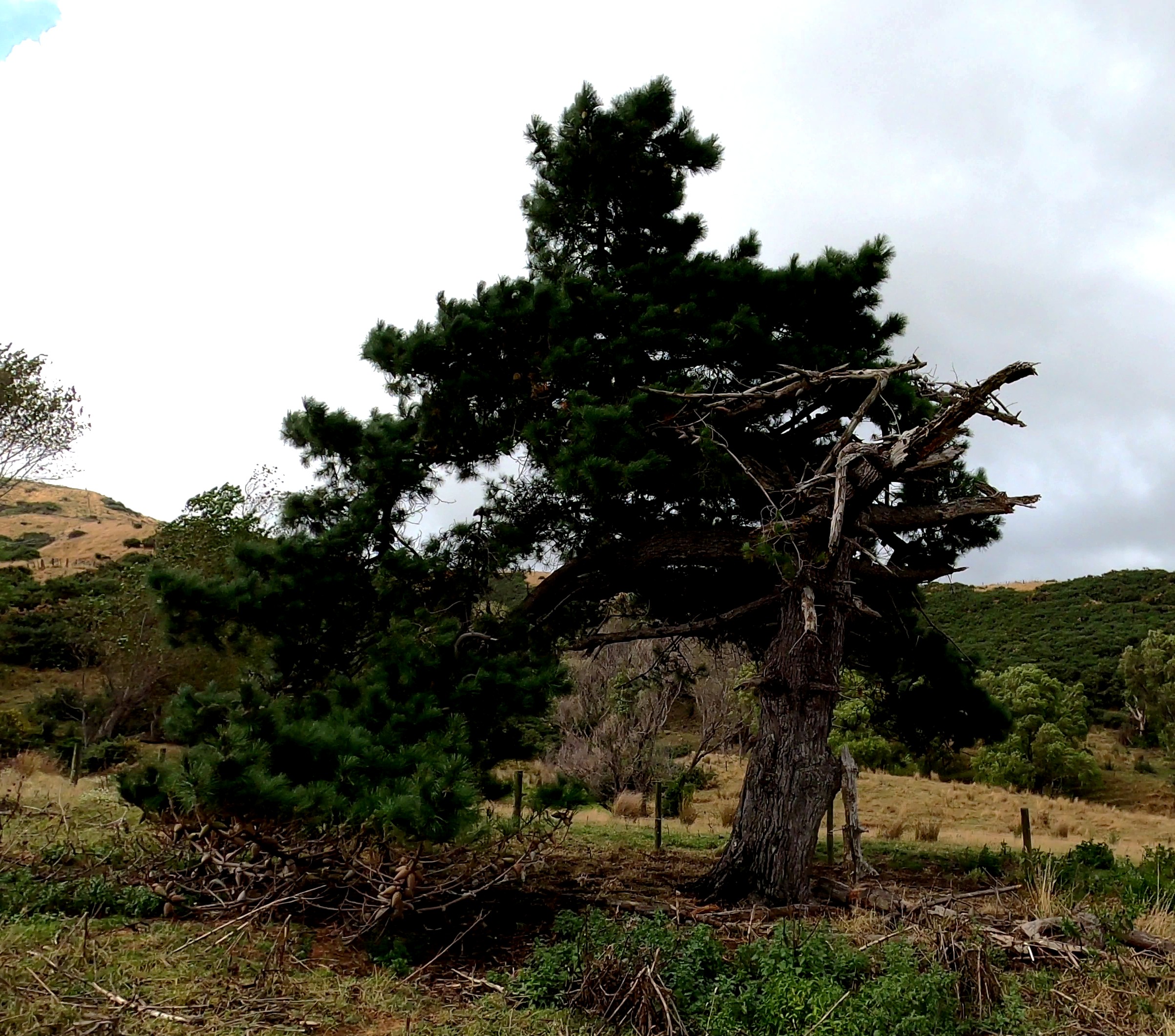
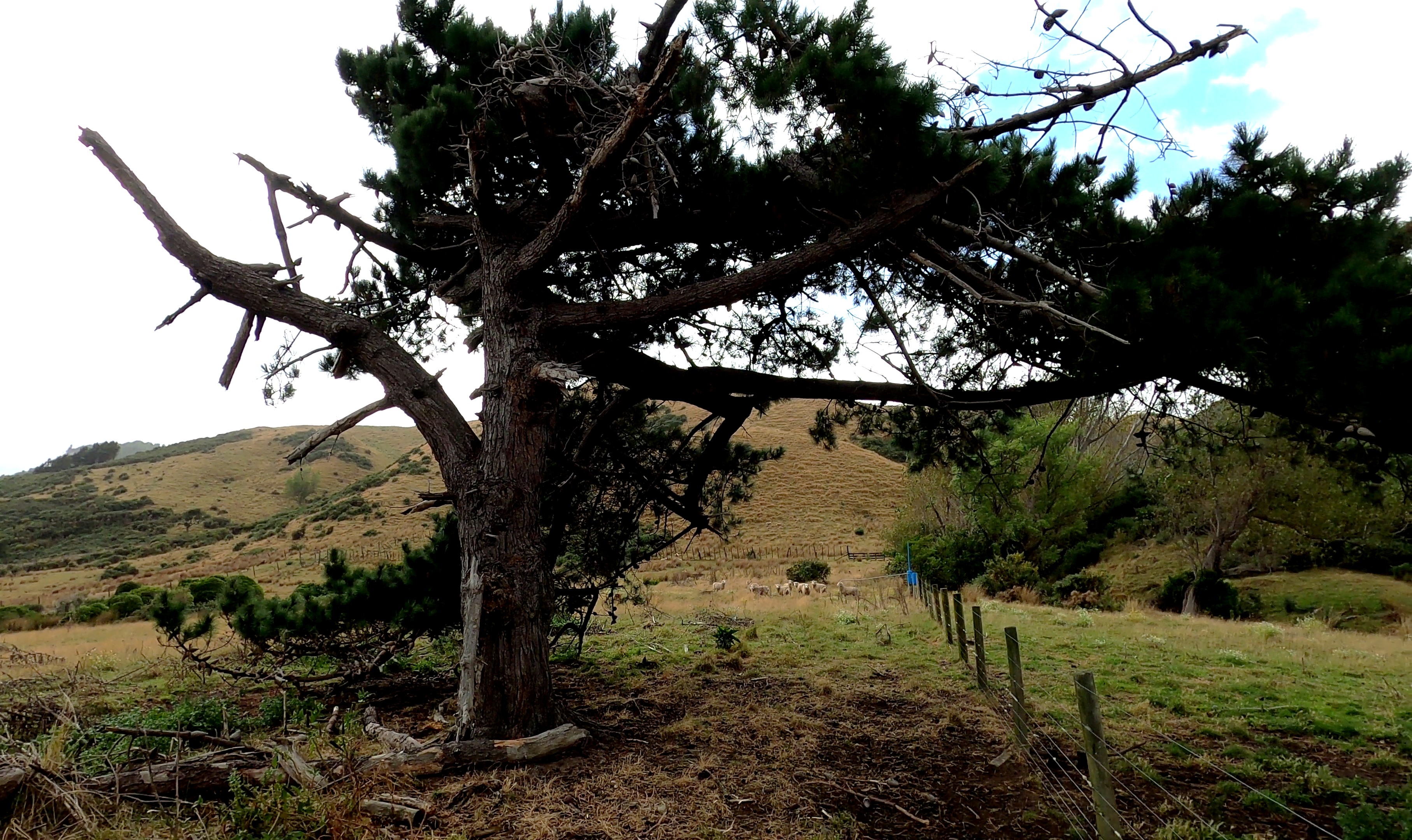
Then, looking back to the motorway, we can see its ‘best face’, unfortunately invisible from the glimpse we gain from our car-bound viewpoint:
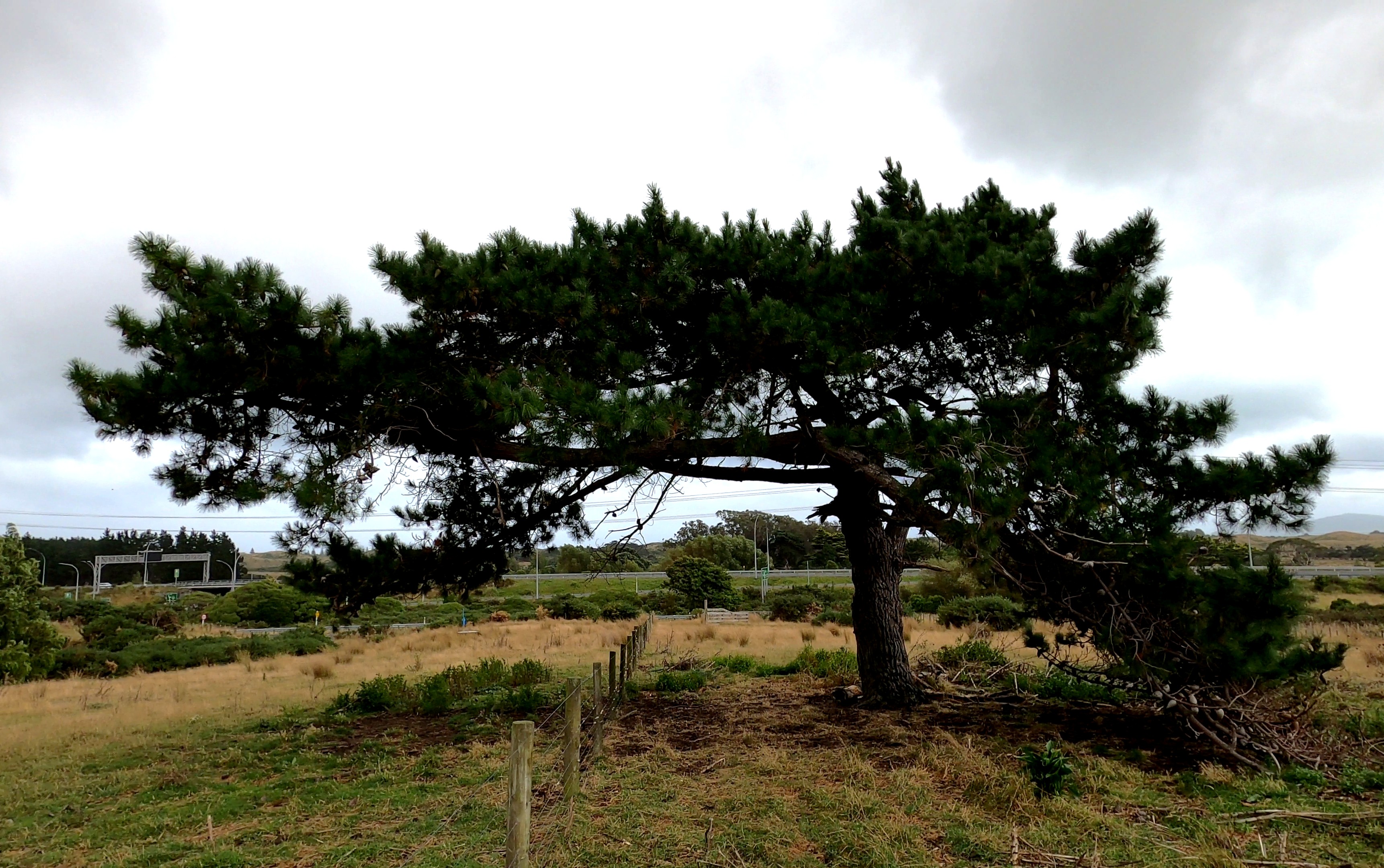
These different faces of the Paekakariki bonsai-pine, and also the different aspects of the Massey University pine, might help us realise why Cézanne took six years to paint The Great Pine. I don’t know whether any modern-day artists have seen any of these Great Pines of Wellington and have been similarly inspired. From my non-artist’s eye they do seem worthy of artistic production, no doubt like the pine that inspired Cézanne. Trees may have fallen out of favour as an artistic muse, nevertheless, there seems plenty in these Great Pines to inspire art.
I will follow up this connection between artwork and trees in a future post, as I’ve recently discovered a well-known New Zealand artist has incorporated imagery of macrocarpas in his work.

 The Local Arboretum: Noticeable trees and their stories
Leave a comment