In part 2 we jumped forward 63 years from when Donald Arrowsmith took his photographs in various locations which happened to also have Phoenix palms. We considered four cases where the palms were no longer growing due to the consequences of development. Below we’ll consider the interesting case of Photograph 258 – Street Scene in Hastings. Part 4 of the blog will move onto Gisborne and then consider the five cases where the palms are still growing, becoming monumental in their site. We’ll finish with the conundrum that in the area where Phoenix palms were first heavily planted – Auckland – they have now been classified as a ‘pest plant’. What consequence has this had for the once most popular exotic palm in New Zealand?
Hastings Cenotaph
It is worth considering again Donald’s photograph from this site, this time lightened:
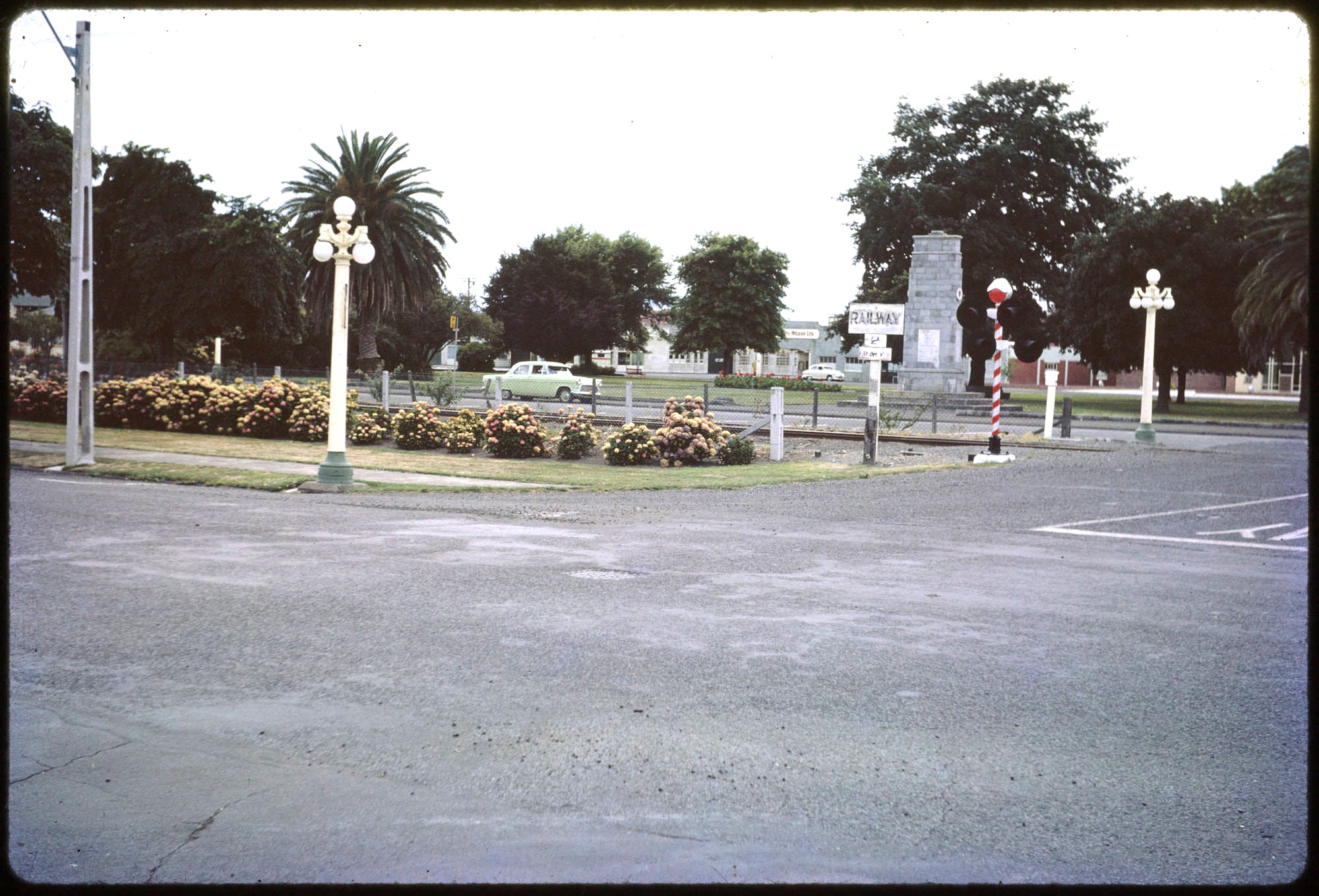
The inclusion of so much road in the frame shows that Donald was not an expert photographer, and again the inclusion of the car shows how important it was to him. The lightening of the photo brings into view a second Phoenix palm, at the right of the frame. Clearly, this again shows that Donald’s interest was not in the Phoenix palms, even though here we see two palms.
Other photographic evidence suggests that at one time Civic Square, which is the larger area housing the War Memorial cenotaph, actually contained five Phoenix palms. The planting of these seems to have occurred at different times, and though it takes up a bit of space to tell the story, it gives a fascinating insight into changes in a garden over time, which we can piece together as best we can. First, a photo which shows the mostly excluded palm to the right only five years after Donald’s photo:
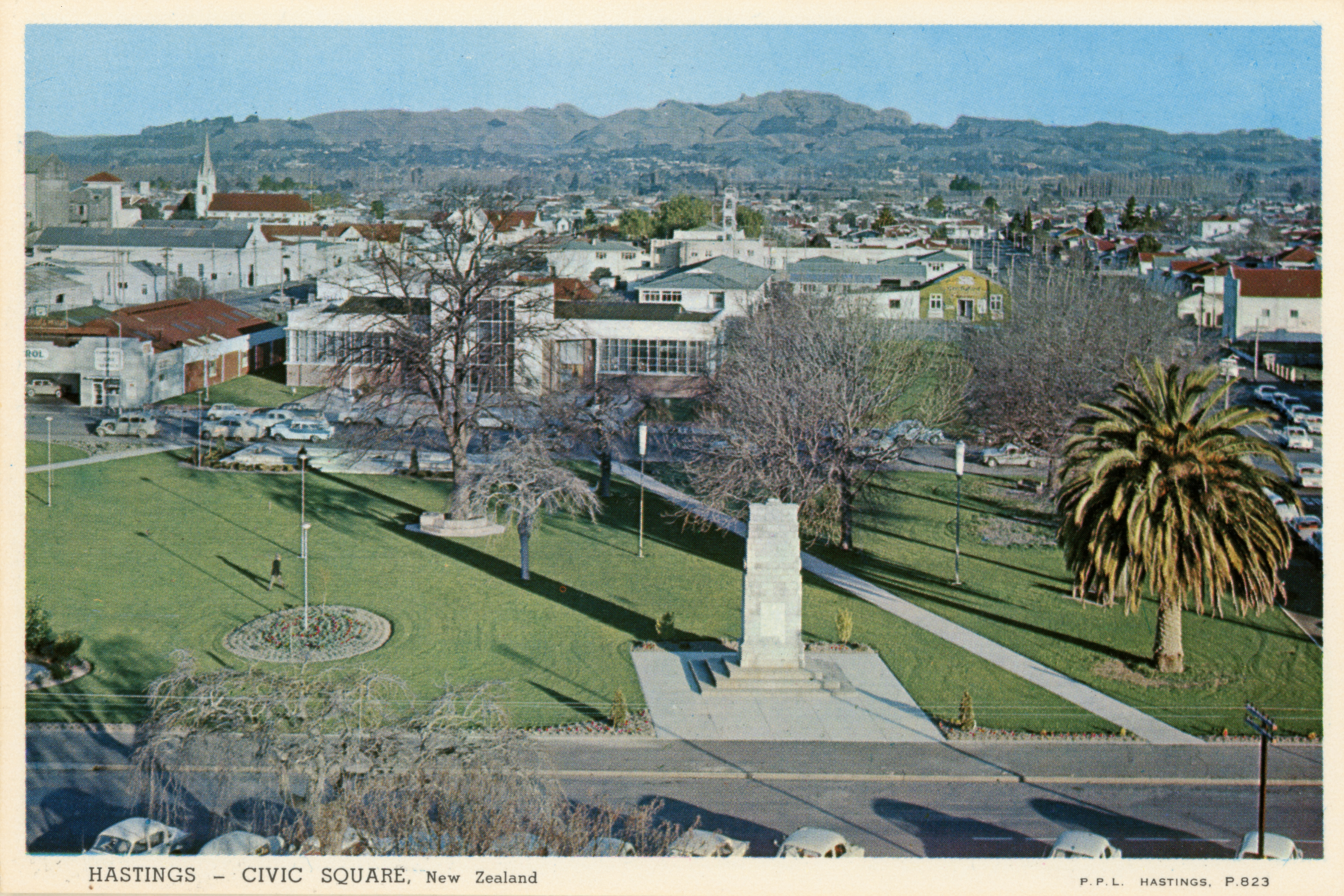
Source: Hastings District Libraries, P.823, Pictorial Publications Ltd, 1967
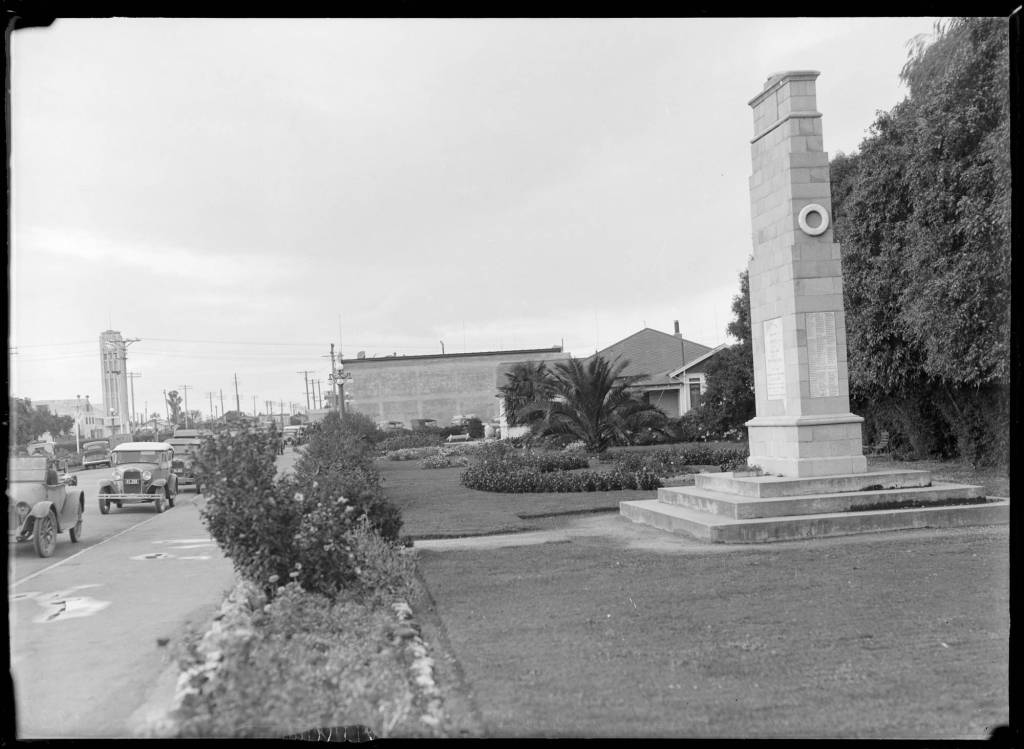
The photo is actually a postcard which shows that the Civic Square with the cenotaph and various plantings was regarded as a significant attraction in the area. The cenotaph is a World War One memorial, known in full as the Hawke’s Bay Fallen Soldier’s Memorial, and luckily there are several photographs which include the palms planted close to the cenotaph. The first is from 1936:
Source: Auckland Libraries Heritage Collections 1784-033
The cenotaph was unveiled on 11th November, 1923, and the size of the Phoenix palm visible here suggests it was planted not long after the unveiling. There were other Phoenix palms planted around Hawke’s Bay at this time, so it is not unexpected to see it here. Given its size in 1936 we can reasonably date its planting as about 1926 to 1928. Next consider an aerial photo from 1951:
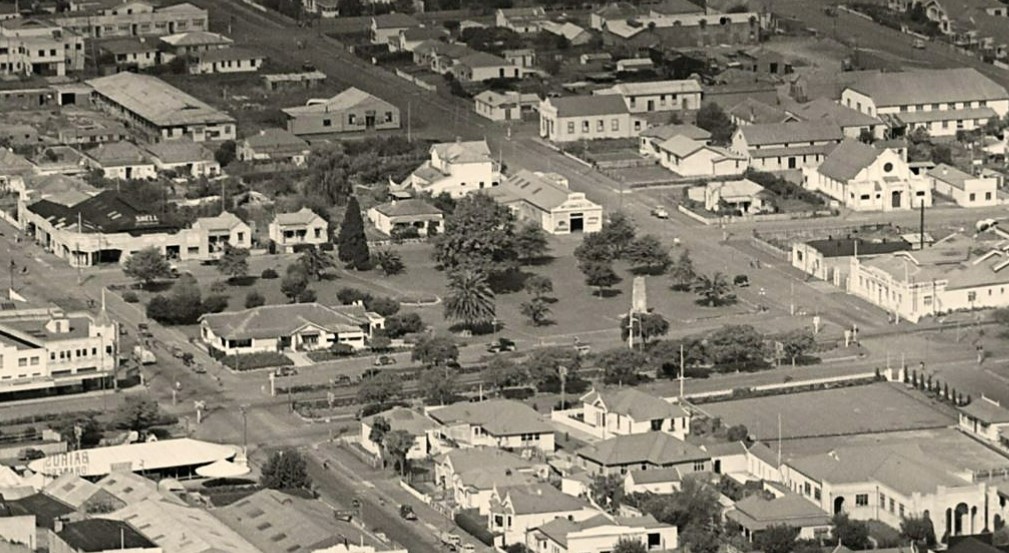
Source: WA-07270 Whites Aviation Collection, Alexander Turnbull Library
Looking carefully, this shows that by 1951 there were five Phoenix palms in Civic Square: three in a row on the cenotaph side of the park, and two directly across on the other side, flanking the large cone-like tree. The four additions all seem about the same size, but are clearly smaller than the circa 1926 to 1928 specimen. The palm beside the large one must have been planted after 1936, but its size here suggests a planting date not too long after 1936. It could be that the additional four palms were all planted about 1937, making them 14 years old in this photo.
Moving forward to 1958 another photo shows an interesting development:
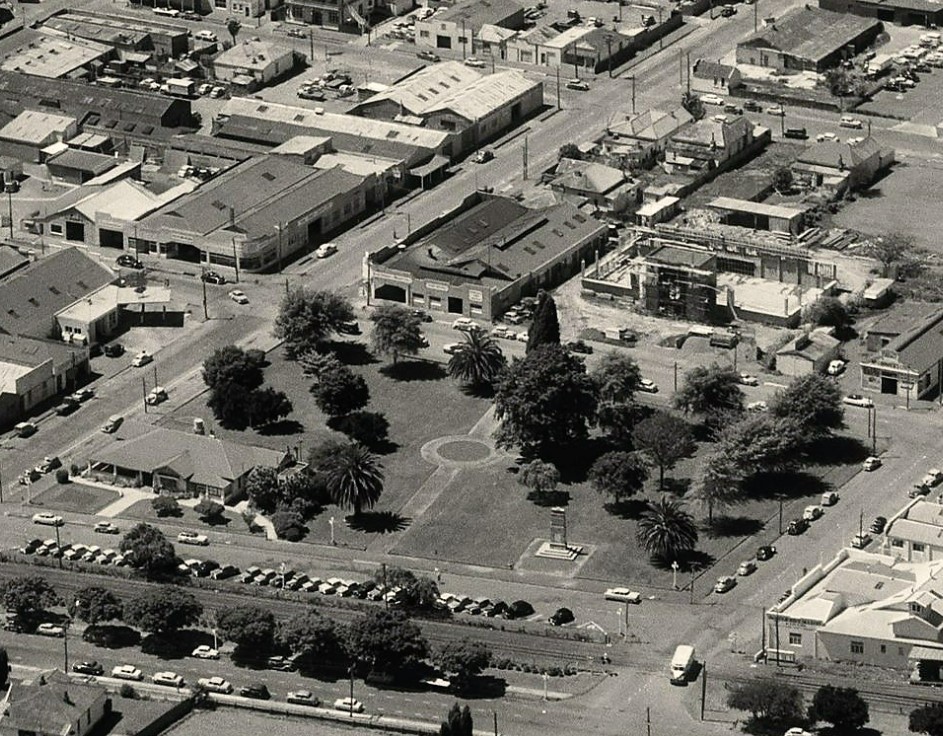
Source: WA-48464, Whites Aviation Collection, Alexander Turnbull Library
We can see in this photo that the newcomer palms are quickly approaching the size of the older specimen, however, the palm to the immediate east of the cenotaph has been removed. I have not been able to find any information about this removal. Of course, changes in trees and structures in parks are commonplace, but just why one palm was removed in the 1950s is something of a mystery. The reason for other removals is not so mysterious, as we can piece together likely reasons in the existing historical information on Civic Square. To cut a long story short, by 2005 there was only one remaining Phoenix palm. Here is what it looked like in October 2023 when I visited:
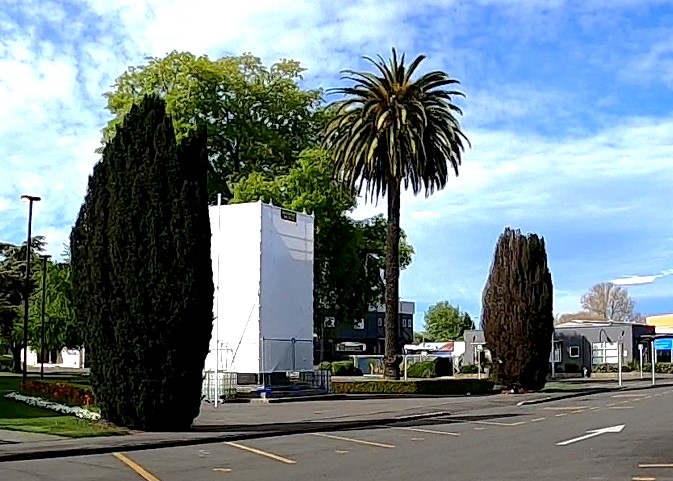
Source: Author, October 2023
The cenotaph is clad in plastic wrap while it undergoes cleaning, but there behind it is the remaining Phoenix palm, probably about 86 years old at the time of the photograph. The two palms at the other side of Civic Square were removed when new developments occurred: the existing road was turned into part of the park where a new Hastings Art Gallery and Library were built. So, just like the full removals we saw in Part 2 of this blog series, development was again a reason for removal.
A photo from my 2023 visit shows what happened to the oldest palm east of the cenotaph:
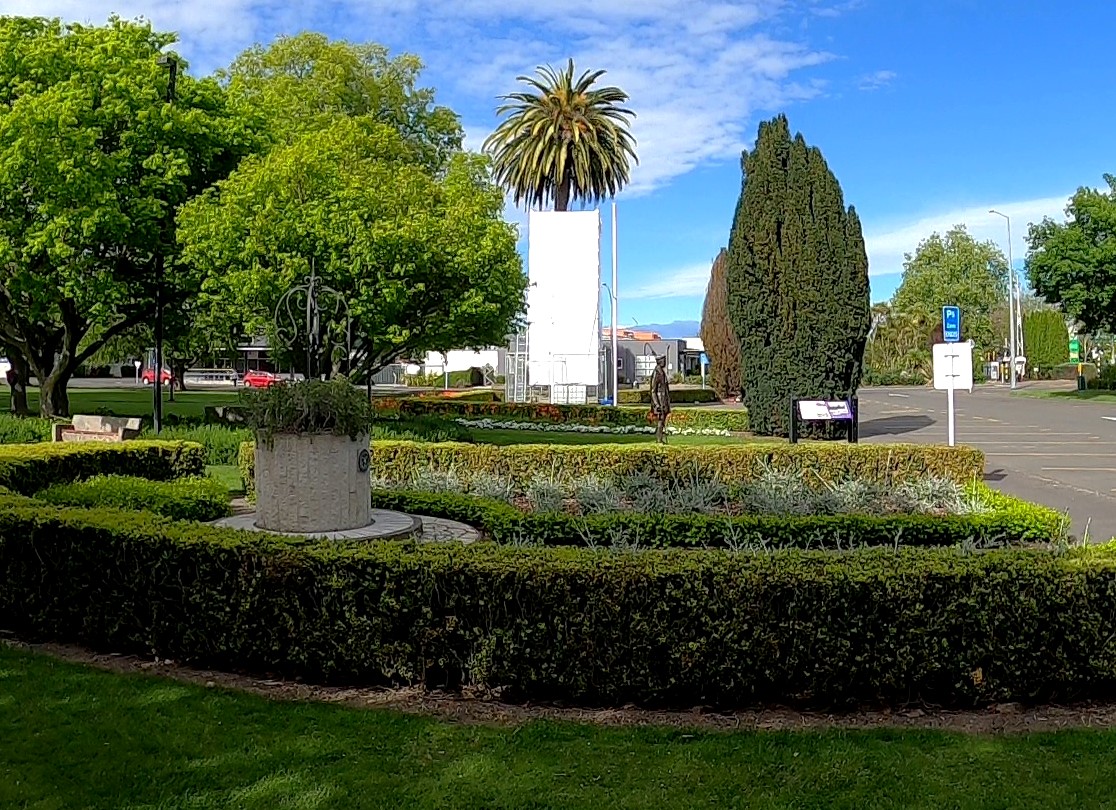
The semi-circular plot and the structure within it is where the oldest Phoenix palm used to be growing. The structure marks the 100th anniversary in 2005 of the founding of Rotary International, which has had a club in Hastings since 1924. Although I have found no record of the removal of the Phoenix palm to make space for the Rotary International monument, a quick look at Google Map confirms that this is where the oldest palm was:
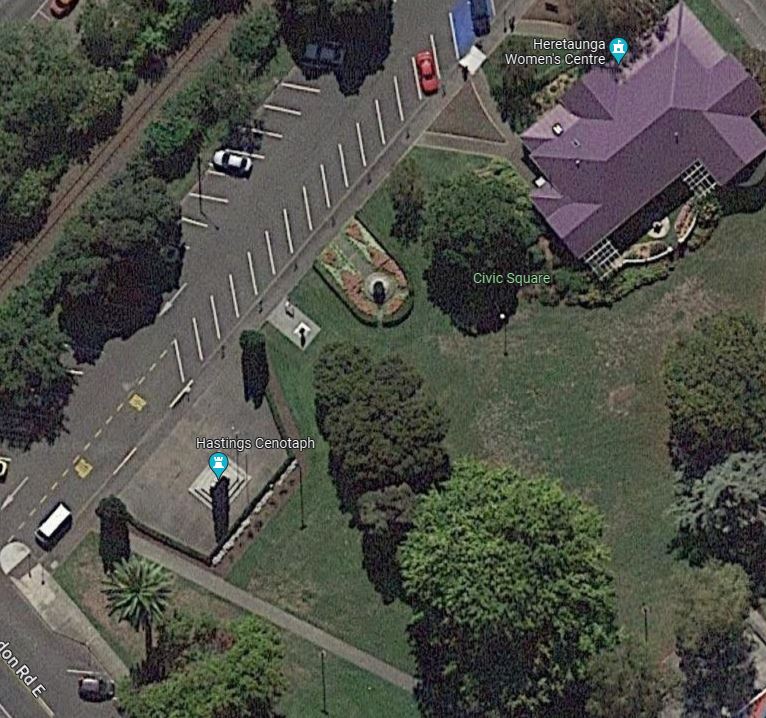
Source: Google Maps 2023
Interestingly, there are further plans to build new monuments near the cenotaph, including one to be called Dolly the War Horse. This bronze statue of Dolly is planned for installment in February 2026, memorialising the over 10,000 horses who ‘served’ in World War One. Dolly is reputed to be one of only four horses that returned to New Zealand. Luckily for the one remaining Phoenix palm in Civic Square, space for the bronze of Dolly is available next to the current bronze statue of Major General Sir Andrew Hamilton Russell, which is next to the Rotary International monument.
Consequently, the remaining Phoenix palm may yet get to reach 100 years of age.

 The Local Arboretum: Noticeable trees and their stories
Leave a comment