In part 1 of this post I took some poetic license with ‘better by the dozen’, but we can start here with a case where there are literally a dozen palms under consideration. Consider this extract from an article in the Wanganui Herald:
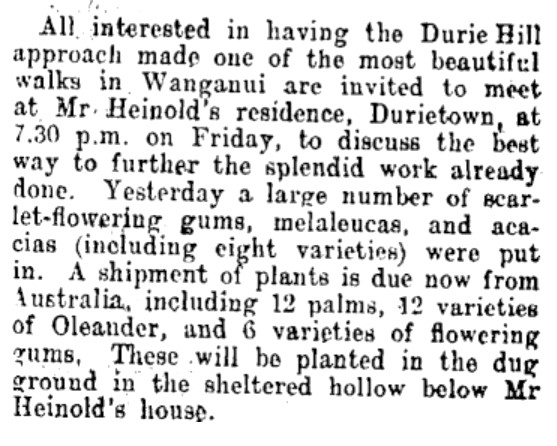
Mr Heinold1 lived at 3 Blythe Street, which is near the top of Durie Hill, about the middle of the photo below. Perhaps no address had to be given because Mr Heinold’s house was well-known, plus there were so few houses there at the time:
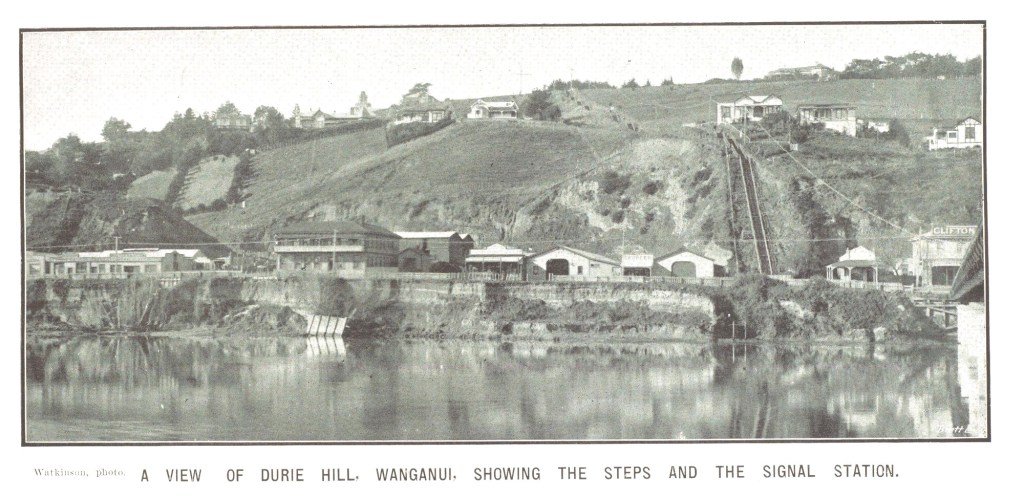
Source: Auckland Libraries Heritage Collections NZG-19130604-0022-02
The palms do not show in this 1913 photo, but five of the dozen ‘palms’ were indeed planted less than 100 metres downhill from Heinold’s house. Continued beautifying efforts must have occurred as by the 1940s quite a lot had changed, as the photo below shows:
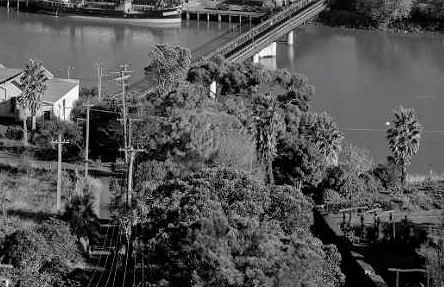
Source: ‘Wanganui from Durie Hill’, ca. 1940, Tourist and Publicity. Ref: 1/1-017192-F. Alexander Turnbull Library.
We can see here more planting has occurred, and growing up amongst it are Washingtonia robusta palms at the height expected of 30-year-old specimens. Change continued apace, and the contemporary view of Durie Hill show new roads and houses, now with the five palms a very visible skyline presence:
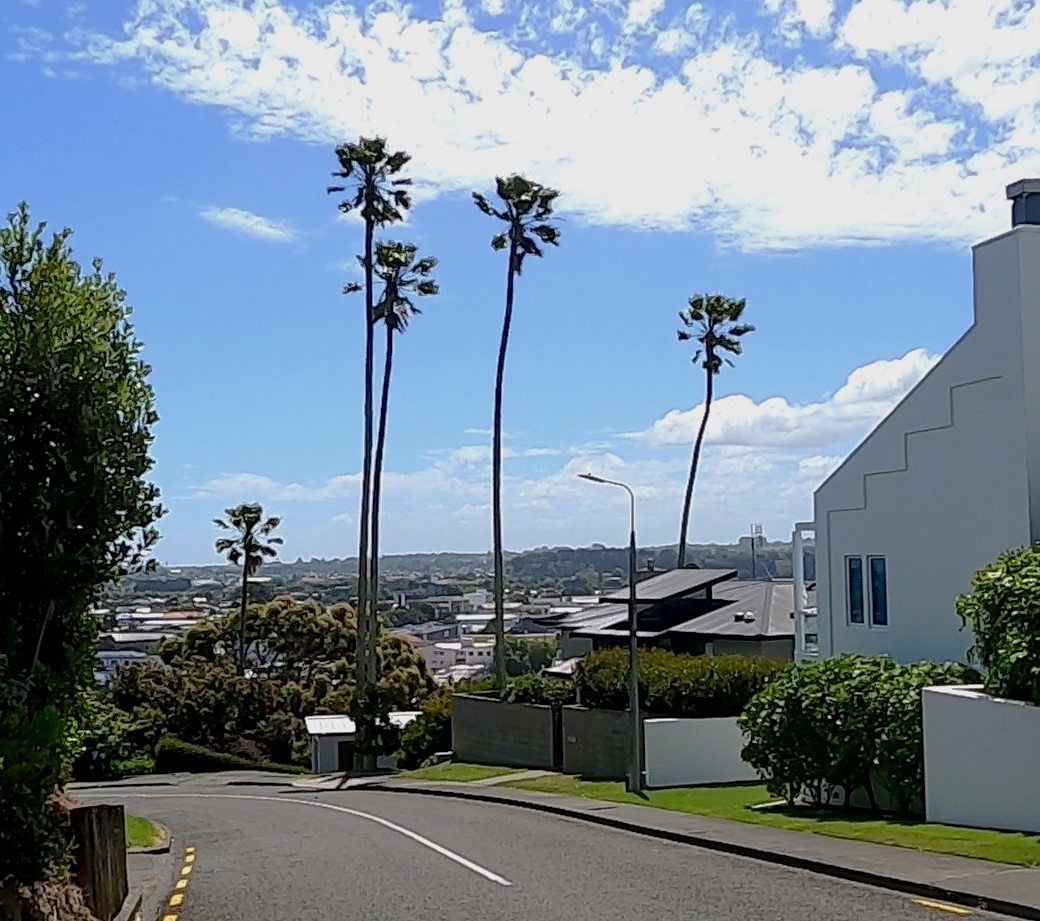
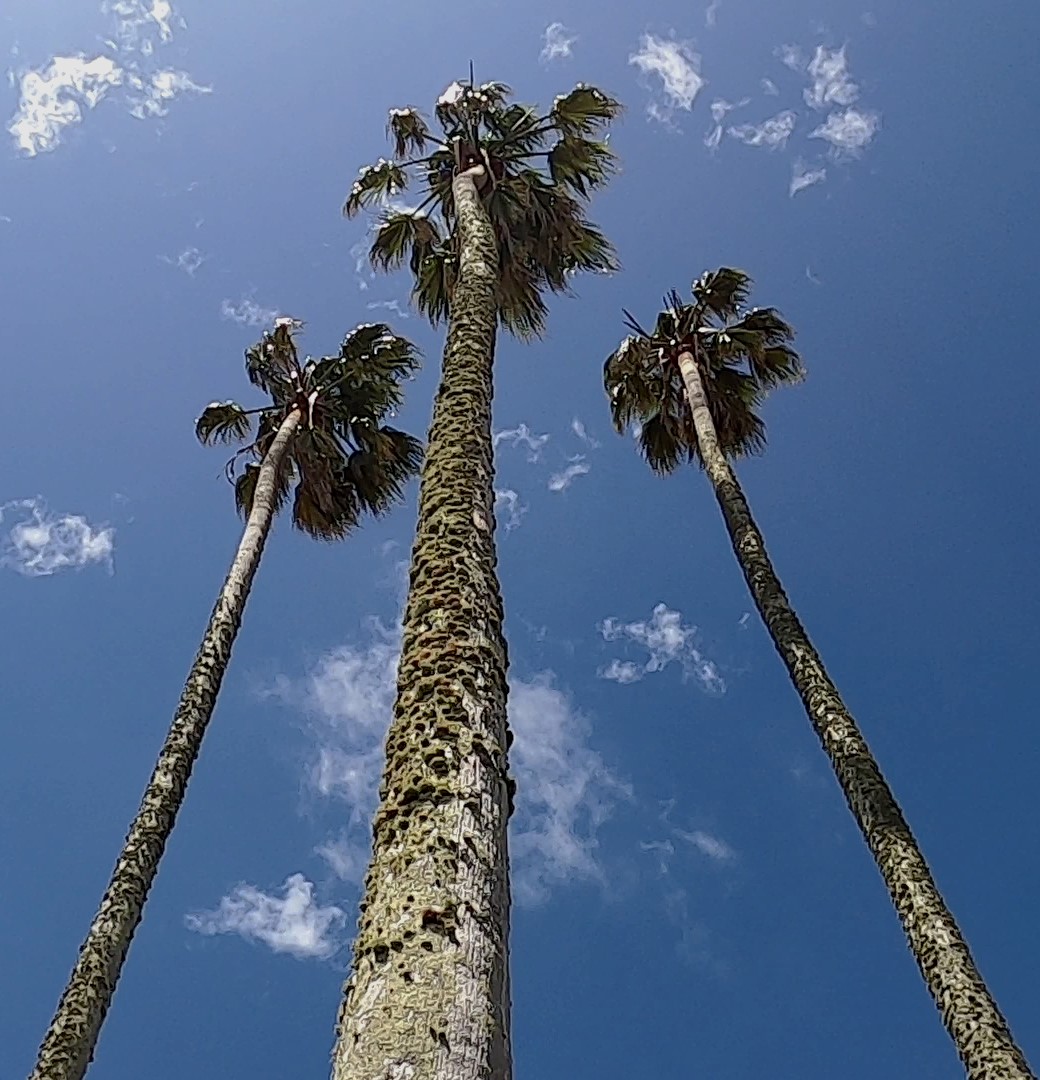
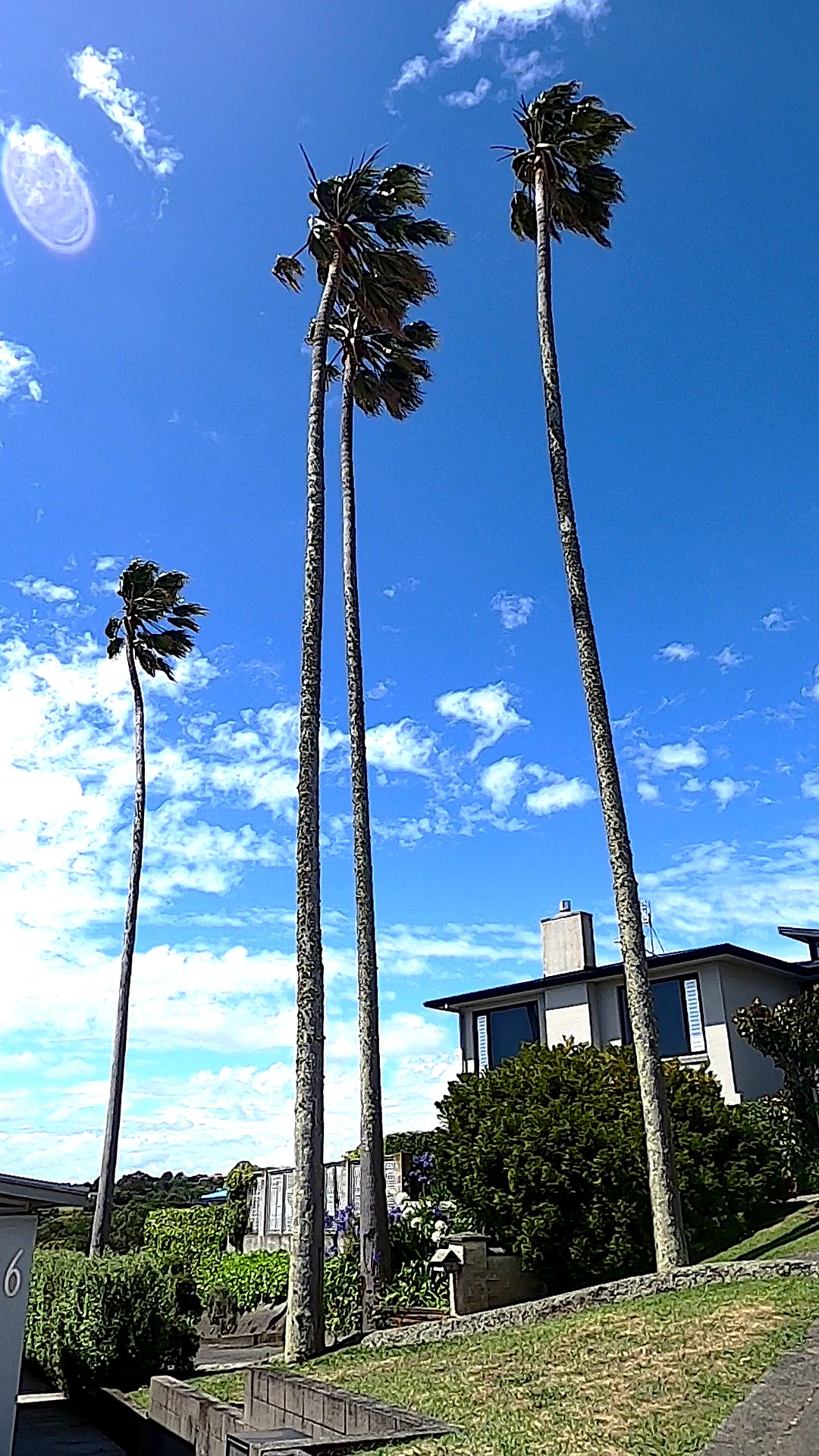
Source: Author, December 2024.
Clearly the 1911 article mentioned ’12 palms’ shipped from Australia, whereas there are only 5 on Durie Hill, posing the question of where the other 7 went. The fact that they were spread elsewhere, and shipped from Australia, attests to their value at the time. The Wanganui schedule of Notable Trees2 suggests that the palms were planted in at least two other locations: one in Moutoa Gardens, and five at St Georges Gate reserve. They are all of equivalent height to the Durie Hill five, so it would appear the palms were spread out in these three separate sites, with perhaps one planted elsewhere but not entered in the register of notable trees (or it could have died).
Clearly, the palms have been appreciated in Whanganui. Further evidence of this is seen in more recent plantings, including over a dozen in Blythe Street (where Conrad Heinold lived) adjacent to the War Memorial:
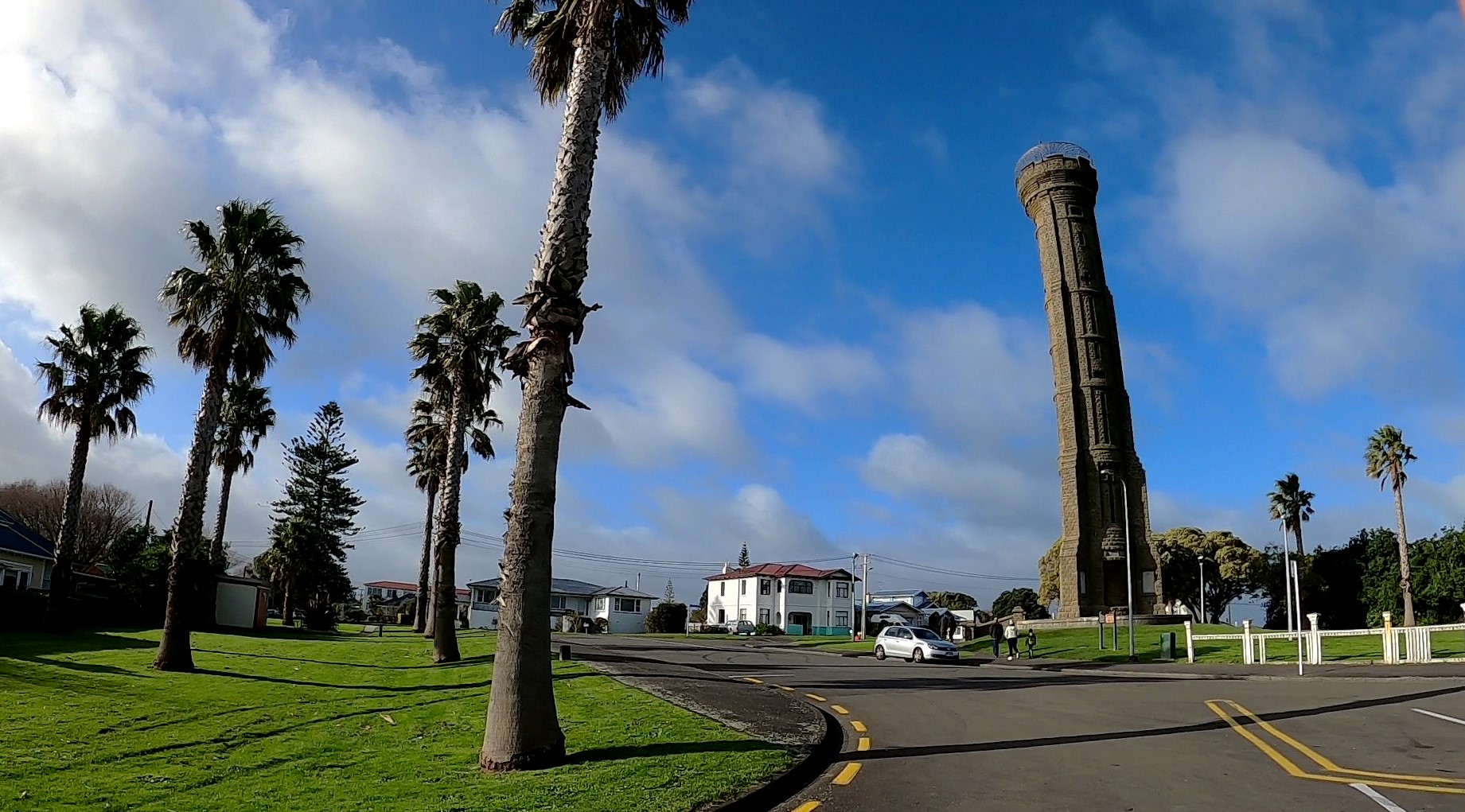
These look to about 40 years old, and will undoubtedly constitute quite a sight as they continue growing skyward.
Gisborne’s Mass Planting
In part 1 of this post we saw significant plantings of W. robusta in Napier, but it is perhaps further north in Gisborne where there has been the largest mass planting of the palm in New Zealand. The numbers planted are recorded in this extract from a Gisborne District Council document:
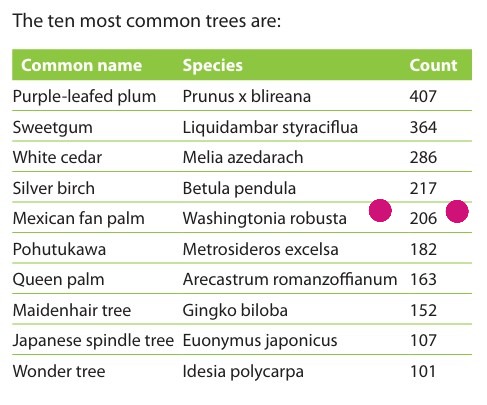
Source: Gisborne District Council, Tairawhiti Street Trees and Garden Plan
The palm is not the most heavily planted street tree, nonetheless at 206 in number they constitute a significant presence on the streets of Gisborne. It is worth noting that the Queen palm is also heavily planted, with both of these palms dominant in the central city streets of Gisborne. The wide streets of Gisborne were initially quite stark, but now have been transformed into a palm lined thorougfare, as we can see from some photos centred on the Memorial Clock Tower:
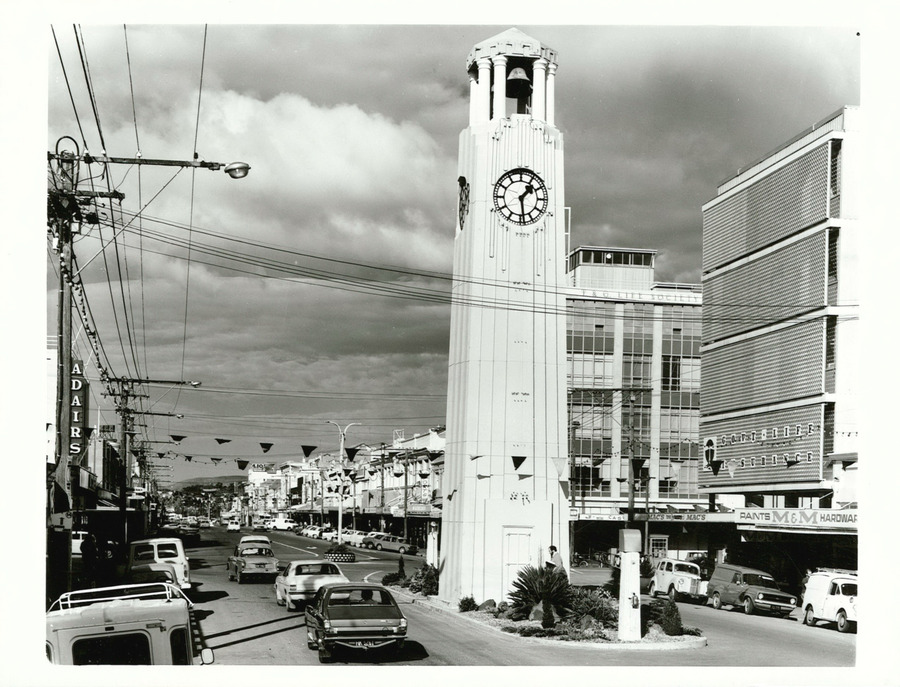
Source: Gladstone Road with the Memorial Clock Tower in the foreground, R. Coad, 1977, Archives New Zealand
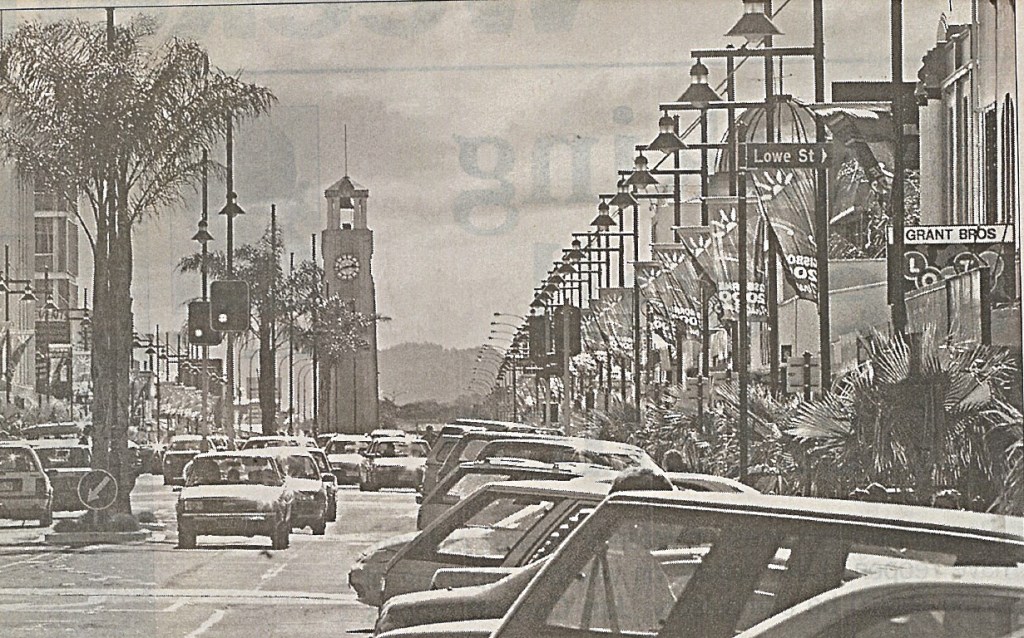
Source: Gisborne Herald, 12-13 August, 2000. Courtesy of Tairawhiti Museum
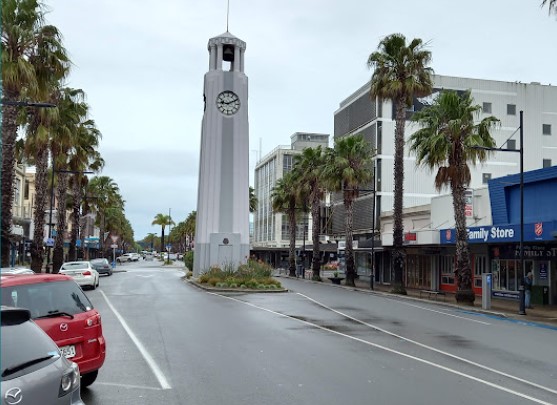
Source: Google Maps, September 2022.
The Gisborne Herald photo from 2000 suggests that the W. robusta were planted about 1995,3 though the Queen palms in that photo must have been planted at an earlier date4. Now at between 10 to 15 metres tall, Gisborne’s skyduster palms have grown at a rapid rate. With a few more years growth they should become equally as iconic for Gisborne as the Phoenix palms of Kennedy Ave are for Napier (52 palms planted in 1929 – see NZTR entry on the 52 palms).
Wellington: not a palm town
There are a few specimens of young W. robusta in the Wellington region, but I only know of one that approaches the size of the large specimens we have seen in Hastings, Napier, and Whanganui. A few photos serve to show that singly their height is still impressive but they do look ‘better by the dozen’:
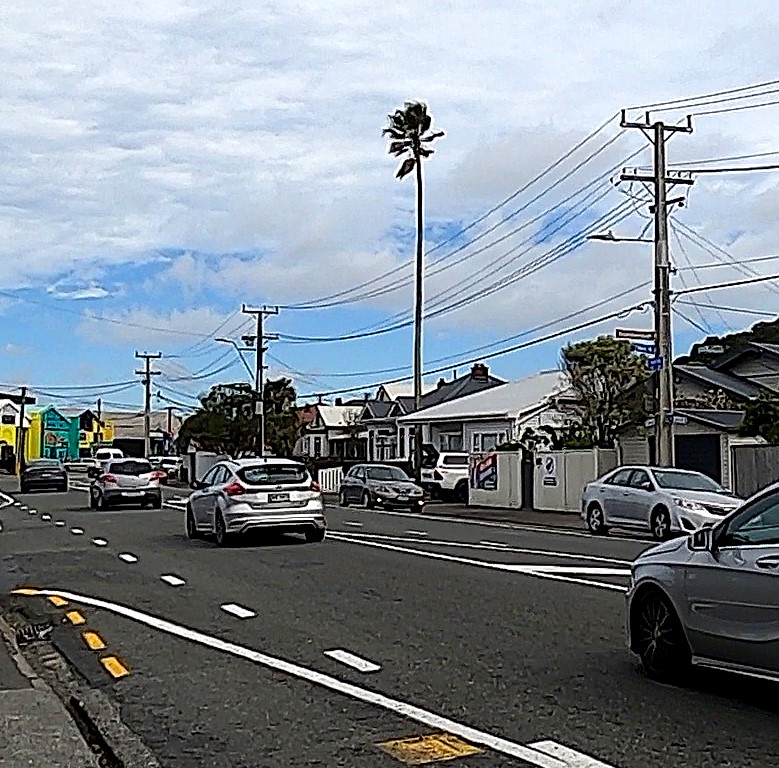
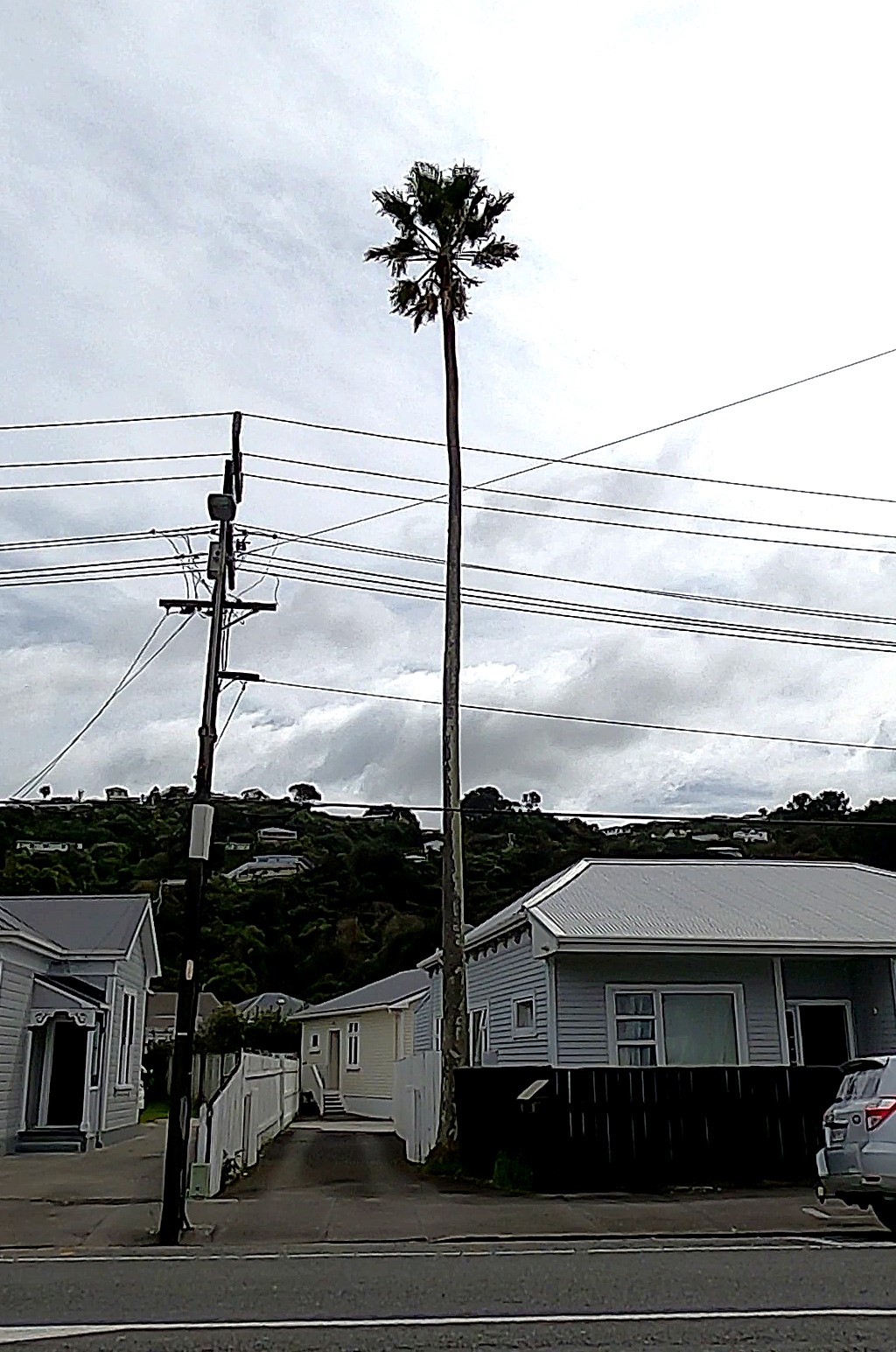
This specimen, located in Petone, is on Lower Hutt’s register of notable trees where the age given is circa 100 years. It is visible on the skyline from some distance, but does appear to be slightly lonely.
- Conrad Heinold (sometimes mistakenly spelt as Heinhold) was a naturalised German immigrant, who ran a successful butchers shop in central Wanganui. Not long after his involvement in the Durie Hill beautification, he fell victim to anti-German sentiment during World War One: his butcher’s shop was vandalised in a mini-riot, prompting Mr Massey, the Prime Minister, to issue a statement condemning the riot (see ‘Feeling against Germany: Big disturbance in Wanganui’, Otago Daily Times, 24 May, 1915, p. 3). ↩︎
- The skydusters were entered on the register in 1988, showing how early they had reached a notable height. ↩︎
- An inquiry to the Gisborne District Council about dates of palm planting yielded no information. ↩︎
- Also known as Cocos plumosa the planting of Queen palms in Gisborne may have connections to efforts of Clement Wragge to popularise the palm in the early 1900s. As such I may pick this up in a later post. ↩︎

 The Local Arboretum: Noticeable trees and their stories
Leave a comment