If you fly into Wellington and drive into town from the airport, the first significant trees you come across are in the Mt Victoria town belt. The planting of conifers in this large public reserve began in the early 1880s, and radiata pines and macrocarpa still predominate. Some of these old conifers featured in the Lord of the Rings film scenes known as ‘The way of the Nazgul’, ‘the Black Rider’, and ‘Hobbit hideaway’, and exact locations can be found on Google Maps. The large pines and macrocarpas do make a very good film set, but their darkness also makes an excellent contrast to a tree which is also common in New Zealand, but which as far as I know did not become part of the Lord of the Rings film sets. This is the tree commonly called the White Peppermint Gum, or in botanical nomenclature, Eucalyptus pulchella, which is a gum tree endemic to Tasmania, Australia. Some photos taken on a sunny day on the eastern side of the Mt Victoria town belt clearly show the aptness of the white descriptor:
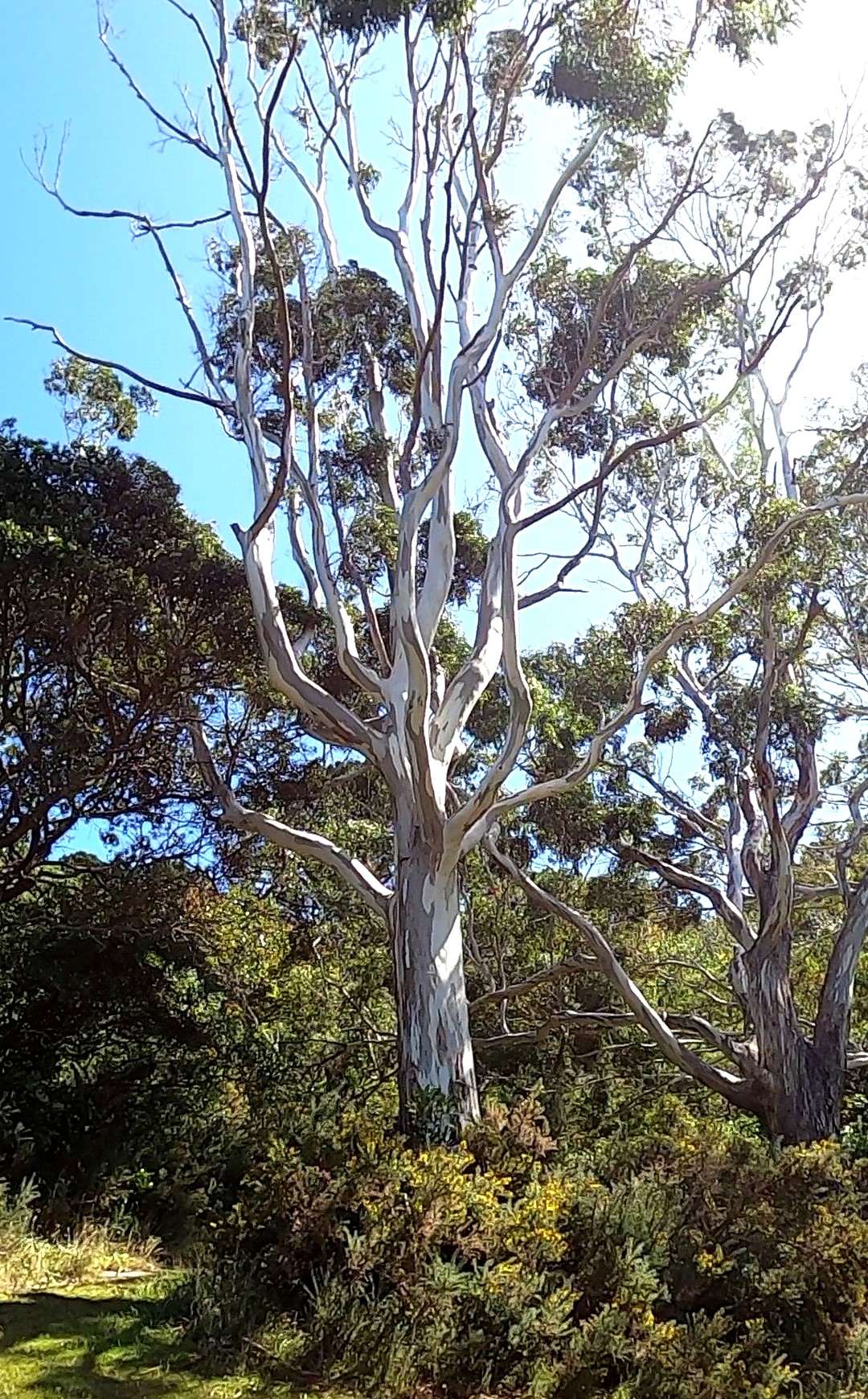
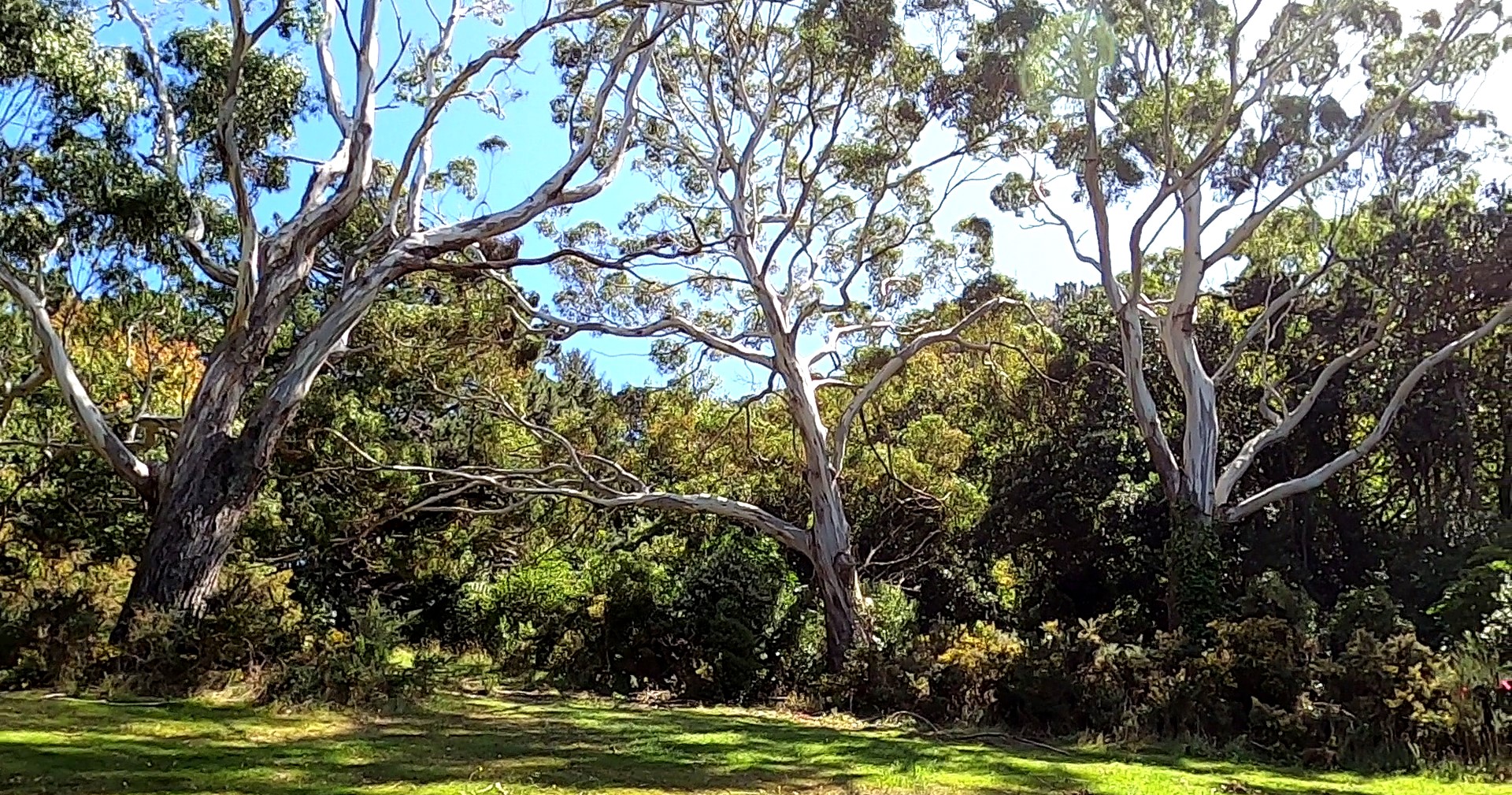
Author; Location, SH1 Hataitai, Wellington
M. Wilcox of the Forestry Research Institute notes that E. pulchella was widely planted in New Zealand’s North Island, however it was ‘virtually worthless’ as a forest tree owing to its crooked stem and relatively slow growth rate.1 From a forester’s point of view the tree’s aesthetic features were clearly not of interest, but it seems that the value of the white-limbed trunks and their crookedness did not escape others as the tree was also planted in amenity and garden landscapes. Here are a few in the Wellington region:
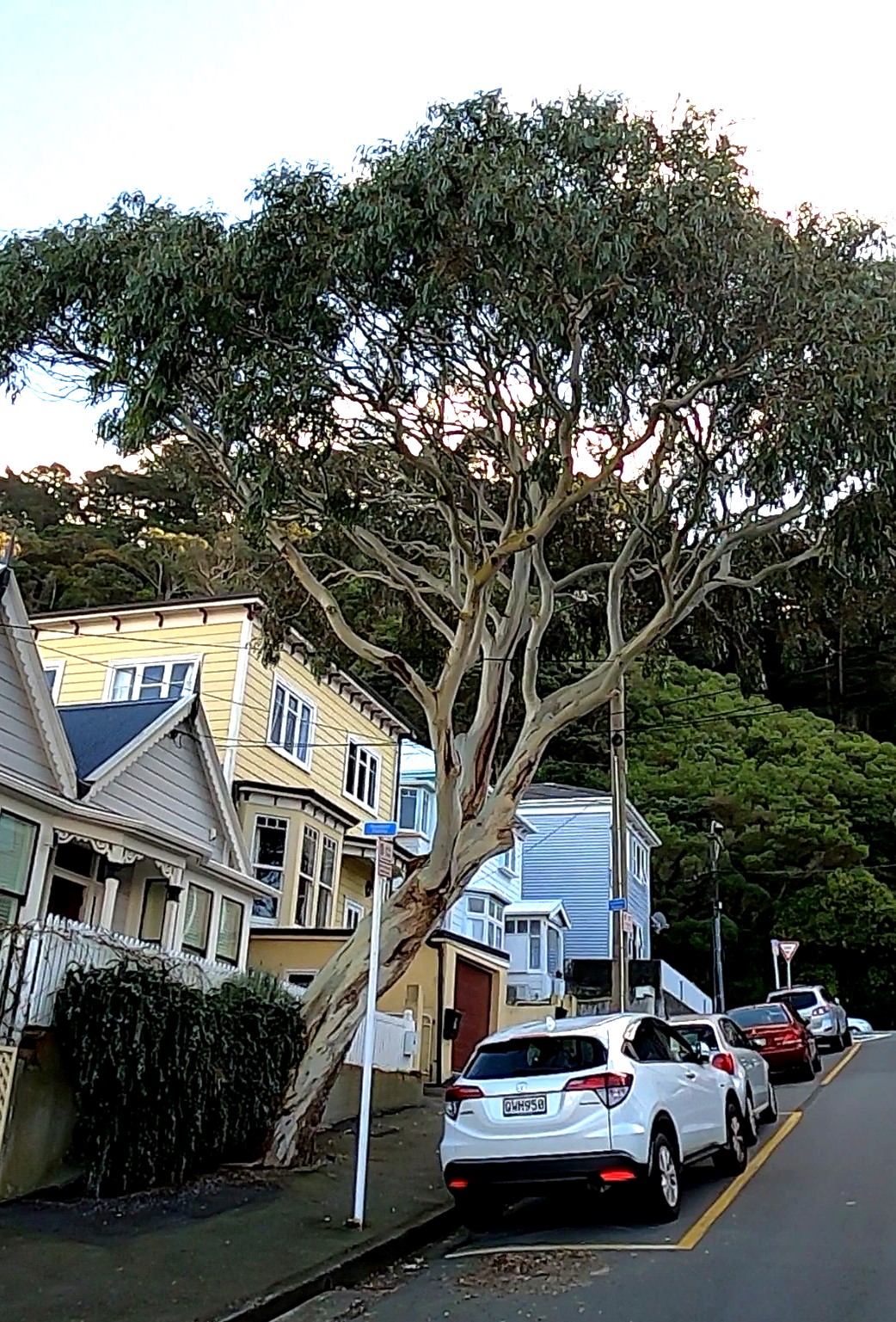
Author; location: George St, Thorndon, Wellington
This tree is not particularly old, but it is certainly very noticeable. The photo was taken early in the morning, when the whiteness of the trunk made it significantly stand out (the photo doesn’t do it justice).
Here is a much larger tree, similarly in a footpath space, but this time on a busier road:
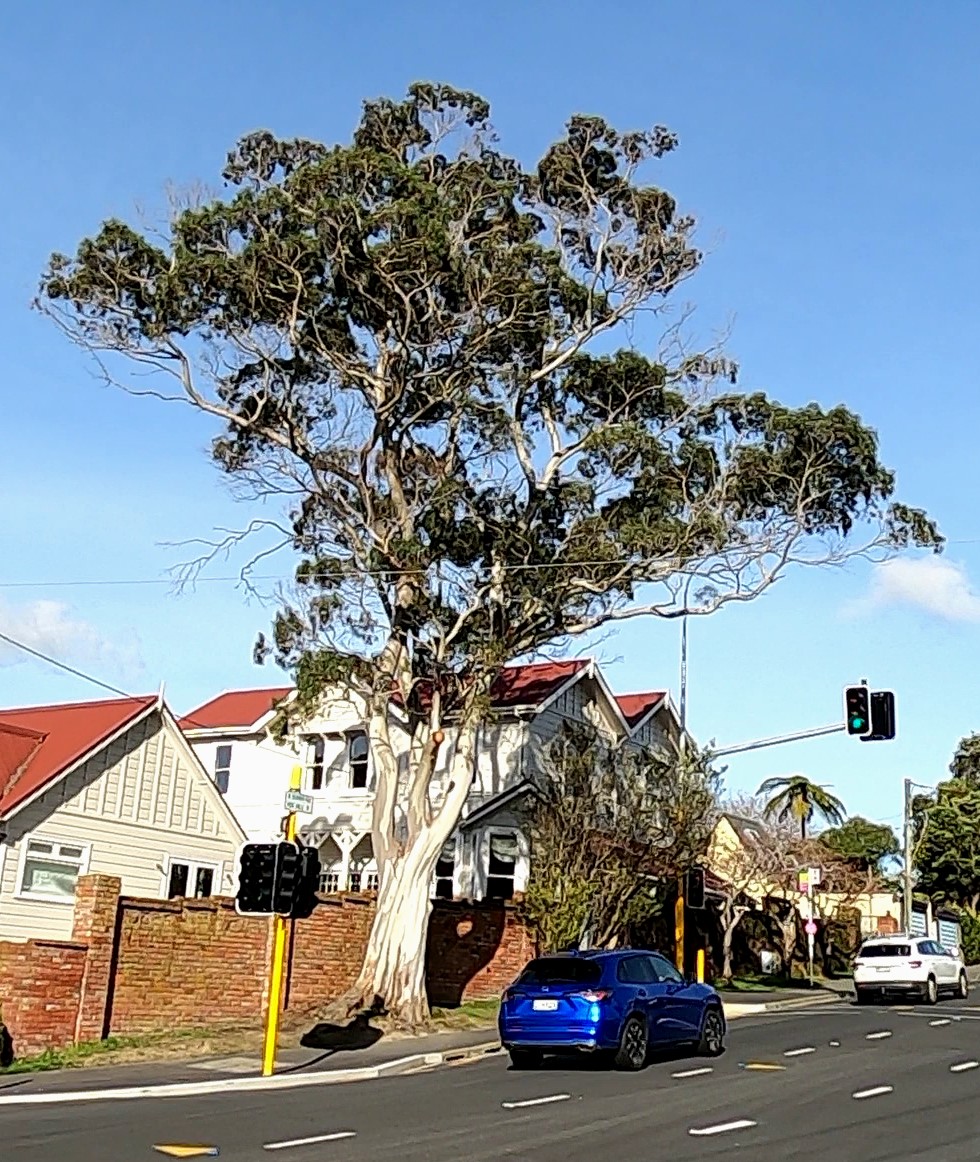
Author; Location: Burma Rd, Khandallah, Wellington
This tree looks to be at least 20 metres tall, so quite old, but if we look closely at the trunk, the same features of whiteness and crookedness predominate:
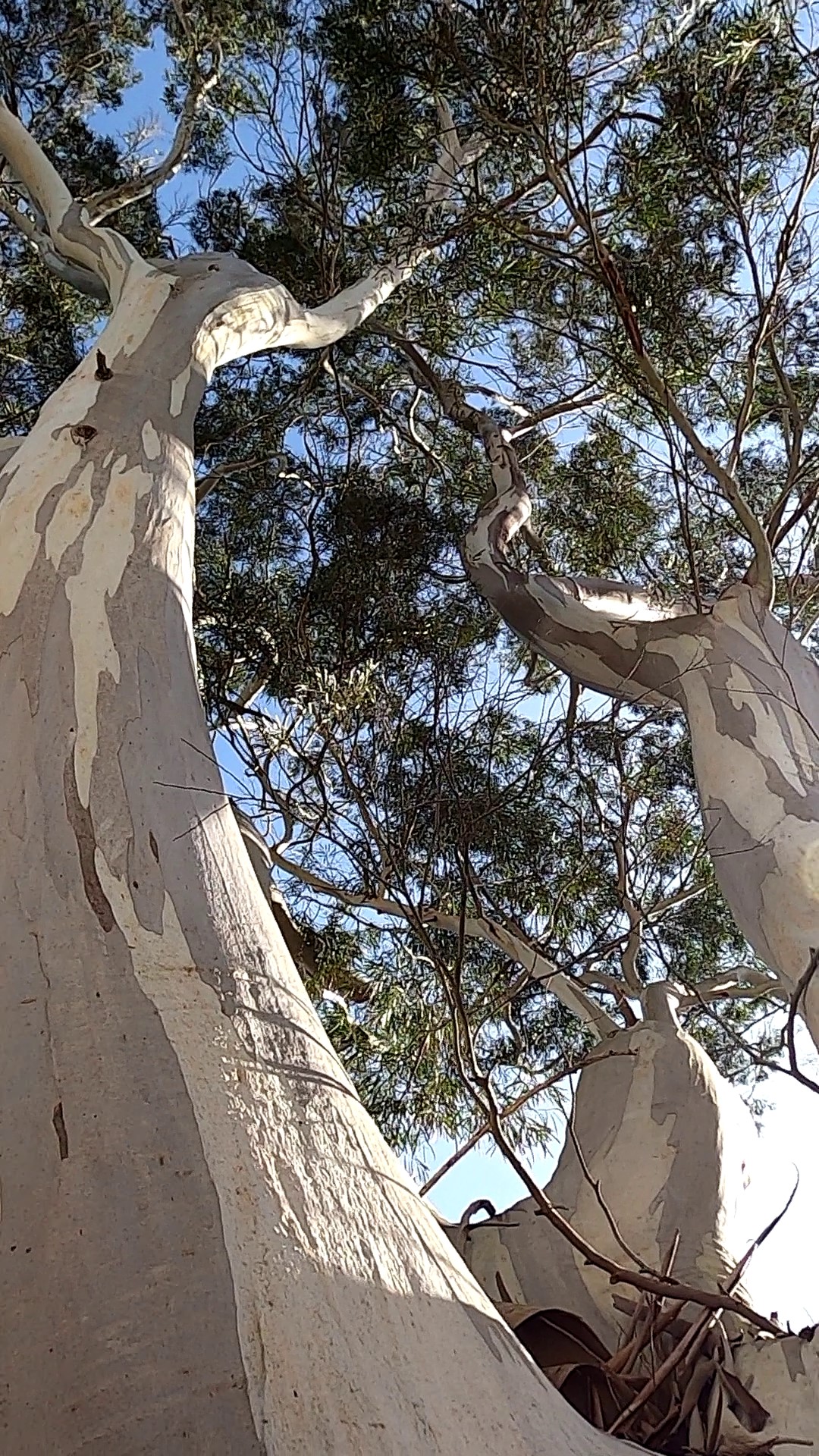
Finally, here is a white peppermint gum tree found in Featherston:
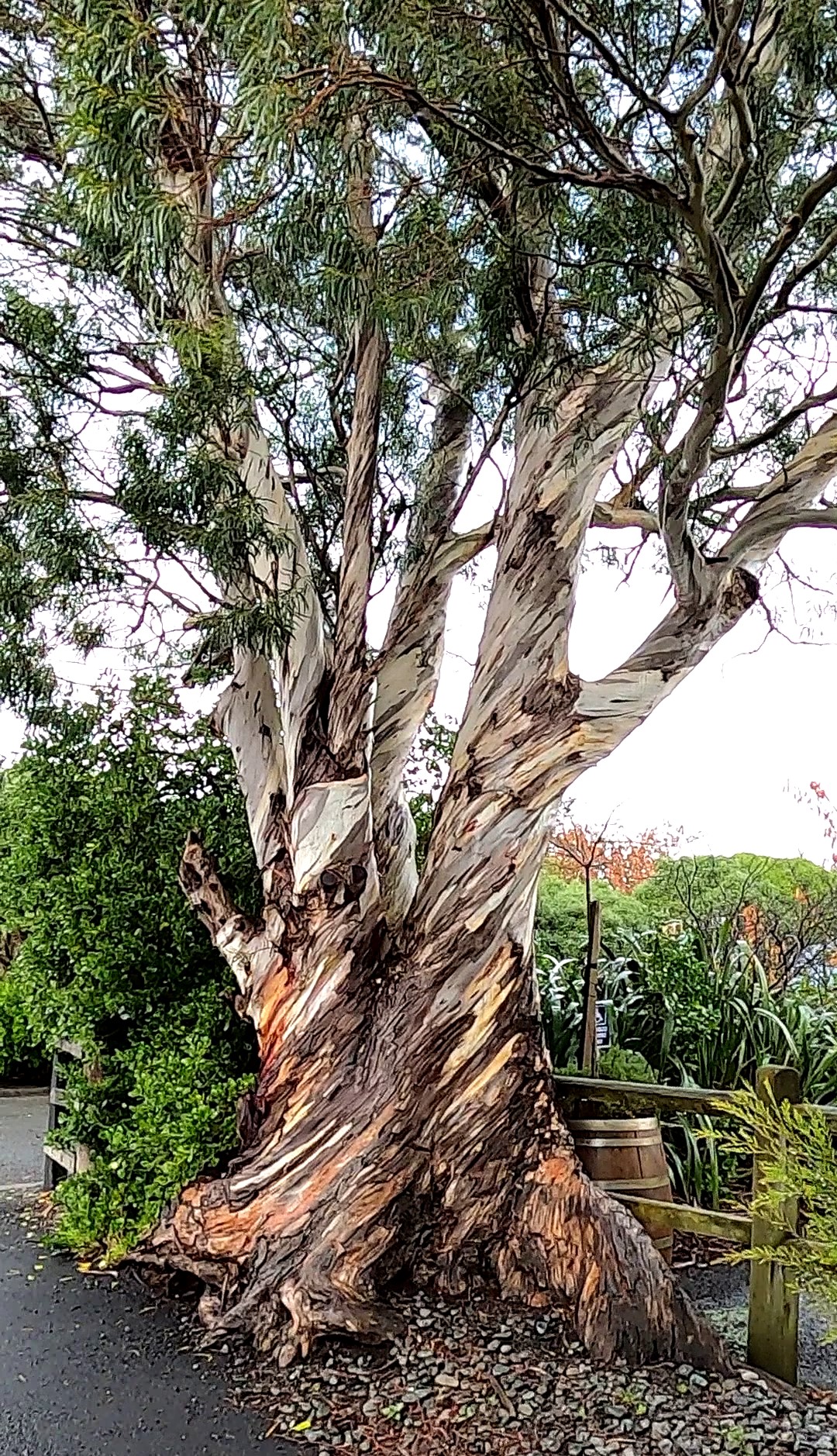
Author; Location: Revans St, Featherston
The lovely orange tinge to some of the bark is explained by significant rain falling just before the photo was taken. Also this particular tree has a slighlty different ‘wrapping’ to the trunk pattern, collectively adding to its strong visual appeal.
Clearly, text and images cannot convey the strong peppermint smell of the gum’s leaves, but even without this it is clear they are a tree worth keeping an eye out for.
- ‘The peppermint group of eucalypts’, New Zealand Journal of Forestry Science, 1979, vol 9, pp 262-266, ↩︎

 The Local Arboretum: Noticeable trees and their stories