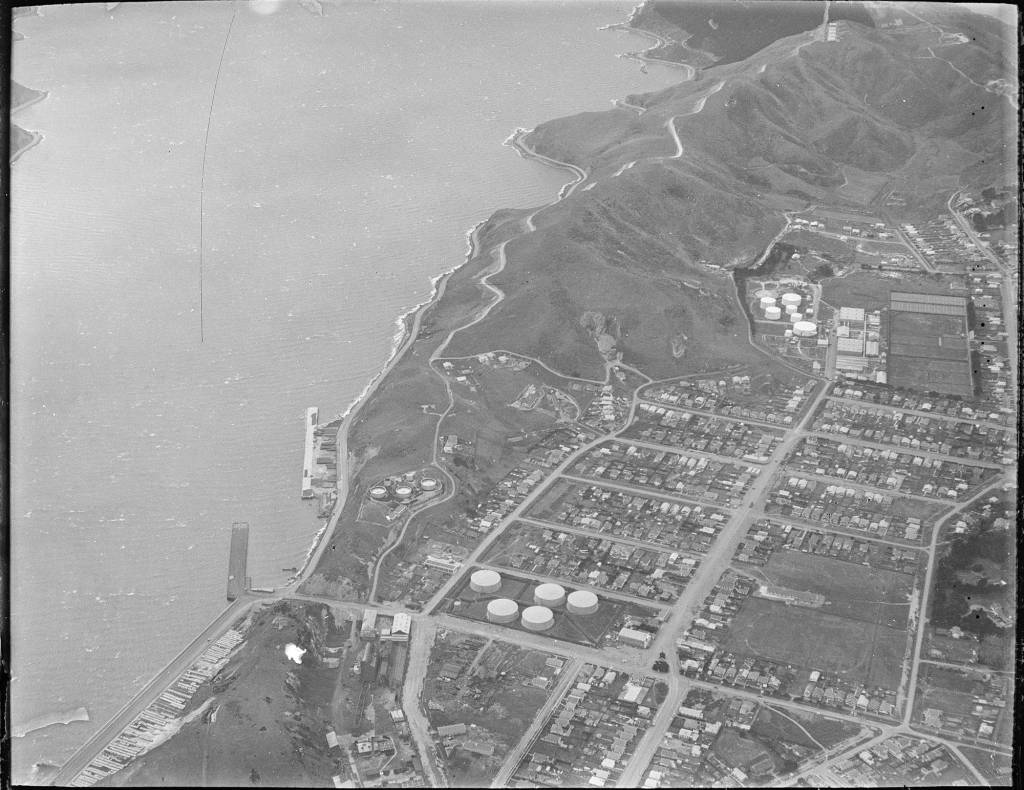
Source: ‘Wellington from the air, 1930‘, F. Douglas Mill Collection, Auckland Libraries Heritage Collections FDM-0570-G
The photo above shows part of the Miramar Peninsula, Wellington. If you fly into Wellington when a southerly is blowing, you’ll be just above the strip of water with the land to your left. Struthers1 reports that the name ‘Miramar’ was adopted in 1870 by J. Crawford, a major European landholder, in reference to the Italian ‘mira mare’, meaning ‘behold (or wonder at) the sea’ and the supposed likeness of the area to the Gulf of Trieste where there was a ‘Castle of Miramar’. Clearly though, as the photo shows, in 1930 the Miramar Peninsula did not have the established tree life we would associate with an old castle on the Italian coast. However, this was about to change, particularly here in the area enlarged from the photo:
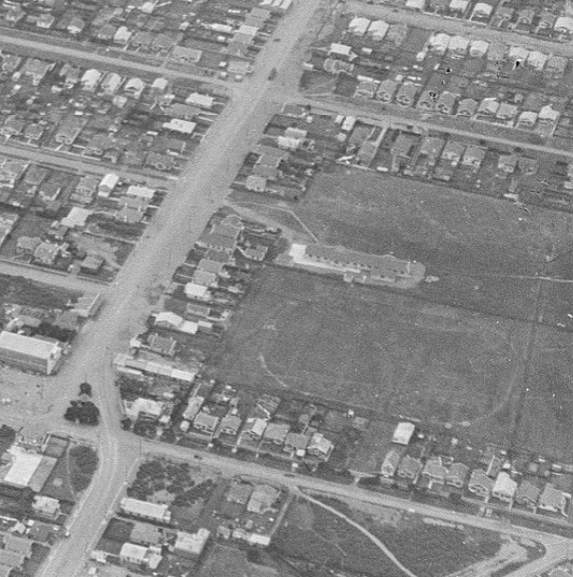
The very wide road running south to north is Park Rd, which is crossed by Miramar Ave. A branch of the Wellington tram system ran up Park Rd, past a main shopping area, including the Roxy Cinema (the large building to the left of the intersection).
On the 16th of January, 1931, it was reported that in these streets of ‘noble width’ a start had been made in local beautification. Pohutukawa trees were planted, and these being a ‘fairly fast grower … these streets will gain considerably in picturesque aspect in a few years’.2 Indeed this proved to be the case, and the popularity of the pohutukawa as a street tree spread within a few years to nearby streets of less ‘noble width’. Within the area considered to be central Miramar, and not including planting in parks, Para St, Chelsea St, Brussels St, Rex St, Weka St, and Rotherham Tce all had pohutukawa planted as street trees. Miramar Avenue alone has a total of 67, and there is little doubt that the sum total planted would be well over 300. As I have written elsewhere Wellington is very much a ‘Pohutukawa Town’, even though the tree is not endemic to the area. They certainly flourish near the sea, which Wellington in surrounded by, and also seem able to tolerate Wellington’s notoriously strong winds. The numbers above clearly suggest that within Wellington, no other area can challenge Miramar as the leading ‘Pohutukawa Suburb’.
The Miramar Avenue pohutukawas are particularly noticeable because they are planted on both sides of the road, but it is useful to start with a single tree visible in an historic photo from 1978 as this provides a good point of comparison to realise the rate of growth. The photo shows the Church of the Holy Cross with an already decent-sized pohutukawa in front of it:
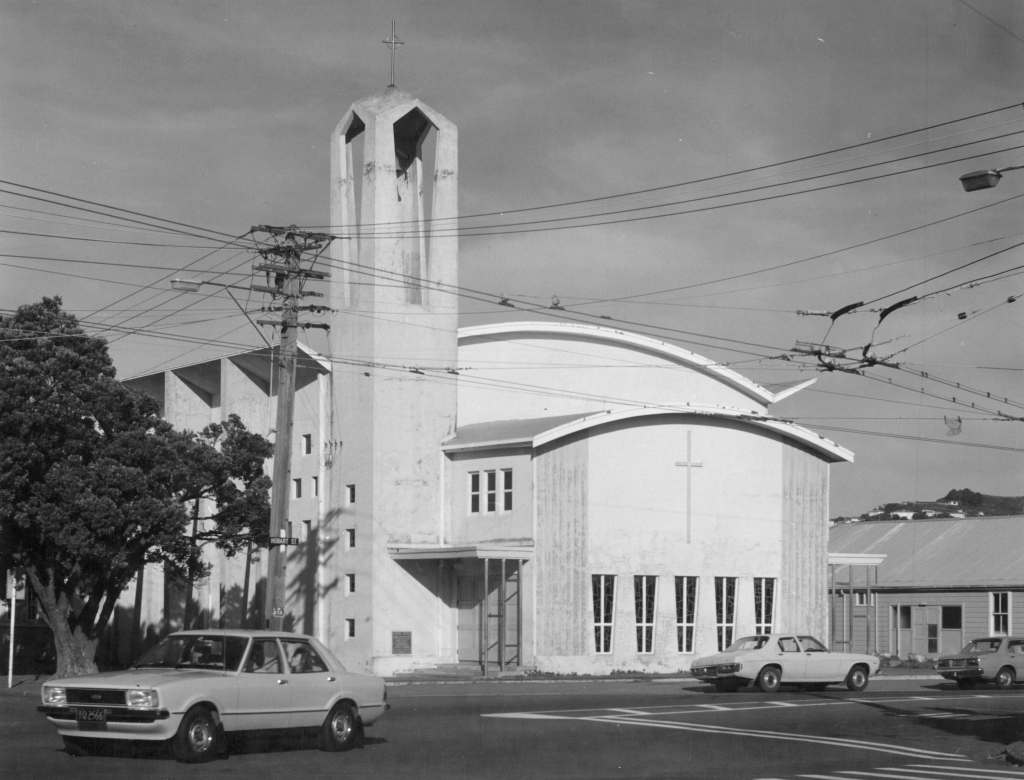
Source: Church of the Holy Cross, Hobart Street, Miramar, 1978. Charles Fearnley, Wellington City Recollect 1432
The church is not visible in the aerial photo above as it was not opened until September 1961, but it is located at the intersection where the tram route slightly curves from Hobart St into Park Rd. The overhead lines visible here are for electric trolley buses, as the Miramar electric tram route was discontinued in 1957.3 A photo from April 2026 shows us how much the pohutukawa has grown:
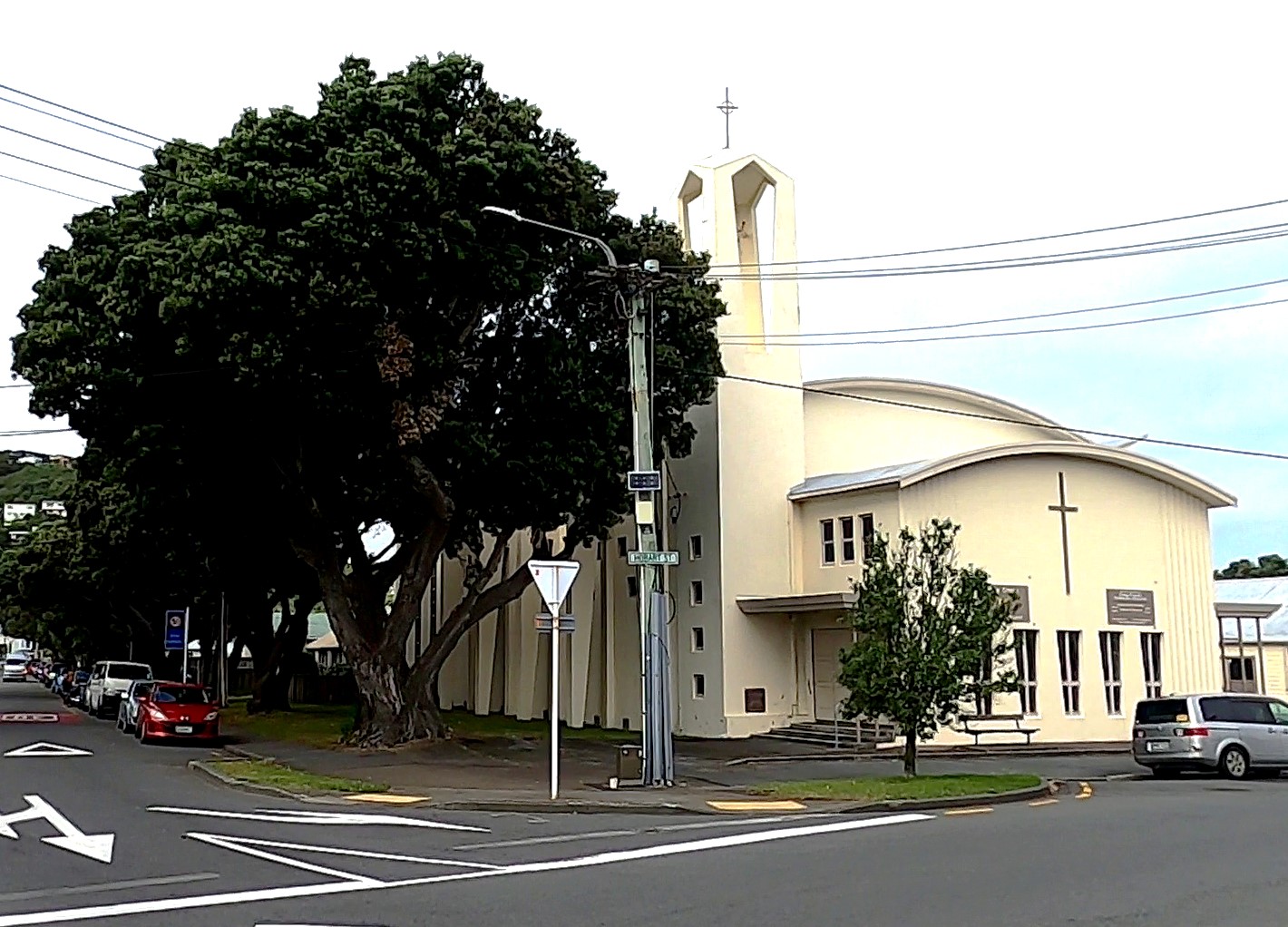
The useful internet resource Wellington Urban Tree Explorer measures the tree, in 2020, at 12.3 metres high and 9.03 in diameter. Sadly, the Holy Cross Church ceased being used in September 2024 due to earthquake damage and water-tightness issues, and its future is currently undecided.4
Proceeding eastward on Miramar Ave we can see there are many more pohutukawa of similar size:
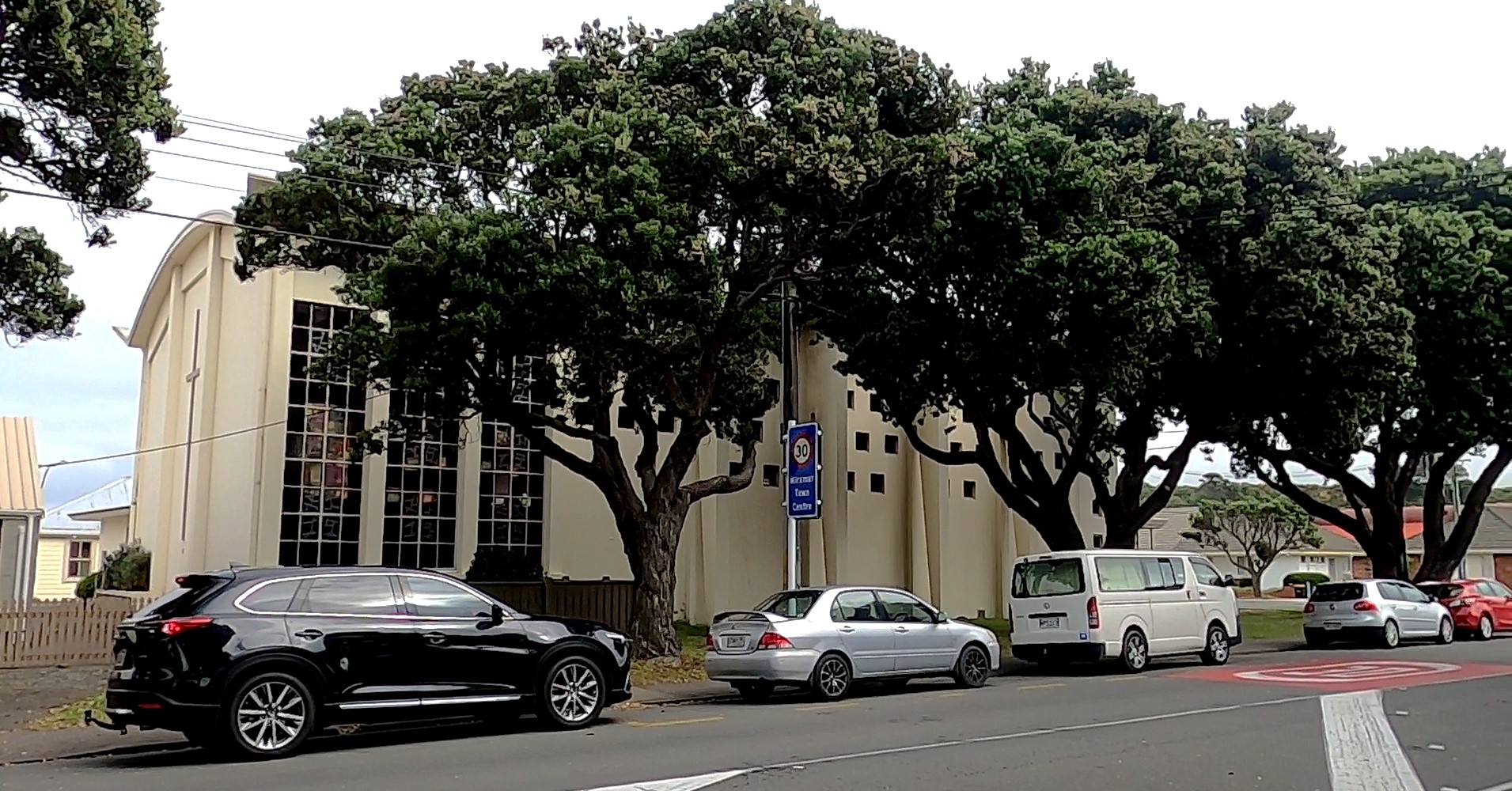
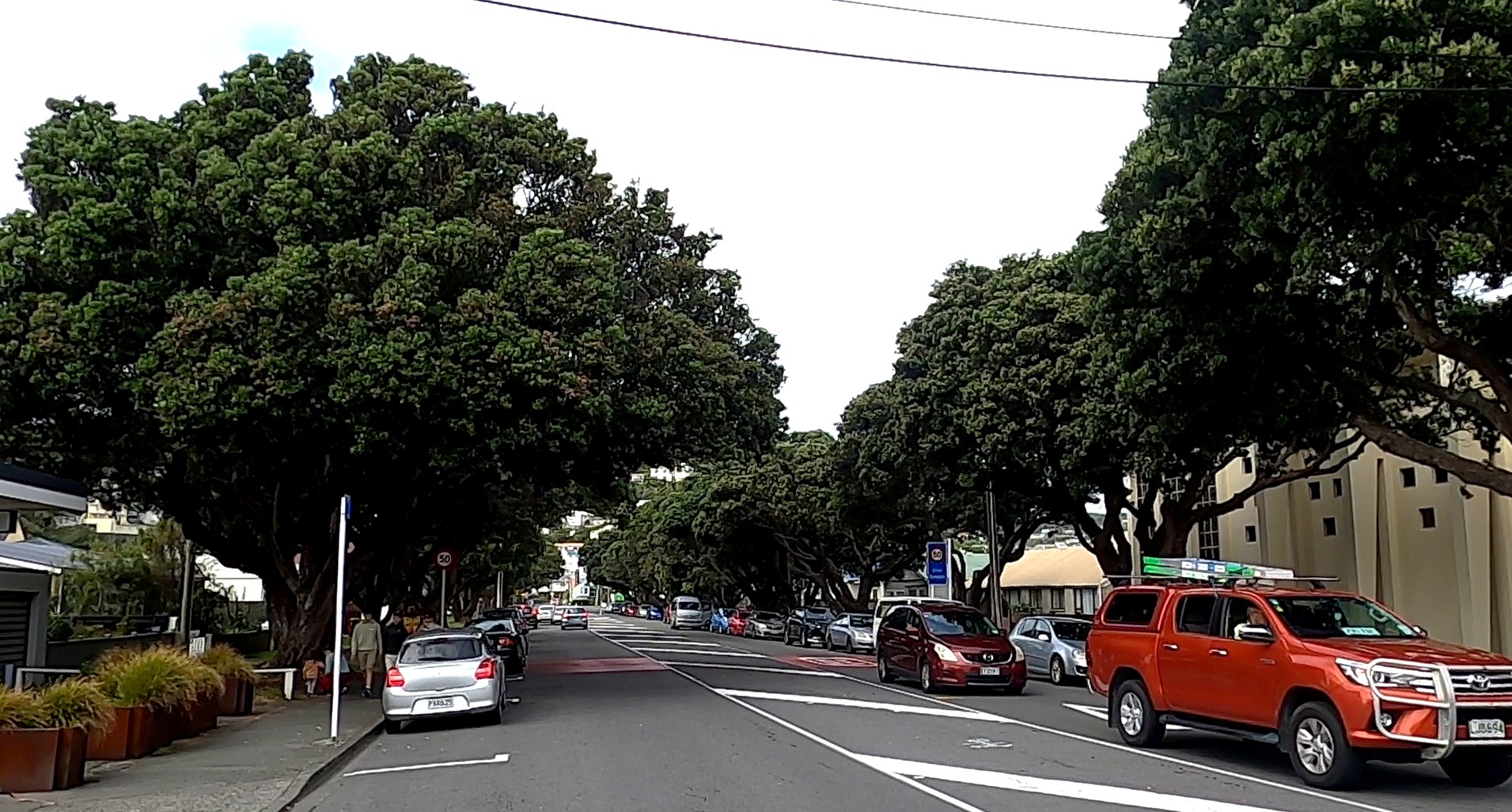
The trees have the typical feature of often being wider than they are tall, and while the photos don’t do justice to the reality, there is very much an effect of travelling through a tunnel of pohutakawa. Unfortunately, the photos were not taken during flowering – usually December to January – when the visual impact is even more pronounced.
I don’t live in Miramar so have little idea of the range of local attitudes towards the trees, however, some visual and other evidence can be marshalled on this. As noted, pohutakawa have been planted in Brussels St, but interestingly a newspaper article suggests that by 1951 when they were planted, not everyone was thrilled with them:
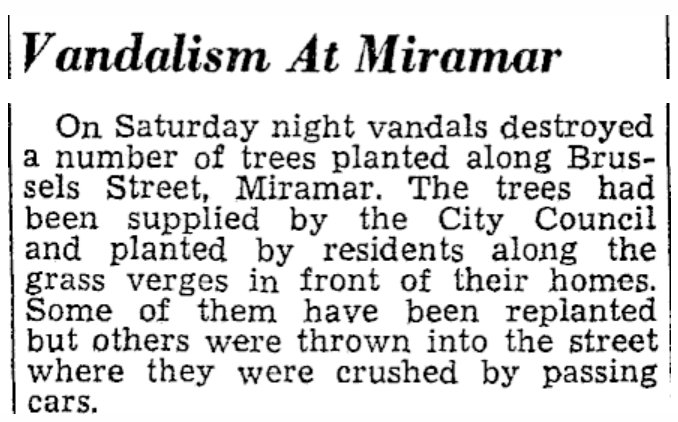
Source: Evening Post, 4 September, 1951, p. 9
The article does not mention that the trees were pohutukawa, but recent photos establish that they were:
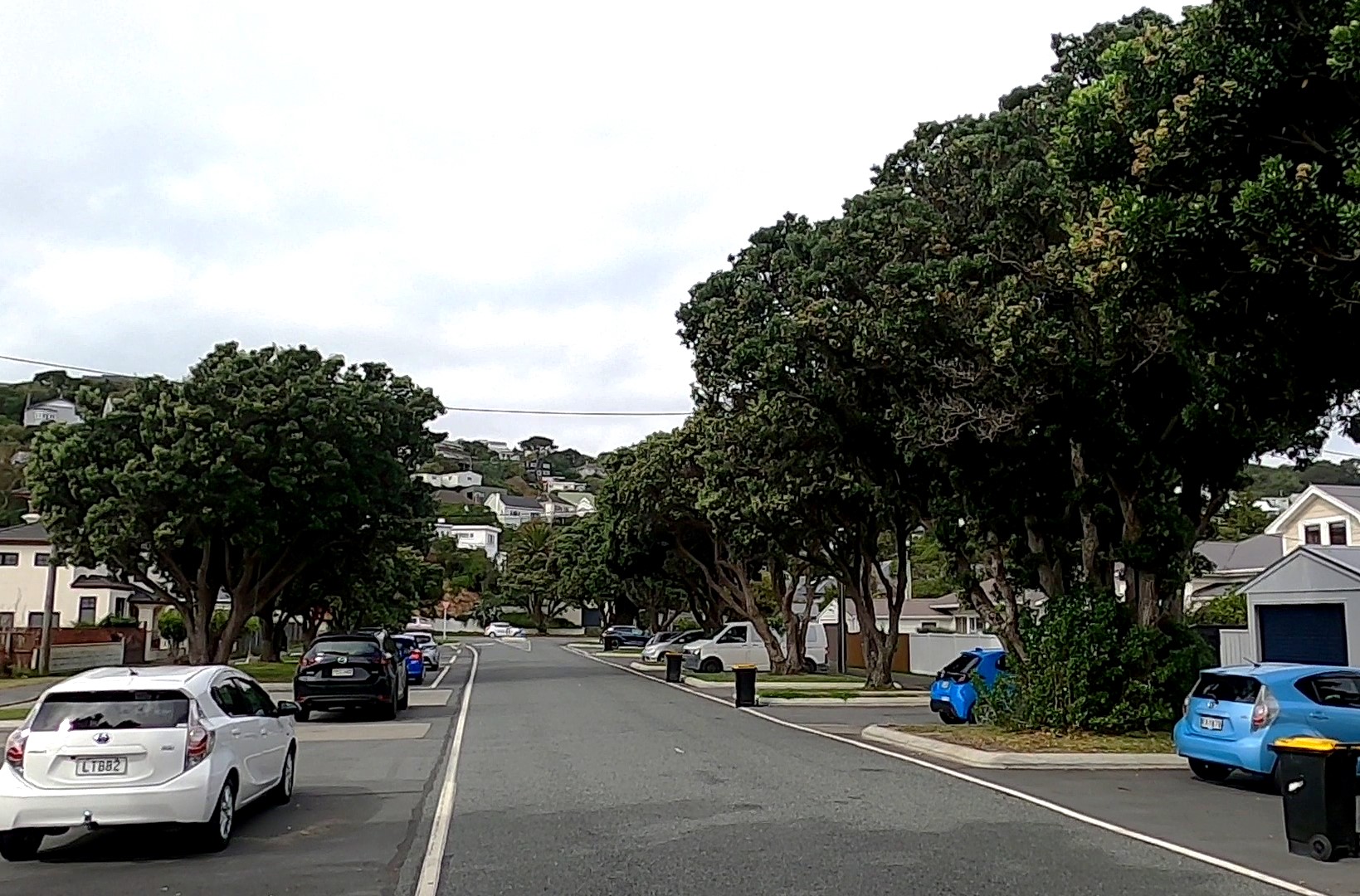
The layout of the road has probably changed since 1951. We can see here that recently the council has made considerable effort to accommodate both the trees and spaces for car parking. Pohutukawa seem well-suited to such street tree planting, and we can see a further advantage of them just around the corner in Park Rd, which is the very wide road where part of the original 1931 planting occurred:
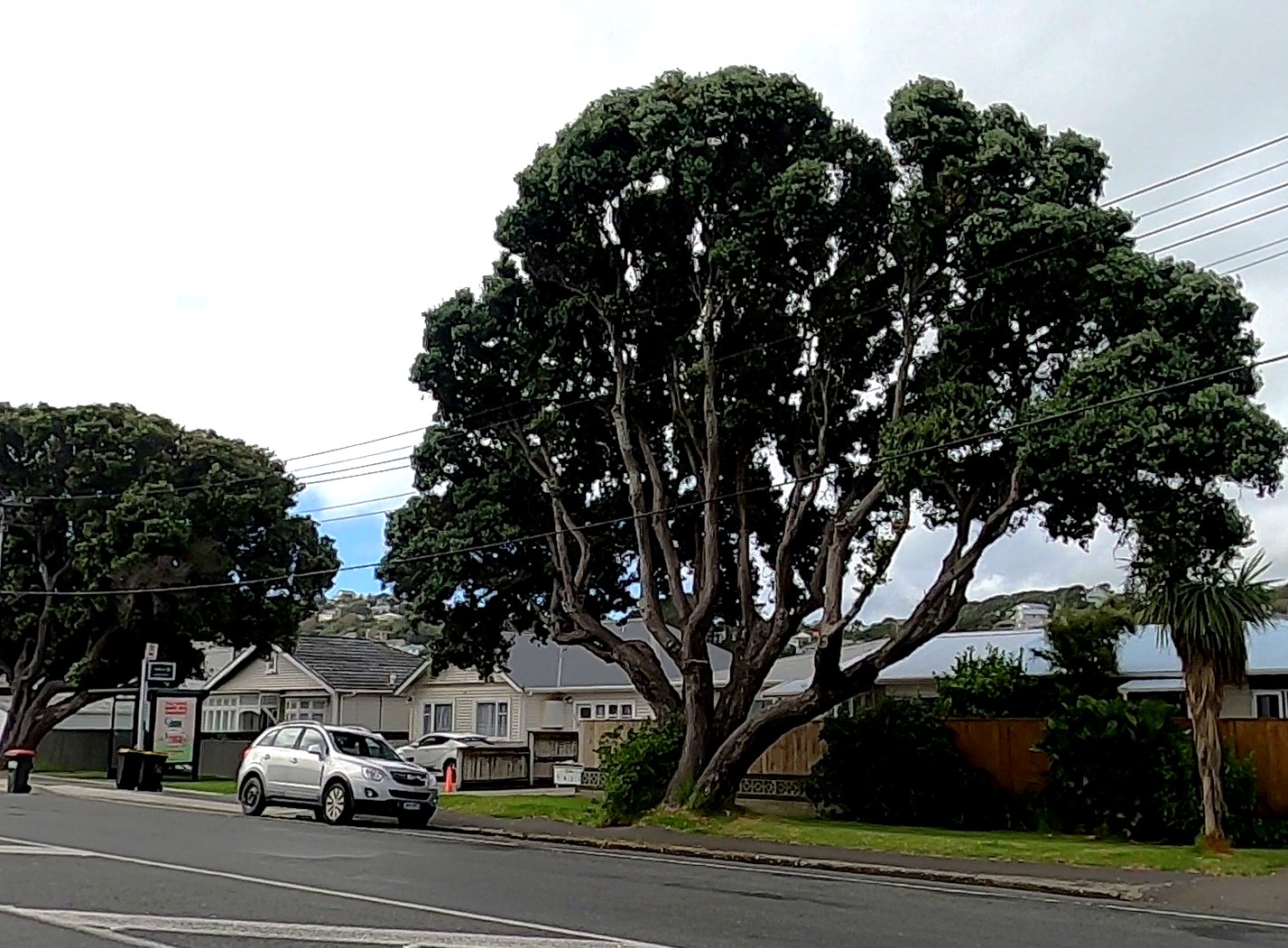
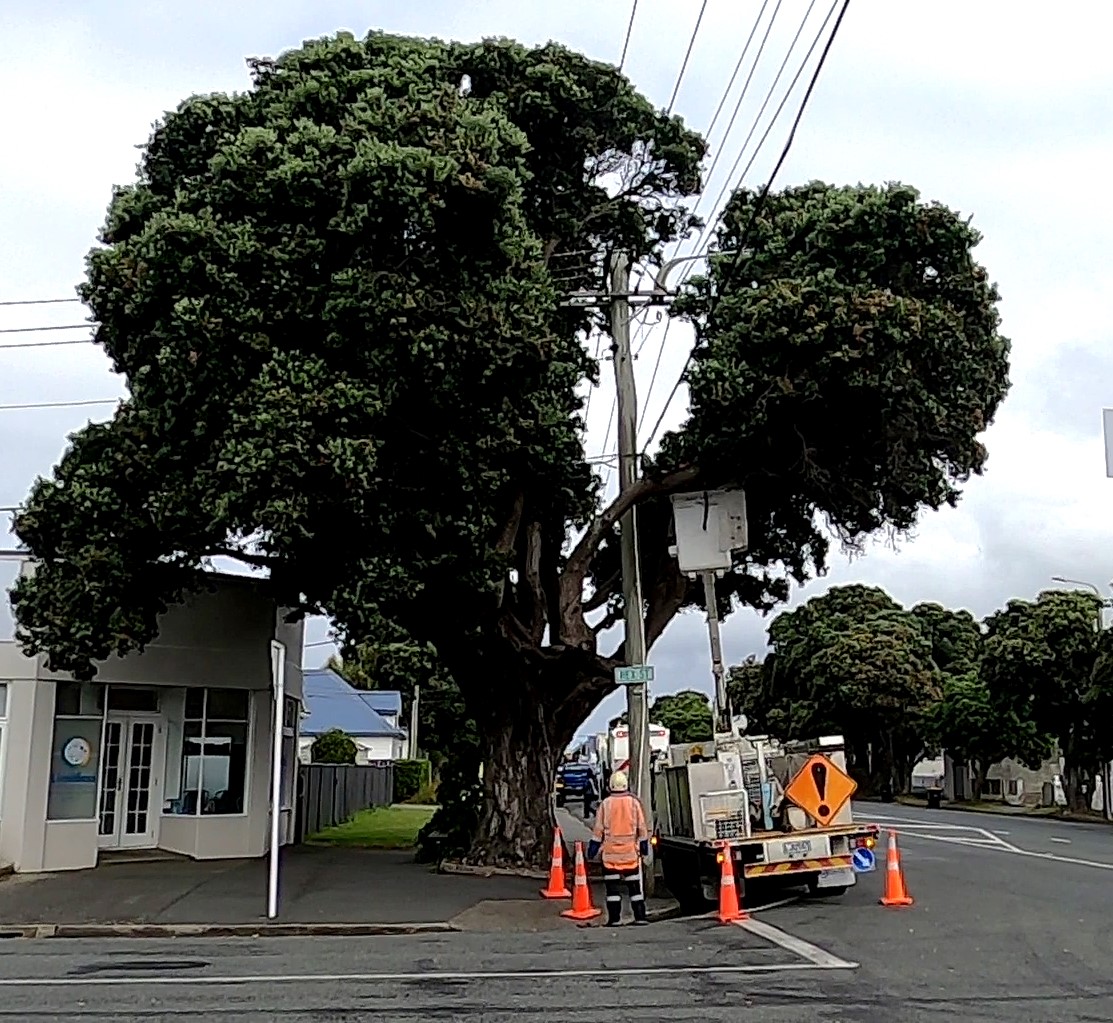
The photo to the left shows how a pohutukawa can be pruned, effectively with a ‘flat half’, to avoid power lines without destroying its visual impact. Fortuitously, while I was photographing, I came across a lines company in the act of line maintenance, and the photo to the right again shows how the structural features of the tree allow space to be made for overhead lines. Not all trees would so readily admit such pruning, nor retain their aesthetic features afterwards.
Of course, sometimes the roots of the trees cause unevenness to foopaths, as these final two photos show:
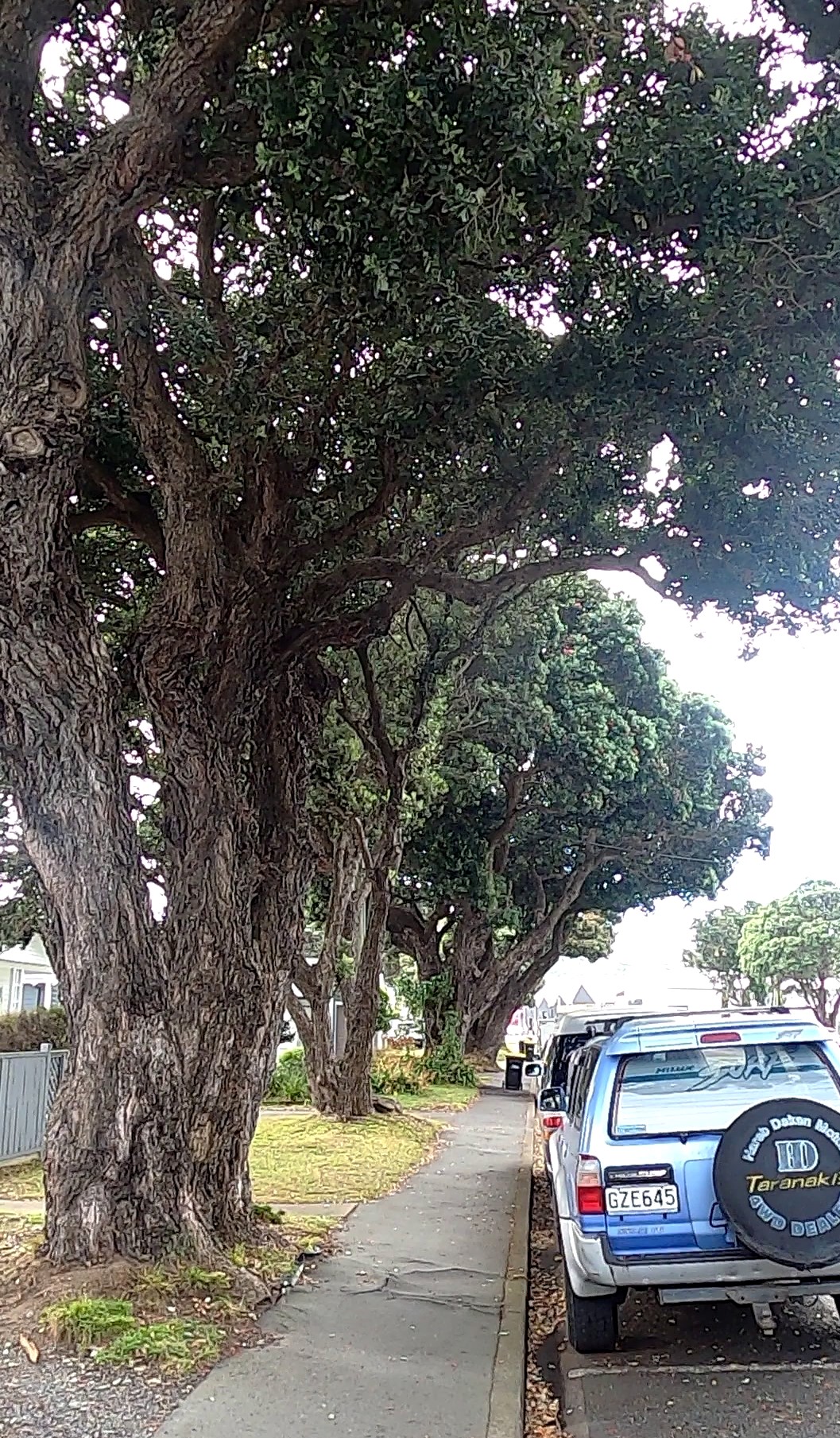
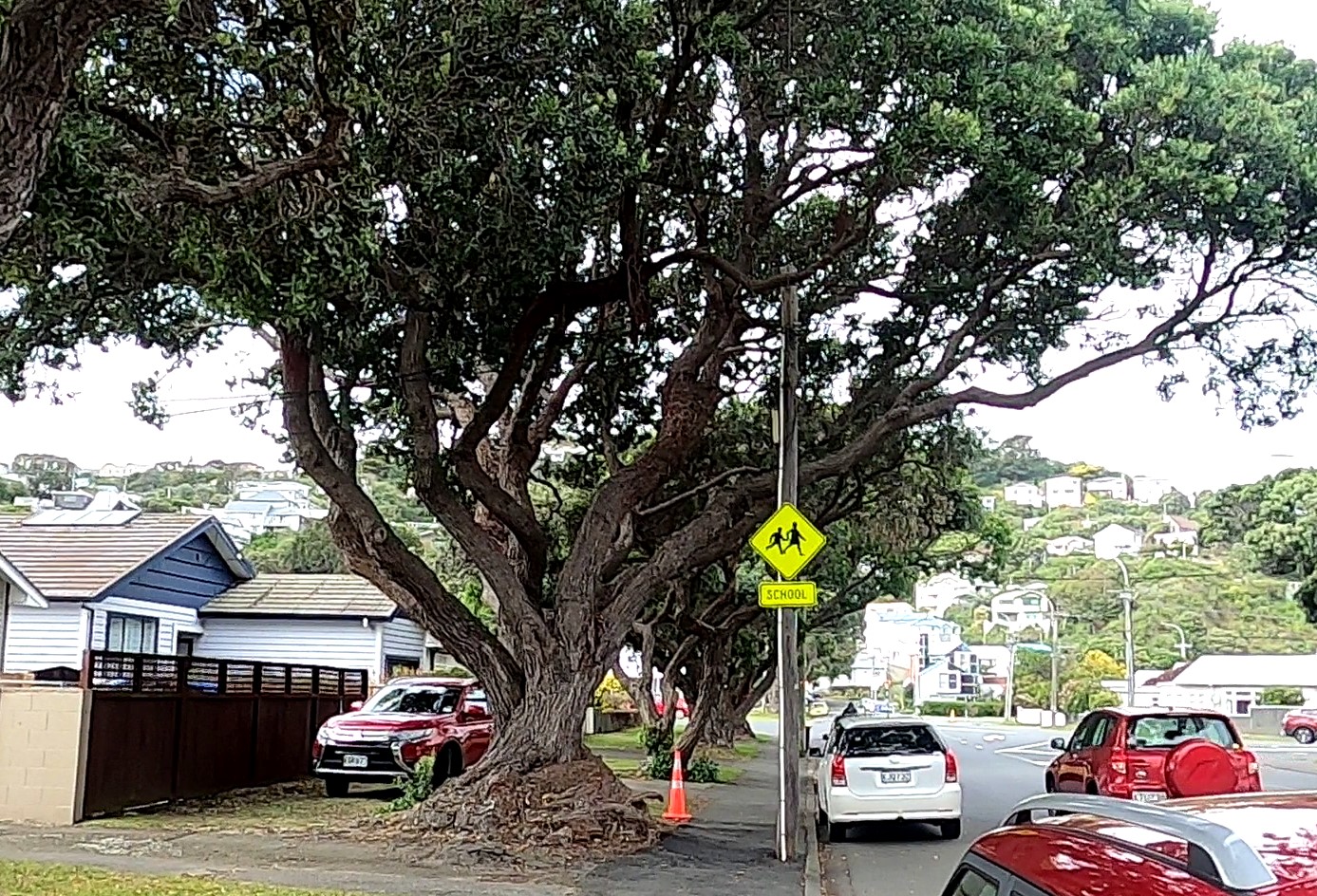
Nevertheless, given that the trees we are looking at here are 95 years of age, surely such disruption is a small price to pay for the undoubted collective effect of the Miramar pohutukawas.
- John Struthers, 1975, Miramar Peninsula: A historical and social study , (self published). ↩︎
- ‘Decorative streets. A start at Miramar’, The Dominion, 16 January, 1931, p. 3 ↩︎
- See E. Cox, 2018, ‘Electric Dreams of Wellington’s Tram History‘. ↩︎
- See ‘Cracks, climate change, safety, close church‘ CathNews New Zealand. ↩︎

 The Local Arboretum: Noticeable trees and their stories