There have been several posts in this blog on various aspects of the Phoenix palm. The number of these is partly because I spent at least a year, from about 2023, researching the spread of the palm in New Zealand. The posts herein have been kept relatively short, but readers who are still interested can read a much longer paper (about 8,000 words), now published and fully available from the International Review of Environmental History: ‘As seen at Ellerslie’: The spread of Phoenix palm sets in New Zealand. The paper’s abstract gives a good indication of what is covered:
‘As seen at Ellerslie’: The spread of Phoenix palm sets in New Zealand
The Phoenix palm was introduced to New Zealand in the late 1800s. Once found to be hardy outdoors, it was quickly utilised in amenity horticulture, often being planted in groups (called a palm set). This followed international trends established in Mediterranean countries, and further spread to the Americas and Australia. Information about these trends reached New Zealand before the palm was available; however, an understanding of the relatively quick spread of palm sets needs to incorporate local effects. The case considered here is the role of a Phoenix palm set planted about 1913 in Auckland’s Ellerslie Racecourse. This palm set established an exemplar, stimulating planting of many other sets, particularly elsewhere in the North Island. Partly because of this influence, the period from the 1920s to the 1950s saw Phoenix palm sets planted from the far north to as far south as Timaru in the South Island. The social history of this new landscape trope helps us understand the processes that shaped the contemporary amenity environment.
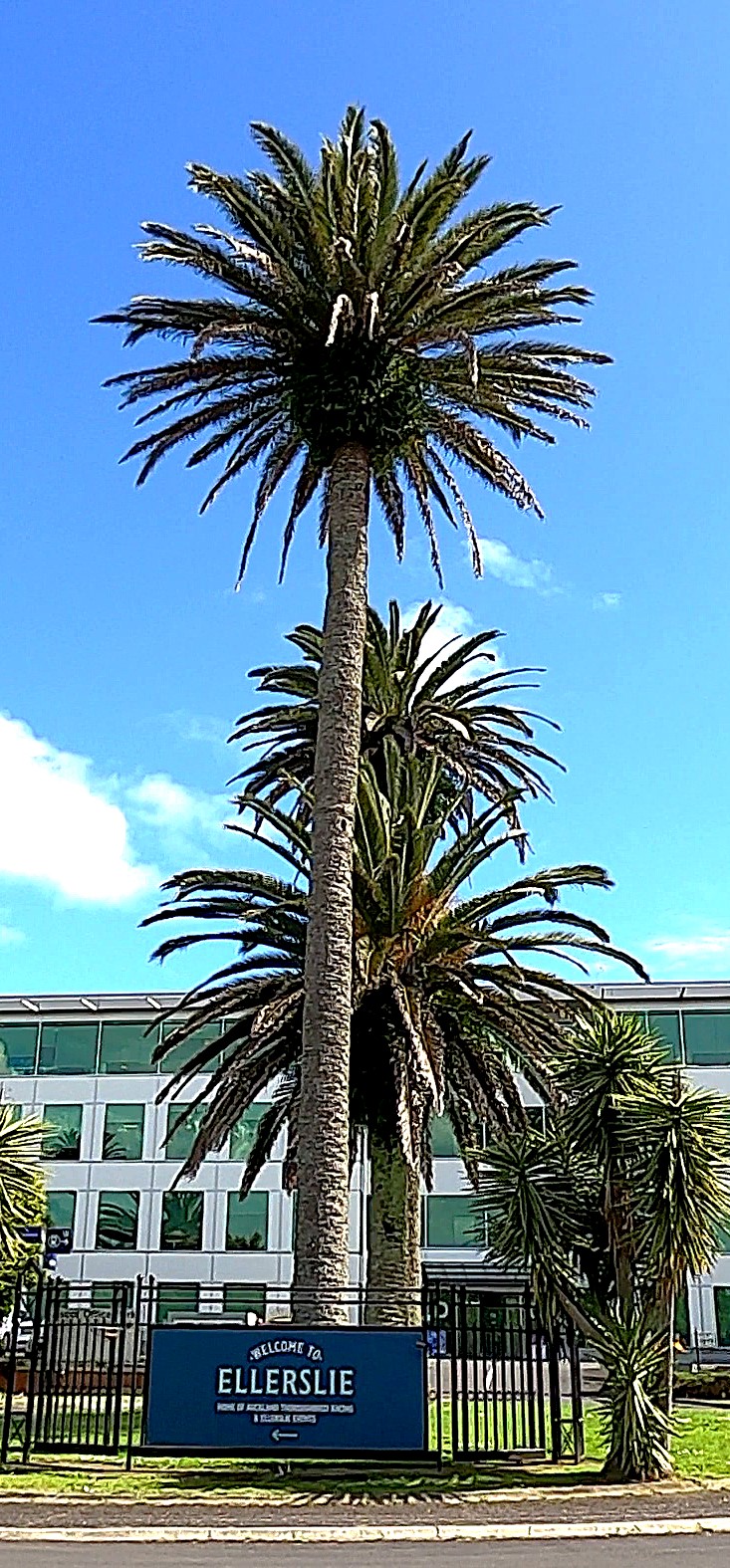
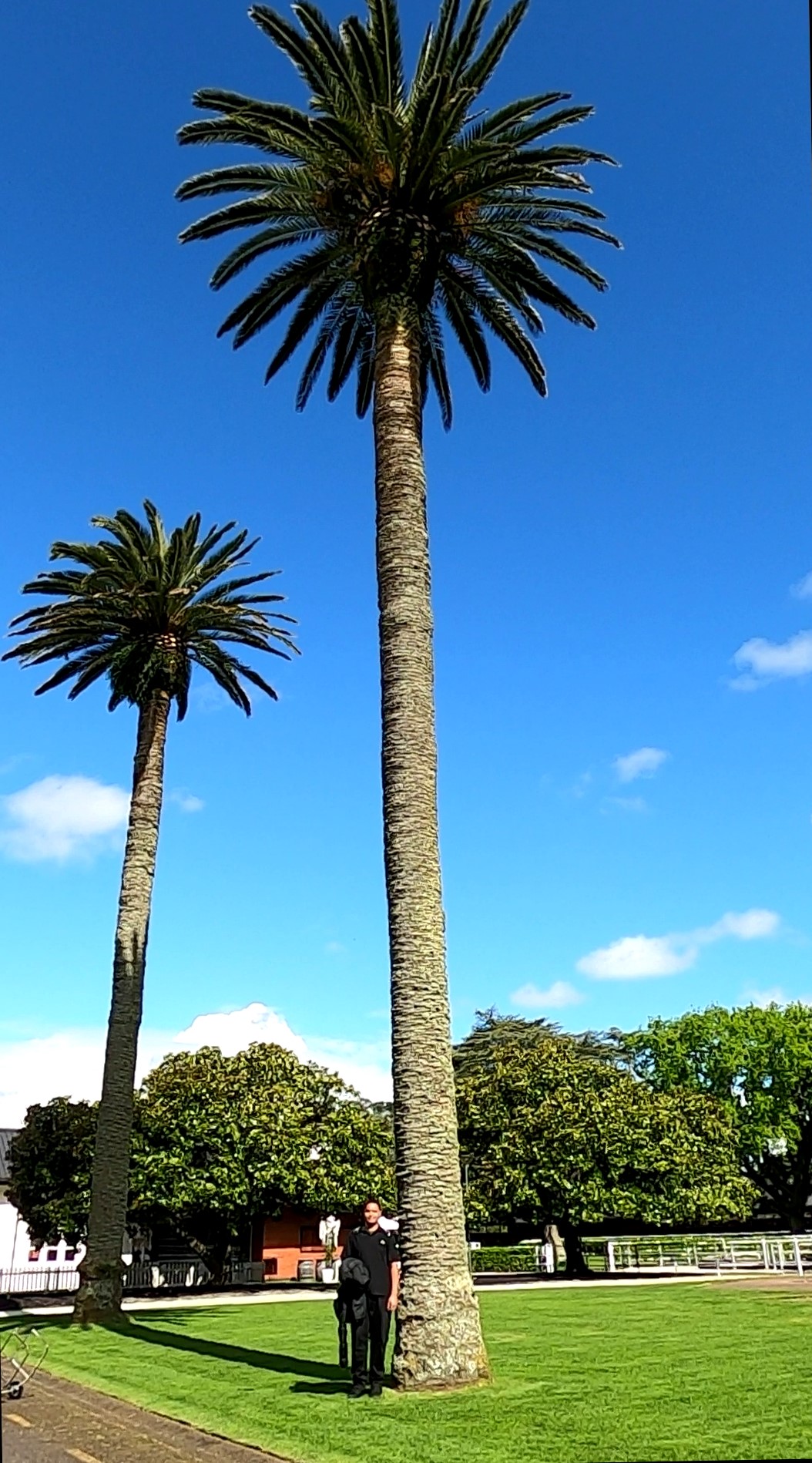
The paper does contain several photos, but it is worth using the greater space a blogpost permits to provide and briefly discuss some ‘bonus photos’ (the photos without sources were all taken by me in October 2024). The planting of the Phoenix palms at Ellerslie can be dated from circa 1913, and first up here are two photos showing the size of the approximately 112-year-old palms:
A crop from a 1954 aerial photo shows that originally the double row was far away from buildings:
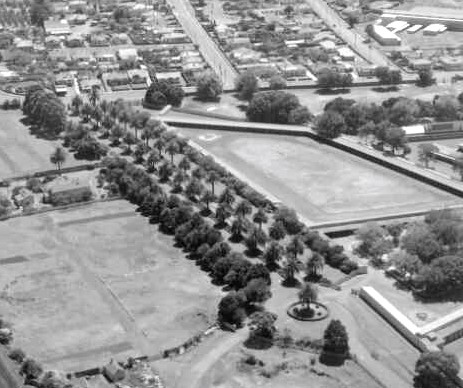
Source: Ellerslie, Auckland. Whites Aviation Ltd: Photographs. Ref: WA-34940-F. Alexander Turnbull Library, /records/23528957
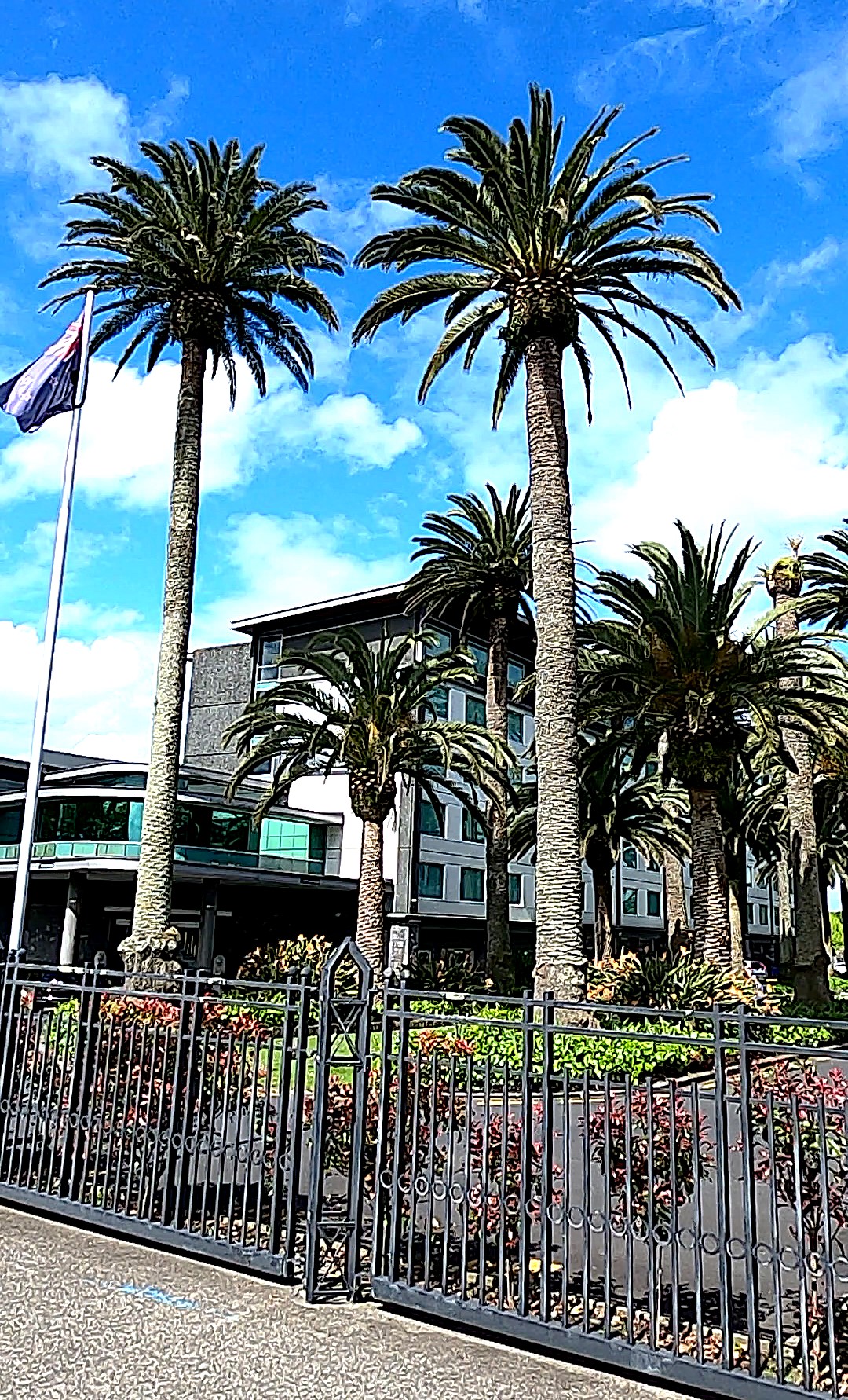
If we go to the top of the photo above we find the double row is now surrounded by new buildings and carparks:
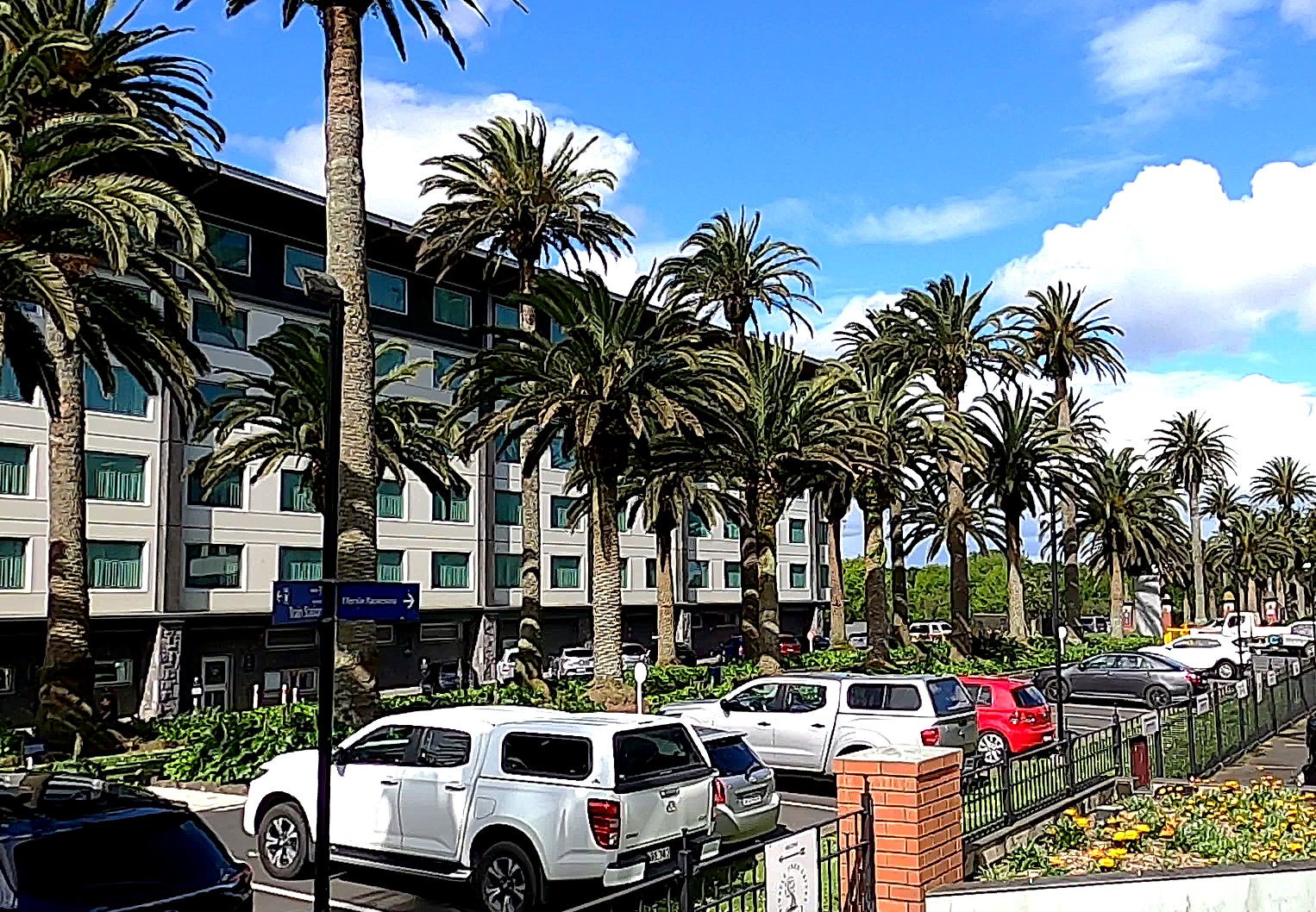
Available historic photos give a nice time-lapse perspective: below, the first photo is from circa 1925, the second from 1940, the third from 1968, and the last mine from 2024:
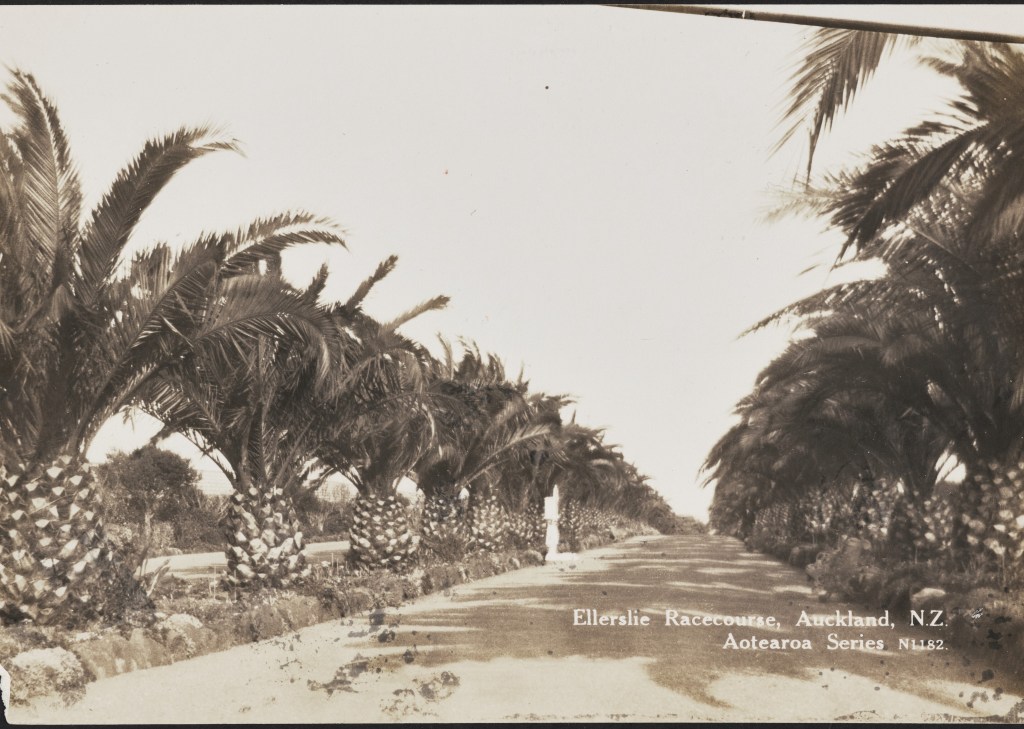
Source: Hugh and G. K. Neill photograph. P1971-008/1-20151. Hocken Collections, University of Otago, Dunedin.
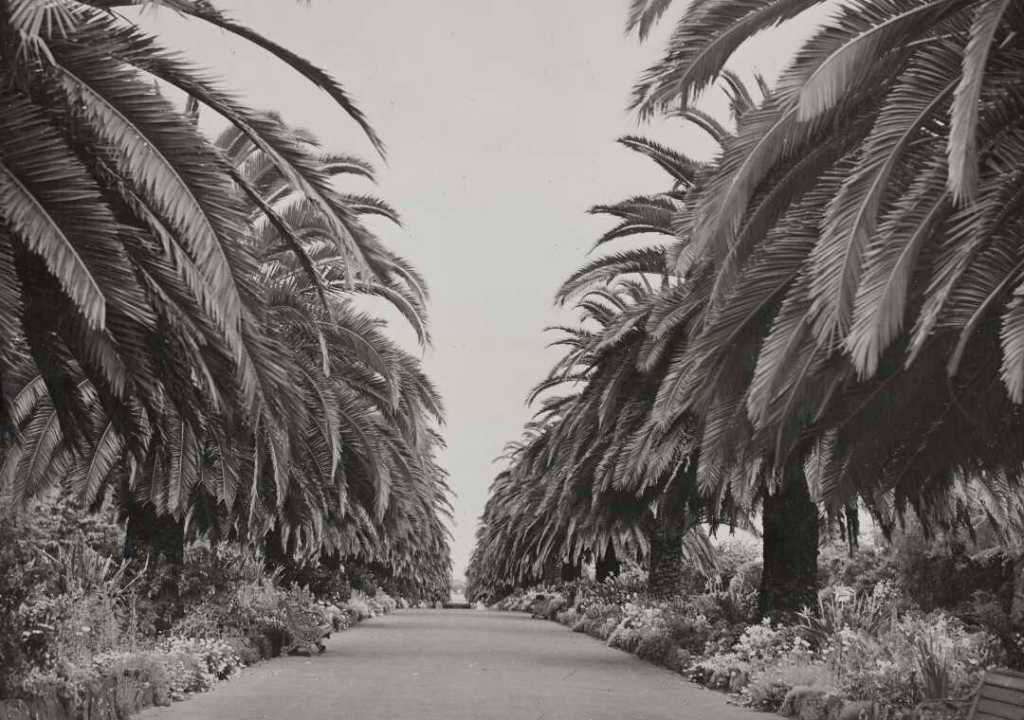
Source: The Palm Avenue, Ellerslie Racecourse. Turnbull Library Pictures: Ref: PAColl-10563-205-48. Alexander Turnbull Library, /records/39067546
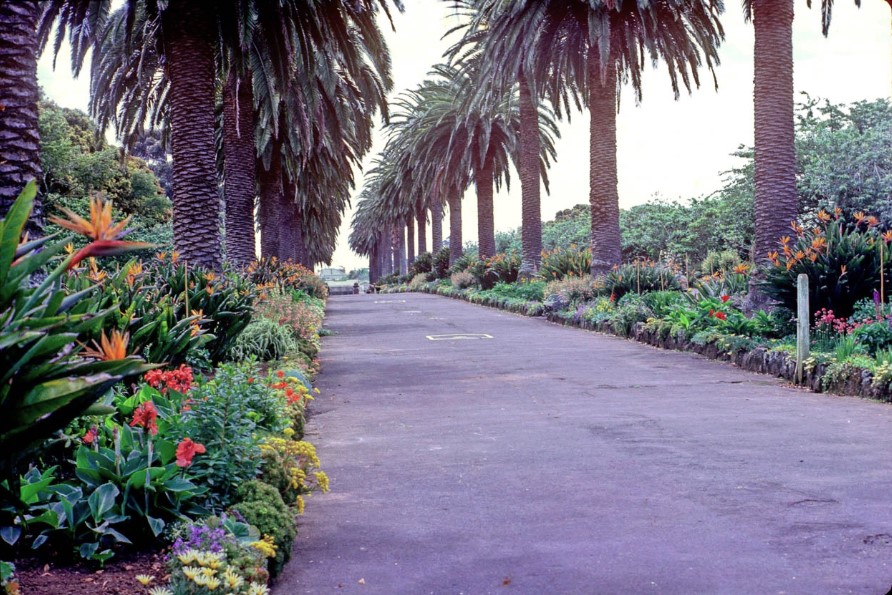
Source: Auckland Libraries Heritage Collection
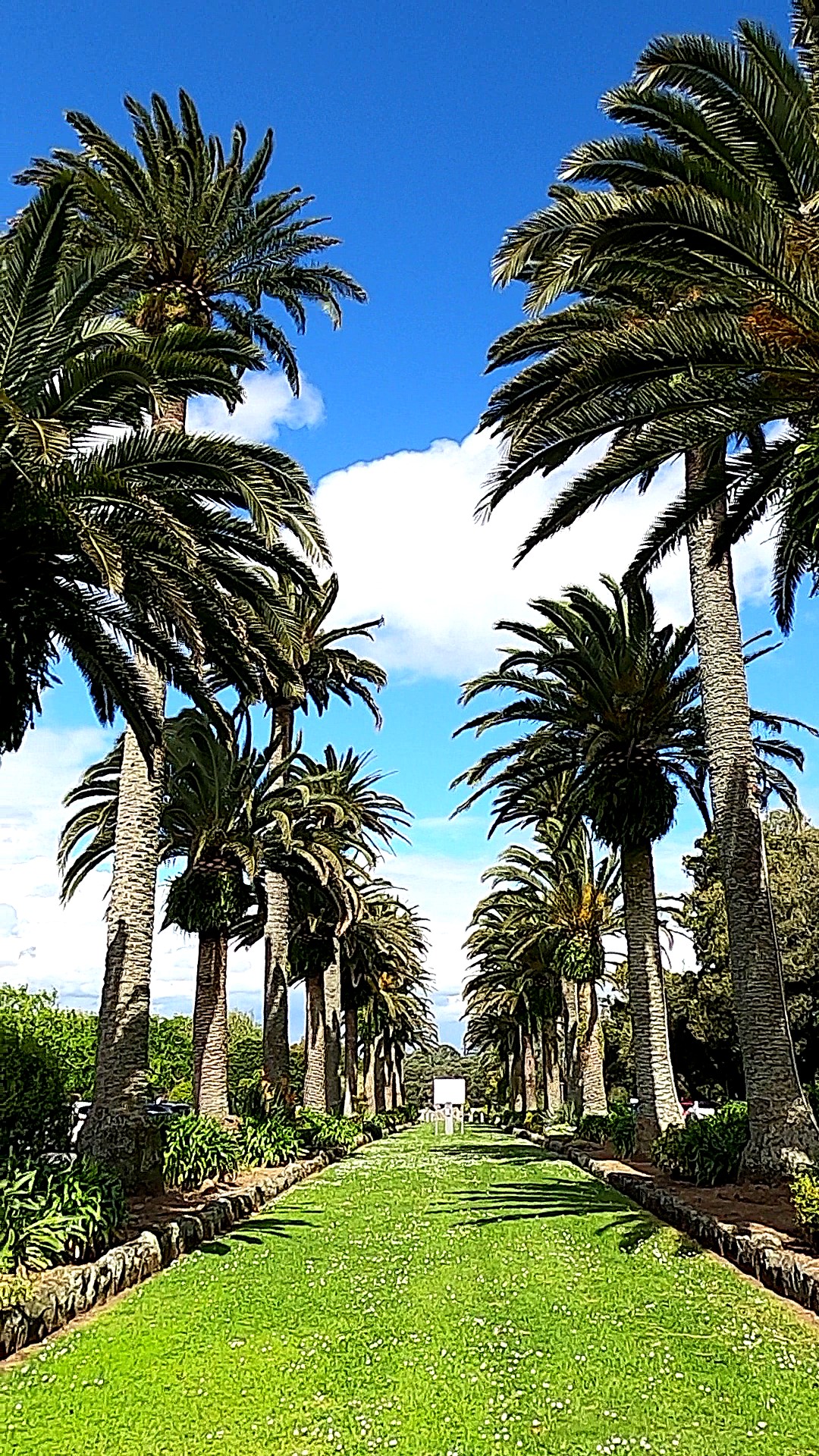
None of these photos show people, but of course on race days thousands of people could be found in the vicinity of the palms. Perhaps they may not have explicitly appreciated them, nonetheless the sense of being in a carefully landscaped space would be inescapable. There are plenty of photos that show crowds amongst the palms, but two will suffice, the first from 1938 and the second a year later:
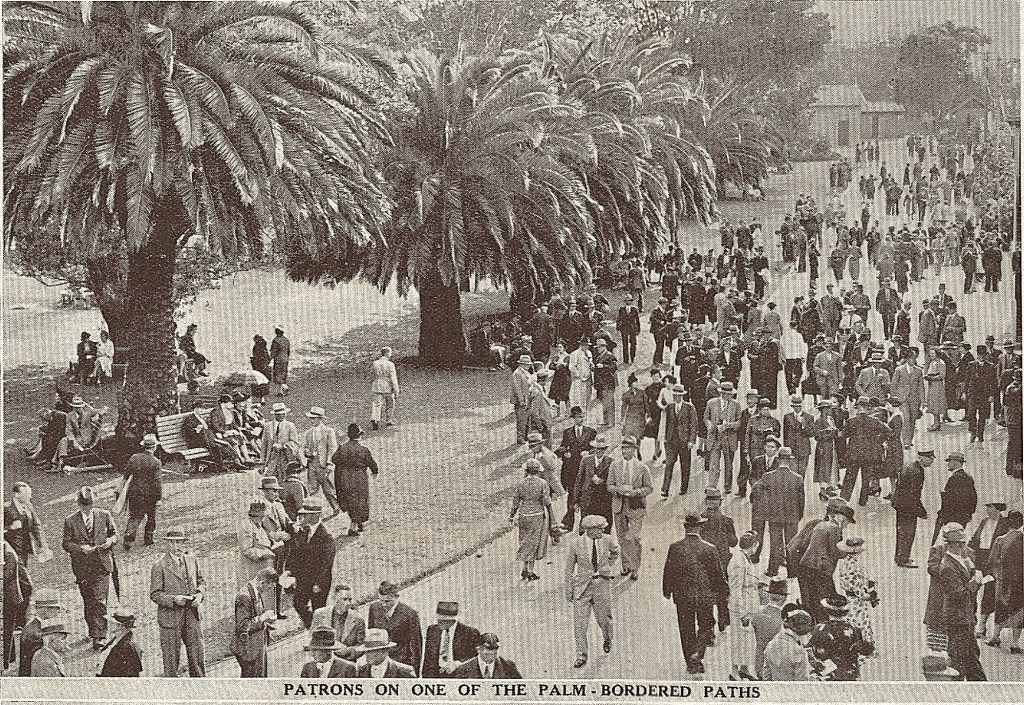
Source: Auckland Libraries Heritage Collections AWNS-19380420-43-04
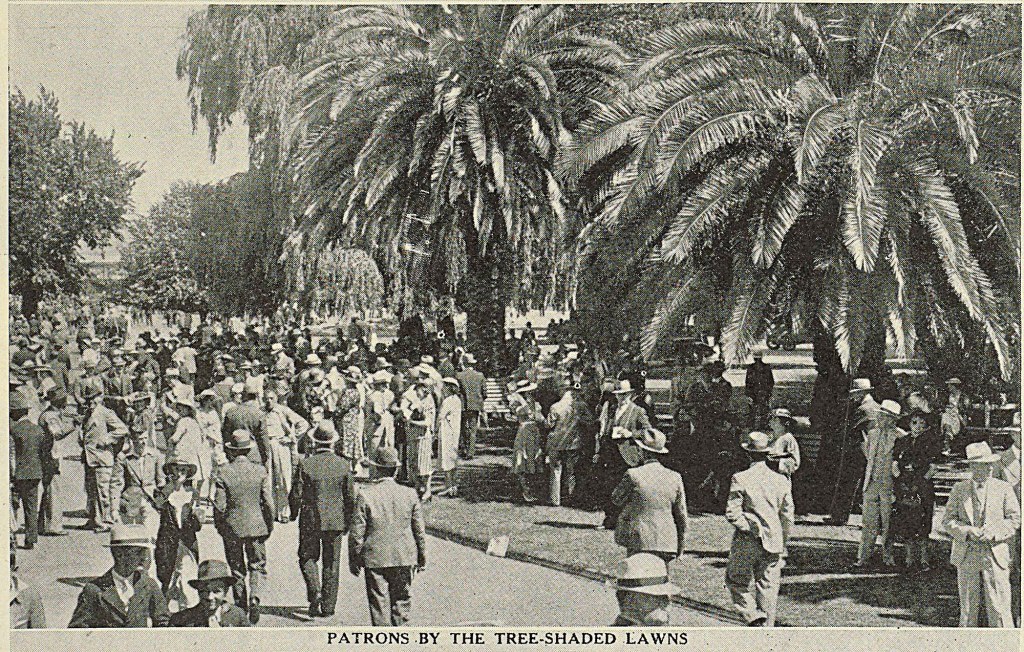
Source: Auckland Libraries Heritage Collections AWNS-19390104-42-04
Crowds still flock to Ellerslie Racecourse, however, it was due to developments in mass media in the 1990s that Ellerslie’s double row gained their largest viewership, albeit with most viewers probably not aware of the palms’ location. This is because they were a convenient backdrop in one of New Zealand’s most internationally successful pop songs: OMC’s How Bizarre, released in late 1994, followed by a music video in December 1995. The video for the ‘Polynesian pop hip hop‘ song consists of portions made in a Ponsonby soundstage, interspersed with a view of a Chevrolet Impala driven through a row of large Phoenix palms. They give a noticeably Pacific Islands look to the scene as Pauly Fuemana drives and sings ‘Brother Pele’s in the back, sweet Sina’s in the front, cruising down the freeway in the hot, hot sun …’:
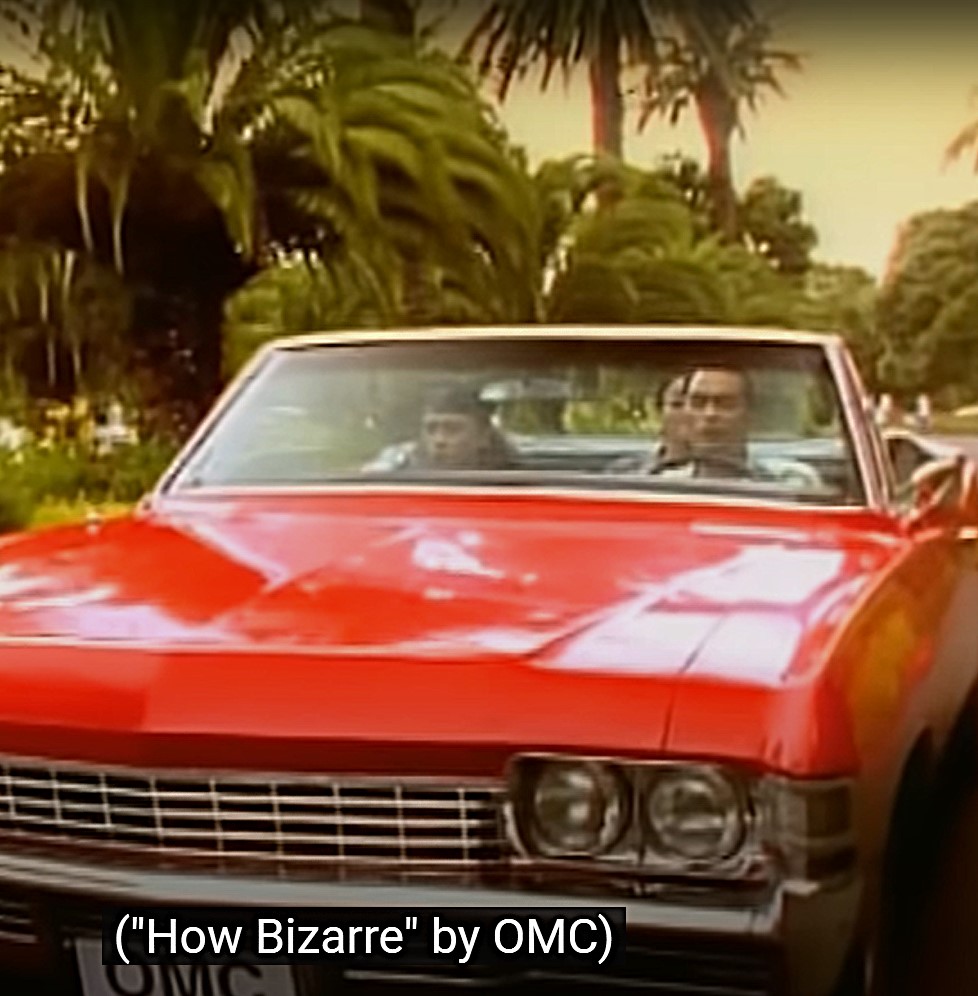
Source: https://www.youtube.com/watch?v=C2cMG33mWVY&list=RDC2cMG33mWVY&start_radio=1
But How Bizarre was not the first pop music video from New Zealand to include views of Phoenix palms, as this shot shows:
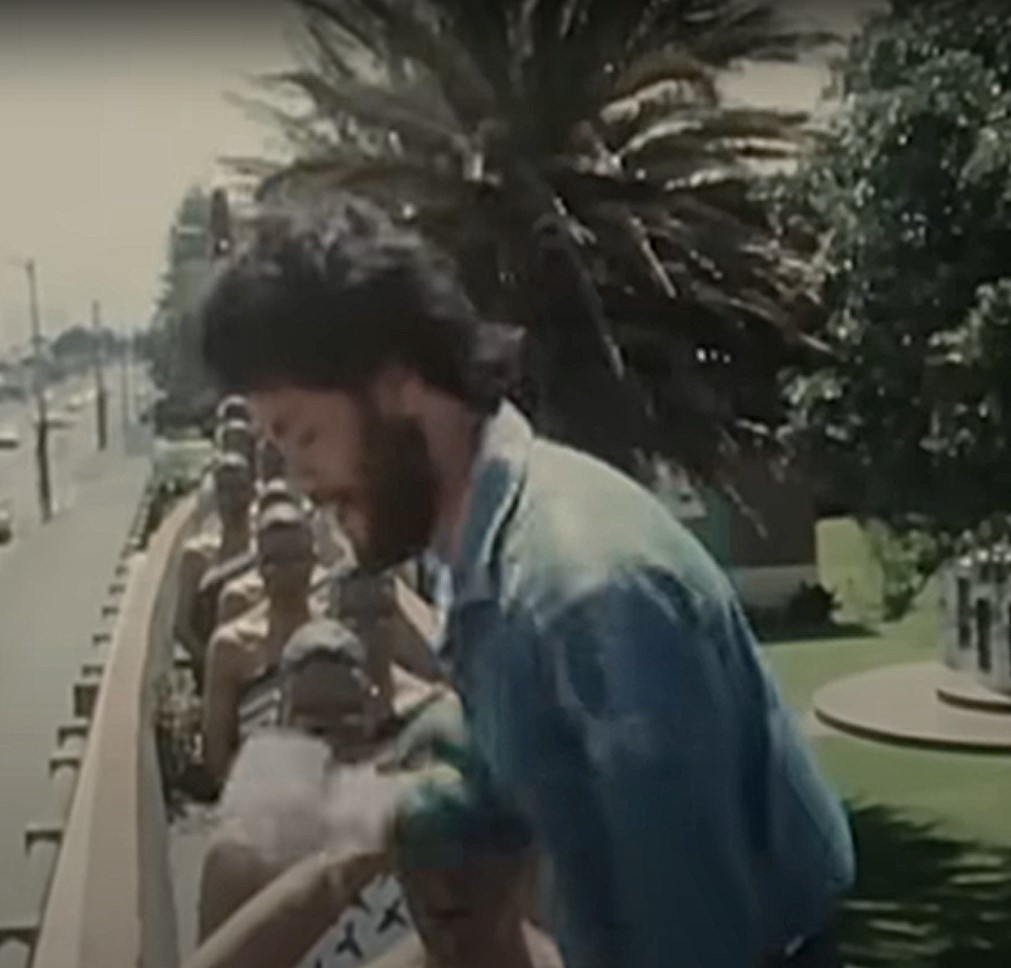
This is from the Patea Maori Club’s Poi E music video, which was a New Zealand number one hit in 1984. The scene shows a break-dancer atop Patea’s Aotea Waka Memorial, with one of two large Phoenix palms in the background.1 In terms of viewership, at September 5, 2025, OMC’s video had been viewed 47 million times, as compared to 1.1 million for Poi E. The former though seems to use the Phoenix palms as a marker of internationality, whereas the latter is inescapably sited in Patea.
Given the international spread of the Phoenix palm, it is far from bizarre that in the OMC music video the ‘Chevy’ cruises through a ‘freeway’ lined with the palm. Similar palm-fringed freeways could be found in many international cities, and this ‘it-could-be-anywhere’ factor perhaps marginally helped the international spread of this highly catchy international hit.


Leave a comment