

This Libocedrus plumosa (kawaka) hasn’t grown much since it was planted in May 2023 in Lower Hutt’s Anzac Lawn to mark the coronation of King Charles. Hopefully it will flourish, and if it does the current plaque will presumably be moved to the base of the tree, as is common practice. It is a New Zealand native, which as noted in part 1 of this blog, is typically what was planted throughout the country to mark King Charles’ coronation.
Further South, in the 1860s
The prior post detailed commemorative plantings in Auckland and Wellington during the Duke of Edinburgh’s first visit by a member of British Royalty to New Zealand in 1869. A range of trees were planted, but when we move to consider Christchurch and Dunedin we see the common English oak (Quercus robur) being favoured. Morgan argues that the oak was the ‘principal tree of choice for royal events’.1 An oak was indeed planted by the Duke of Edinburgh in Christchurch in 1869, but six years before this the pattern of planting oaks was established for the commemoration of a royal wedding.2
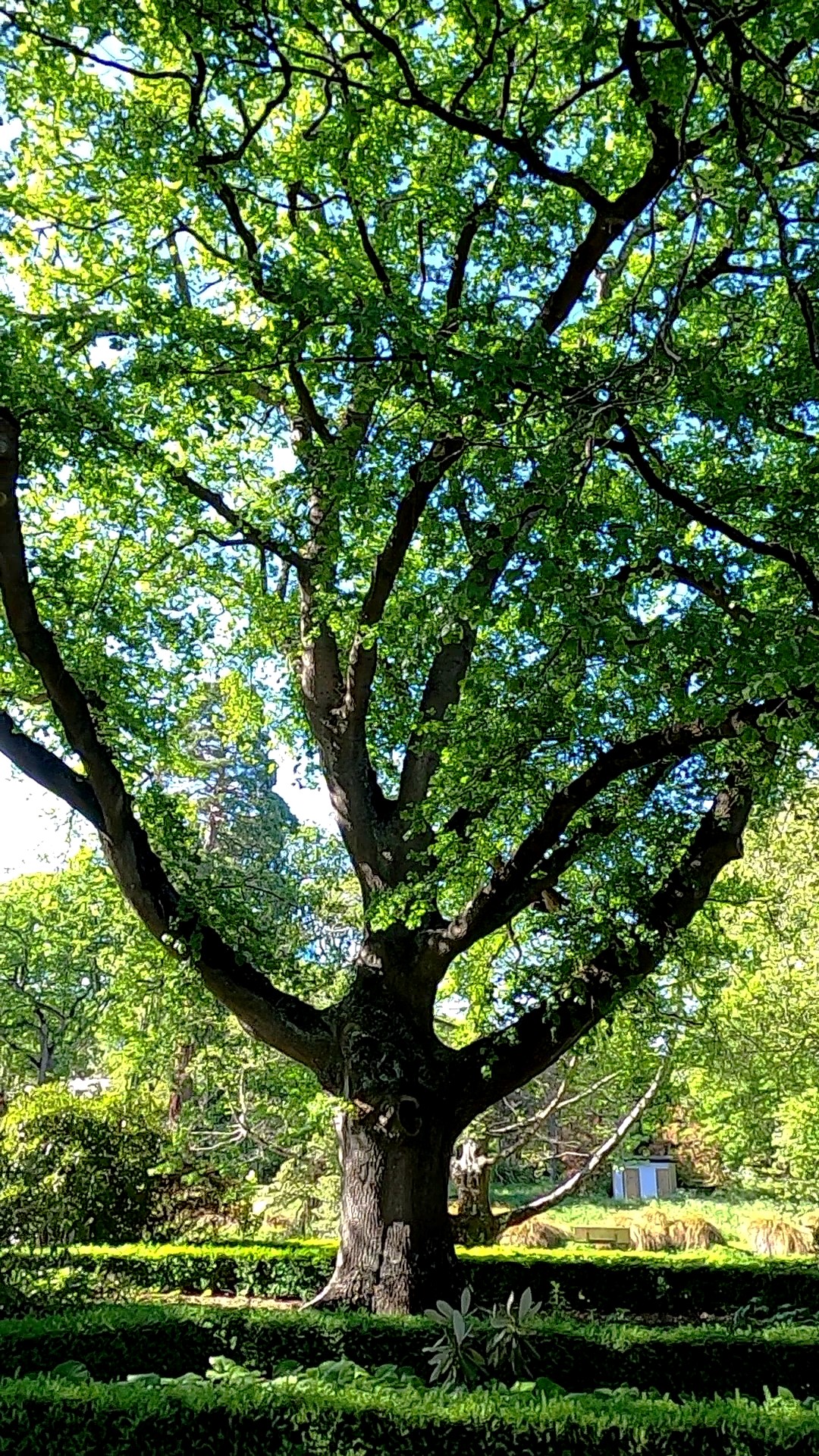
On March 10, 1863, the Prince of Wales (Albert Edward) and Princess Alexandra of Denmark were married at Windsor. The Prince was the assured heir to the British throne, hence news of the wedding spread around the British empire. It was received with enthusiasm in New Zealand, and in Christchurch a committee formed to determine how best to commemorate the royal wedding. There were debates about the declaration of a public holiday, which didn’t come to fruition, but what did was a well-organised planting of oaks. On July 9 a procession ‘three quarters of a mile long’ moved from Papanui to ‘the entrance of the city, by the Ferry road’ where two oaks were planted to commemorate the marriage. A speech was given by the Christchurch Superintendent comparing the empire and its slow growth with that of the oaks. Further planting of oaks was made at the site of a new high school, and one in the grounds of what was to become the Christchurch Botanic Gardens. This was named the Edward Albert Oak, recorded as the first tree planted in the Gardens (see NZTR entry). It seems that this named oak is the only one that still survives. Oaks are not particularly photogenic but given it is supposed to be the first tree in the Christchurch Botanic Gardens it is worth a photo, along with the information plaque in front of it:

Further south in Dunedin similar events occurred. A well-attended procession moved to the site of the original Dunedin Botanic Gardens where the City Superintendent spoke of attachment to the throne being symbolised by the choice of oak trees for commemorative planting: ‘we have chosen as the memorial trees to render perpetual the expression of the sentiments that moved us yesterday … the old traditional oak of the fatherland (ODT, 1 July 1863). The oak still survives though it was moved from its original planting site (which became part of the University of Otago) to the current Botanical Gardens site (see NZTR entry).
By 1901 when the Duke and Duchess of Cornwall toured New Zealand the existing royal commemorative trees were available as a seed source for further commemorative plantings. Although they were planted after the royal visitors had departed, in Dunedin two oaks were planted that were grown from the 1863 oak commemorating the marriage of the Duke’s parents. Such plantings clearly symbolised loyalty to the Crown and Empire, and through the 1920s and into the 1930s commemorative tree planting had become an entrenched tradition. The plantings were not always of English oaks, but clearly they were something of a ‘default option’ when it came to choosing a tree for a royal commemorative purpose.
There are further good examples of how the oak was a ‘go-to’ commemorative tree in significant developments to do with Antarctic exploration. The ‘race to the south pole’ clearly had a lot to do with the dominance of empires, and as is well known the British did not win that race. But failure itself could be commemorated in tree planting, more as a sign of valiant effort. There are two good examples. An English oak was planted in Waltham, Christchurch, by Sir Earnest Shackleton following his return to New Zealand after rescuing the Ross Sea Party in 1917. Second, is the Robert Falcon Scott memorial oak which is planted mid-street in central Oamaru:

News that Scott and his polar party had made it to the Pole, but perished on their return journey, was transmitted to the world from New Zealand in February 1913. Arun Street, Ōamaru, was chosen as the memorial site as the crew members who arranged for the coded message to be sent regarding Scott’s death had walked up this street to reach the local harbourmaster’s residence. The memorial oak and an accompanying plaque bearing the names of the five men who died were unveiled on 28 November 1913 (see NZ history for details).
No doubt aiding a tree to become a ‘go-to’ commemorative planting is ease of propagation, and there is no doubt that oaks are easy to grow from acorns. They also have pleasing aesthetic elements – the robust trunk and the bright green new foliage – but it is particularly the ease of propagation that comes to the fore in the third part of this series. In this we will get to the ‘acorns from Windsor Great Park’, which is a story from 1937 of the celebration of the Empire, via trees, of a remarkable international dimension. But we’ll also see that by 1937 much more was going on in New Zealand than oak-dominated plantings.
- Page 66 in J Morgan (2008) Arboreal Eloquence: Trees and Commemoration, Unpublished Phd, University of Canterbury. ↩︎
- Following details are taken from Morgan (2008), ch. 5. ↩︎

 The Local Arboretum: Noticeable trees and their stories