As is well known the city of Christchurch suffered two major earthquakes in 2010 and 2011. Many of the older buildings in the central city area were subsequently removed, and it is only 15 years later that the rebuild seems almost complete. A popular option for tourists in Christchurch is a tram trip through the central city, which has commentary on the changes the city has gone through. On a visit in October 2025 I didn’t take that short trip, but was struck by what I saw on the front of one of the trams:
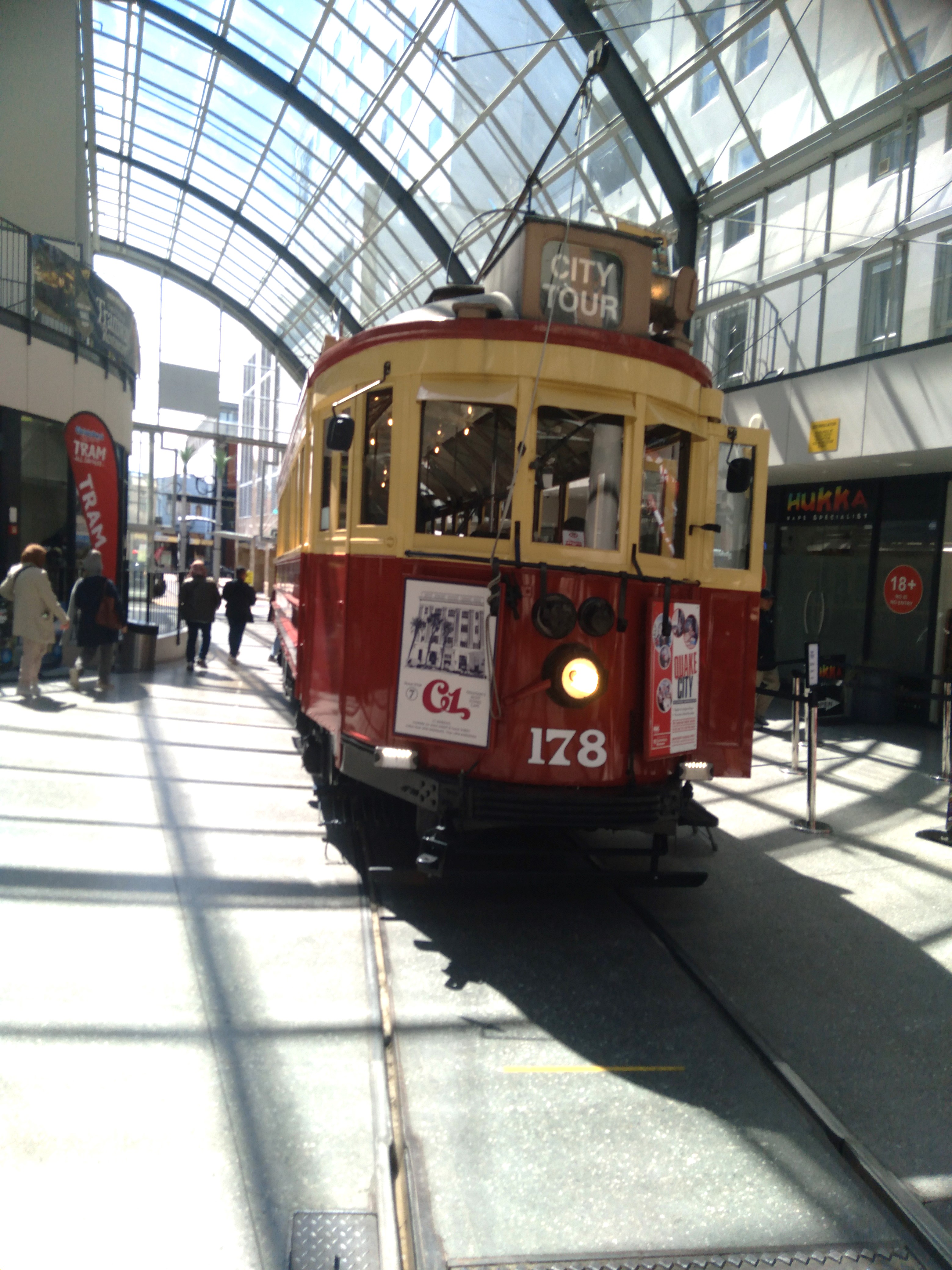
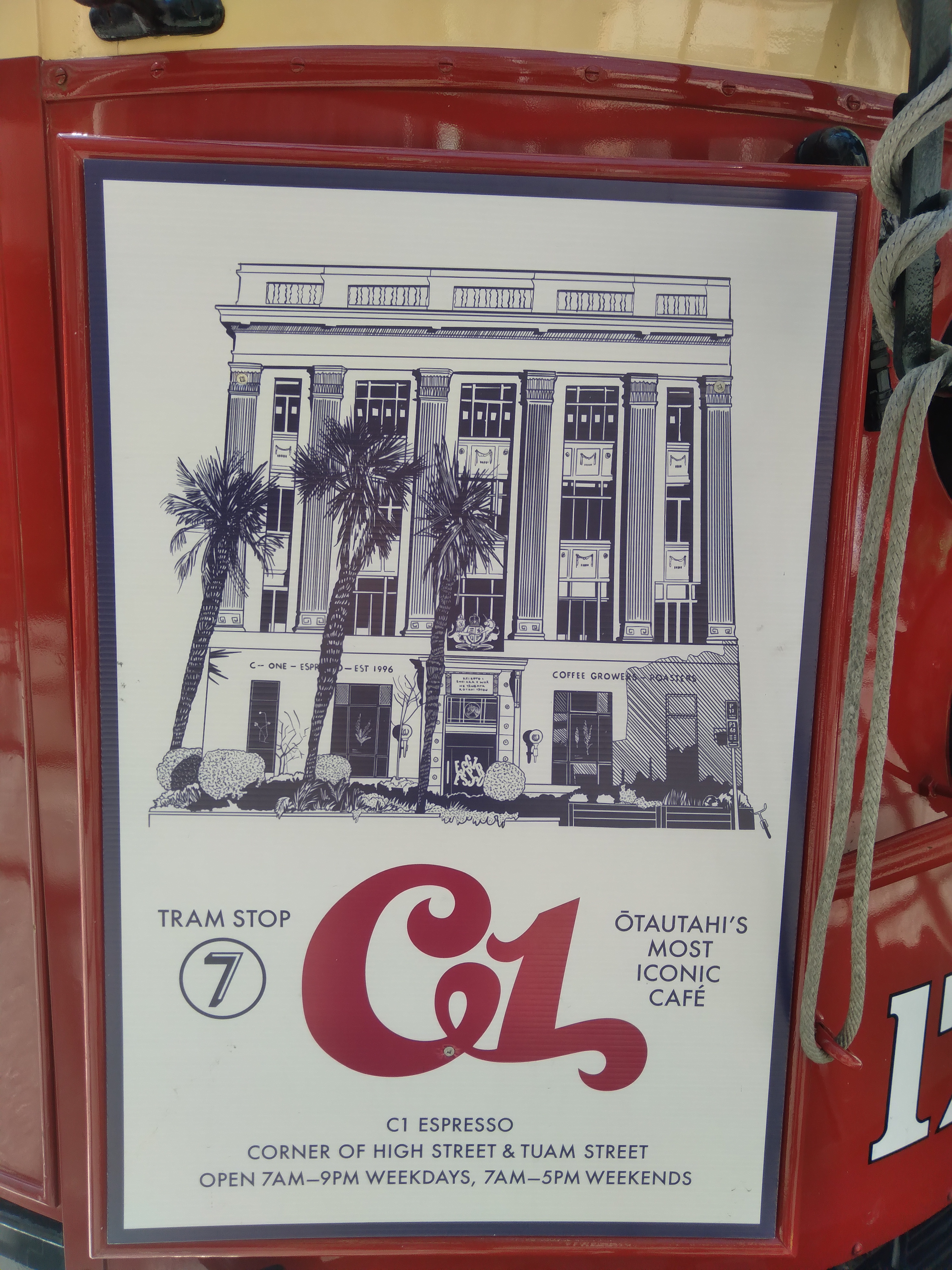
The enlargement shows tram stop 7, described as ‘Otautahi’s most iconic cafe’. But what gained my interest in the image was the fan palms in the foreground of the C1 Cafe. It was only a short walk from where I saw this to tram stop 7, so I grabbed my camera and set off. A photo shows that the drawing is a good representation of reality:
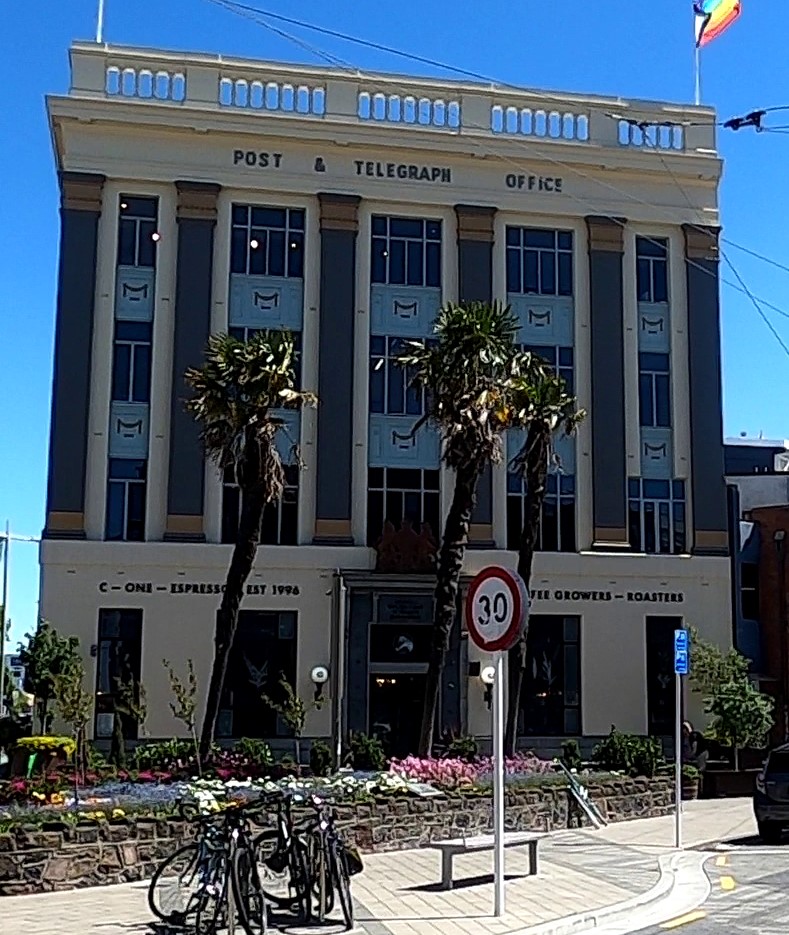
A second photo closer to the three palms, which are Chinese fan palms (Trachycarpus fortunei)1, helps to understand why this building has had the perhaps overused word ‘iconic’ applied to it:
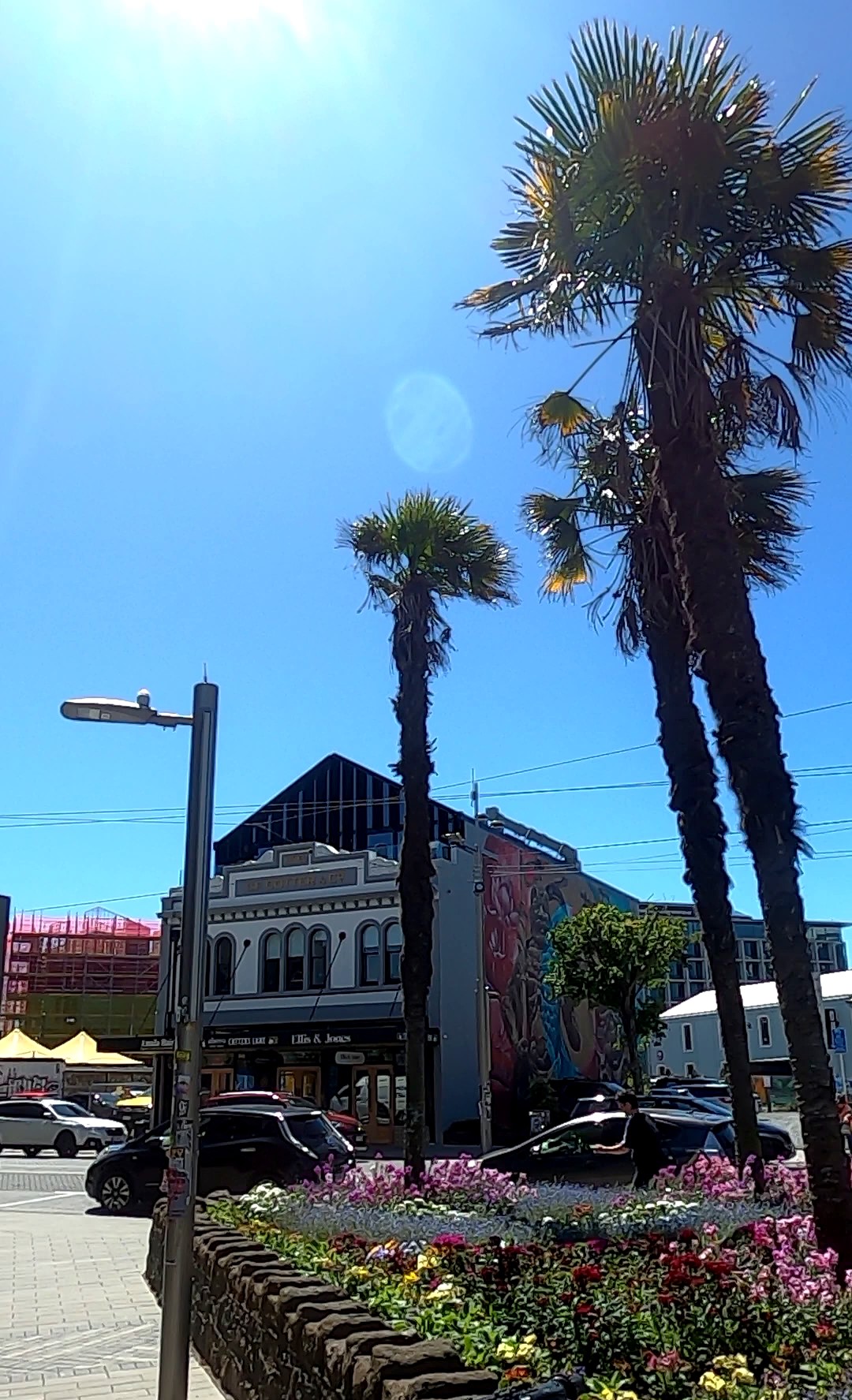
We can see that the palms are in a triangular raised area, built up from basalt rocks, but in the background is a typical sight of the central city area: there is a refurbished older building directly opposite, but either side of it there are spaces empty of buildings. The older buildings that were here were demolished sometime after the 2011 earthquake. This helps to explain why the Post and Telegraph building, now housing C1 Cafe, has had the label ‘iconic’ applied to it. That is, the stock of old buildings in Christchurch has been significantly depleted, meaning a possible gain in significance for those that remain.
At the time I took the photos I knew nothing about the history of the building, and I jumped to the assumption that this was another example of a connection between art deco architecture and palm plantings. This connection is well known from California, where Washingtonia and Phoenix palms have a strong association with the architecture, and it is also well represented in the New Zealand city of Napier. I also guessed that the palms certainly looked old enough to have been planted at about the same time the building was constructed. However, some easy research quickly showed how wrong both assumptions were.
First, the building is not art deco. It is actually a listed Heritage Place, and in the details of that listing it is described as a ‘stripped classical style’. It was designed by John Mair, government architect in the 1930s. It was originally to have been built from brick, but the 1931 Napier earthquake forced a quick change to reinforced concrete, and in that more earthquake resistant form the building was opened in June 1932. It was this fortuitous timing that allowed the High Street Post Office building to survive the 2010 and 2011 Christchurch earthquakes relatively undamaged. Given that many older buildings constructed of brick and timber suffered massive damage, the survival of the Post Office building obviously would have helped it become a more noticeable sight amongst the central city buildings, thus bolstering the description ‘iconic’ as featured on the front of the tourist tram.
Second, the palms were certainly not there at the time the building was completed. Searching DigitalNZ many photos can be found of the Post Office building. As mentioned, I initially made the assumption that the palms could have been planted about the same time as the building was completed. However, an early photo shows that there was a pyramidal conifer in the triangular reserve. It is unknown what that was and what happened to it, but interestingly other photos show that the palms were actually a very late addition to the site. Photos from 1980 and 1985 (which can’t be reproduced) show no palms, suggesting that they were transplanted there some time after 1985. There is no readily available information on that transplantation, but there is another mysterious part of the story, as shown in this photo from 2004:
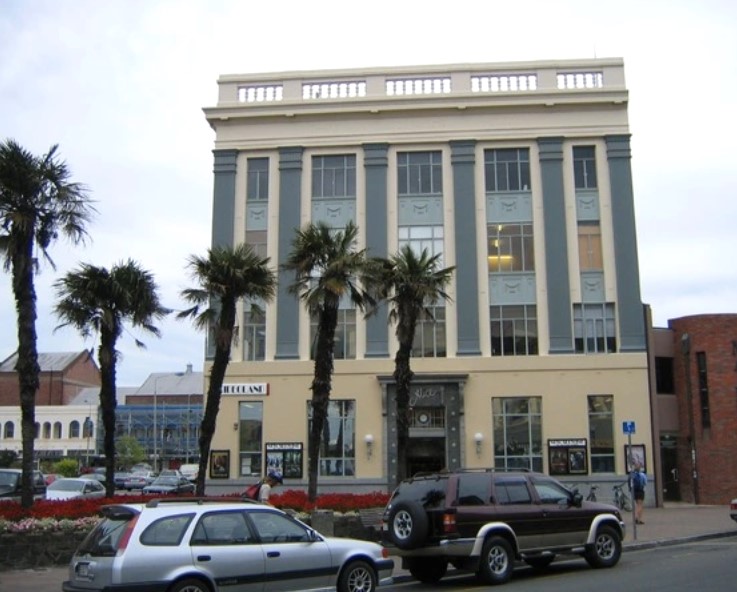
Source: G. O’Beirne, Allice in Videoland and the Physics Room, Christchurch City Libraries, 2004
Clearly in 2004, when the building was leased to Alice in Videoland, there were five not three palms in the triangular reserve. What happened to the two palms on the left is unknown.2
Anyone who has tried to track down the history of noticeable trees will probably be familiar with this type of story. That is, the history of significant buildings is often very detailed and readily available, however, the history of the trees or palms that grow right alongside them is often very scant. This does not stop trees and palms being handy in claims about buildings as icons, but in the absence of detailed knowledge this seems to rely of the strength of visual contribution. In the case of the High St Post Office building, the palms do seem to add a very handy visual complement to the building. That said, as we have seen, their number was reduced from five to three. It is interesting to speculate if such a reduction would have occurred if there was more detailed historical knowledge of their planting and history.
- The palm is very common in New Zealand, as detailed in a previous post (A brief history of the Chinese fan palm in New Zealand) ↩︎
- it is possible the Christchurch City Council has information on this, but as it is holiday closedown time as I write I have not bothered to make inquiries about this to the council. ↩︎


