Recently I was catching a bus home from the central city and partly because leaves had begun falling from deciduous trees (it is autumn here), I noticed a large tree I had previously assumed to be singular was actually three trees. I don’t think I’d ever paid the ‘singular’ tree much attention, perhaps because it is a common or English elm (Ulmus procera). But seeing the three trunks for the first time one had to think that whoever planted three instead of one had purposely done so for added effect. I have no idea when trio planting was first used in garden design, but anyone familiar with silver birches in landscaping will probably have seen a trio planting of Betula pendula. They can be planted quite close together, and this works well to further emphasise the attractive white and sometimes peeling trunk.
The location of the trees I had now seen to be three made an inference of design-intent seem more reasonable: they are at the junction of the Terrace and Bowen St, Wellington, directly opposite the New Zealand Parliament buildings and its well-treed gardens. Two historic photos, the first dated circa 1930, the second June 1970, show changes in the buildings due south of Parliament over time:
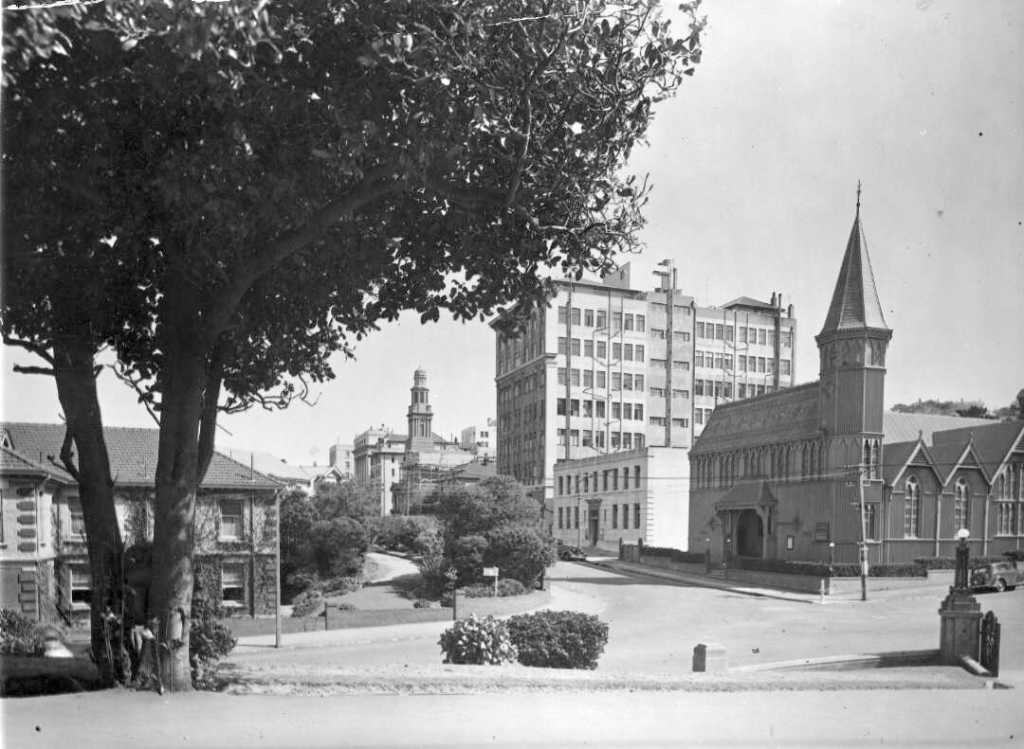
Source: ‘View of the northern end of The Terrace, Wellington, taken from the grounds of Parliament’. Robson, Edward Thomas, Ref: PAColl-5670-02. Alexander Turnbull Library, Wellington, New Zealand. /records/22316974
The elm trees can be seen on the corner of the Terrace, with the building on the right being the Terrace Congregational Church, and the building on the left being the Bowen St Hospital. By 1970 the Church has been replaced by the Reserve Bank – in construction. Unseen to the left, the Hospital has also gone, but the elms are still there and much taller:
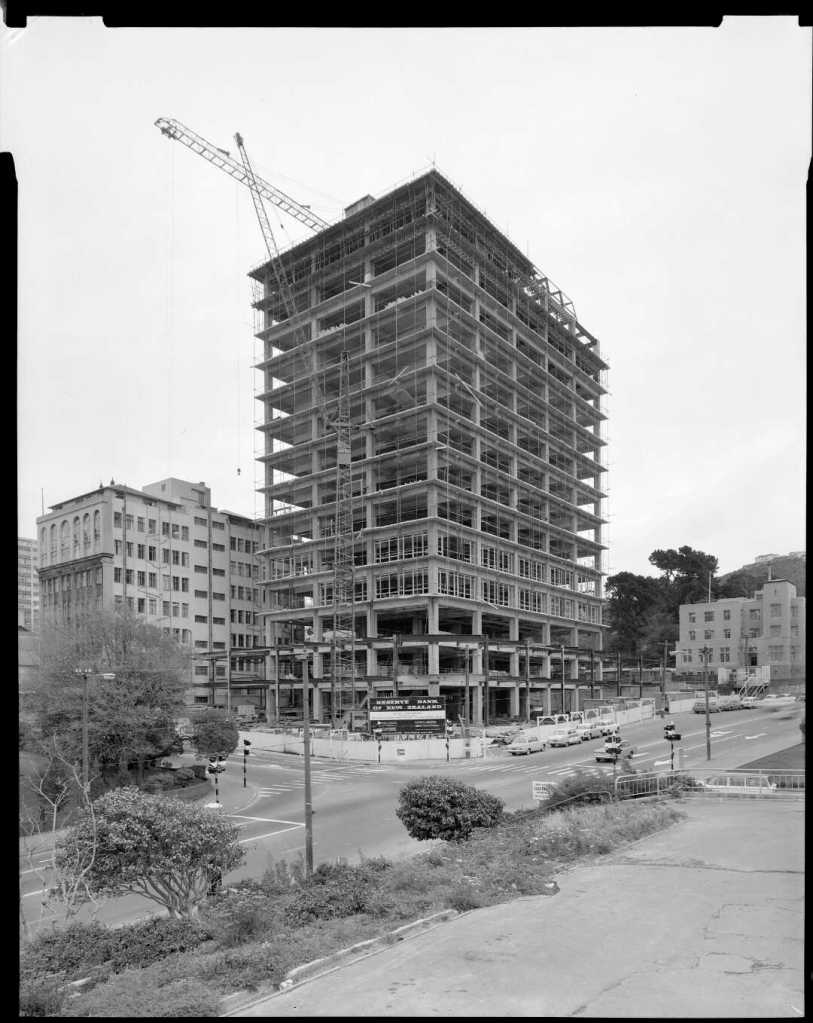
Source: ‘Reserve Bank building construction site, The Terrace, Wellington, view from Parliament’. Duncan Winder Collection, Alexander Turnbull Library, DW-4329-F.
In April 2026 when I passed by on a bus, the view looked more like this:
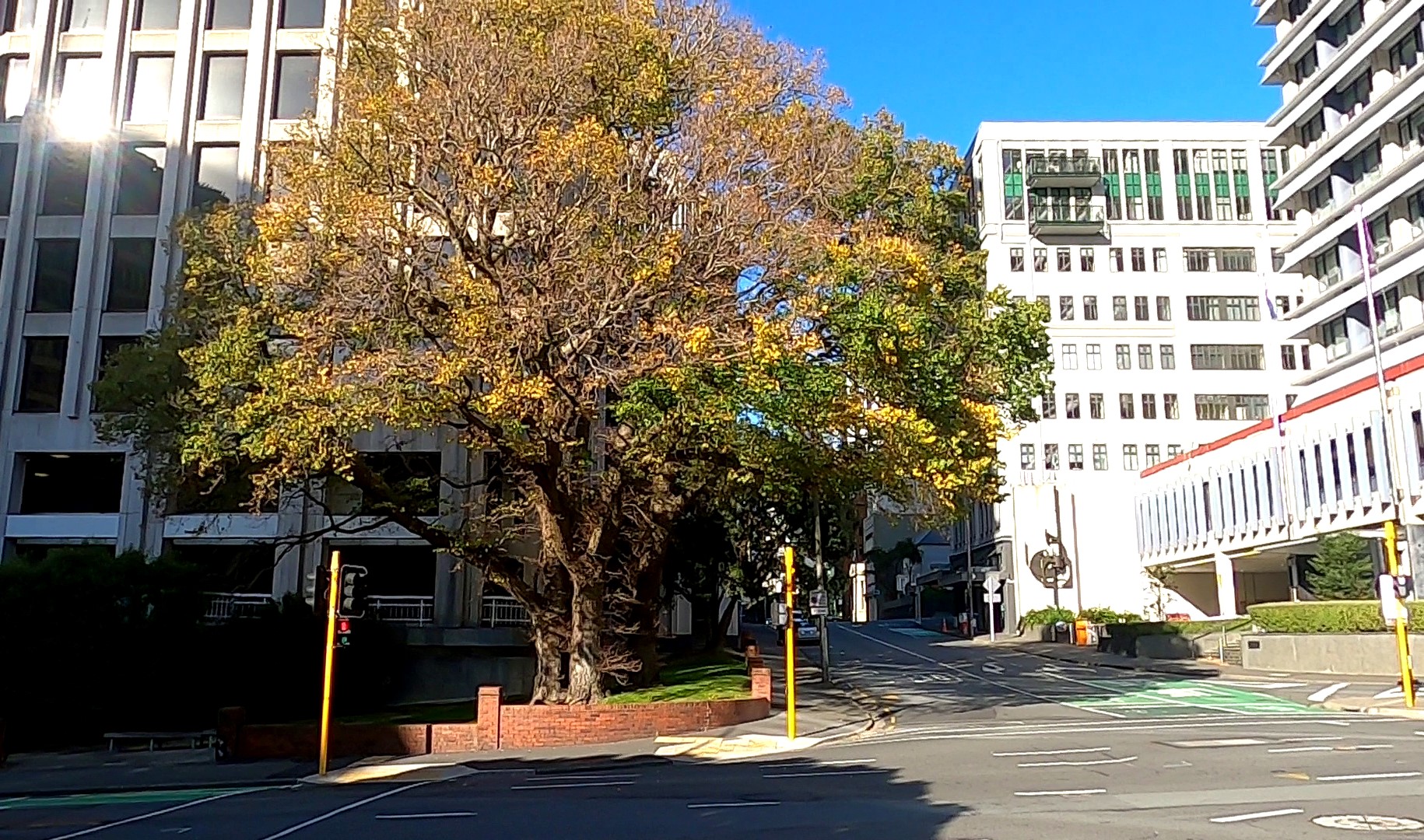
The large, tall building behind the elms is a government building which houses the Ministry of Education and the Treasury.
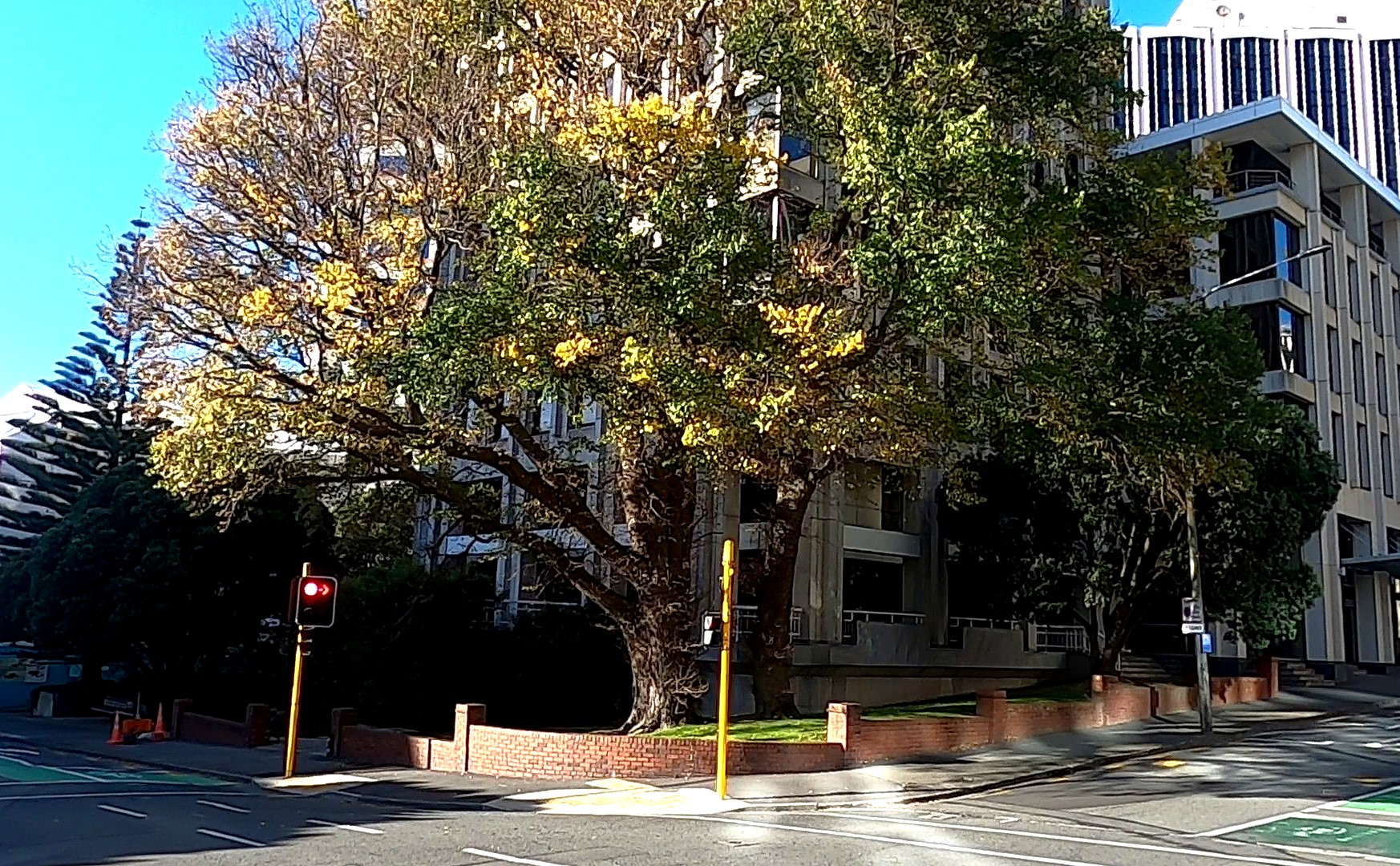
The photo shows that from the road or footpath it is not readily apparent that we are looking at three trees. It is not until we get close – actually up on the lawn beside the elms – that the trio becomes apparent:
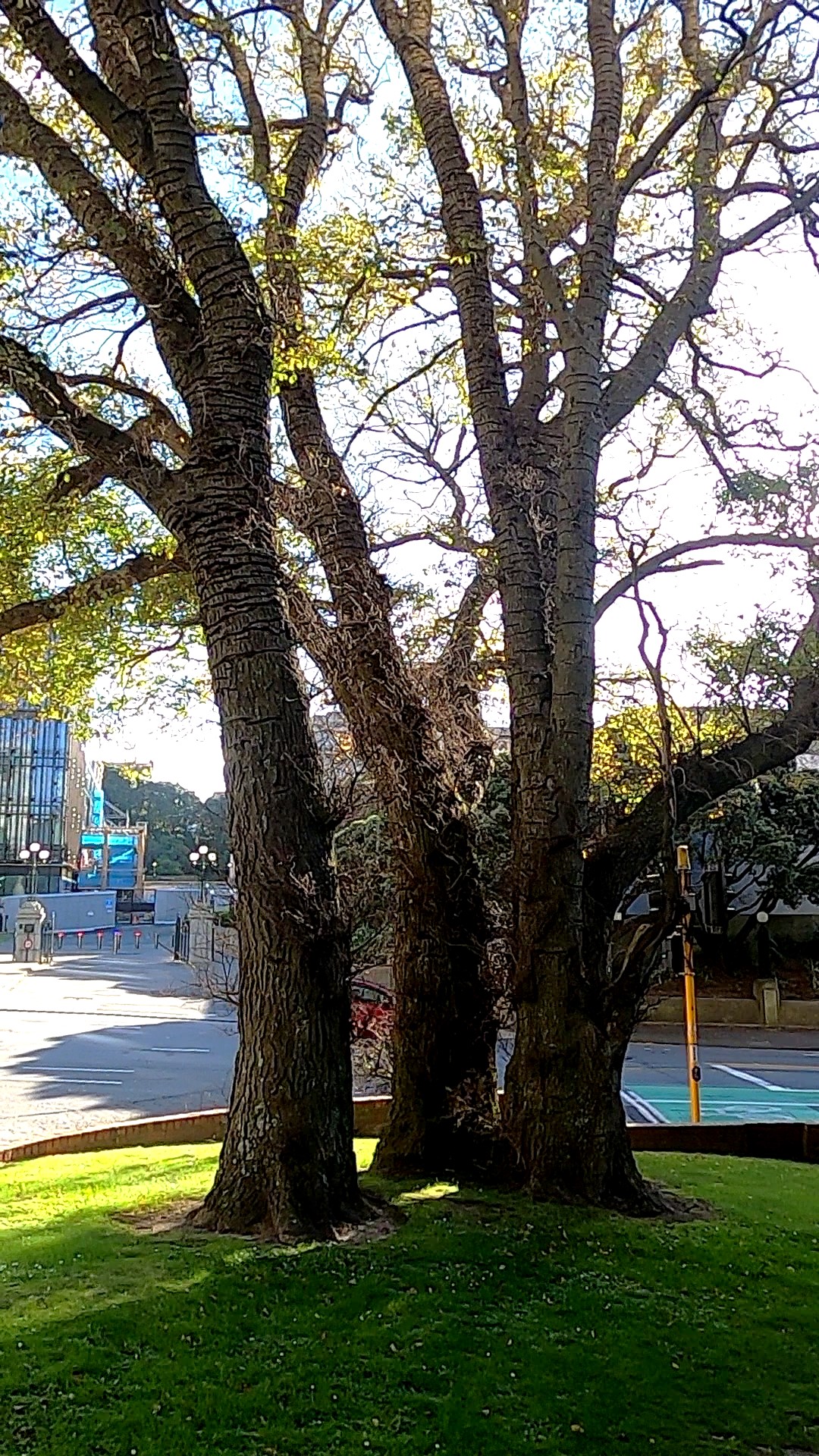
An answer as to what might have happened here is provided by two photos looking down at the trio from further up the Terrace:
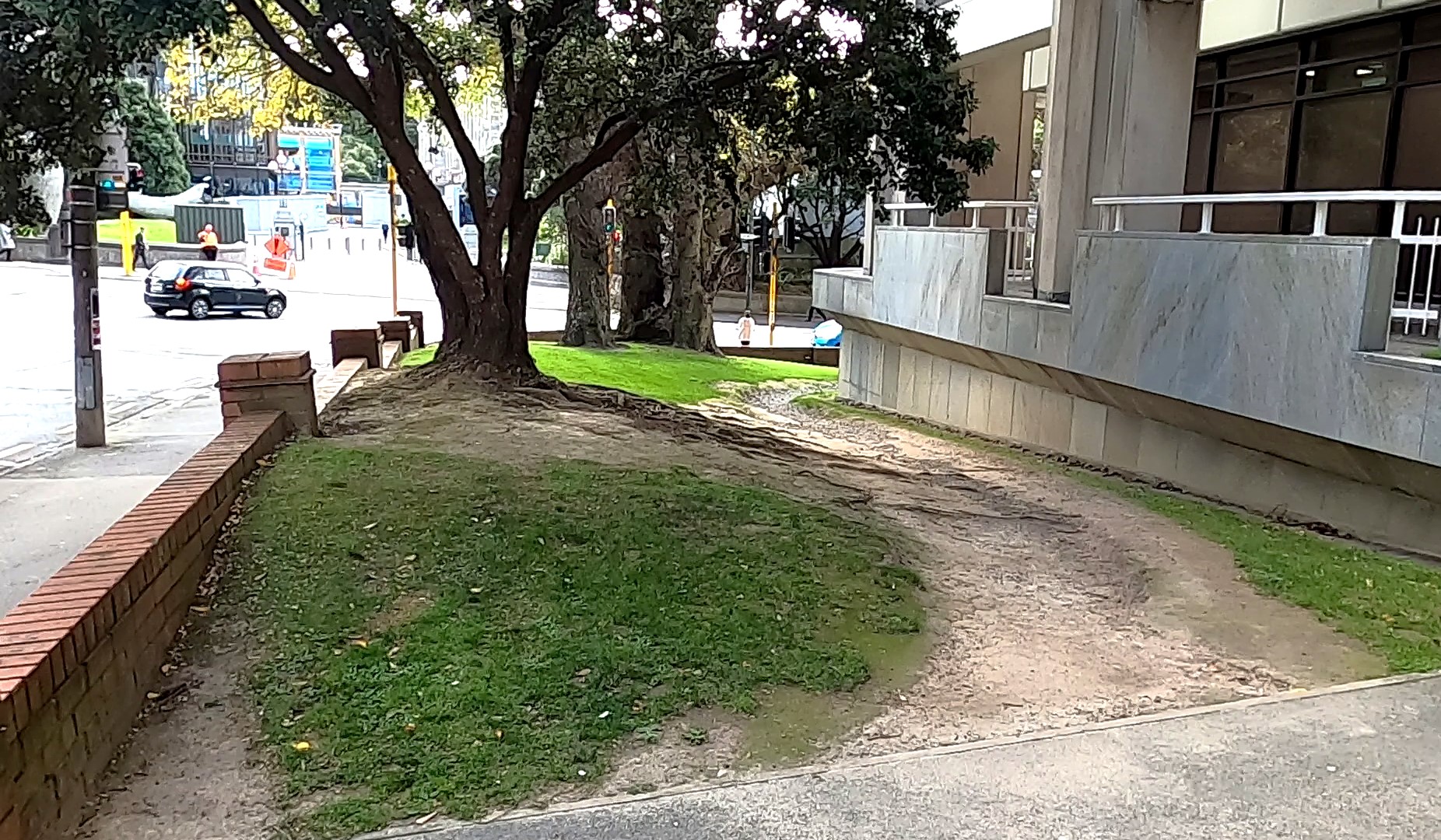
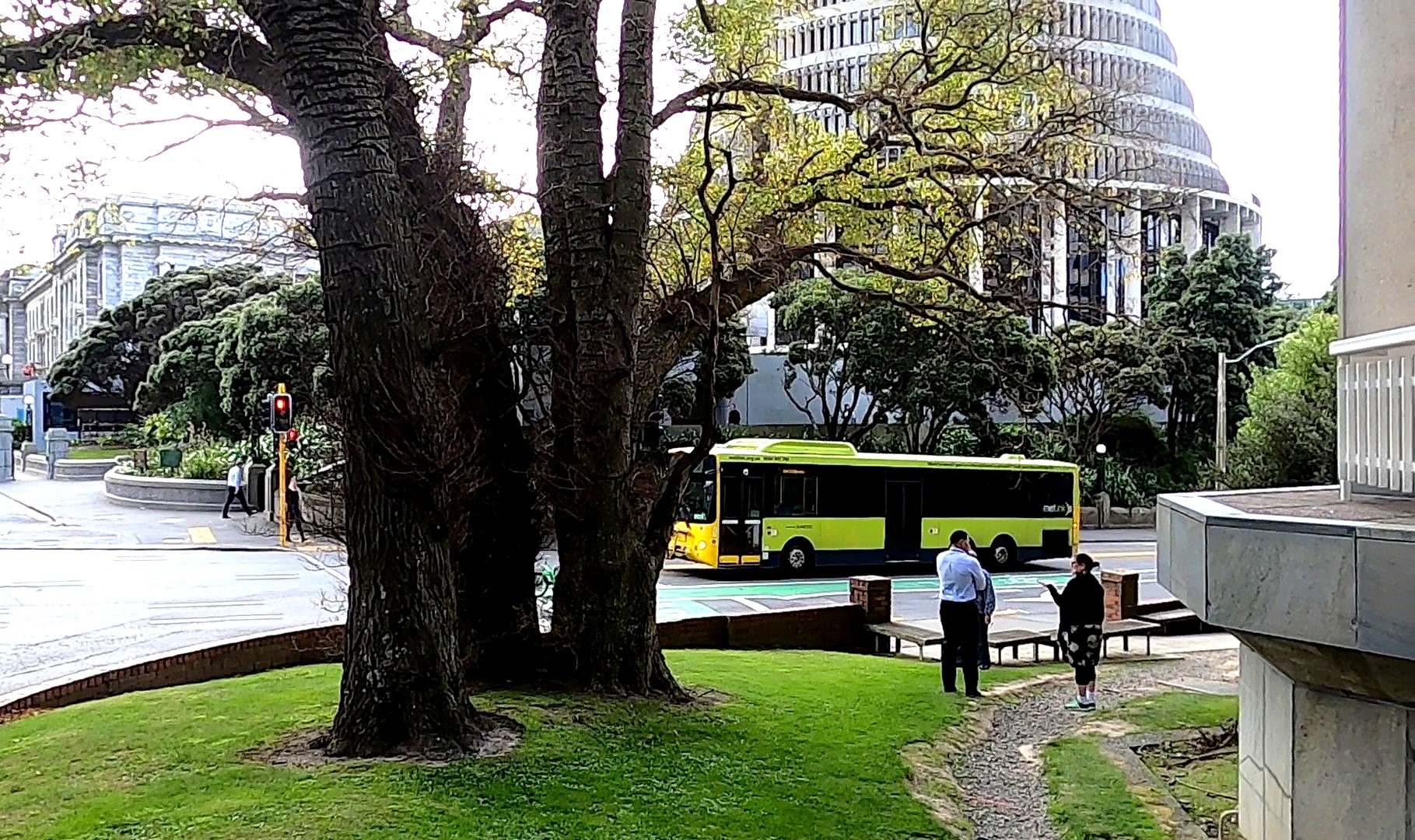
The informal path between the building and the lawn and trees is actually where there was a sealed path when the Bowen St Hospital occupied the site – see the first historic photo above. There is no way of knowing, but perhaps the trio was originally planted to be seen from this walkway, where they would have been experienced much as they are from the now informal walkway (actually a shortcut). The current view from the road or footpaths that are now outside this corner space affords little awareness of the trio of elms, thus losing most of the landscape effect. So, changes over time make the trio of elms less significant, though it is true to say that the shortcuts that pedestrians have taken over time still makes possible a realisation of the trio effect. But that too relies on people noticing the trees that surround them as they move about the city.
Other trees with different structural features can bring out the trio effect to a greater degree and I’ll pick this up in part 2 of this blogpost. In that we’ll move from Wellington city over to Wairarapa’s Greytown where there is an excellent example of the trio effect.


