New Zealand has two species of large parrot, the kea and the kākā, both members of the Nestor genus (notabilis and meridionalis respectively). The kea is found in alpine areas of the South Island, and the kaka more predominantly in the North Island, at lower altitudes. Both birds are well-known for being highly intelligent, inquisitive, and socially inclined. These traits can however have unintended consequences, with a perfect example seen in the 2022 viral video1 ‘Kea flies away with GoPro‘ which can still be viewed:
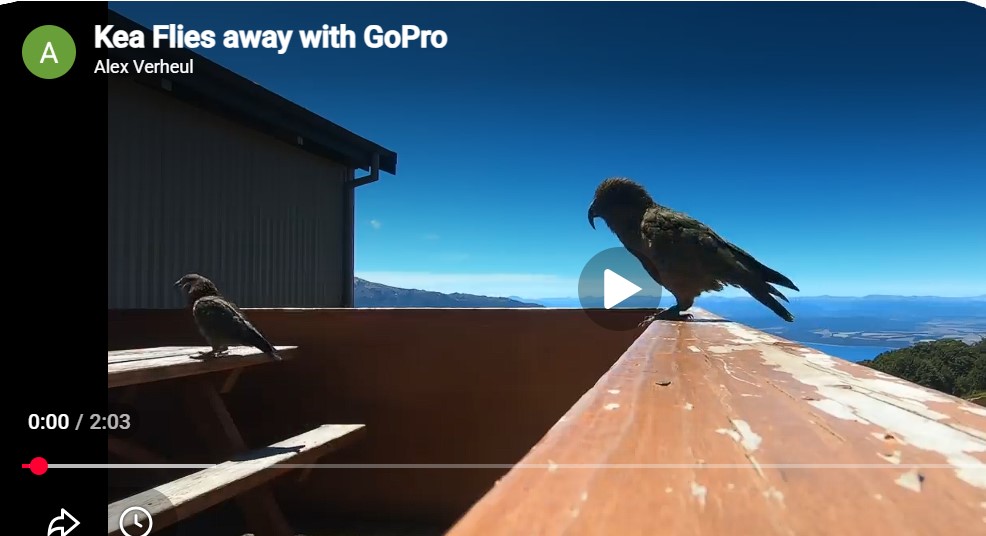
The opening shot is from a GoPro on a balcony, where we can see two kea. Shortly, the one on the right turns and steps towards the GoPro. We see its beak reaching down, and then suddenly the view from the camera is moving through the air – we realise the kea has grabbed the camera and rapidly exited. The GoPro continues to film while clasped in the kea’s beak, giving an incredible view of the bird’s flight:
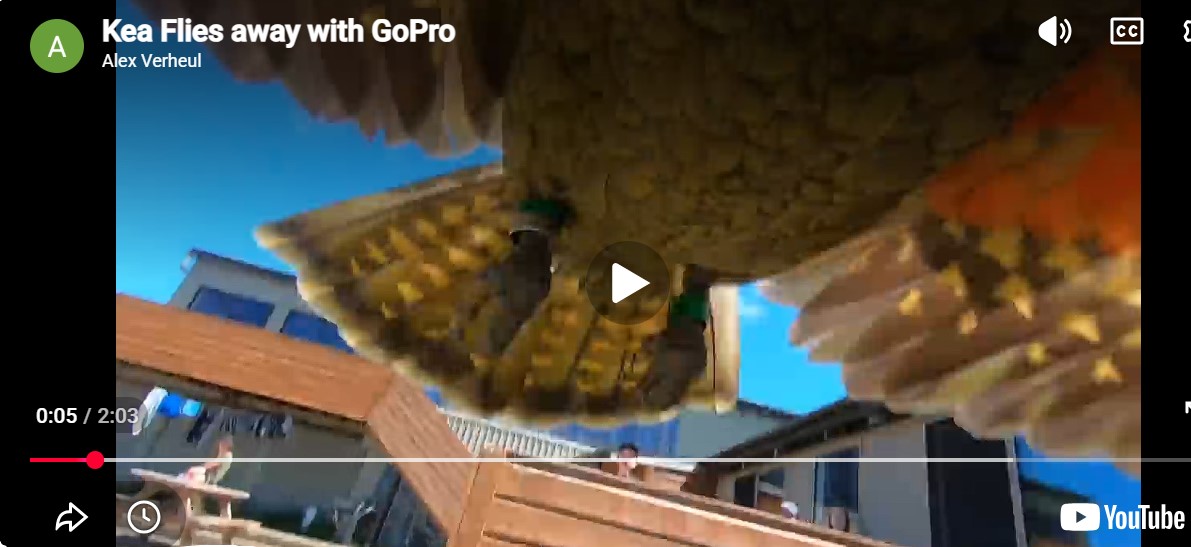
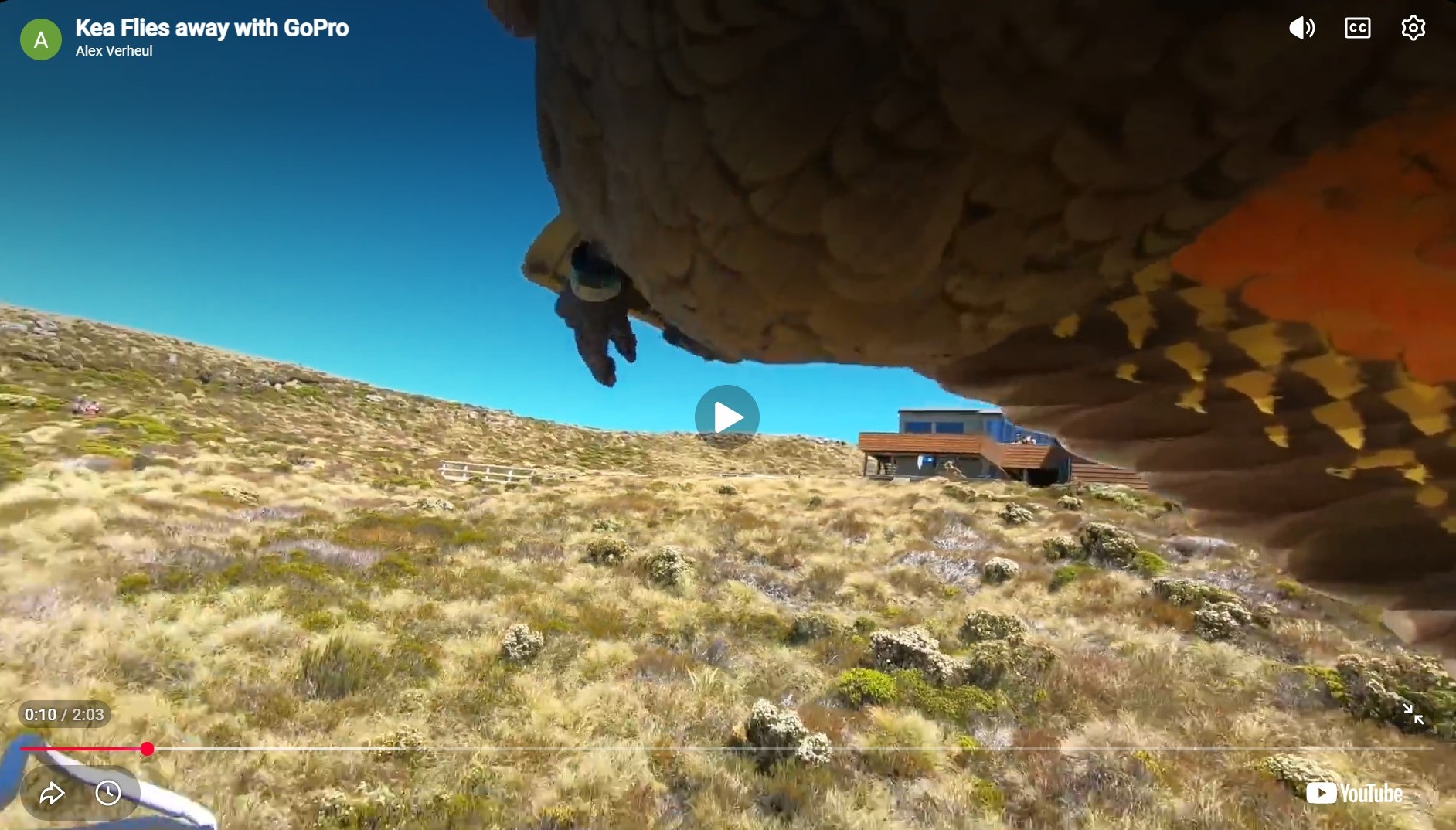
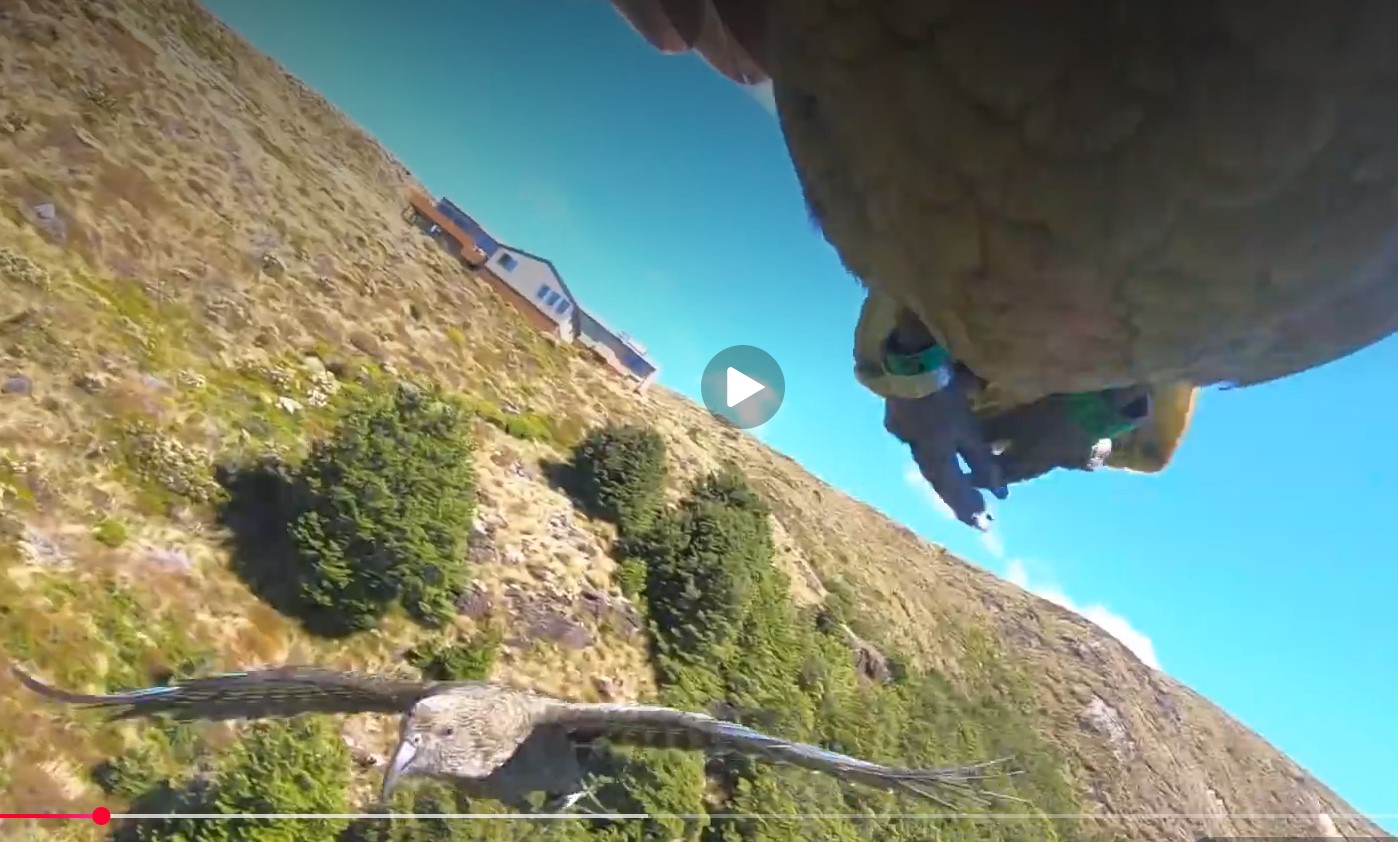
A few hundred metres from the house the bird lands and begins its serious probing of the camera. This goes on for one and a half minutes, during which a piece of the camera, or possibly its mounting, can be seen in the kea’s beak:
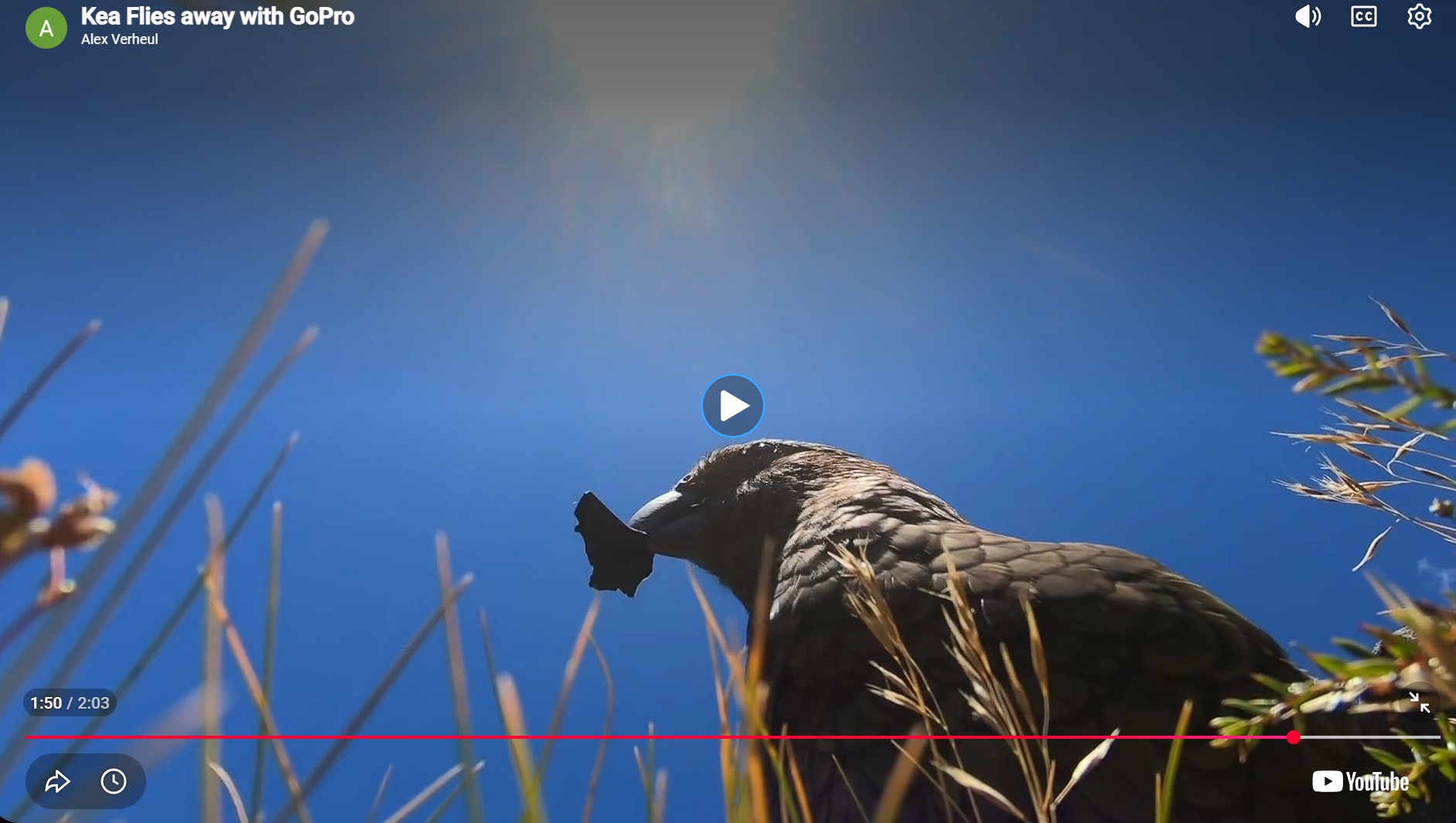
Not long after this we hear the companion kea sounding off, and a young voice say ‘I found it’, and both kea fly off. Despite the serious attack on the camera, it remained functional (otherwise the video would not have been posted on YouTube). For many years prior to this, keas were celebrated amongst tourists on South Island alpine passes for their ability to strip the rubber off car windscreens and the like, but the ‘theft’ and attack of the GoPro added a whole new dimension to the infamy of the bird.
Painting in Wellington with Kākā
I can’t match the viral video, but I do have some cellphone photos which show how equally inquisitive kākā can be. Where I live in Wellington is very close to the Zealandia sanctuary which reintroduced 14 captive-bred birds in 2002. In the 2018-19 season Zealandia banded its 1,000th chick, meaning that flocks of kākā are now a very common sight throughout much of Wellington. Consequently, during a day of house-painting on a small scaffold, I wasn’t at all surprised to have a visit from an inquisitive kākā:
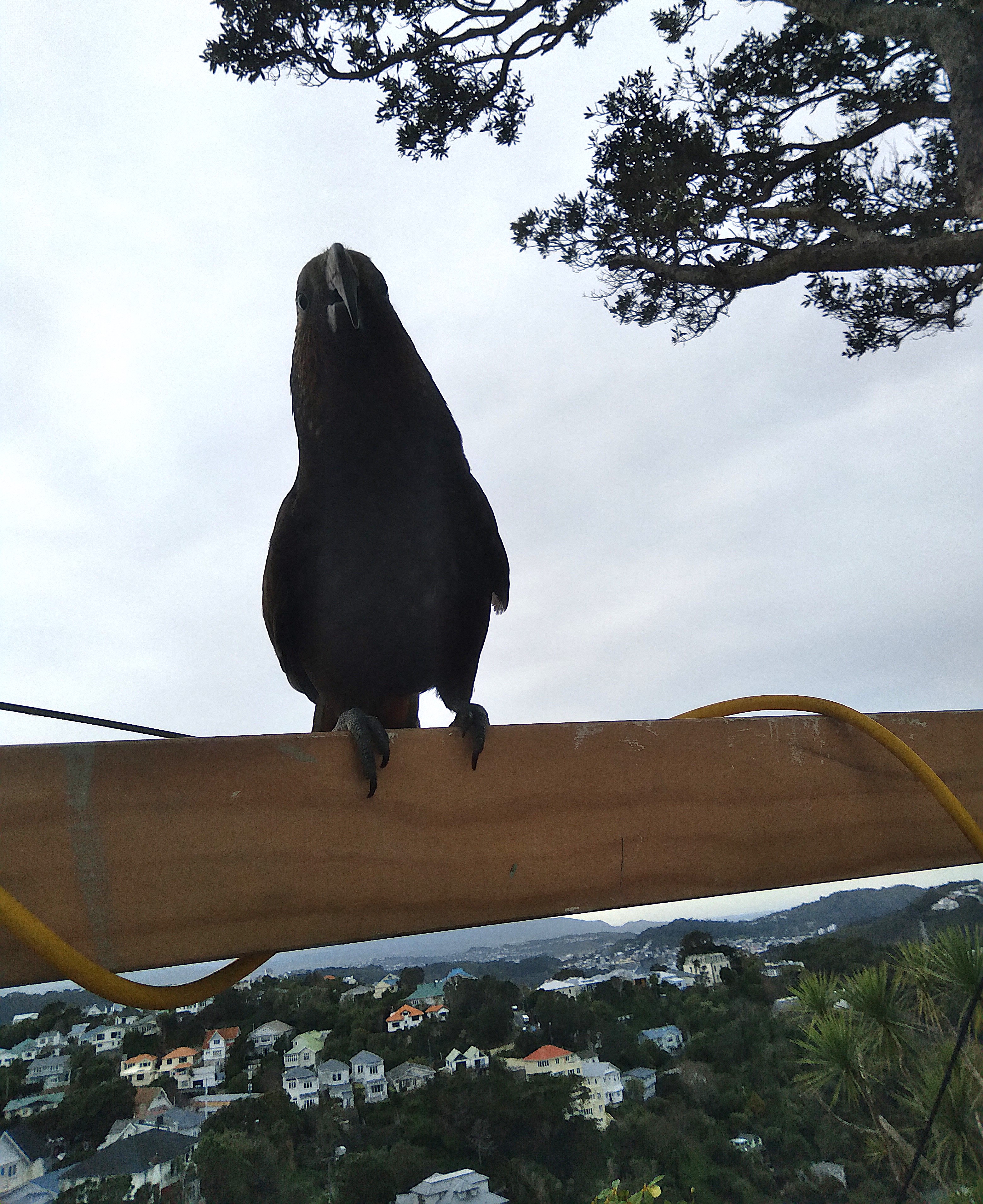
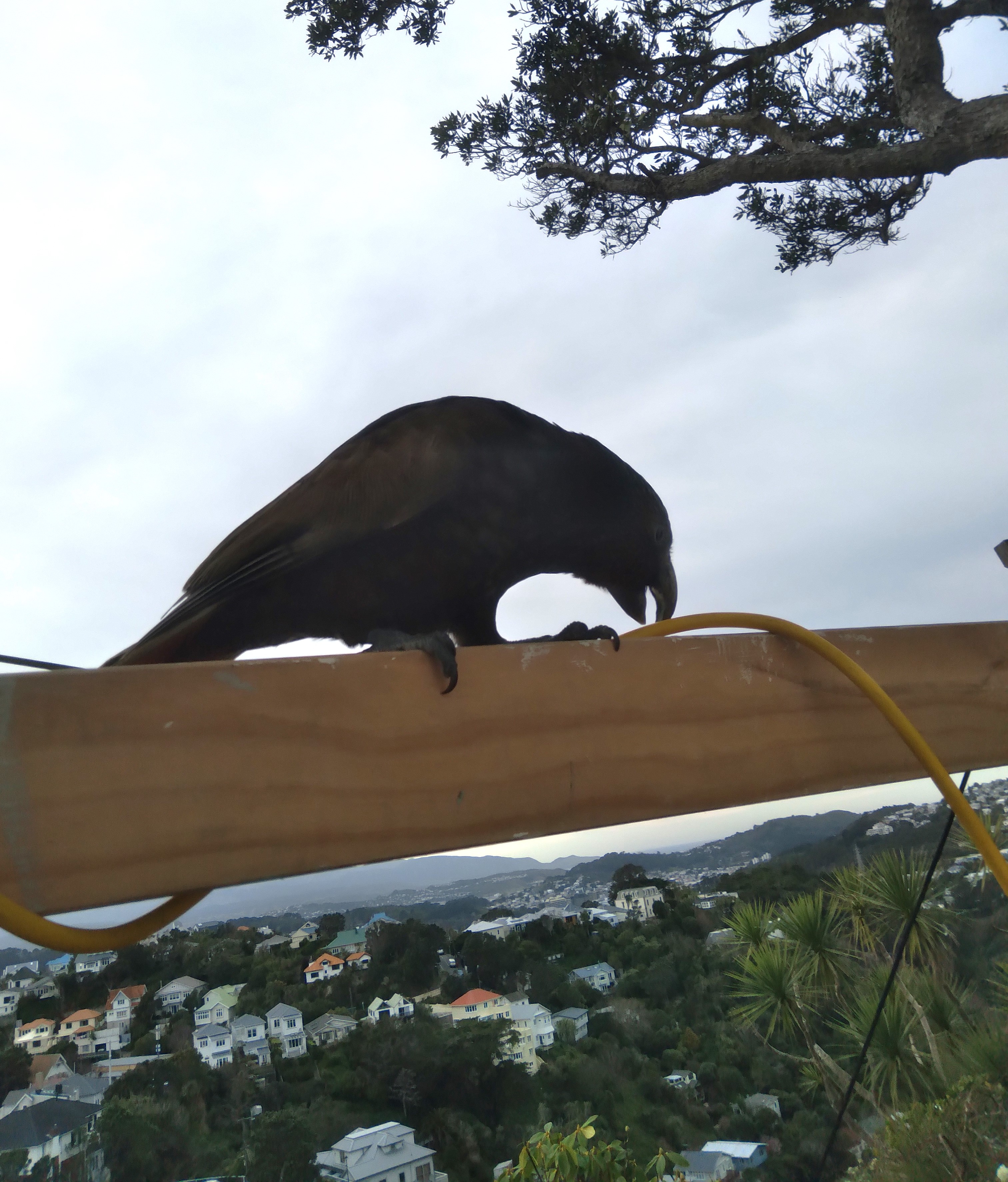
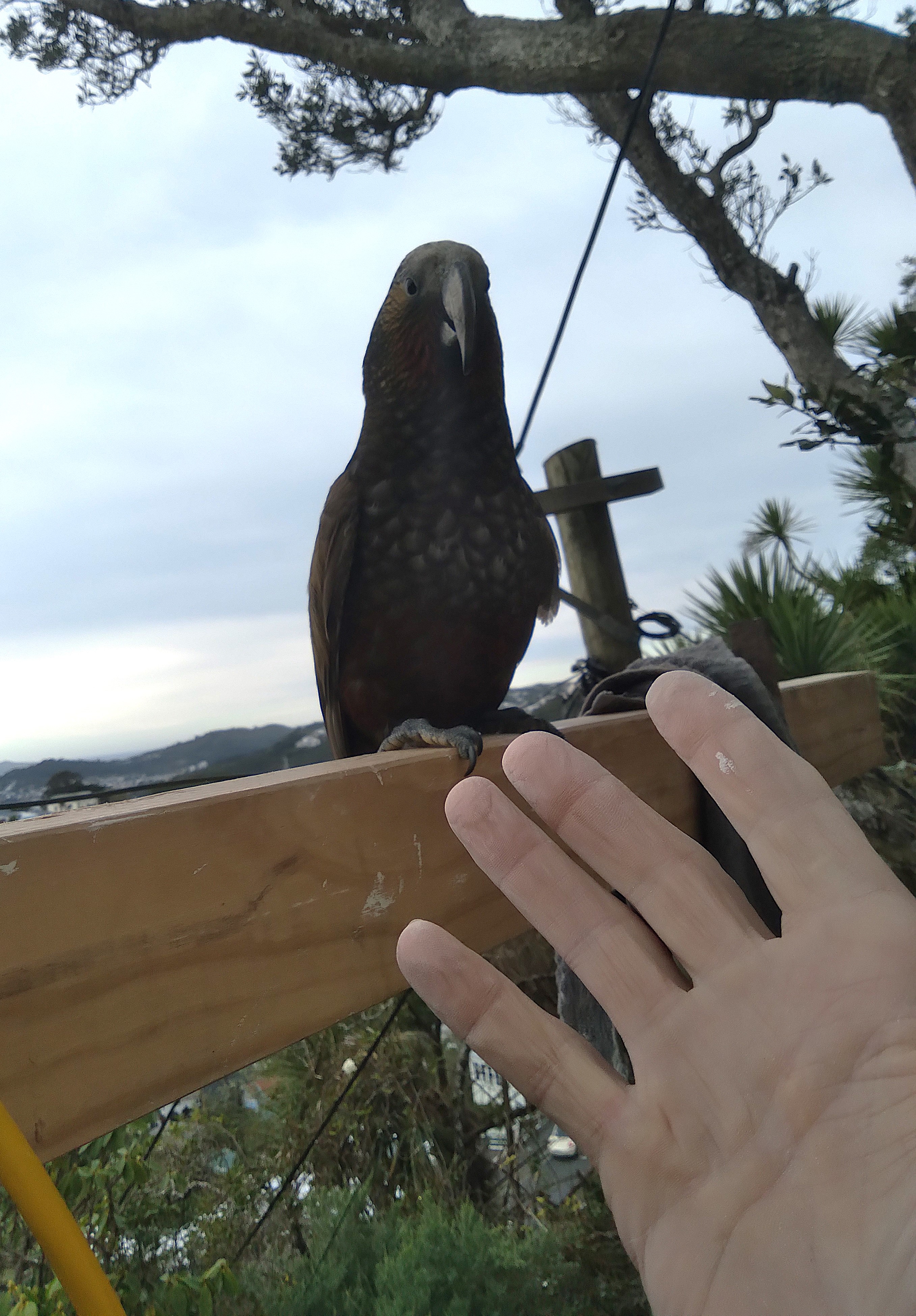
The bird was so close I felt like offering it a paintbrush to help with my painting, but on second thoughts the shot of the beak and the power cord showed that sharing my tools was not a good idea. After a little while the bird flew off and I returned to painting. Unbeknown to me, it returned and by happenstance a person inside (thanks Helen) captured this remarkable shot:
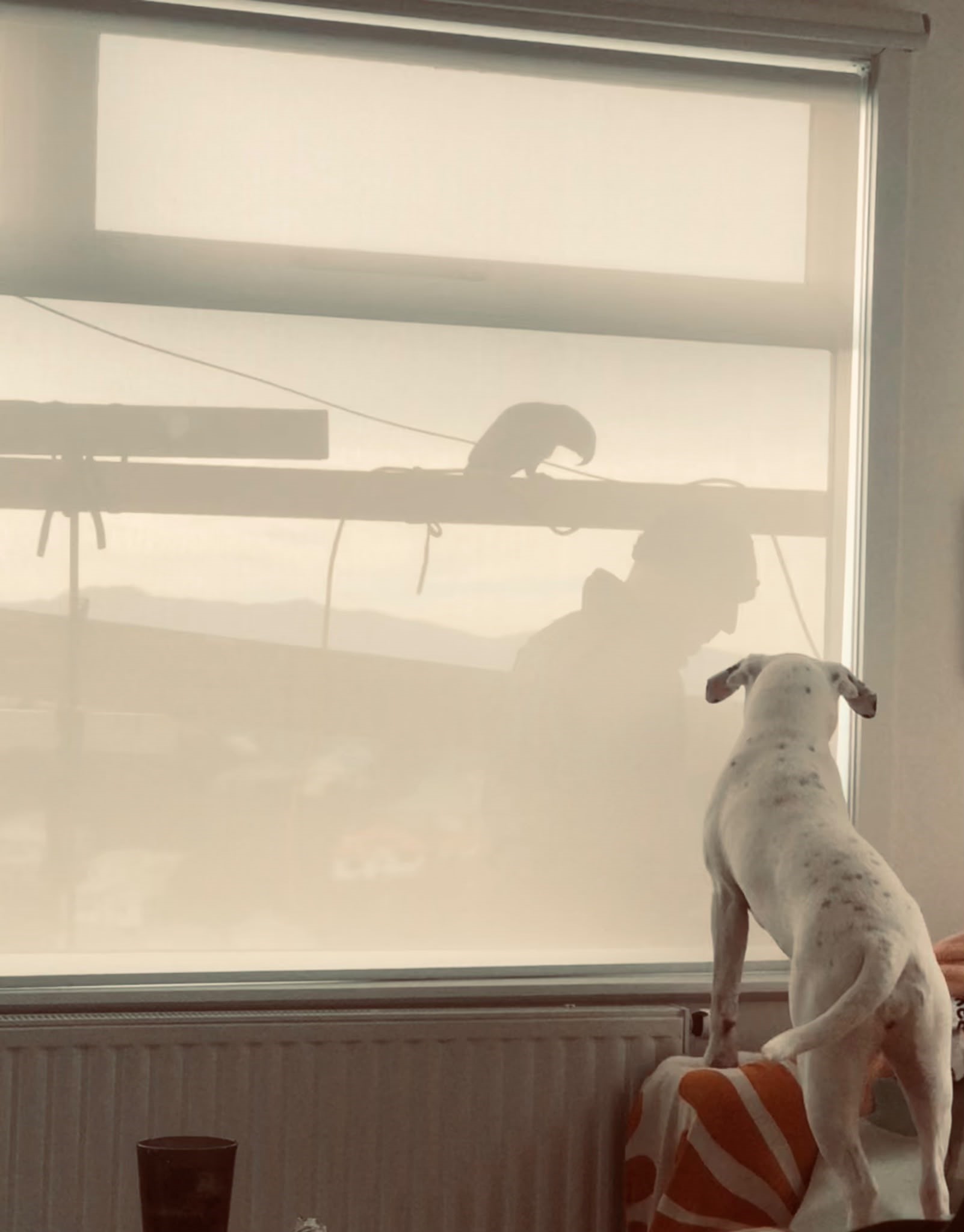
There is a blind drawn down on the inside of the large window, nevertheless the photo shows just how close the kaka has come. It is hard to say whether the bird is drawn to me or is still fascinated with the power cord not far away from its very powerful beak. Altogether, it was quite a remarkable experience.
Sap-feeding via the Powerful Beak
As noted, I live close to Zealandia but I’m also lucky to be a mere 400 metres from the Wellington Botanic Gardens, and it is my frequent walks through these gardens that has given me first-hand experience of a wicked problem2 to do with kākā. In short, they are killing many trees in the botanic gardens. Research has made clear that a wide range of trees are affected, but especially vulnerable are exotic conifers, including one of the largest trees in existence – the giant redwood. My usual entrance to the gardens is close to the James Hector Pinetum which still features this on its information board:
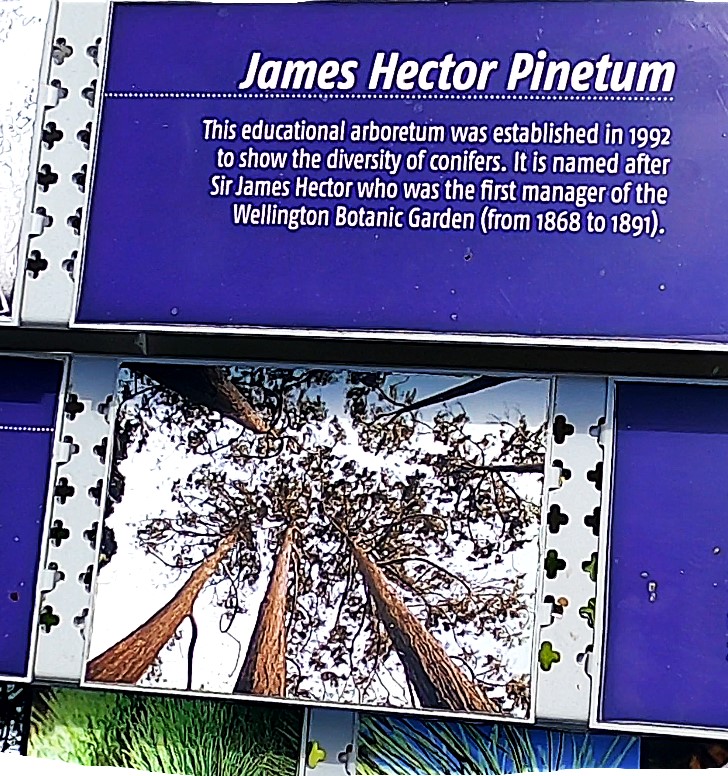
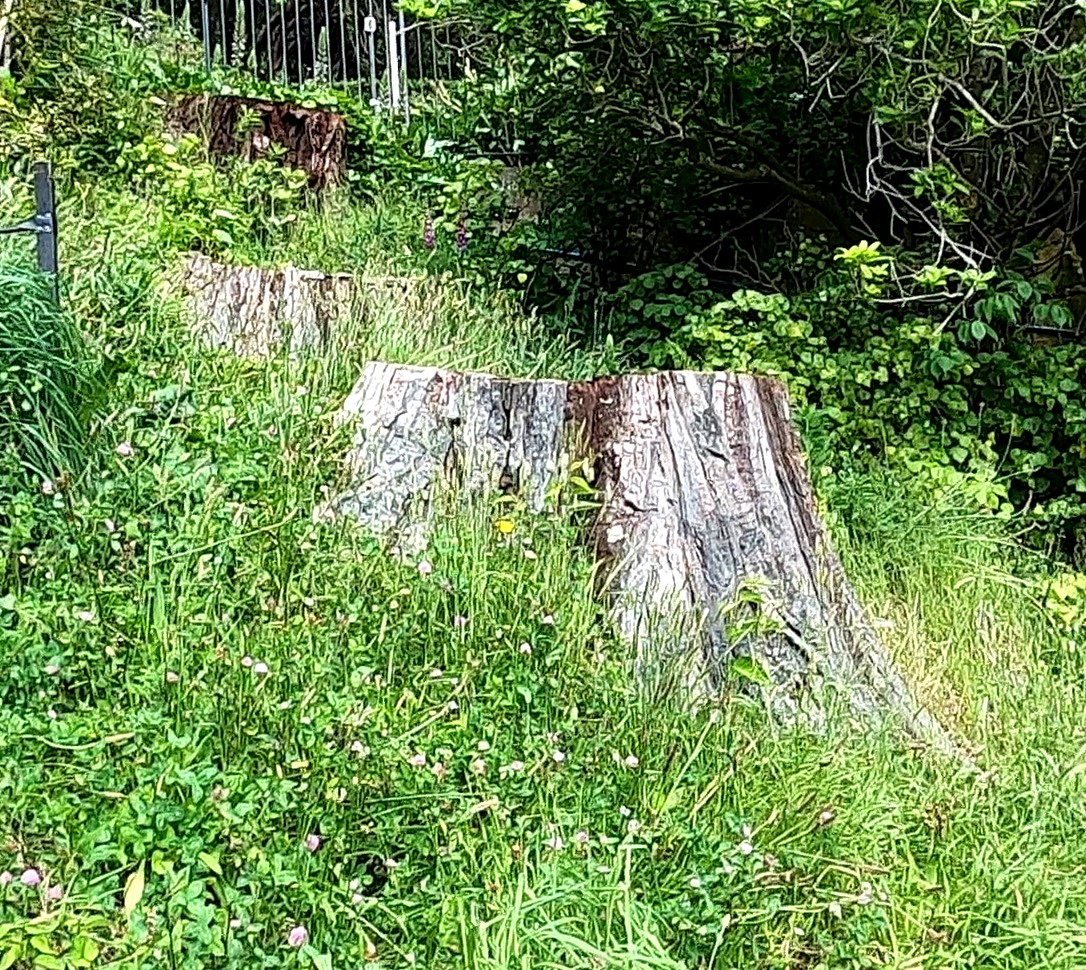
The photo below the top panel shows a group planting of giant redwoods, clearly offering quite a sight. Unfortunately, any person now visiting the gardens and looking for them will be unable to find them. They were cut down about a year ago, and currently look like this:
About 50 metres below this site another very large tree awaits a similar fate. This time the tree is a coastal or California redwood (Sequoia sempervirens), probably the tallest within the Wellington Botanic Gardens. It won’t be so for long as the following photos show;
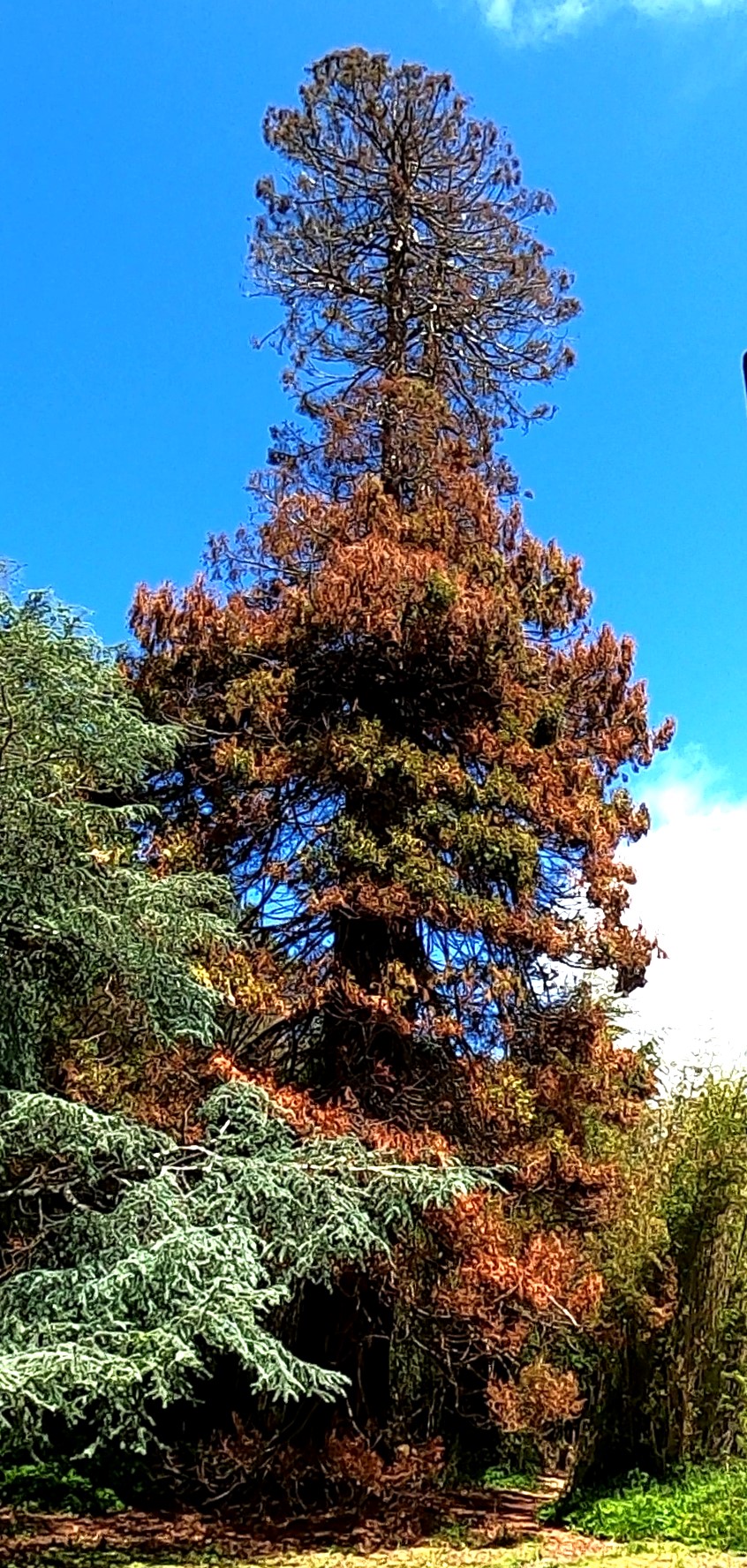
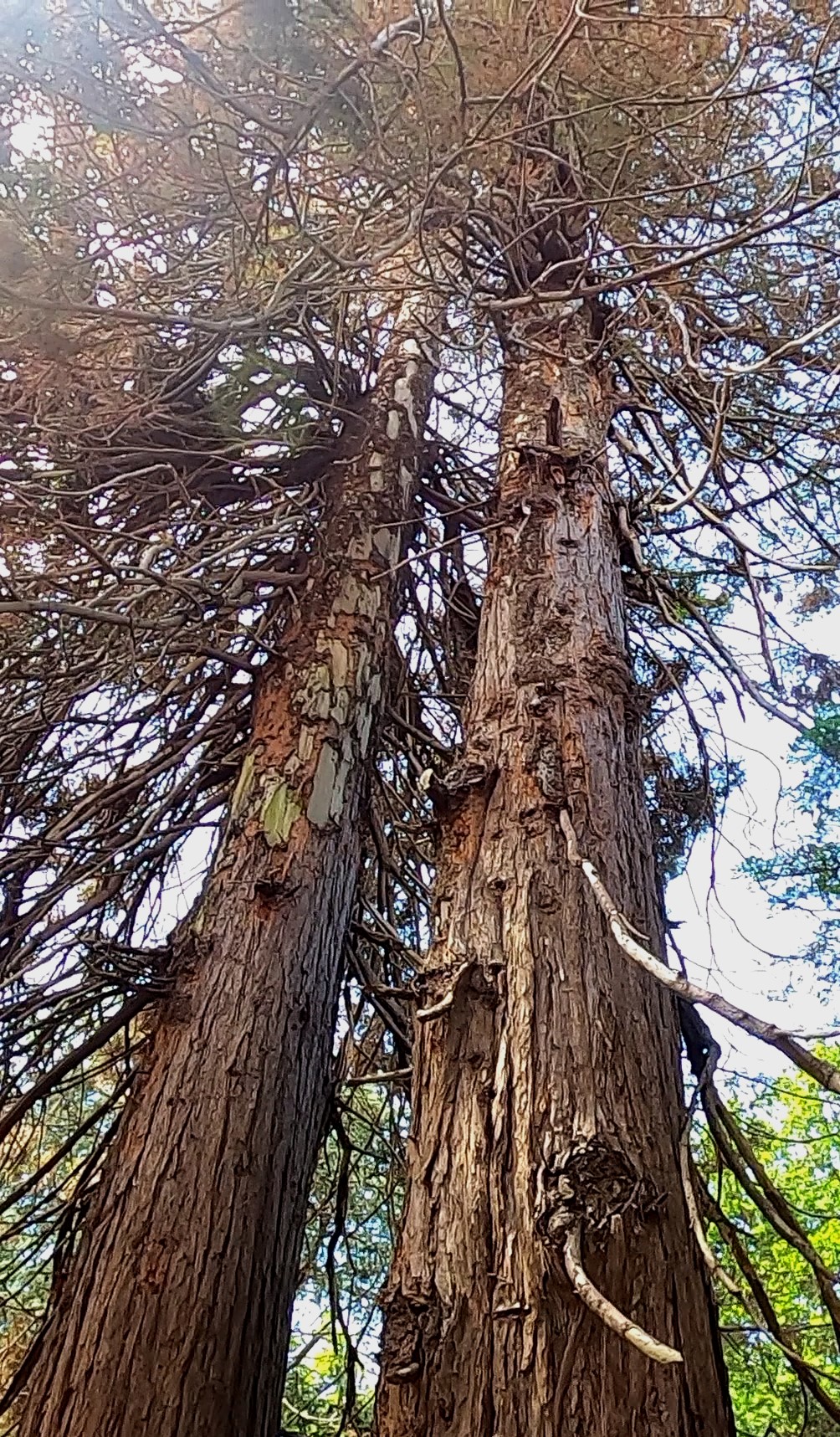
As we can see there are actually two trees, which have both had large parts of their bark stripped, which is the clear cause of their decline. Staff at the Wellington Botanic Gardens will have little choice but to fell the trees, as they have done with many other redwoods in the gardens.
As an excellent Wikipedia entry on kākā explains, the bird typically feeds on fruit, berries, seeds, nectar, and insects, however, in mid to late winter when such food is scarce, sap-feeding can become common. There are two strategies for gaining access to the highly nutritious sap of trees: first, transverse gauges, which leave linear marks around the branch or trunk of a tree; second, removal of bark patches. The second strategy appears to be more damaging to a tree. It is what led to the removal of the group of redwoods, and is clearly killing the coastal redwood.
Not all trees will be killed by the removal of bark patches, irrespective it certainly does lead to disfigurement of a tree. A few examples are worth considering before closing.
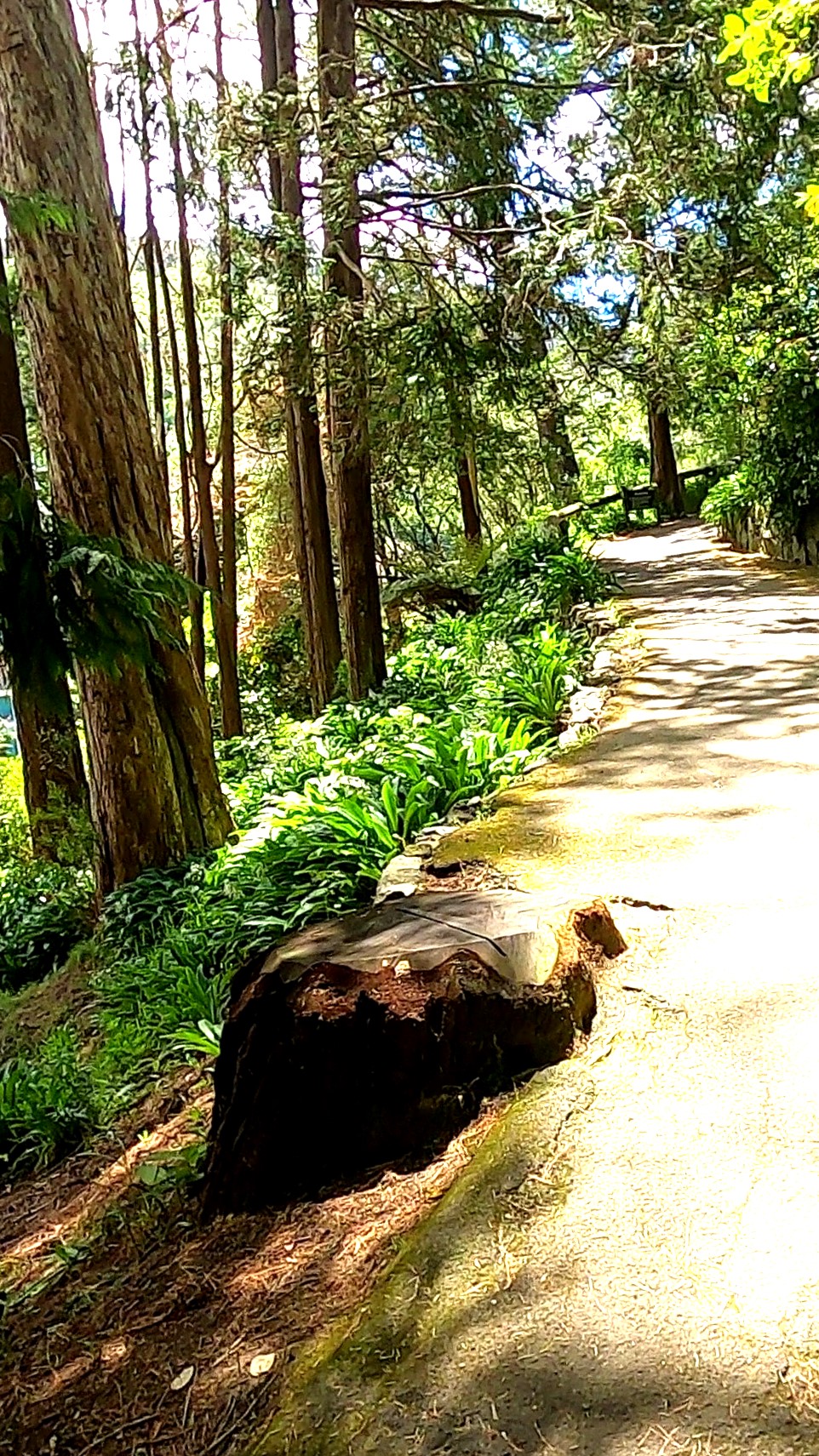
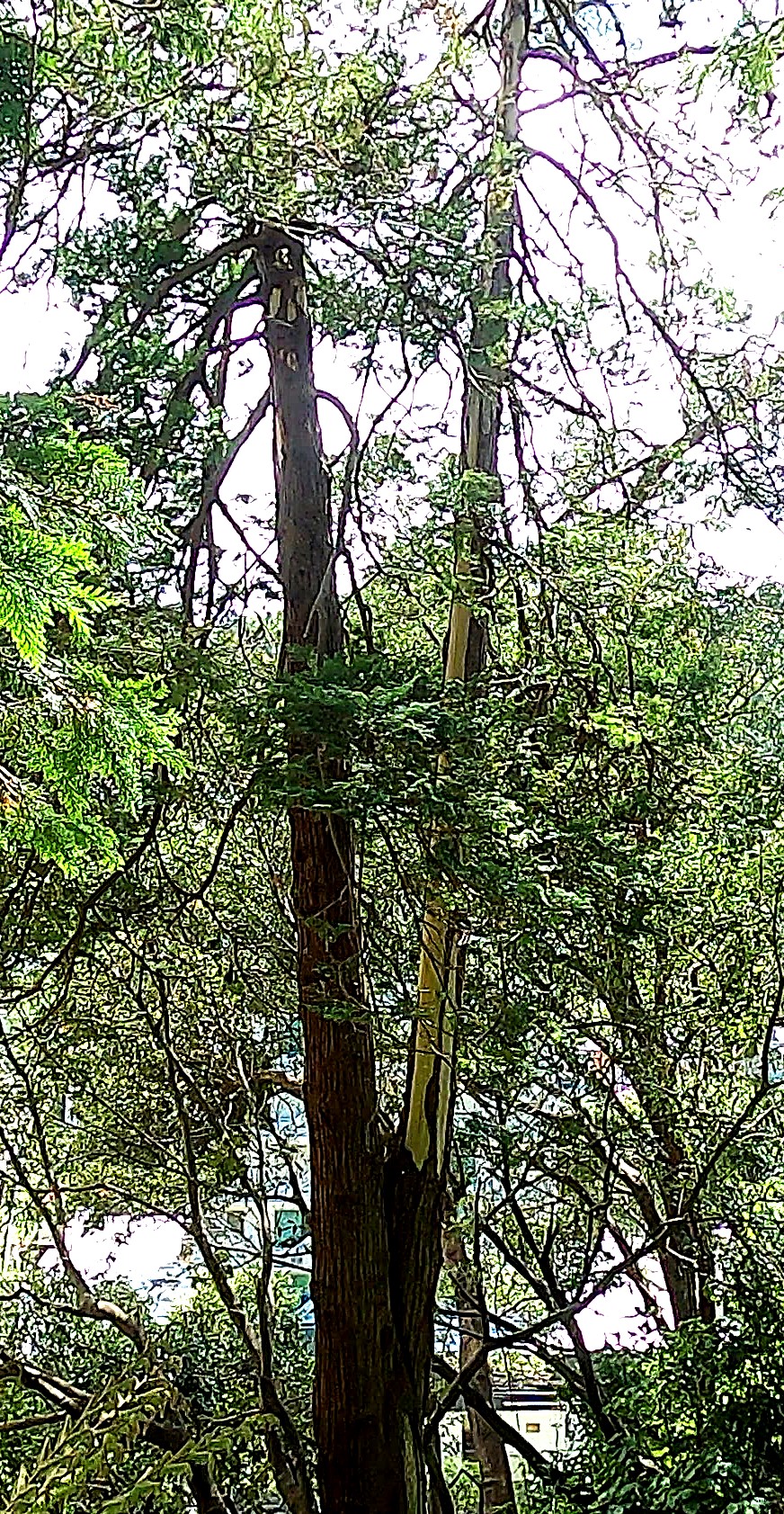
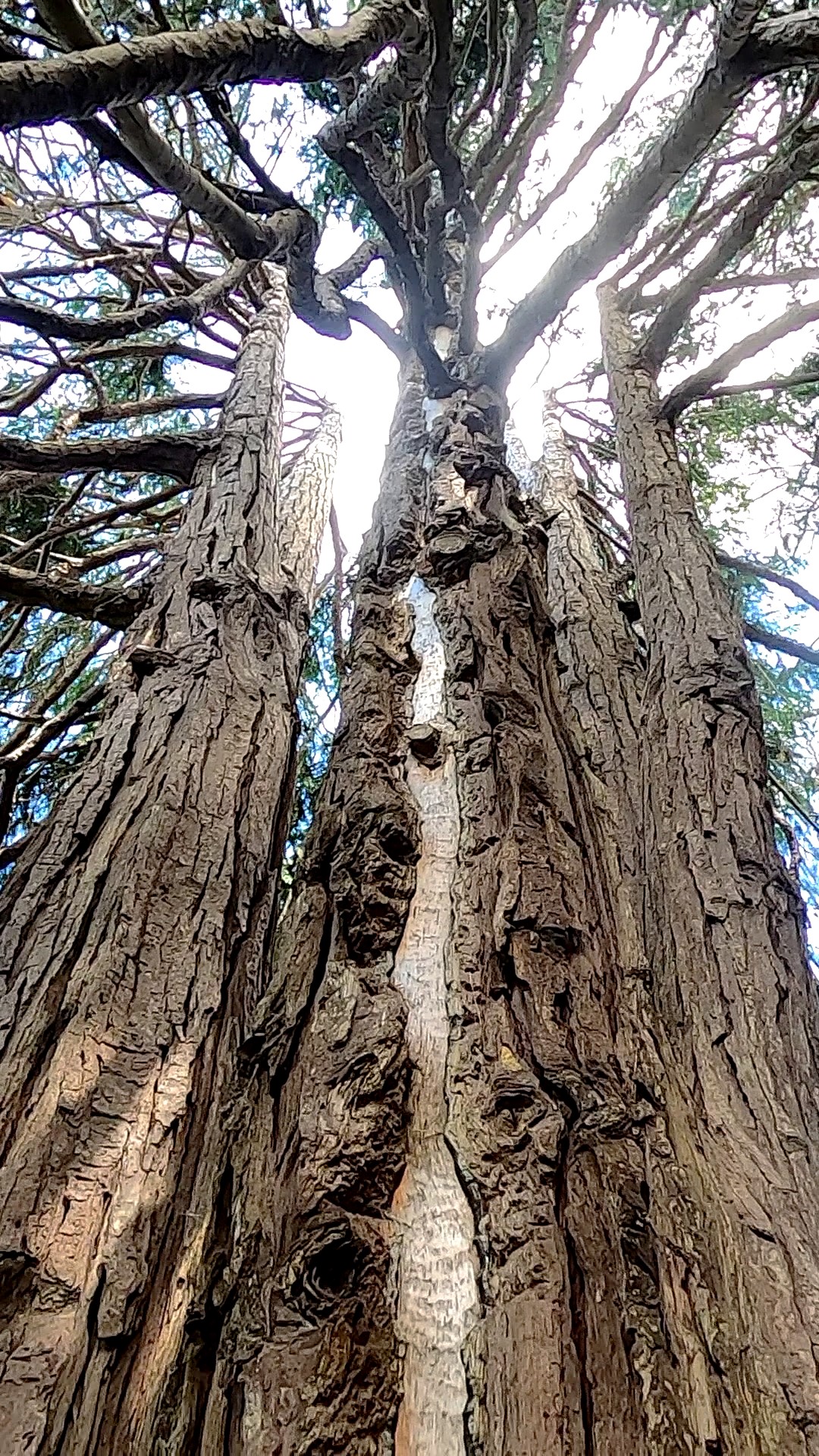
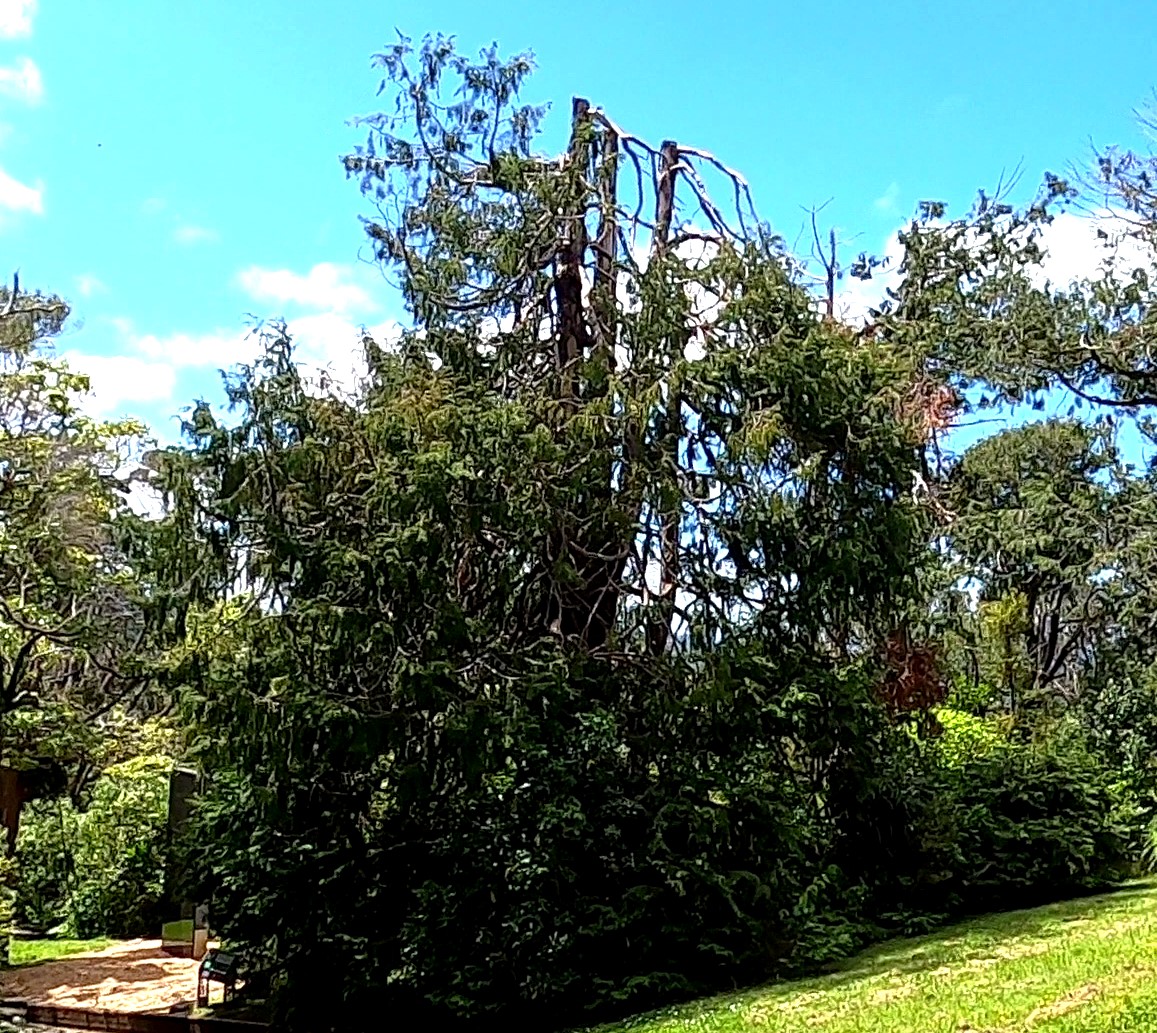
This is a grove of Lawson cypress (Chamaecyparis lawsoniana) where one tree has been cut down and many of the others show loss of vigour due to bark patch stripping. Often staff at the gardens treat such damage by cutting off the tree leaders, as can be seen here:
An Irresolvable Situation
I am far from the first to be aware of what has been happening to trees in Wellington due to the rapidly expanding numbers of kākā and their sap-feeding behaviour. University theses, academic articles, and popular media reports have all noted the problem. But no one sees a solution, making it a perfect example of a wicked problem. Kākā are an amazing bird, and I imagine no one would want them harmed, or even limited in distribution. I will certainly never forget the visit from a kākā while painting. But the flip side of their presence is accepting that their feeding behaviour will disfigure and kill trees, even the very largest we have in Wellington gardens.


