The last blogpost finished by promising the next issue would be on bunya bunya trees, another species of Araucaria. In preparing for that however I chanced upon some recently planted monkey puzzle trees in Southland, hence this short post dwells on this topic again. I hate to break a promise but this serves to flesh out the feeling noted in the previous posts that monkey puzzle trees were particularly popular and well-planted in Southland.
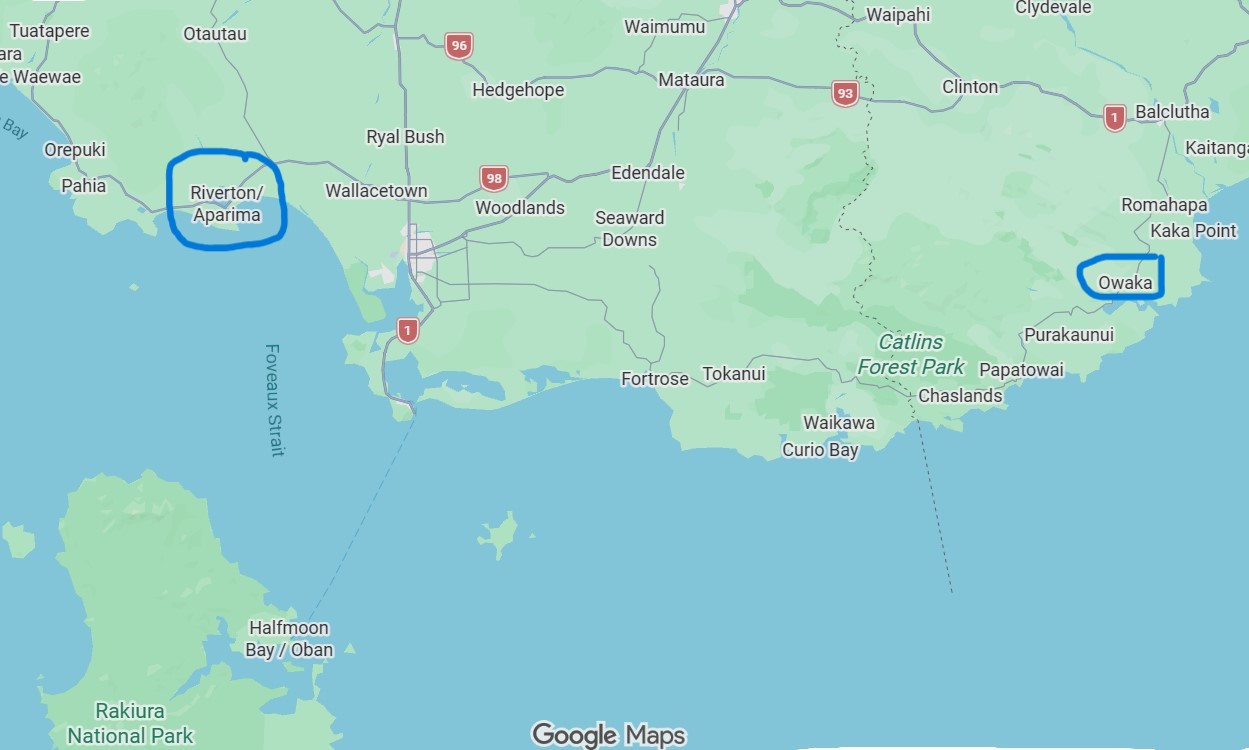
Technically the example below from Owaka is in South Otago, but a Google Map shows why many from this area feel a part of Southland:
Source: Google Maps
Owaka is indicated in the right circle, and Riverton/Aparima the left, both being very close to the bottom of the South Island.
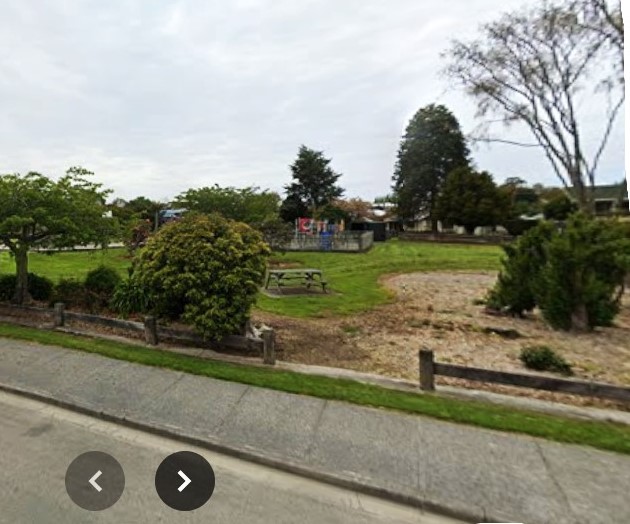
Recently a friend told me he was in Papatowai, and I semi-jokingly said to keep an eye out for monkey puzzle trees. I was pleasantly surprised to receive an email a day later saying he had indeed spotted one in Owaka. Being a small town I figured I might be able to find the tree on Google Maps street view, and after a little searching this proved to be the case:
Sourece: Google Maps, street view, October 2024
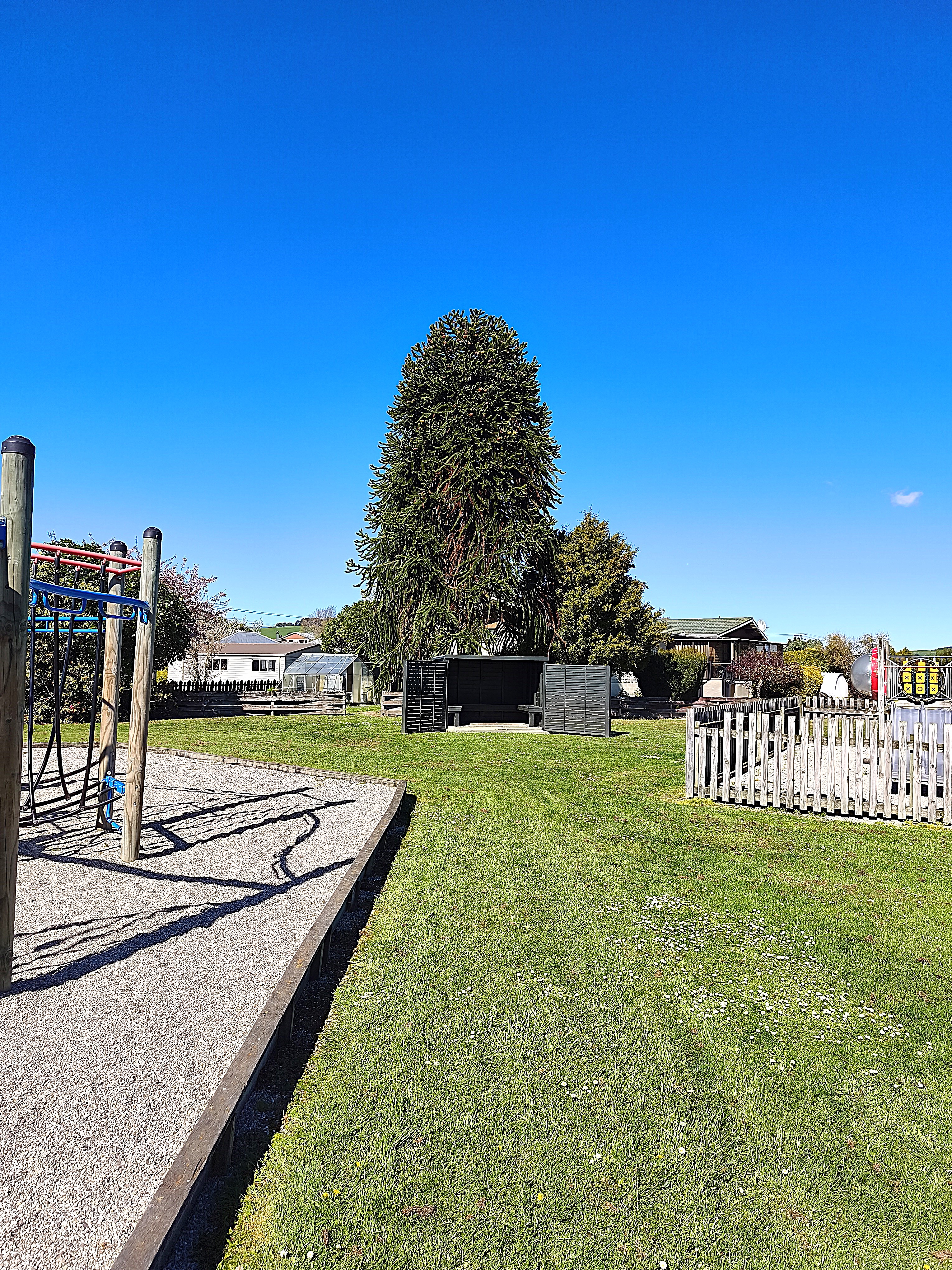
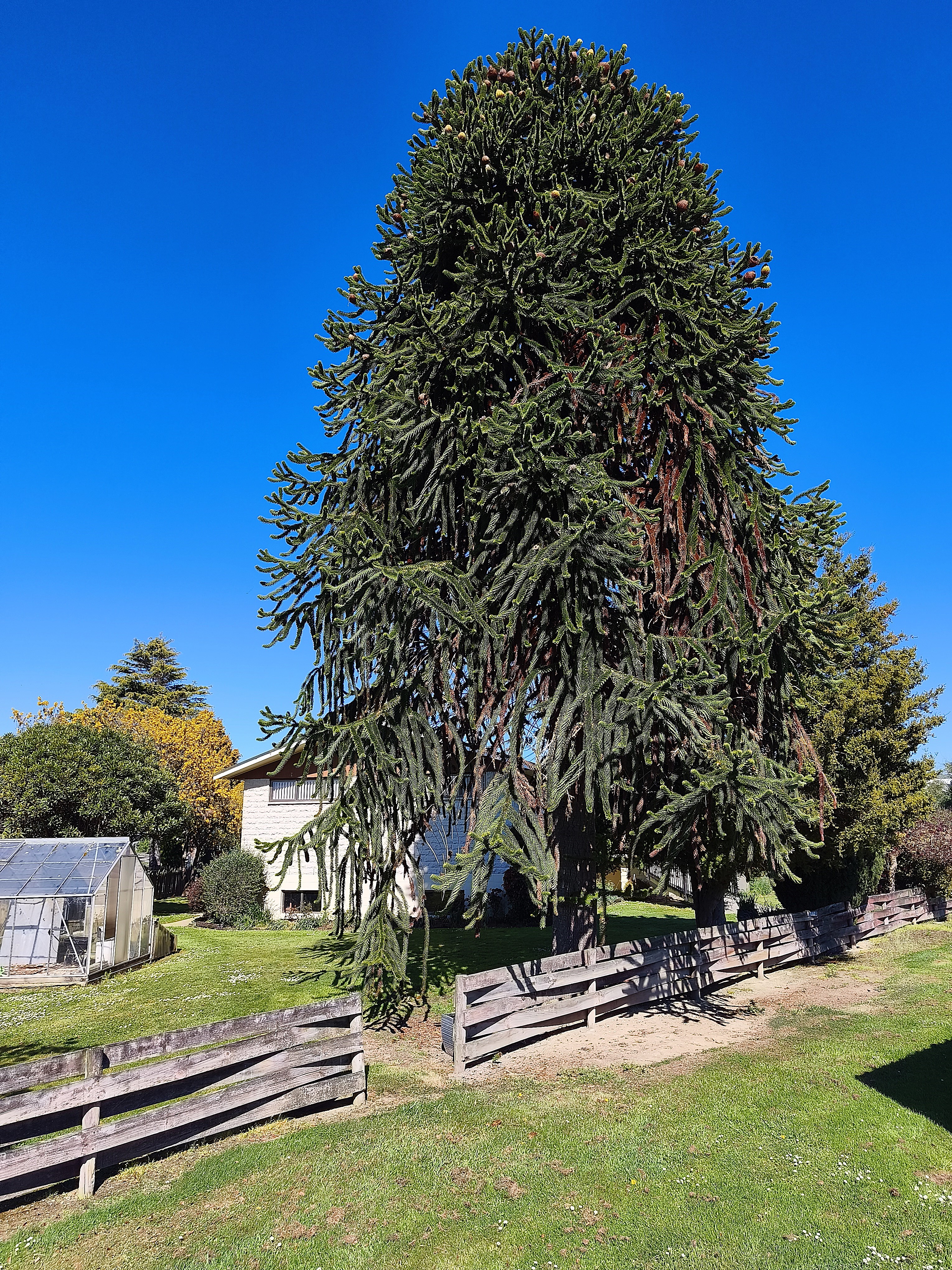
On show in the Owaka Lions Club playground on the Southern Scenic Route is the unmistakable form of a monkey puzzle. The tree is some distance from the road, so I was very pleased when my friend sent me some photos from closer up:
Source: James Beattie, October 10, 2026
The photo shows that the tree is growing in a private property, not actually in the playground. It is clearly very healthy, and a close examination also shows the tree is bearing cones at the top. It is not possible to date the planting of the tree, but aerial photos of Owaka certainly suggest it was not growing in 1955. Given its size it could well have been planted not long after though, perhaps being in the order of 50 to 60 years old.
Searching Google Maps for Riverton, approximately 130 kilometres away from Owaka, I chanced upon two specimens much more recently planted. They can be found at a large property featuring a two-storey brick house on the corner of Delhi and Palmerston Streets. The earliest views available are from 2008, but both trees do not show up well at this date so the second, and larger tree, is shown from the January 2010 shot:
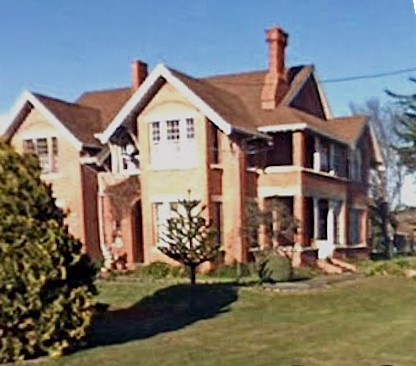
Google Maps, street view Aug 2008
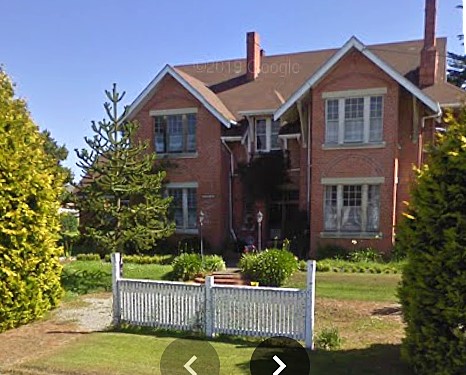
Google Maps, street view Jan 2010
Moving forward to 2026 we can view both trees in one image, from two different angles:
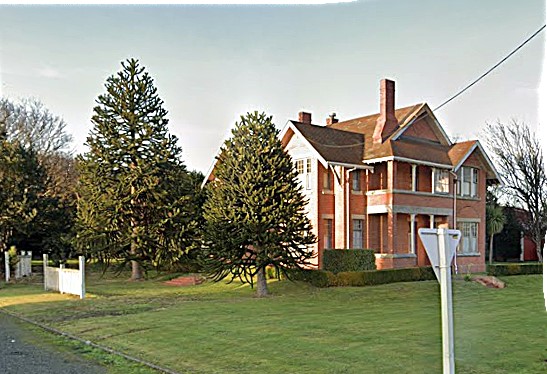
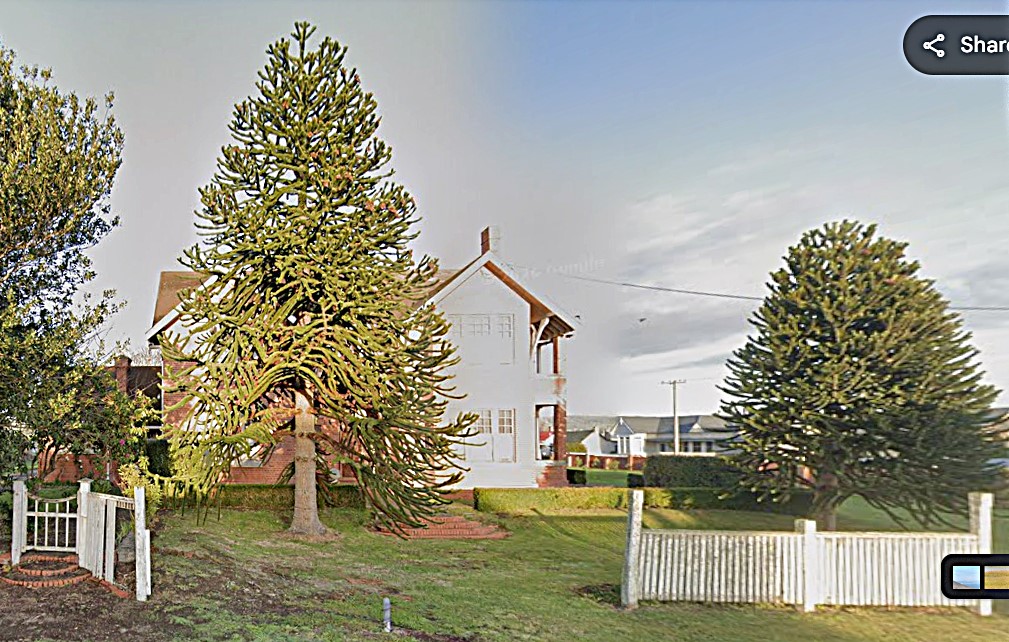
Google Maps, street view May 2026
Clearly the difference in size between the two trees suggests they were planted at different dates. The smaller of the two was perhaps planted about 2005, and the other perhaps about 2000. The 2026 street views give a useful indication of the height they can reach after growing for 20 to 25 years.
If you look closely at the street views across the years you will also see that some other trees on the property have been removed: a large macrocarpa on the north side, and two of the yellow conifers that were in front of the two monkey puzzles, which remain. Of course there could be many reasons for the removal of these other trees, but the retention of the monkey puzzles does suggest they were more highly valued. As noted in previous posts, such a valuing of monkey puzzles diminished with time throughout New Zealand, but perhaps the examples seen here show that some Southlanders have retained a strong connection to the tree.
The next blogpost will move on to consider the bunya bunya, which funnily enough is also known as the ‘false monkey puzzle tree’.
Acknowledgement:
Thanks to James Beattie for his tree-spotting, and for sending me photos from South Otago/Southland.


