The three palms showcased here have both a botanical label and further information on them provided nearby. The ‘backstory’ relates to the nature of such information, and an entry into such matters is provided by the following photos captured in a recent visit to Corsair Bay, Banks Peninsula:
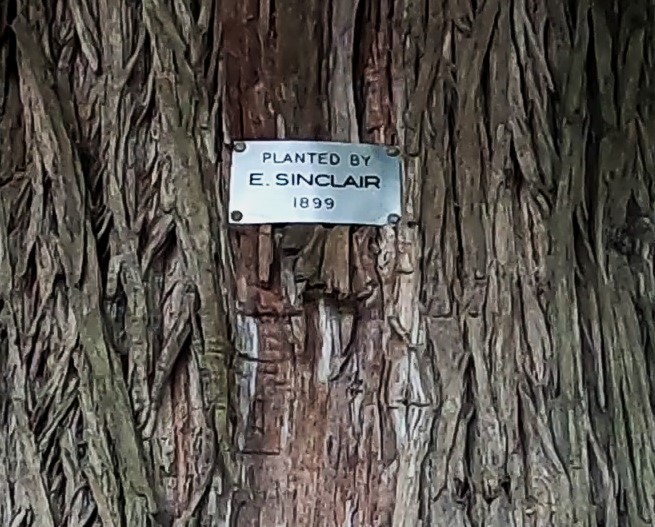
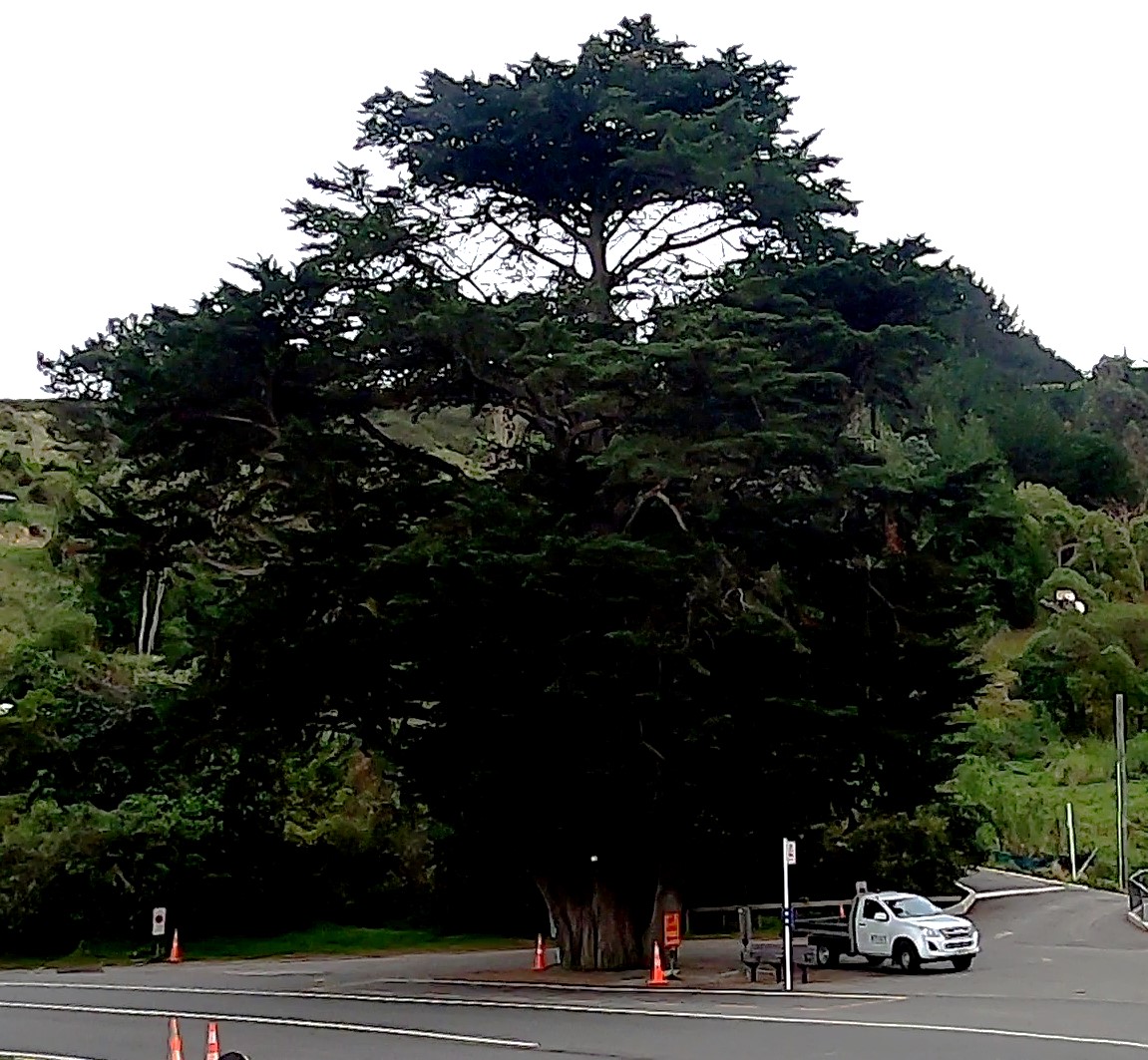
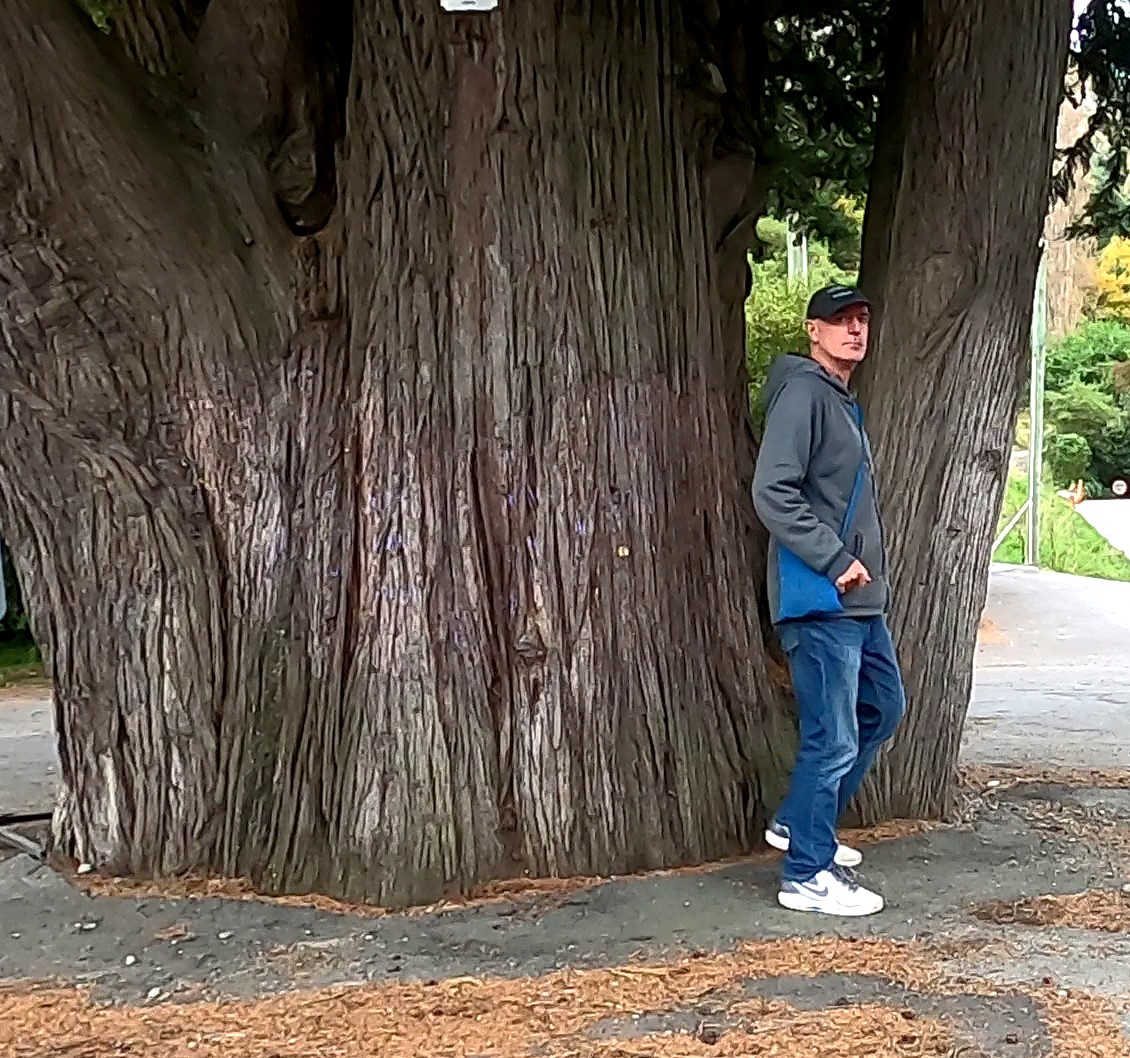
Source: Author, May 2026
This is very large and old Monterey pine, or macrocarpa (Hesperocyparis macrocarpa). As we can see, the plaque doesn’t provide a botanical label but simply tells us the tree was ‘Planted by E. Sinclair 1899’. This is quite minimal as information goes, nevertheless the key thing about this information is that as it is sited on the tree itself there is little reason to doubt that the tree was indeed planted in 1899. That is, both its height and circumference at the base is exactly what we would expect of a 127-year-old macrocarpa: there is consistency between what the plaque tells us, and what the tree in effect shows us.1 But as we can now move onto, such consistency is not always the case.
The Three Palms of Greytown
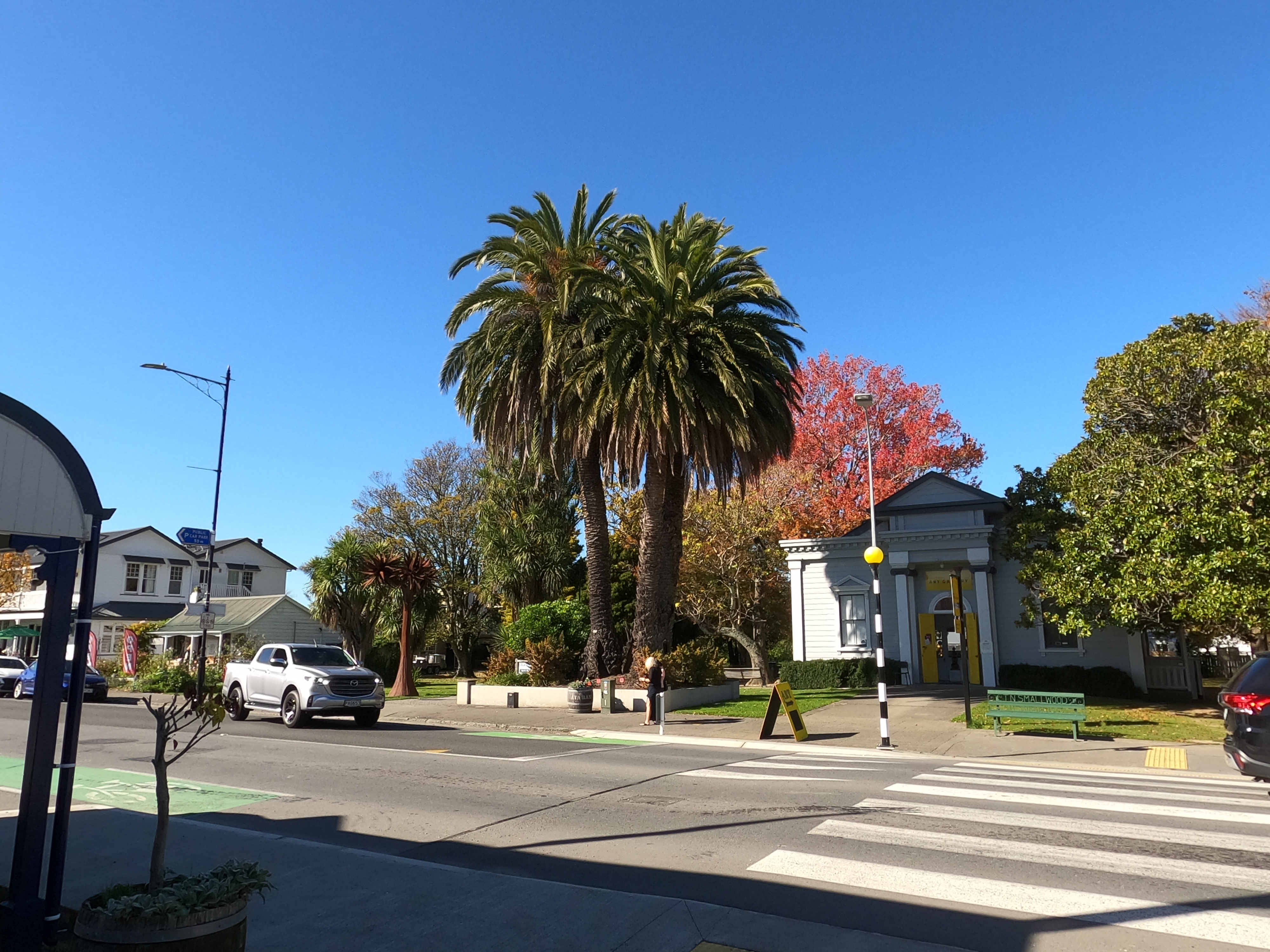
Greytown was the site of New Zealand’s first Arbor Day, so it has many mature trees, including this trio of Phoenix canariensis:
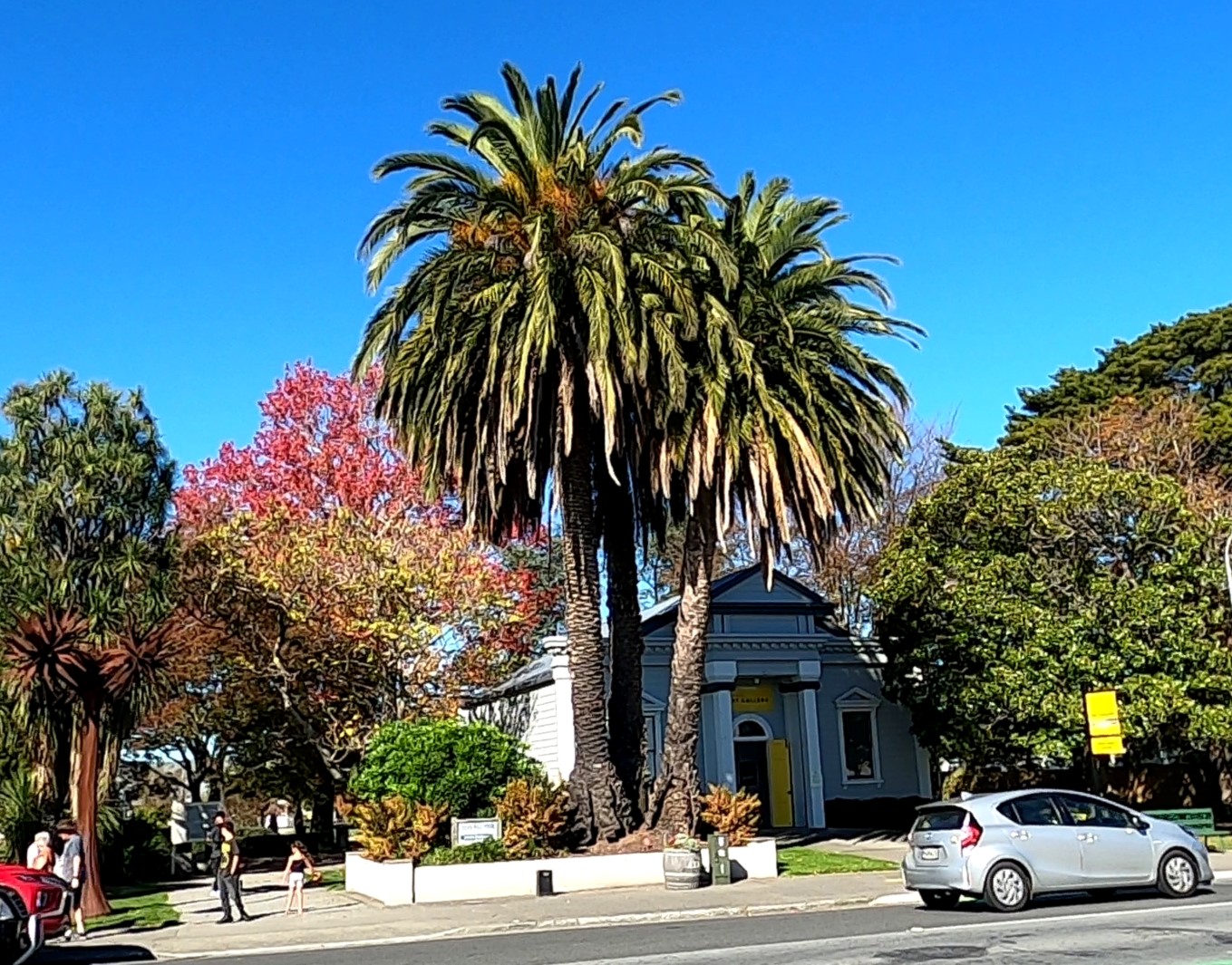
Clearly, one of the trio is slightly larger than the other two, nevertheless the close planting as a trio has resulted in a very significant landscape effect. They are found in Stella Bull Park, which is on Main Street near to Greytown’s main conglomeration of shops, cafes and eateries. The park also has several sculptures, one of which can clearly be seen in the next photo:
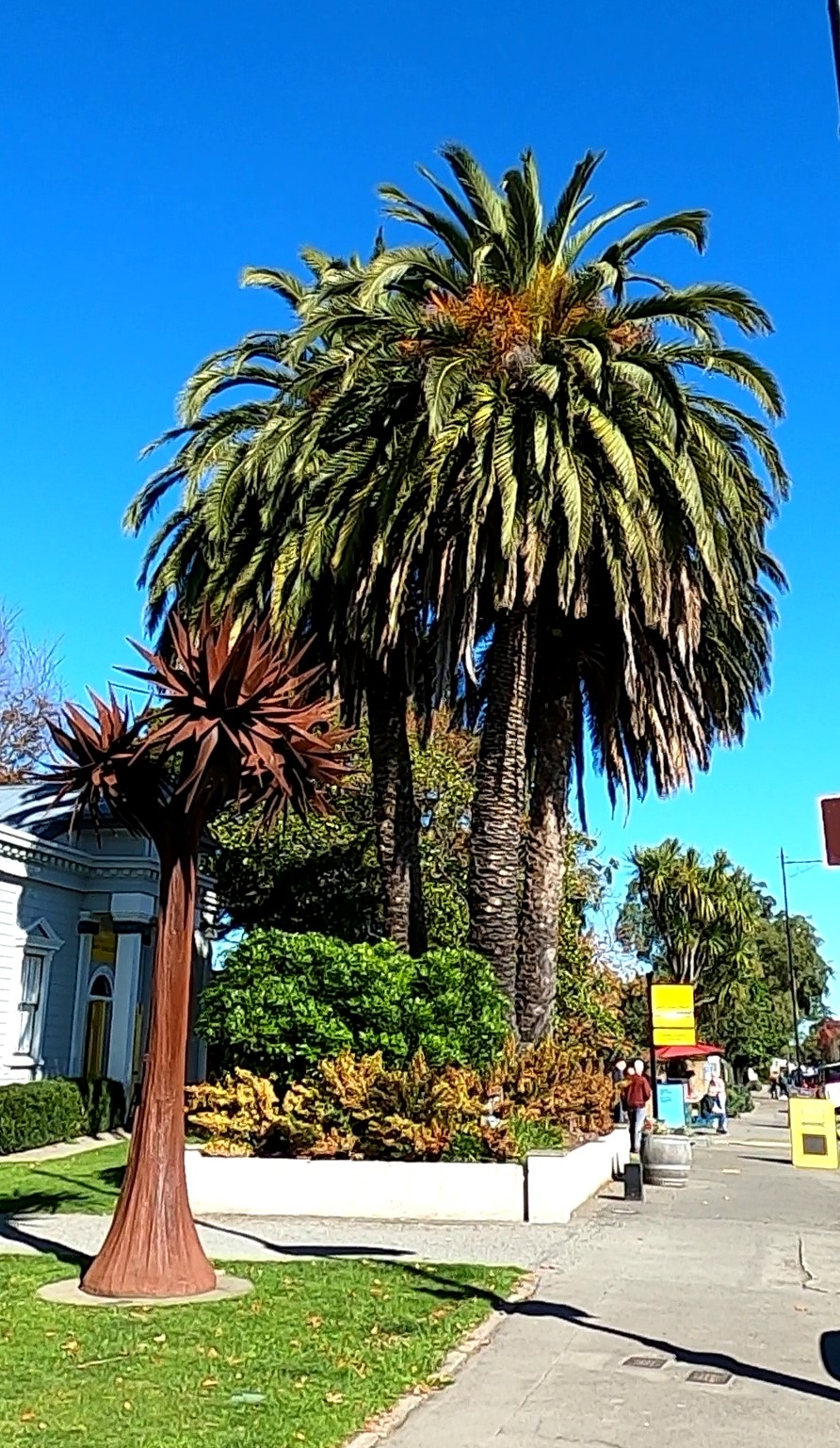
The sculpture symbolises a cabbage tree, many large specimens of which were found in the park before it underwent redesign as a garden. This history is found in an information board in the park, about 5 metres to the left of the sculpture:
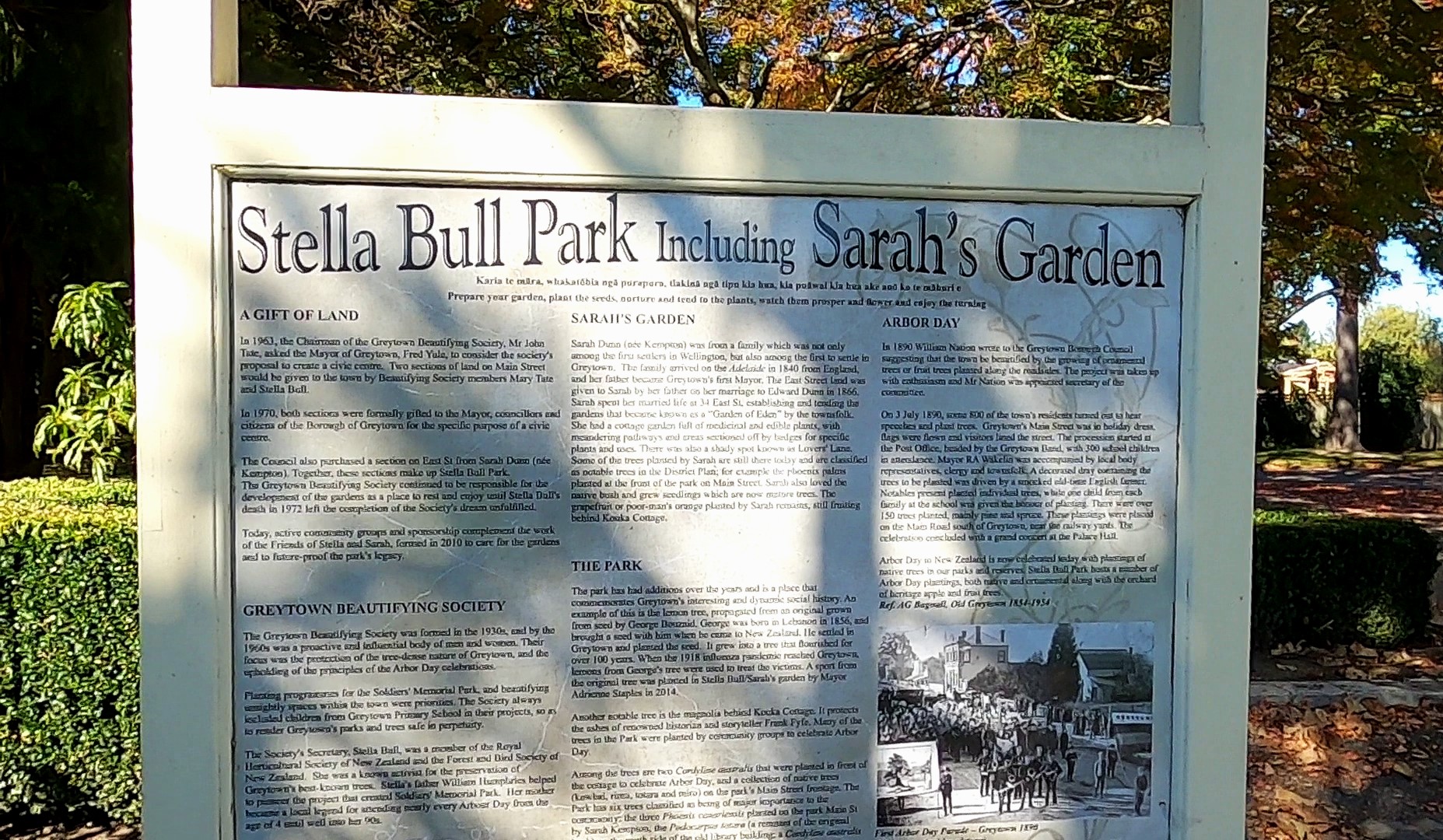
As can be seen, a lot of information is provided, but for our purposes the key piece of interest pertains to the planting of the trio of Phoenix palms. The photo has shading so I’ll just quote the relevant piece: ‘The park has six trees classified as being of major importance to the community: the three Phoenix canariensis planted on the park Main St by Sarah Kempton ….’ Whereas this information is useful it is intriguing that along with telling readers who planted the palms it neglects to give the date of planting. It seems fair enough to think that if you know who planted a tree, you would also know when that occurred. Given that I researched Phoenix palms in New Zealand I was able to look at the size of them and come to my own estimate as to their age: about 60 to 70 years.
I was interested to know if this was correct, so it was simple enough to use the information board for further research. Cutting a long story short, it was easy to establish that Sarah Kempton was the daughter of Greytown’s first mayor, Thomas Kempton. She married Edward Dunn in 1867, had 9 children, and died in 1937 aged 93.2 It is the last piece of information that is key. If, as stated in the information board, Sarah Kempton/Dunn planted the three Phoenix palms it must have been at the latest in 1937, but probably some years before. Consequently, if the information board is correct, the palms would be at least 89 years old. This simply did not strike me as correct, and my doubts were compounded by further research.
First, searching DigitalNZ there are several Whites Aviation aerial photographs of Greytown between 1948 and 1951, and these show no presence of Phoenix palms in the Main St of Greytown. Second, I consulted Bull’s history of Greytown3, where I found the following important photograph:
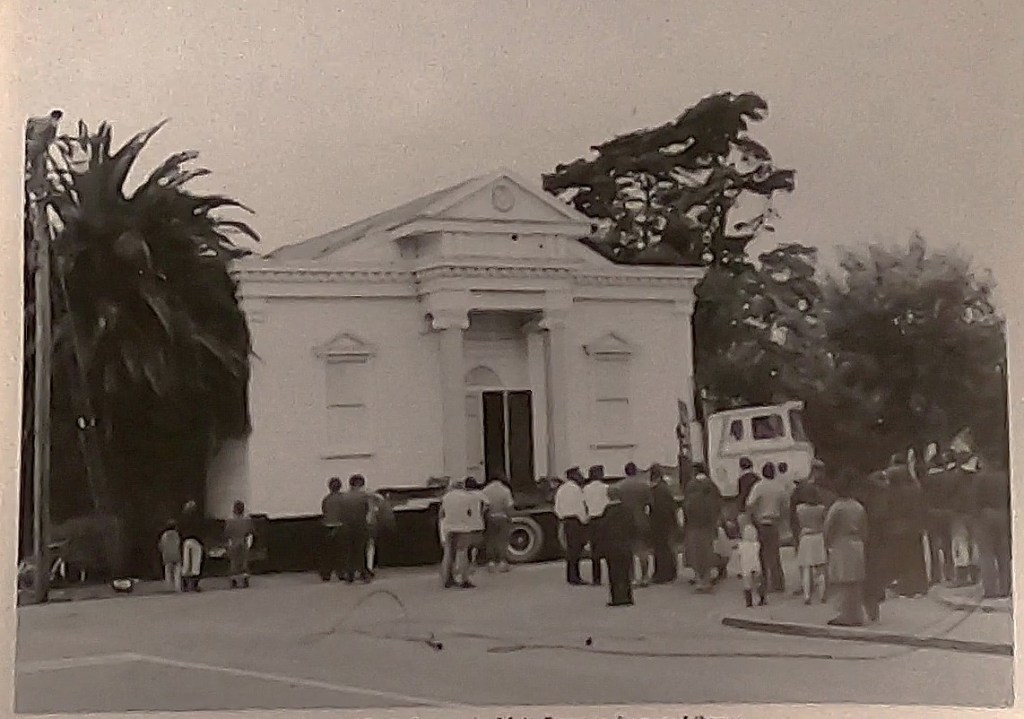
This shows the Greytown Masonic Lodge building being moved into Stella Bull Park to become the Greytown Public Library. A number of other photos show this move:
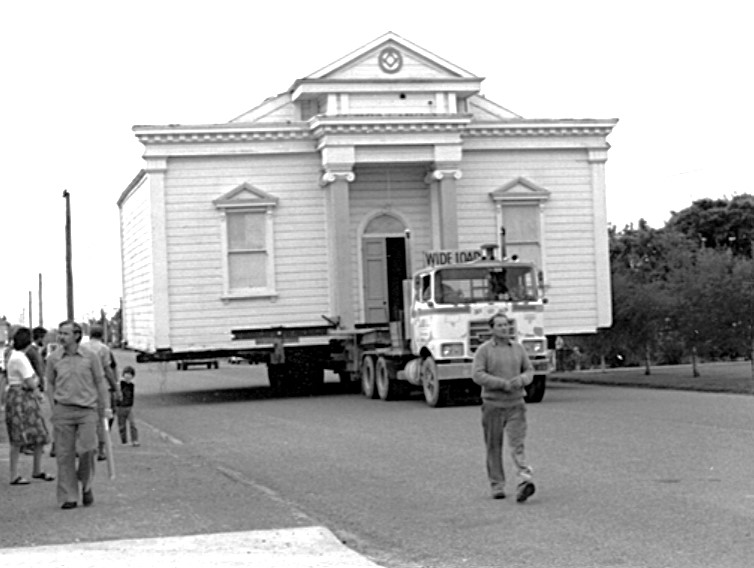
Source: ‘Resiting the Masonic Lodge building, Greytown’, 03-89/17 Wairarapa Archive
The first one though gives a good indication of the size of the Phoenix palms in 1978. If the information board is correct, then the palm seen beside the building would be at least 41 years old. It is easy enough to convince yourself that this could be reasonable, however when taken alongside the absence of any palms in the aerial photos we have to be very careful about taking as fact what we want to be the case. In other words there is good reason not to accept the information board story that Sarah Kempton/Dunn planted the three palms. Simply, in 2026 when I photographed them, they do not have the size of an over 89-year-old palm.
What I suspect is more likely the case is that the palms were planted in some kind of memory of Sarah Kempton/Dunn and this somehow got recorded on the information board as them having been planted by Sarah. This is a perfectly common human story of recording activities so they fit with what we want to be the case, and probably has many other examples in information boards of all kinds. Irrespective of this backstory with its slight quibble about historical accuracy, there is no doubt that the three palms have significant presence in Greytown’s Main Street, justifiably deserving their protected status:
- The tree is listed on the New Zealand Tree Register – see CR/2130 – where its height in 2025 is given as 22.2 metres. A quick bit of google searching also turns up considerable information on the family that presumably E. Sinclair belonged to – a notable family in this region of Banks Peninsula. ↩︎
- Information from Papers Past articles, including ‘Obituary’ The Dominion, 28 January, 1937, p. 10 ↩︎
- B. Bull, 1986, The Years Between: Greytown Borough Centennial, 1878-1978. ↩︎


