Robert Percy Moore is regarded as New Zealand’s greatest panoramic photographer.1 Particularly during the 1920s, Moore’s photos included many large urban houses of the upper class and rural homesteads of wealthy runholders. Here is an example of the former:

Source: Smith, George John, 1862-1946. Riverlaw, a very large three-storeyed house in Aynsley Terrace, St Martins, Christchurch. Moore, Robert Percy, 1881-1948 :Panoramic photographs of New Zealand. Ref: Pan-0928-F. Alexander Turnbull Library, Wellington, New Zealand. /records/32050477
The St Martins house, owned by Colonel Smith, had an extensive garden designed by Alfred Buxton, who in terms of landscape design shares with Moore the appellation ‘New Zealand’s greatest’ (at least during the early 1900s). If we enlarge the photo to show the entrance to the house, we can see the central interest of this blogpost:
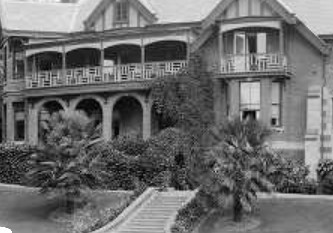
The relatively formal design has two palms framing the entrance steps leading to the front of the house. The magnification does not give enough detail to precisely identify the palms, but as Gleeson2 notes Buxton liked Chinese and European fan palms. The former in particular were heavily used in his garden designs, and so it is likely the palms are either Livistona chinensis or Trachycarpus fortunei, both of which can go by the common name ‘Chinese fan palm’, though the latter is also known as the Chusan or Chinese windmill palm.3
As Tipples notes in his 1989 book Colonial Landscape Gardener,4 Buxton’s Christchurch nursery had a large heated greenhouse for the production of palms, both for sale and for use in planting out his landscape designs, so it is quite possible that the two palms seen above were grown in Buxton’s nursery. Though the pair above function as an entrance frame, another reason Buxton favoured the palm was a rising popularity in the 1920s for Japanese gardens. Either the Chusan or Chinese fan palm went well with bamboos, Japanese maples, camellias and so on to give a Japanese look to parts of a garden.
Both palms are amongst the most cold-hardy of palm species, hence their further appeal to Buxton who designed many large gardens in the South Island. As Tipples notes, Buxton hired Robert Percy Moore to photograph many of his major landscape works, as early as 1910, and certainly up to 1926 when Buxton’s landscape business went into voluntary liquidation. A good number of Moore’s panoramic photos are available from DigitalNZ as a result of a National Library digitisation project, but the coverage does not allow the identification of the southern-most Buxton-inspired planting of fan palms. The remainder of the post does however focus on two that being in the deep south – Clyde – are a strong candidate for that category.
Earnscleugh Station’s Fan Palm Pair
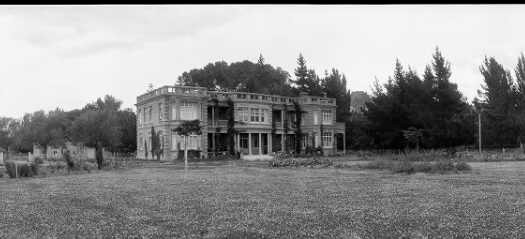
Source: Spain, Stephen Thomas, 1862-1940. Earnscleugh Station homestead. Moore, Robert Percy, 1881-1948 :Panoramic photographs of New Zealand. Ref: Pan-1859-F. Alexander Turnbull Library, Wellington, New Zealand. /records/33821129
The photo is one among many of the Moore collection in the National Library that is dated 1923-1928, which turns out to be useful because if we magnify the front-of-the-house portion of the photo we can see something of interest:
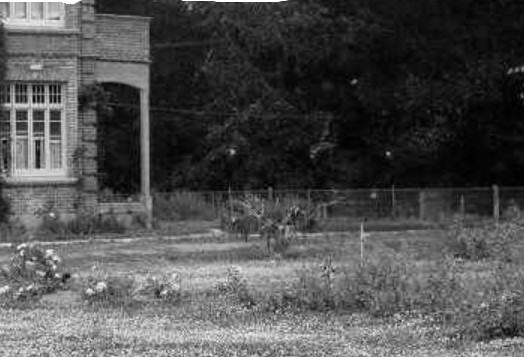
Visible as a lawn planting in the front of the house is a young palm, perhaps planted within a year or two of the photo date, meaning that circa 1925 is a reasonable planting date. That this is a palm is confirmed by a photo taken in 1948:
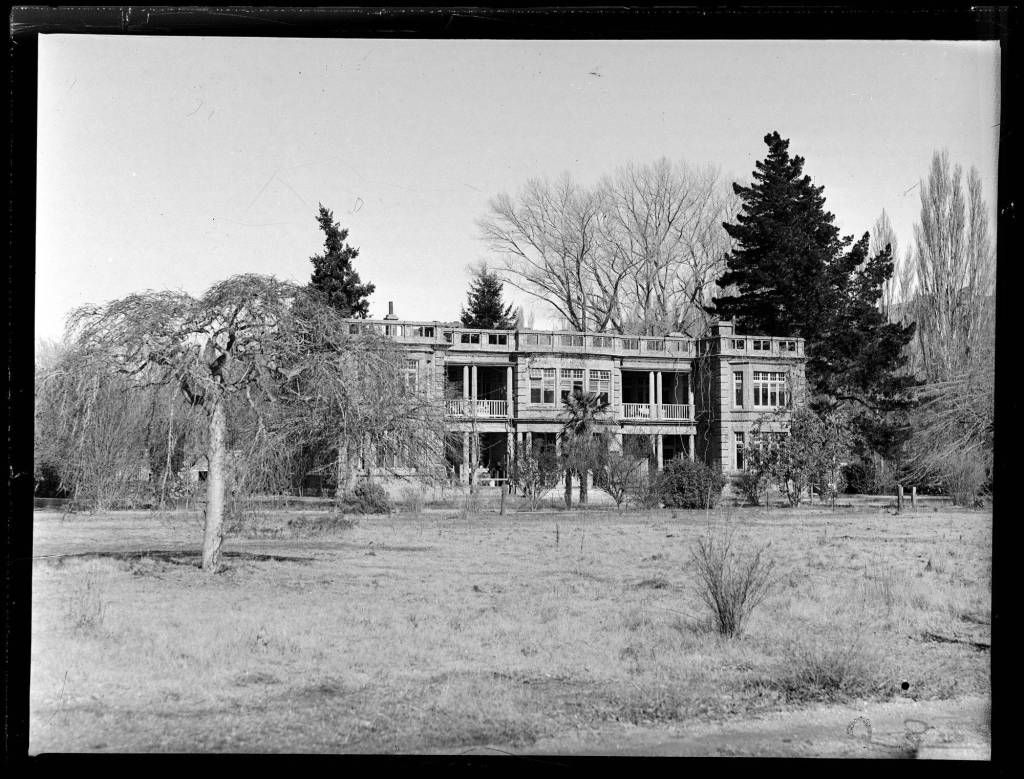
Source: Earnscleugh Station Homestead, Clyde, 1948. Auckland Libraries Heritage Collections 1370-217-08
Two palms can actually be seen in front of the homestead,5 but again a magnification is needed to clearly see this:
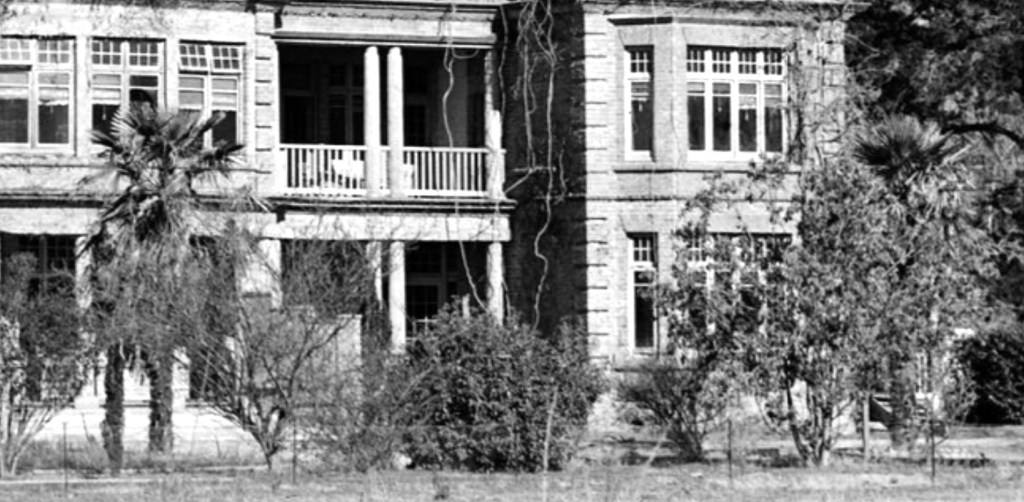
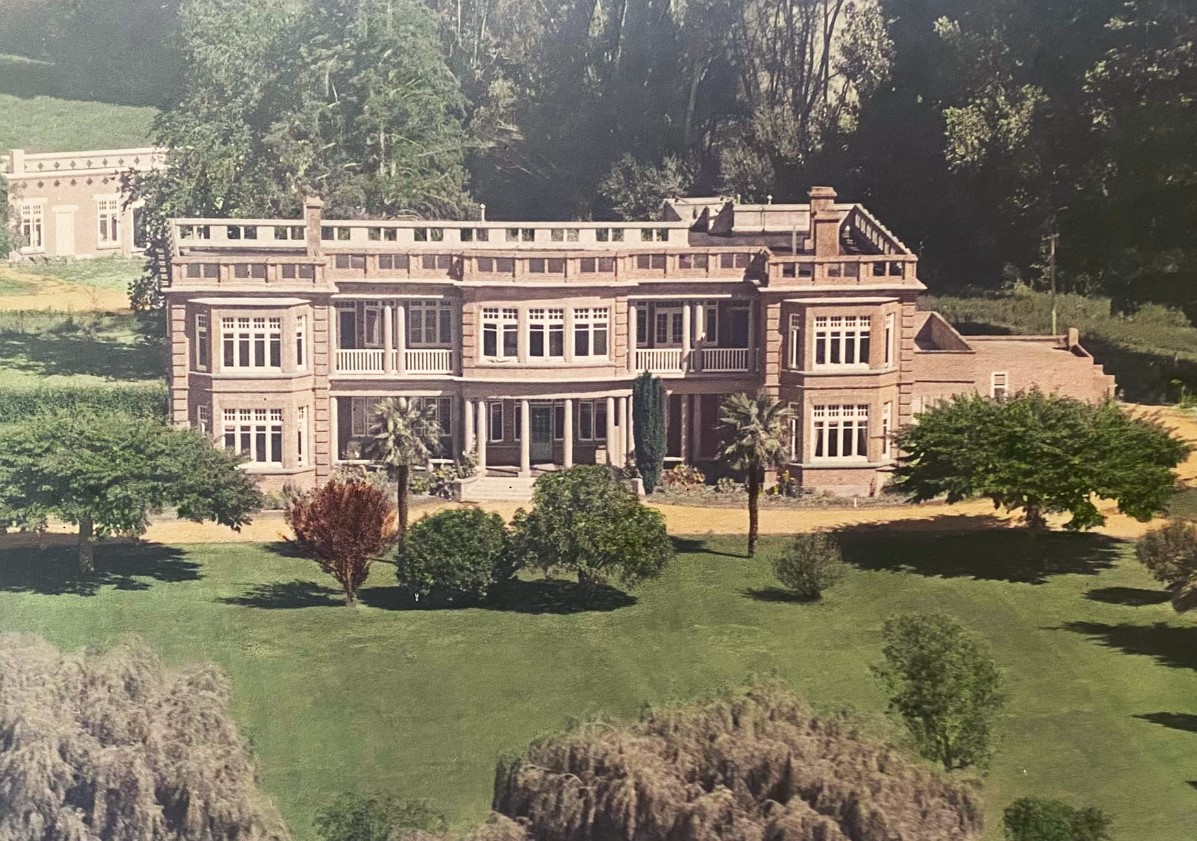
Whereas I have not actually visited Earnscleugh Castle as it is now called, I have been given access6 to several photos which wonderfully update both what the palms and the refurbished castle currently look like. Views from an aerial view, and both inside and outside the castle are useful:
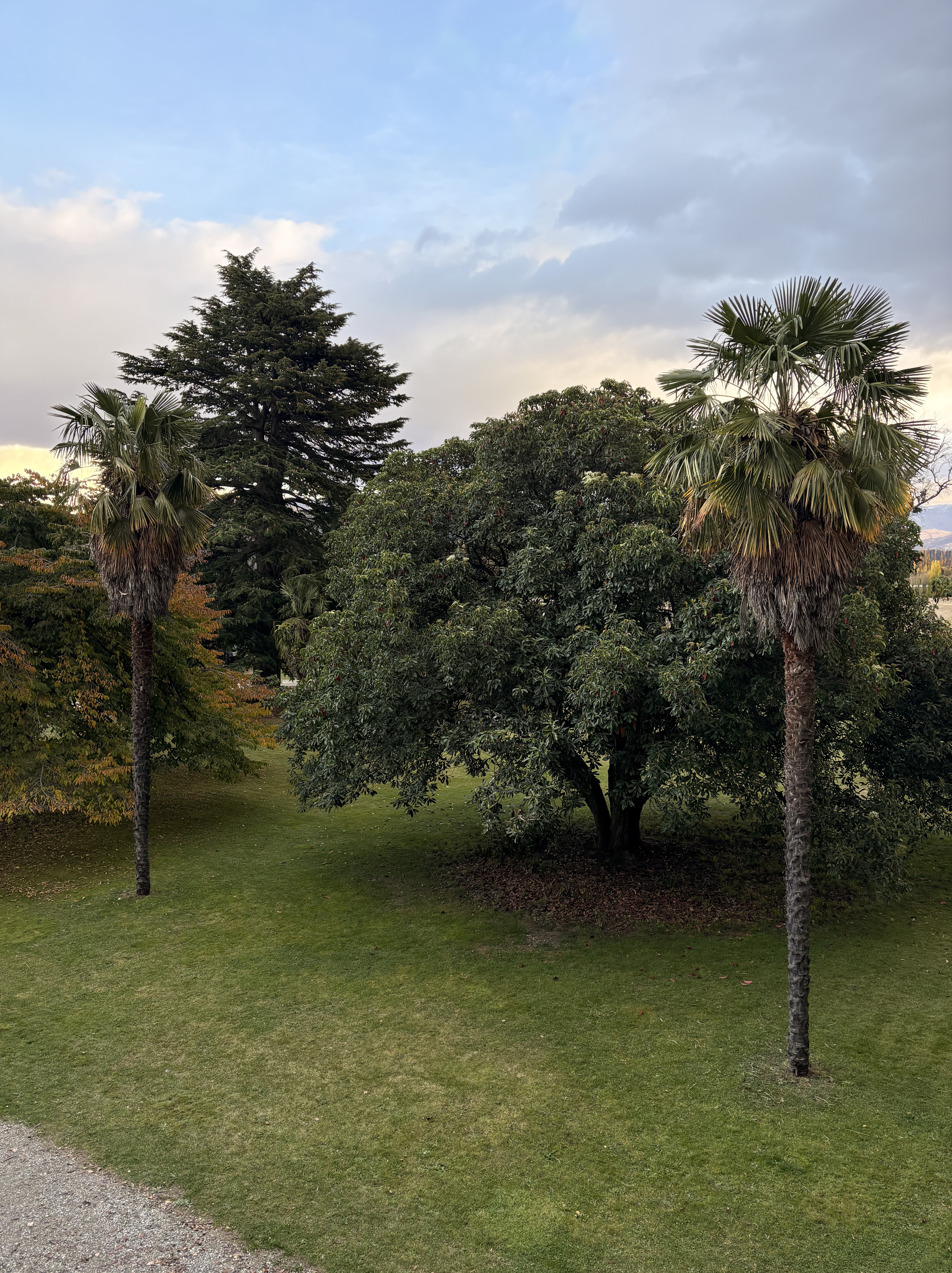
The following photo clearly shows the palms have retained the thatch on the trunk, thus strongly suggesting they are T. fortunei rather than Buxton’s other favourite fan palm, L. chinensis.
Finally some photos at ground level help give a contextual feel for the appearance of the palms alongside the now restored castle:
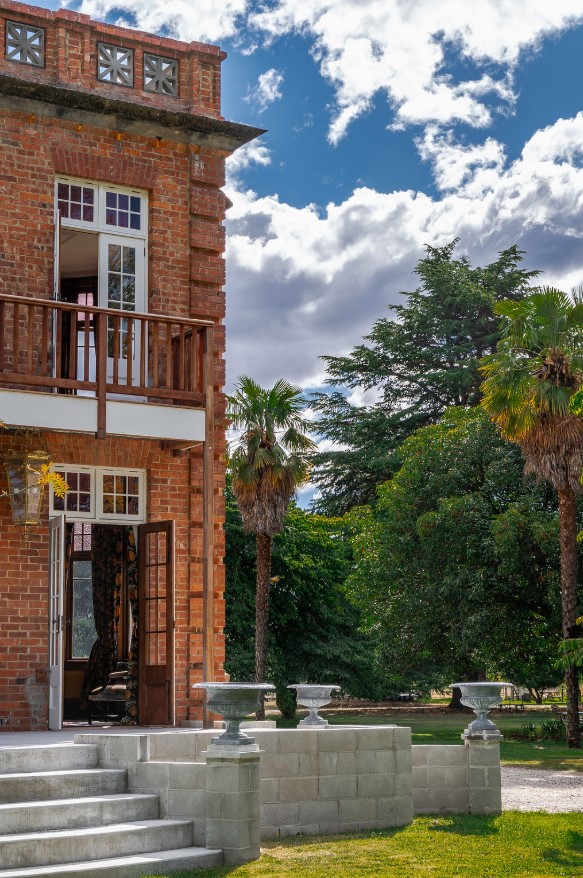
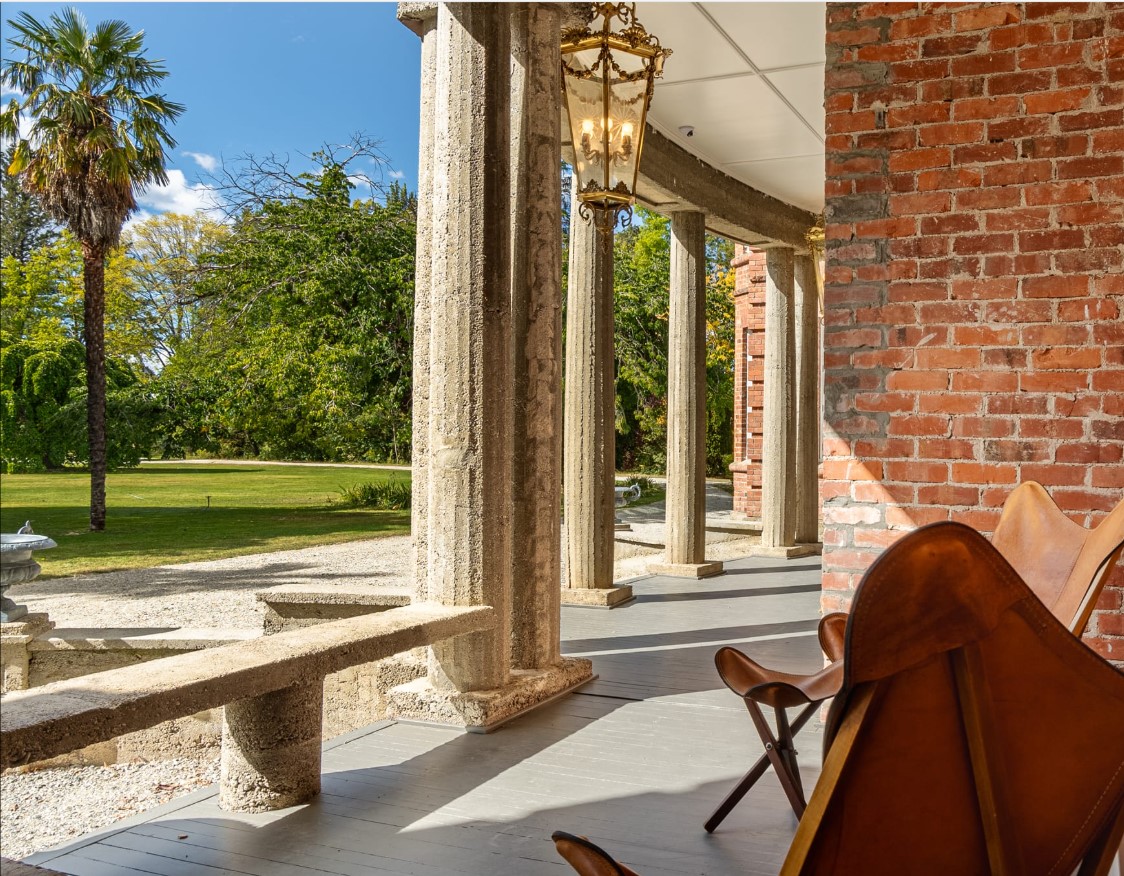
In this case the pair of palms certainly don’t contribute to a Japanese themed section of the garden, nonetheless, now at just over 100 years old and still very healthy, there is little doubt that they make a notable contribution to the overall landscape of Earnscleugh Castle. As we saw in the first photo above, Buxton was certainly very keen on the effect of a pair of palms in front of a large house, thus perhaps risking over-use, but this far south in New Zealand his landscape choice is far from hackneyed, providing a striking and key element to the now impressive garden.
- See Natalie Marshall’s The Long View which along with examples of his photographs has a fascinating description of how the National Library has gone about digitising over 2,000 of Moore’s photos. ↩︎
- See Clare Gleeson’s recent book The Fairer Side of Buxton: Alfred Buxton’s gardens and the women who loved them (Cuba Press, 2024). For a shorter online introduction see her blogposts available in the Garden History Research Foundation website: New Zealand’s Garden Great and the Women Who Made Him, A Directory of Alfred Buxton Gardens. ↩︎
- Obviously it is hard to distinguish the two palms from photos alone, however a useful difference is that T. fortunei tends to retain the thatch on the trunk, whereas L. chinensis tends to have a ‘naked’ trunk, something common to most palms. If a close view can be obtained the latter also has thorns on its petioles, which T. fortunei does not. ↩︎
- The full title is Colonial Landscape Gardener: Alfred Buxton of Christchurch 1872-1950, Department of Horticulture and Landscape, Lincoln College, 1989. ↩︎
- The homestead is incomplete in this 1948 photo. Stephen Spain – the original owner – had to close his rabbit canning factory in 1924 and the homestead was unfinished at the time of the photo. See the website of Earnscleugh Castle for details of this story and a description of the recent refurbishment and completion of the building. ↩︎
- Many thanks to Marco Creemers for taking some recent photos and allowing my use of photos from the Earnscleugh Castle website gallery. ↩︎


